
💵 Caribbean Currency Explained 2026: US Dollars, XCD & Travel Money Plans
Caribbean currency is not one thing. The right money plan depends on your exact island, but most first-time visitors do best with a no-foreign-fee card, a small stack of clean US Dollar bills, and local cash for taxis, markets, tips, and smaller restaurants.
🌴 Price Your Island Stay Before You Go
Compare refundable Caribbean stays quoted in US dollars, then leave room in your budget for cash, transfers, tips, and local meals.
💡 When the hotel page opens: Type “Barbados” or “Saint Lucia” + your dates, then filter “Free cancellation.”
💡 When the deals page opens: Type “Barbados all-inclusive” or “Saint Lucia resort” and compare the total with taxes included.
🎯 Key Takeaways for First-Time Visitors
- 🗺️ Check the Caribbean currency for every island, not every trip. Saint Lucia and Barbados are close, but they don’t use the same money.
- 💱 The Eastern Caribbean dollar (XCD) is fixed at EC$2.70 to US$1. That makes quick mental math easier across the eight-island currency union.
- 💵 Bring clean small US bills. US$1, US$5, US$10, and US$20 bills are practical for tips and small purchases. Coins aren’t useful tips.
- 💳 Use cards for large purchases, not every purchase. Hotels and larger restaurants often take cards; beach vendors, drivers, and markets may prefer cash.
- 🧳 Don’t spend your final XCD on another island unless you know it uses XCD. A few leftover bills are fine; a thick wallet of unusable cash is not.
📍 Quick Links for Caribbean Currency and Travel Money
- 1. What is the Eastern Caribbean dollar and where is it used?
- 2. What is the Eastern Caribbean dollar exchange rate?
- 3. Should you bring US dollars or local currency?
- 4. Can you use cards and ATMs in the Caribbean?
- 5. How do you avoid bad exchange rates and fees?
- 6. People Also Ask: Caribbean Currency FAQ
💵 What Is the Eastern Caribbean Dollar and Where Is It Used?
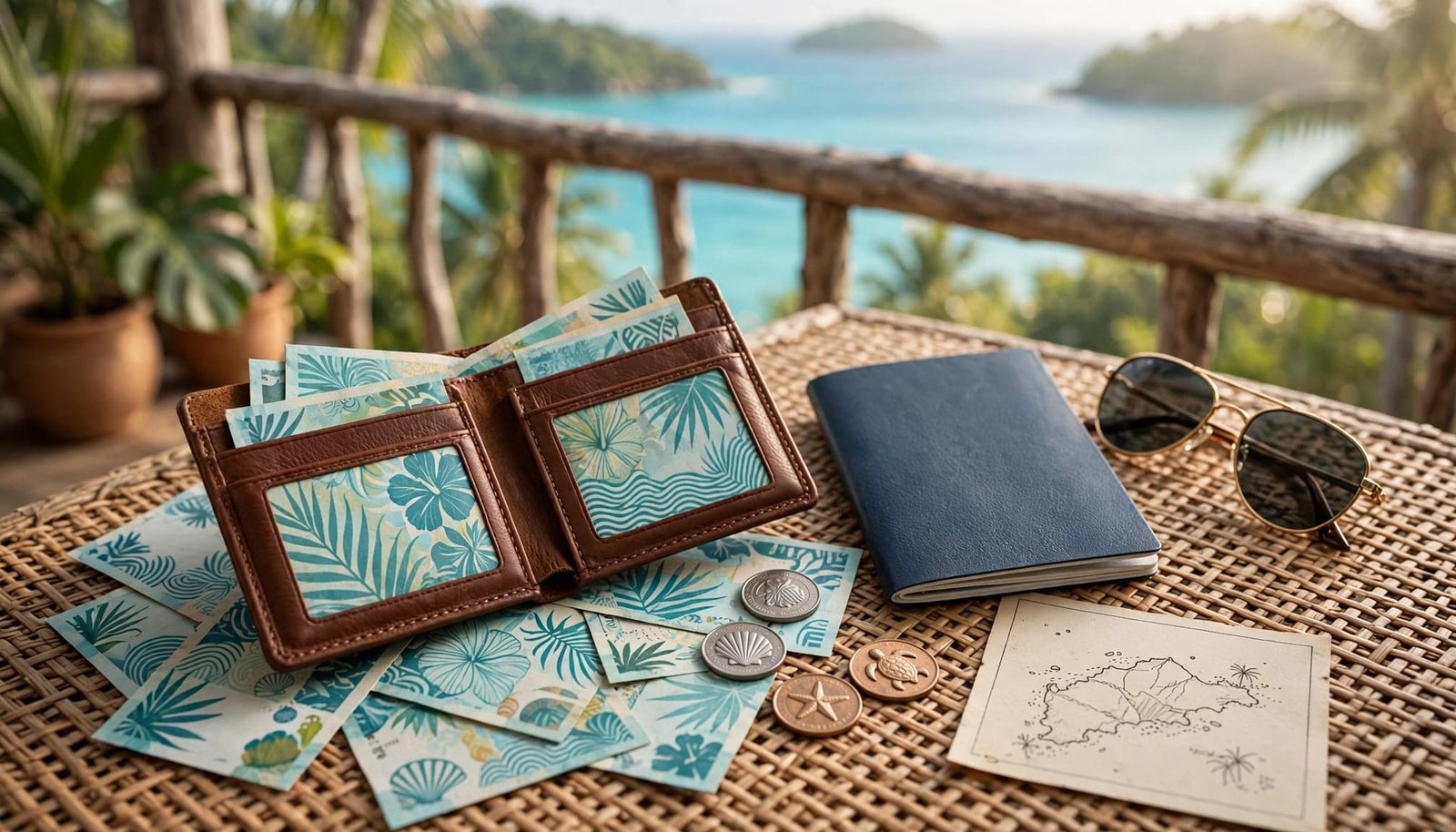
The Eastern Caribbean dollar, written as XCD or EC$, is the shared Caribbean currency of eight destinations. Together, they form an eight-member currency union. It is issued by the Eastern Caribbean Central Bank, rather than by a separate bank on each island. The Eastern Caribbean Central Bank’s currency page confirms that XCD is the official legal tender across its eight member countries. You may see prices written as EC$10, EC$50, or simply $50, so always ask which dollar a menu or taxi driver means.
Which islands use XCD?
- Anguilla
- Antigua and Barbuda
- Dominica
- Grenada
- Montserrat
- Saint Kitts and Nevis
- Saint Lucia
- Saint Vincent and the Grenadines
This is useful if you’re visiting more than one member destination. Because they belong to the same currency union, XCD may still work when you cross between these islands. The Caribbean looks connected on a map, but money changes quickly once you cross a border or board a ferry: Barbados has its own dollar, Jamaica uses Jamaican dollars, and Puerto Rico uses US dollars.
💱 What Is the Eastern Caribbean Dollar Exchange Rate?
The XCD/USD currency pair uses a fixed exchange rate of EC$2.70 for US$1. The Eastern Caribbean dollar has been pegged at that level since 1976, as historical data in this XCD exchange-rate history explains. This isn’t a floating currency pair you need to monitor every morning. The Central Bank supports the shared currency union, giving travelers a reliable rate to use. Shops may apply a slightly different rate when accepting US cash.
If a restaurant bill says “$80,” don’t assume it’s US$80. On many Eastern Caribbean islands, it may mean EC$80, or about US$29.63.
What bills and coins will you see?
Common XCD bank notes are EC$5, EC$10, EC$20, EC$50, and EC$100. Coins are used for smaller amounts, including EC$1. Don’t build your trip around coins: cashiers may return them as change, but travelers should prioritize small notes. Save coins for a final coffee, snack, or airport purchase. Divide the XCD price by 2.7 to estimate the US dollar amount, or multiply US dollars by 2.7 to find the EC value.
💵 Should You Bring US Dollars or Local Currency?
For most visitors, bring some US Dollar bills and plan to get local cash after arrival if needed. US bills are widely accepted in resort areas across many Caribbean destinations, especially for hotels, tourist restaurants, excursions, and taxis. Still, accepted does not always mean ideal: a vendor may quote you a less favorable rate, and you may receive change in XCD, Jamaican dollars, or another local currency.
When do US dollars make life easier?
Small, newer US bills are useful for tipping hotel staff, paying drivers, buying water, and covering a quick beach-chair rental. Keep bills crisp and avoid bringing only US$50 or US$100 notes. Resort guests often find US bills convenient because many big charges go on a card anyway, and families can use small bills for separate tip envelopes.
When is local cash the better choice?
Local currency is better for market stalls, roadside food, small local restaurants, and independent taxis. You are more likely to pay the posted price without doing mental conversion at every stop. In Saint Lucia, a member of the currency union, visitors may use small US bills at resorts, while local purchases are often priced in XCD. For couples and solo travelers who plan to leave the resort bubble, take out a modest amount of local cash early — don’t exchange a huge amount before you know your daily routine.

🎫 Reserve Excursions Before Cash Is Your Problem
Pre-booking a tour gives you the price upfront, then you only need small bills for tips, snacks, and extras on the day.
🗺️ Browse Caribbean Tours💡 When the page opens: Type “Saint Lucia catamaran” or “Barbados food tour” and filter by date and group size.
🌍 What Currencies Are Used Outside the XCD Zone?
Don’t assume Caribbean currency is shared across the entire region. The former British West Indies aren’t a modern single-currency zone, and each destination’s legal tender may differ. These popular destinations use different currencies, or operate outside that zone:
✈️ 2026 Airfare Snapshot (round-trip economy, from ~): American MIA–SJU (San Juan, USD zone) ~$250; JetBlue JFK–UVF (Saint Lucia, XCD) ~$380; JetBlue JFK–ANU (Antigua, XCD) ~$400; American MIA–BGI (Barbados, BBD) ~$420.
🏨 2026 Stay Snapshot (USD per night, from ~): Condado Vanderbilt (San Juan, USD) ~$320; The Crane Resort (Barbados) ~$400; Sugar Beach, A Viceroy Resort (Saint Lucia) ~$900; Jade Mountain (Saint Lucia) ~$1,150.
Is Puerto Rico the easiest money choice?
For US travelers, yes. Puerto Rico uses the US dollar, and US citizens don’t need a passport when traveling from the mainland. That removes a lot of first-trip stress. If easy logistics matter most, see these best Caribbean islands for first-time visitors. Currency is one small detail, but it can make an island feel much easier.
What about Barbados and Jamaica?
Barbados and Jamaica are both easy to visit, but neither uses XCD. If your cruise or flight plan includes either island, don’t stock up on EC dollars. Use a card for bigger costs, then keep a small amount of that island’s currency for independent spending. That’s the safest middle ground.
💳 Can You Use Cards and ATMs in the Caribbean?
Yes, but don’t rely on cards alone. Major hotels, established restaurants, supermarkets, car-rental desks, and larger tour operators commonly accept cards. Cash is still part of normal travel life: small vendors, local taxis, beach bars, and market stalls may not accept cards, or their terminal may not be working that day.
Where do cards work best?
Use credit cards for hotel bills, resort dining, grocery runs, rental cars, and activities booked through an established operator. A card with no foreign transaction fee can save money over a full week. Tell your bank where you are going before departure — a declined card at a resort check-in is a bad start, especially after a long connection.
How much cash should you carry?
Carry enough for one day, not your whole vacation. Keep the rest locked in your room safe with your passport and backup card. For a practical setup, carry your primary card, a backup card stored separately, and small notes. The Caribbean packing list has more easy travel-wallet tips that prevent one lost wallet from ruining the trip.
📱 Keep Maps and Banking Apps Working
Install travel data before departure so you can check ATM locations, message drivers, and avoid expensive roaming charges after landing.
📶 Get a Caribbean eSIM💡 When the page opens: Select “Saint Lucia” or “Barbados” (or the regional Caribbean plan) and install before you fly.
🧮 How Do You Avoid Bad Exchange Rates and Fees?
Airport exchange counters are convenient, but they can eat into your travel money budget through foreign exchange fees and spreads. If you need cash on arrival, take out only enough for the first day or two, then compare the exchange rate before choosing your next option. Use an ATM connected to a bank when possible, and compare its conversion with the mid-market rate. Your home bank, the local ATM owner, and your card issuer may each charge a fee.
Should you decline dynamic currency conversion?
If an ATM or card terminal asks whether you want to pay in US dollars, choose the local currency when your card issuer offers fair conversion terms. The card network’s conversion for the relevant currency pair may differ from the merchant’s offered conversion. Read the screen before tapping: the option with familiar dollars is not always the cheaper option.
Should you watch the change you receive?
A restaurant may accept US$20 for a small bill and return change in XCD. That is normal in the XCD zone, but understand what happened before you walk away. I treat foreign change as spending money for later that day: use it for lunch, snacks, or a taxi. Don’t wait until departure morning and hope a shop will take it.

🔐 How Do You Tip and Keep Cash Safe in the Caribbean?
Bring small bank notes for gratuities. Clean US$1, US$5, and US$10 notes are easy for staff to use; coins are not practical because they are hard to exchange. Some all-inclusive resorts include gratuities, while others do not — check the resort policy before you start handing out cash. For off-resort meals, drivers, and guides, local currency or small US bills both work better than a large note.
Should you buy XCD before you fly?
If you’re buying travel money before departure, availability may be limited outside the Caribbean. Compare the provider’s foreign exchange spread, fees, and any buy-back promise for leftover currency. For home delivery or click and collect, check the home delivery fee, arrival date, and collection deadline. For a short resort trip, I would not chase a large XCD order at home: bring small US bills, use a card, and withdraw local cash only if your plans call for it.
How do you keep cash safe without overthinking it?
Split your money between your day bag, hotel safe, and backup location. Never keep your passport, every card, and all your cash together. A waterproof pouch is helpful for boat days, beach bars, and sudden rain — it is a small item, but it can save a lot of stress. And the money you leave at home deserves protection too: store passports you won’t carry, backup cards, and spare cash in a fireproof, waterproof home safe while you island-hop.
🧭 What Is a Simple Money Plan for Island Hopping?
Island hopping creates more Caribbean currency decisions than staying on one island. Before each ferry, regional flight, or cruise stop, make a quick travel money check: confirm the currency, check what local currency is available, and decide whether you’ll need a card or ATM when you arrive. For the full spending picture, use this Caribbean vacation cost guide before you lock in flights and hotels.
What is a better plan for XCD island hops?
If your route stays inside the Eastern Caribbean dollar area, you can keep a small XCD float through the trip. That makes it easy to pay drivers, buy snacks, and cover quick local purchases. An itinerary within this currency union is simpler than one crossing into Barbados, Jamaica, Puerto Rico, or a French Caribbean island. If one of those destinations is next, spend down XCD first — your card becomes the best bridge between different currencies.
Should you plan airport transport before arrival?
Landing with no local cash is less stressful when your airport ride is already arranged. This is useful for late arrivals, families with tired kids, and travelers who don’t want to negotiate a taxi price after a flight. Pre-booking your airport ride keeps your first local expense clear and predictable, before you find an ATM or exchange cash.
🚗 Arrive With Your Transfer Sorted
Lock a fixed-price ride from the airport to your resort so your first island expense is known before you touch an ATM.
🚙 Check Private Airport Transfers💡 When the page opens: Type “Hewanorra Airport (UVF) to Castries” or “BGI Airport to Crane Beach” for a fixed quote.
❓ People Also Ask: Caribbean Currency FAQ
1. What Caribbean currency should I bring for Saint Lucia?
Bring small US Dollar bills and use local cash for purchases outside the resort. Saint Lucia uses XCD at a fixed rate of EC$2.70 to US$1, maintained by the Eastern Caribbean Central Bank. Cards work at many hotels and restaurants, but cash helps with taxis, markets, and tips.
2. Can I use US dollars in the Eastern Caribbean?
Usually, yes, especially in tourist zones. US cash is widely accepted, but it isn’t the island’s legal tender: merchants may apply their own exchange rate, and change often comes back in XCD. Keep small bills for convenience, then use EC dollars when you want posted prices.
3. Do I need cash at an all-inclusive resort?
Yes, but not a huge amount. Even when food and drinks are included, cash helps with airport transfers, staff tips, off-site meals, local taxis, souvenirs, and excursions. Check the resort’s gratuity policy before your trip, since tipping practices vary.
💡 Your Money Plan Should Stay Simple
The best Caribbean currency and travel money plan is not carrying every bill you might need. It is carrying the right mix: a good card, small US notes, and a little local cash when your island and travel style call for it. Check the currency before every island stop, and know whether that “$50” is US$50 or EC$50. That one habit keeps your vacation budget where it belongs — on beach days and good meals instead of avoidable fees.
🌴 Lock In Your Island Stay Before You Fly
Book a refundable stay quoted in US dollars, then build your cash plan around the island’s real currency.
💡 When the hotel page opens: Type your island + dates, then filter “Free cancellation” and read the tax and fee breakdown.
Support the Blog
If you love our travel guides and vacation tips, consider buying us a coffee to fuel the next adventure!
Buy Me a Coffee© 2026 I Need My Vacation. All rights reserved. Updated September 2026.