
...

IneedMyVacation.com

Affiliate Disclosure: This article contains affiliate links. If you book or purchase through these links, I Need My Vacation may earn a small commission at no extra cost to you. We only recommend services we genuinely trust and use ourselves to help you plan the perfect trip. Thank you for your support!

💰 Maldives Resort Costs 2026: The Complete 7-Night Budget & Pricing Guide

Maldives resort costs for a seven-night private-island holiday average $8,000 to $10,000 for two adults, including economy flights, speedboat transfers, all-inclusive meals, and the 28.7% tax and service charge markup. Beach villas and speedboat transfers offer the best value compared to overwater seaplane packages.

🌴 Price the Whole Holiday First

Compare the same dates, villa category, and meal plan. Then match your international flight arrival to the island transfer schedule to avoid unexpected airport hotel nights.

💡 When the hotel page opens: Type “Maldives”, select your exact dates, and filter by “All-Inclusive” and “Free cancellation” to compare identical packages.

💡 When the flight page opens: Enter your home airport and “MLE” (Velana International Airport). Ensure your arrival time aligns with your resort’s seaplane or speedboat transfer schedule.

🎯 Key Takeaways Before You Book

  • 🏖️ Choose a beach villa and speedboat transfer when keeping the budget down matters more than having an overwater deck.
  • 🛩️ Allow $600-$800 per adult for return remote-air seaplane transfers, unless your package explicitly includes them.
  • 🧾 A $100 charge becomes $128.70 when the 10% service charge and 17% tourism GST apply sequentially.
  • 🍽️ Compare half board, full board, and all-inclusive plans against your likely daily spending, not just their marketing labels.
  • 🌧️ May to November usually brings better resort offers, but cheaper dates come with less predictable weather and higher rain chances.

🏨 What Do Maldives Resort Costs Look Like Per Night?

For 2026 planning, use these broad room-rate allowances per night for two adults. They aren’t live booking quotes, but they establish the baseline before taxes and transfers. Transfers, Green Tax, service charge, and tourism GST may sit outside the displayed rate. An overwater villa carries a premium, but the gap varies by resort and season. A beach villa can offer more space, direct sand access, and a lower rate. Our beach versus overwater villa comparison helps separate the upgrade you want from the extras you won’t use.

Accommodation TierNightly AllowanceCommon Inclusions
Local-Island Guesthouse$50 – $150Room, sometimes breakfast
Entry-Level Private Island$250 – $500Entry room; meals vary
Upscale Resort$500 – $1,000Larger room; board packages
Luxury Resort$1,000 – $2,300+Premium accommodation; private pools
A wooden beach villa in the Maldives with a pathway leading to a turquoise lagoon.
Beach villas often provide more interior space and direct sand access at a lower nightly rate than overwater alternatives.

🧾 How Much Do Taxes and Service Charges Add?

The current combination is usually 10% service charge plus 17% tourism GST, with Green Tax added separately. A tax-inclusive price should not have the same taxes added again, but Green Tax may still appear separately on your final folio.

🧮 What does “++” mean on a Maldives price?

“++” usually means the listed price excludes applicable charges and taxes. Tourism GST is 17%, effective July 1, 2025. Where both percentage charges apply, the calculation is: $100 × 1.10 × 1.17 = $128.70. That is a 28.7% uplift because GST applies after the service charge.

⚠️ Hidden Trap Warning: The older 23.2% figure used the former 12% GST rate. Do not use outdated math for 2026 bookings; always multiply your base subtotal by 1.287 to find the true final price of onboard meals, spa treatments, and excursions.

🌿 How much is the Maldives Green Tax?

Private-island resorts generally charge $12 per person per night. Two adults staying seven nights pay $168. Qualifying guesthouses and hotels with 50 rooms or fewer on inhabited islands charge $6 per person per night. Children under two are exempt.

🚤 Which Resort Transfer Fits Your Budget?

Your island usually determines your transport. A cheaper air transfer isn’t useful if it doesn’t serve your specific resort. Resorts normally coordinate transfers directly, so don’t rely on a generic airport taxi booking. Pre-book your fixed-price airport transfers with 🚖 Kiwitaxi if staying on a local island or near Malé. Read our Maldives resort transfer guide for baggage and routing rules.
Transfer TypeEst. Cost (Per Person Return)Best For
Speedboat$150 – $300Nearby atolls, late arrivals, families
Domestic Flight + Boat$350 – $600Distant atolls, budget-conscious travelers
Seaplane$600 – $800+Scenic views, remote luxury resorts
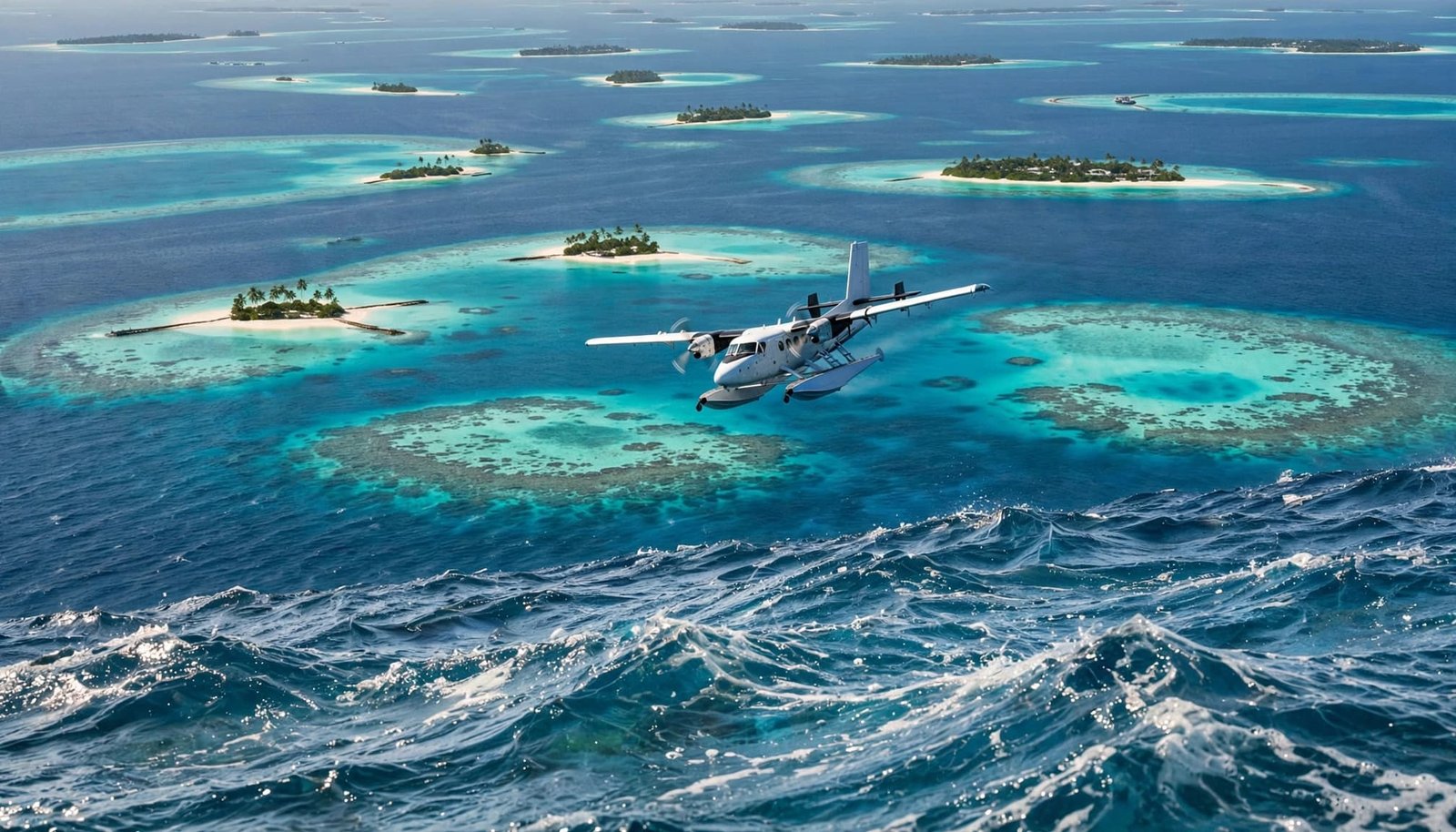
A seaplane flying over turquoise lagoons and coral atolls in the Maldives.
Seaplanes only operate during daylight hours; international arrivals after 3:30 PM will require an overnight stay in Malé.

🍽️ Which Meal Plan Prevents an Expensive Checkout?

At a private-island resort, you can’t stroll down the street for a cheaper dinner. Allow around $30-$90 for each diner at a mid-range resort restaurant and $90-$150 for fine dining, before the 28.7% tax/service markup. Our Maldives meal-plan comparison explains the differences. Full board doesn’t automatically include alcohol, and All-Inclusive doesn’t mean every premium restaurant is covered.

💡 Pro Tip: Compare the meal plan upgrade across every guest and every night. A small daily difference for a family of four becomes a substantial weekly bill. Festive gala dinners can remain compulsory extras even on an All-Inclusive package.

✈️ What Should You Pay for Flights to Malé?

New York economy return flights commonly cost an estimated $1,200-$1,800 per person, although peak dates and departure airports affect fares. For UK travelers, peak-season direct flights have been quoted at around £1,000-£1,500 per person. Compare flight options with the transfer as one journey. A lower airfare loses its appeal if it requires an airport hotel night and cuts into prepaid resort time. Add checked baggage and the onward transfer’s separate baggage allowance; a generous international allowance doesn’t automatically carry onto a small seaplane.

📊 What Does a Seven-Night Maldives Trip Cost for Two?

A practical starting target is about $8,800 for two adults, including flights from New York. This illustrative estimate uses a $500 nightly all-inclusive base rate, a speedboat-accessible resort, and one paid excursion. The complete trip averages about $1,253 per holiday night, including airfare and contingency. Use our vacation budget calculator to organize each category for your specific dates.

Budget ItemCalculationTwo-Adult Total
All-Inclusive Accommodation$500 × 7 nights$3,500.00
Service Charge (10%)10% of accommodation$350.00
Tourism GST (17%)17% of $3,850$654.50
Green Tax$12 × 2 × 7 nights$168.00
Return Speedboat$200 × 2$400.00
New York Return Flights$1,500 × 2$3,000.00
Excursions & ContingencyTours + Buffer$700.00
Complete Trip TotalTwo adults, 7 nights$8,772.50

🤿 How Much Should You Set Aside for Activities?

Allow roughly $100-$320 or more per person for guided snorkeling, dolphin cruises, and spa treatments. Two paid activities for each guest can add more than $1,000 for a couple. A good house reef can reduce the need for repeated boat excursions. Leave room in your budget for gratuities, equipment rental, and travel insurance. Protect your trip with comprehensive travel medical insurance via VisitorsCoverage to cover water sports and emergency evacuations.

📸 Capture the Atolls: Premium Full-Frame Travel Camera

Sony Alpha 7C II Full-Frame Mirrorless Camera (~$2,198)

The Maldives offers unparalleled clarity and vibrant coral colors that smartphones simply cannot capture. The Sony Alpha 7C II features a 33MP full-frame sensor, AI-based autofocus, and 4K 60p video in an ultra-compact body. Pair it with a waterproof housing to document your house reef snorkeling and overwater villa sunsets in professional quality.

✅ 33MP Full-Frame Sensor ✅ AI Real-Time Tracking ✅ 4K 60p 10-bit Video
🛒 Check Sony A7C II Pricing

💡 When Amazon opens: Copy/paste “Sony Alpha 7C II Full-Frame” and add a dive housing to your cart for underwater reef shots.

📅 When Are Maldives Resorts Better Value?

December to April is generally the drier, higher-priced season. Christmas, New Year, and school holidays can push resort rates well beyond ordinary weekly spending plans. May to November is the low season and usually brings better offers, with discounts reaching around 50% against high-season rates. Compare the complete package on Expedia and with resorts directly. Free nights, return transfers, and room upgrades can beat a simple room discount. We’d shortlist several months ahead, especially for festive dates.

🏘️ Can Local-Island Guesthouses Cut the Budget Further?

Yes. Guesthouses around $50-$150 per night can bring accommodation costs far below private-island resort prices. You also gain access to independent cafés and restaurants. The experience is different: local islands have residential neighborhoods, public beaches, and cultural expectations. Alcohol isn’t available at ordinary local-island guesthouses, and swimwear belongs strictly on designated tourist beaches. For budget travelers and solo visitors, that trade-off can make immense financial sense.
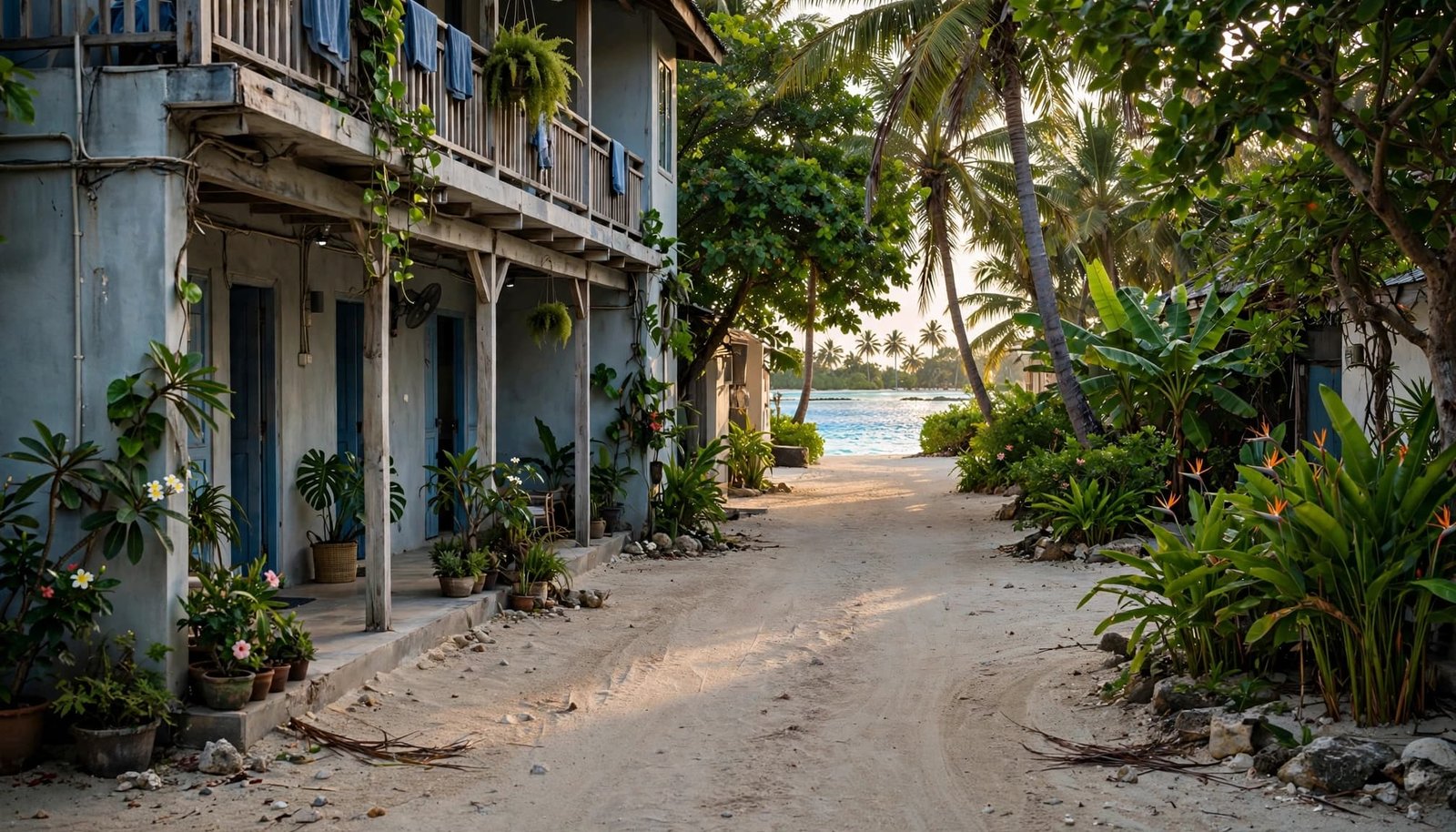
A sandy lane beside a modest guesthouse leading to a bright lagoon with palm trees.

❓ People Also Ask: Maldives Resort Costs FAQ

1. How much are Maldives resort costs for seven nights all-inclusive?

A useful planning target is $8,000 to $10,000 for two adults with economy flights from the US or Europe and transfers. This includes the 28.7% tax and service markup, Green Tax, and a modest excursion budget. Luxury overwater villas and peak holiday weeks will push this total significantly higher.

2. Are resort service charges refundable if I cancel?

Service charges are actual bill items tied to your room rate, not refundable security deposits. A temporary card authorization hold at check-in is different and is released after outstanding charges are settled. Cancellation refunds depend entirely on the specific booked rate’s terms and conditions.

3. Is a longer seaplane transfer worth the extra cost?

It can be worthwhile for a remote, ultra-luxury resort you particularly want to visit. However, for a shorter or budget-focused holiday, a nearby resort accessible by speedboat usually offers simpler logistics, later flight arrival options, and significantly lower transfer spending.

4. Is all-inclusive worthwhile if you don’t drink alcohol?

Sometimes. Compare the upgrade cost with the price of covered lunches, specialty coffees, soft drinks, snacks, and non-motorized water sports. Half board can be much cheaper when your extra daily spending is modest and the premium package benefits would go unused.

☕

Support the Blog

If you love our travel guides and vacation tips, consider buying us a coffee to fuel the next adventure!

Buy Me a Coffee

🌅 Choose the Total You Can Actually Enjoy

The Maldives is easier to budget for when you price the whole holiday, not just the villa. Choose your room, meal plan, and arrival route together. Set aside enough for the experiences you want, then compare the complete price before booking. When comparing offers on Agoda, Expedia, or other sites, keep the guest count, meal plan, villa category, and cancellation conditions identical.

🏨 Find a Maldives Stay That Fits Your Trip Total

Compare your exact dates, package inclusions, and transfer requirements before committing to the room.

💡 When the page opens: Filter by “All-Inclusive” and check the fine print to ensure the mandatory seaplane or speedboat transfer is included in the final checkout price.

© 2026 I Need My Vacation. All rights reserved.
💰 Royal Caribbean Gratuities 2026: Daily Rates, Extra Charges & Tipping Guide

Royal Caribbean cruise gratuities cost $18.50 per guest, per day for standard staterooms and $21.00 for suites. Additionally, an automatic 18% to 20% service charge applies to beverages, specialty dining, and spa purchases. For a family of four on a 7-night Caribbean sailing, expect to pay $518 in baseline daily gratuities.

Affiliate Disclosure: This article contains affiliate links. If you book or purchase through these links, I Need My Vacation may earn a small commission at no extra cost to you. We only recommend services we genuinely trust and use ourselves to help you plan the perfect trip. Thank you for your support!

🌴 Plan Your Port Days & Pre-Cruise Logistics

Keep your shore excursion guide tips and port transfers separate from your onboard gratuity budget. Secure your activities and airport rides today.

💡 When the excursion page opens: Type your port (e.g., “Cozumel” or “Nassau”) and filter by “Free Cancellation”.

💡 When the transfer page opens: Copy/paste “Miami International Airport (MIA) to PortMiami” for a guaranteed fixed rate.

🎯 Key Takeaways Before You Sail

  • 💵 Royal Caribbean’s standard daily charge is $18.50 per guest in standard staterooms and $21.00 in suites.
  • 🔒 Prepaying gratuities moves the cost before departure and locks in the current rate, keeping your final onboard bill lower.
  • 🍹 Extra service charges of 18% to 20% are automatically added to beverages, specialty dining, room service, and spa purchases.
  • 🛎️ You can adjust or remove daily gratuities at Guest Relations before the morning of disembarkation if service issues arise.
  • 💼 Bring small U.S. bills ($1s and $5s) for terminal porters and optional personal thanks; you don’t need to tip twice.

That attractive cruise fare needs a little breathing room. Our Caribbean vacation cost guide helps put these costs beside the rest of your trip expenses. Start with the daily charge, then set aside cash for the services you’ll use.

💵 How Much Are Royal Caribbean Gratuities in 2026?

Royal Caribbean’s automatic gratuity is $18.50 per guest, per day for standard staterooms and $21.00 per guest, per day for suites. These are cruise-line-specific rates, not a Caribbean-wide tipping rule. The rates took effect in late 2024, increasing from the previous $18.00 and $20.50 benchmarks. The daily gratuity applies to each guest, including children, and applies every day of the sailing, including port days.

Cruise LengthStandard (1 Guest)Suite (1 Guest)
3 Nights$55.50$63.00
4 Nights$74.00$84.00
7 Nights$129.50$147.00
10 Nights$185.00$210.00

🔒 Should You Prepay Gratuities or Pay Onboard?

Both options cover the exact same daily gratuity; the only difference is when you pay. Prepaying clears a predictable expense before your vacation starts and locks in the rate paid under current policy, meaning later rate increases won’t change your amount. If you don’t prepay, Royal Caribbean adds the daily charge to your SeaPass account during the sailing. We recommend prepaying when a quieter final bill matters more than keeping the cash liquid until departure.

✅ Quick Win: If the daily charge is already included in your booking package or promotional offer, check your cruise planner documents so you don’t budget for it a second time.

🍹 Which Purchases Carry an Extra 18% or 20% Service Charge?

The daily gratuity doesn’t cover every onboard purchase. Royal Caribbean’s U.S. gratuity policy lists an automatic 20% service charge on beverages, specialty dining, room service, and spa services. For budgeting under the U.S. policy, every $100 of eligible purchases adds $20 before other applicable charges. While some regional booking pages (like Australia) may list 18%, U.S.-market bookings should use the 20% figure for accurate planning.

Purchase TypeU.S. Policy RateStatus
Beverages & Drink Packages20%Automatic
Specialty Dining20%Automatic
Room Service & Minibar20%Automatic
Spa & Salon Services20%Automatic

💼 How Much Extra Cash Should You Tip Staff and Porters?

Extra cash is a personal thank-you, not another required daily charge. Terminal porters aren’t covered by the ship’s daily gratuity pool, and an optional tip of $1 to $2 per bag is standard. For shore excursions, gratuities are optional, but $10 to $20 is a common estimate for a highly helpful tour host. If you are sailing in a Star Class suite, community suggestions for Royal Genie service range around $100 per day, though this is entirely discretionary.

Service RoleOptional Cash TipContext
Terminal Porters$1 – $2 per bagPaid in cash at embarkation/debarkation
Cabin Attendant$20 – $100 totalPersonal thanks at end of sailing
Dining Room Waiter$20 totalHanded directly on final night
Shore Excursion Guide$10 – $20Based on group size and service quality
Royal Genie (Star Class)~$100 / dayCommunity suggestion, highly discretionary

⚠️ Hidden Trap Warning: Read your room service or bar receipt before adding a personal cash tip. A delivery fee, an automatic 20% gratuity, and a personal cash payment are separate expenses. You do not need to calculate another percentage for every coffee delivery.

🎧 Block Out the Noise: Premium Cruise & Flight Companion

Sony WH-1000XM5 Wireless Noise Canceling Headphones (~$398)

Cruise ships and airports are incredibly loud environments. The Sony WH-1000XM5 features industry-leading noise cancellation to block out pool deck chaos, cabin hallway traffic, and airplane engine drone. With 30 hours of battery life and multipoint Bluetooth connection, you can seamlessly switch between watching a movie on your tablet and taking a call on your phone while relaxing on your balcony.

✅ Industry-Leading ANC ✅ 30-Hour Battery Life ✅ Multipoint Bluetooth
🛒 Check Sony WH-1000XM5 Pricing

💡 When Amazon opens: Copy/paste “Sony WH-1000XM5 Wireless Noise Canceling Headphones” to ensure you get the latest generation model.

👨‍👩‍👧‍👦 What Do Gratuities Cost for a Family of Four?

For a family of four in a standard stateroom on a 7-night sailing, the baseline calculation is $18.50 × 4 guests × 7 nights = $518. Below is a complete budget illustration including the automatic daily charges and optional cash tips for porters, cabin staff, and tour guides. We recommend separating daily charges, activities, and connectivity into different budget lines. Our Caribbean cruise Wi-Fi guide helps keep another common onboard expense in view.

Budget ItemCalculationTotal Amount
Standard Daily Charge$18.50 × 4 × 7$518.00
Terminal Porters$2 × 4 bags × 2 ways$16.00
Extra Cabin Attendant TipDiscretionary$40.00
Extra Dining Waiter TipDiscretionary$20.00
Room Service Deliveries$3 × 2 deliveries$6.00
Shore Excursion Guides$15 × 2 tours$30.00
Total Gratuity BudgetBase + Optional Cash$630.00

❓ People Also Ask: Royal Caribbean Gratuities FAQ

1. Can I refuse to pay Royal Caribbean gratuities?

Yes. Royal Caribbean’s daily gratuities are technically optional. You can visit Guest Relations to adjust or remove the charge before the morning of disembarkation. There is no financial penalty, but remember that meal prices, delivery fees, and purchased services remain payable.

2. What is the $99.75 charge on my cruise account?

The $99.75 amount is not a universal Royal Caribbean fee. At current rates, a 7-night standard gratuity is $129.50 per person. A specific unexplained charge like $99.75 is likely a combination of a spa service, a specialty dining cover charge with the 20% gratuity added, or a shore excursion purchase. Always check your SeaPass receipt for the exact breakdown.

3. Are extra Caribbean cruise tips required?

Additional cash tips are entirely optional and discretionary. Cabin attendants, dining teams, and bartenders are already compensated via the automatic daily onboard charge and the 20% service fee on drinks. Cash tips for terminal porters, private excursion guides, and cabana attendants are separate considerations based on the level of service you receive.

4. Does prepaying the daily gratuity save me money?

Prepaying doesn’t reduce the actual daily rate, but it protects you against future price increases by locking in the current rate. It also keeps the daily charge off your onboard SeaPass bill, making your final morning checkout much faster and your onboard spending budget much easier to track.

☕

Support the Blog

If you love our travel guides and vacation tips, consider buying us a coffee to fuel the next adventure!

Buy Me a Coffee

🌅 Keep Gratuities Inside Your Vacation Budget

Budget separately for the daily automatic charge, purchase-related percentages, and optional cash tips. Bring a mix of $1, $5, $10, and $20 bills, and divide your cash into three groups: porters at the terminal, port-day spending, and end-of-cruise thank-yous. Enjoy your vacation without an uncomfortable final bill by planning these hard costs before you step onto the ship.

🌴 Finalize Your Port Day Logistics

Compare flexible shore excursions and lock in your port transfers so you know exactly what cash you need for guide tips.

💡 When the page opens: Type your specific port and filter by “Free Cancellation” to protect your budget against weather delays.

© 2026 I Need My Vacation. All rights reserved.

💵 Caribbean Currency Explained 2026: US Dollars, XCD & Travel Money Plans

Caribbean currency is not one thing. The right money plan depends on your exact island, but most first-time visitors do best with a no-foreign-fee card, a small stack of clean US Dollar bills, and local cash for taxis, markets, tips, and smaller restaurants.

Affiliate Disclosure: This article contains affiliate links. If you book or purchase through these links, I Need My Vacation may earn a small commission at no extra cost to you. We only recommend services we genuinely trust and use ourselves to help you plan the perfect trip. Thank you for your support!

🌴 Price Your Island Stay Before You Go

Compare refundable Caribbean stays quoted in US dollars, then leave room in your budget for cash, transfers, tips, and local meals.

💡 When the hotel page opens: Type “Barbados” or “Saint Lucia” + your dates, then filter “Free cancellation.”

💡 When the deals page opens: Type “Barbados all-inclusive” or “Saint Lucia resort” and compare the total with taxes included.

🎯 Key Takeaways for First-Time Visitors

  • 🗺️ Check the Caribbean currency for every island, not every trip. Saint Lucia and Barbados are close, but they don’t use the same money.
  • 💱 The Eastern Caribbean dollar (XCD) is fixed at EC$2.70 to US$1. That makes quick mental math easier across the eight-island currency union.
  • 💵 Bring clean small US bills. US$1, US$5, US$10, and US$20 bills are practical for tips and small purchases. Coins aren’t useful tips.
  • 💳 Use cards for large purchases, not every purchase. Hotels and larger restaurants often take cards; beach vendors, drivers, and markets may prefer cash.
  • 🧳 Don’t spend your final XCD on another island unless you know it uses XCD. A few leftover bills are fine; a thick wallet of unusable cash is not.

💵 What Is the Eastern Caribbean Dollar and Where Is It Used?

The Eastern Caribbean dollar, written as XCD or EC$, is the shared Caribbean currency of eight destinations. Together, they form an eight-member currency union. It is issued by the Eastern Caribbean Central Bank, rather than by a separate bank on each island. The Eastern Caribbean Central Bank’s currency page confirms that XCD is the official legal tender across its eight member countries. You may see prices written as EC$10, EC$50, or simply $50, so always ask which dollar a menu or taxi driver means.

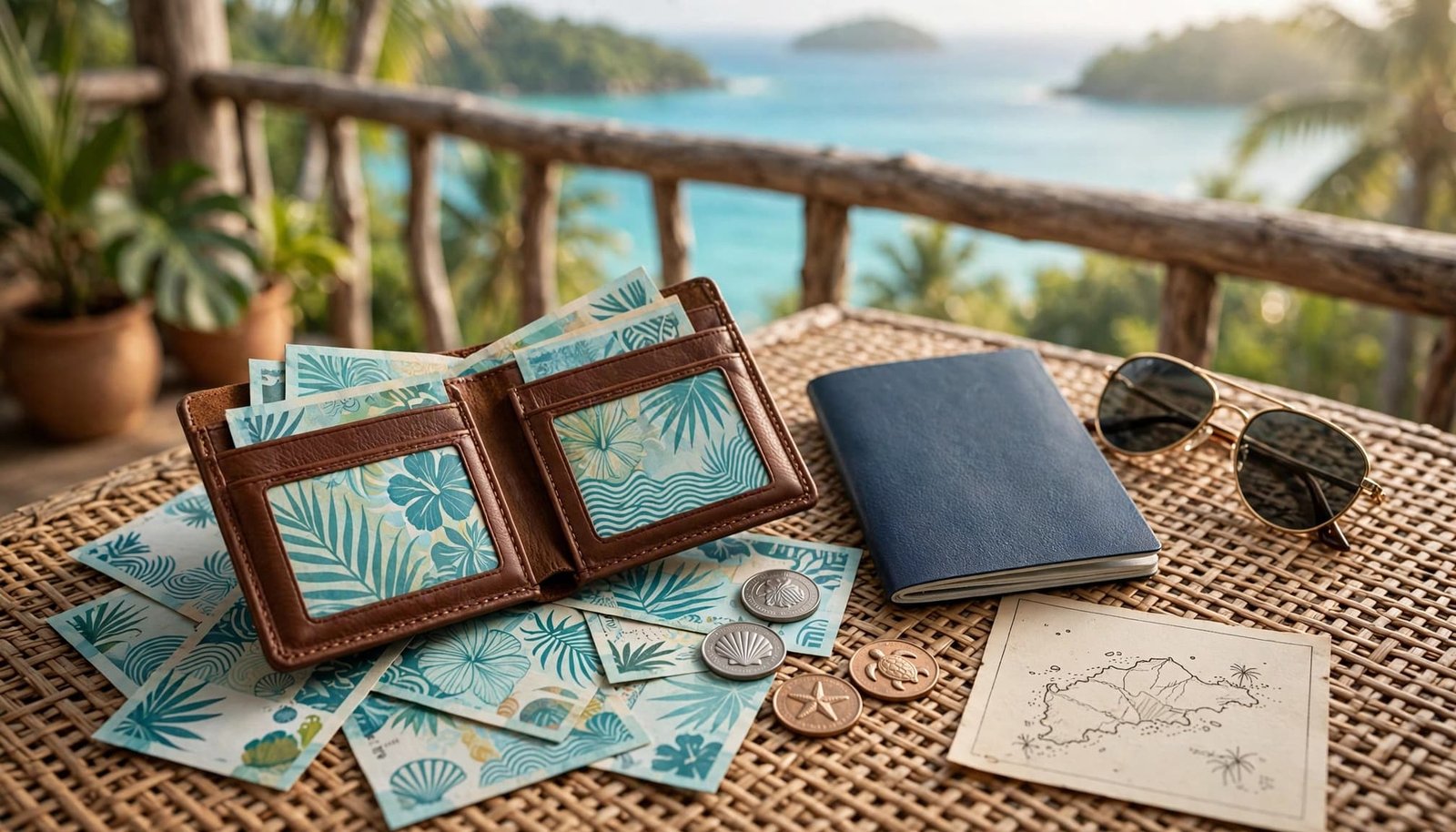
Travel wallet with Caribbean cash, passport, sunglasses, and an island map beside turquoise water.

Which islands use XCD?

  • Anguilla
  • Antigua and Barbuda
  • Dominica
  • Grenada
  • Montserrat
  • Saint Kitts and Nevis
  • Saint Lucia
  • Saint Vincent and the Grenadines

This is useful if you’re visiting more than one member destination. Because they belong to the same currency union, XCD may still work when you cross between these islands. The Caribbean looks connected on a map, but money changes quickly once you cross a border or board a ferry: Barbados has its own dollar, Jamaica uses Jamaican dollars, and Puerto Rico uses US dollars.

💱 What Is the Eastern Caribbean Dollar Exchange Rate?

The XCD/USD currency pair uses a fixed exchange rate of EC$2.70 for US$1. The Eastern Caribbean dollar has been pegged at that level since 1976, as historical data in this XCD exchange-rate history explains. This isn’t a floating currency pair you need to monitor every morning. The Central Bank supports the shared currency union, giving travelers a reliable rate to use. Shops may apply a slightly different rate when accepting US cash.

XCD PriceRough US Dollar ValueEasy Way to Think About It
EC$10US$3.70A small snack or tip
EC$20US$7.40Casual lunch add-on
EC$50US$18.52Taxi or market purchase
EC$100US$37.04Tour deposit or dinner share

If a restaurant bill says “$80,” don’t assume it’s US$80. On many Eastern Caribbean islands, it may mean EC$80, or about US$29.63.

What bills and coins will you see?

Common XCD bank notes are EC$5, EC$10, EC$20, EC$50, and EC$100. Coins are used for smaller amounts, including EC$1. Don’t build your trip around coins: cashiers may return them as change, but travelers should prioritize small notes. Save coins for a final coffee, snack, or airport purchase. Divide the XCD price by 2.7 to estimate the US dollar amount, or multiply US dollars by 2.7 to find the EC value.

💵 Should You Bring US Dollars or Local Currency?

For most visitors, bring some US Dollar bills and plan to get local cash after arrival if needed. US bills are widely accepted in resort areas across many Caribbean destinations, especially for hotels, tourist restaurants, excursions, and taxis. Still, accepted does not always mean ideal: a vendor may quote you a less favorable rate, and you may receive change in XCD, Jamaican dollars, or another local currency.

When do US dollars make life easier?

Small, newer US bills are useful for tipping hotel staff, paying drivers, buying water, and covering a quick beach-chair rental. Keep bills crisp and avoid bringing only US$50 or US$100 notes. Resort guests often find US bills convenient because many big charges go on a card anyway, and families can use small bills for separate tip envelopes.

When is local cash the better choice?

Local currency is better for market stalls, roadside food, small local restaurants, and independent taxis. You are more likely to pay the posted price without doing mental conversion at every stop. In Saint Lucia, a member of the currency union, visitors may use small US bills at resorts, while local purchases are often priced in XCD. For couples and solo travelers who plan to leave the resort bubble, take out a modest amount of local cash early — don’t exchange a huge amount before you know your daily routine.

A traveler holds cash at a colorful Castries market stall with fruit and crafts.

🎫 Reserve Excursions Before Cash Is Your Problem

Pre-booking a tour gives you the price upfront, then you only need small bills for tips, snacks, and extras on the day.

🗺️ Browse Caribbean Tours

💡 When the page opens: Type “Saint Lucia catamaran” or “Barbados food tour” and filter by date and group size.

🌍 What Currencies Are Used Outside the XCD Zone?

Don’t assume Caribbean currency is shared across the entire region. The former British West Indies aren’t a modern single-currency zone, and each destination’s legal tender may differ. These popular destinations use different currencies, or operate outside that zone:

DestinationMain CurrencyWhat First-Timers Should Know
BahamasBahamian dollar (BSD)US dollars commonly accepted
Antigua and BarbudaEastern Caribbean dollarIn the XCD currency union
BarbadosBarbadian dollar (BBD)Not part of the XCD union
JamaicaJamaican dollar (JMD)US dollars work in tourist areas
Dominican RepublicDominican peso (DOP)Resorts quote USD; locals use pesos
Puerto Rico & USVIUS Dollar (USD)Easiest setup for US visitors
Martinique & GuadeloupeEuro (EUR)Bring a card and euro access, not XCD

✈️ 2026 Airfare Snapshot (round-trip economy, from ~): American MIA–SJU (San Juan, USD zone) ~$250; JetBlue JFK–UVF (Saint Lucia, XCD) ~$380; JetBlue JFK–ANU (Antigua, XCD) ~$400; American MIA–BGI (Barbados, BBD) ~$420.

🏨 2026 Stay Snapshot (USD per night, from ~): Condado Vanderbilt (San Juan, USD) ~$320; The Crane Resort (Barbados) ~$400; Sugar Beach, A Viceroy Resort (Saint Lucia) ~$900; Jade Mountain (Saint Lucia) ~$1,150.

Is Puerto Rico the easiest money choice?

For US travelers, yes. Puerto Rico uses the US dollar, and US citizens don’t need a passport when traveling from the mainland. That removes a lot of first-trip stress. If easy logistics matter most, see these best Caribbean islands for first-time visitors. Currency is one small detail, but it can make an island feel much easier.

What about Barbados and Jamaica?

Barbados and Jamaica are both easy to visit, but neither uses XCD. If your cruise or flight plan includes either island, don’t stock up on EC dollars. Use a card for bigger costs, then keep a small amount of that island’s currency for independent spending. That’s the safest middle ground.

💳 Can You Use Cards and ATMs in the Caribbean?

Yes, but don’t rely on cards alone. Major hotels, established restaurants, supermarkets, car-rental desks, and larger tour operators commonly accept cards. Cash is still part of normal travel life: small vendors, local taxis, beach bars, and market stalls may not accept cards, or their terminal may not be working that day.

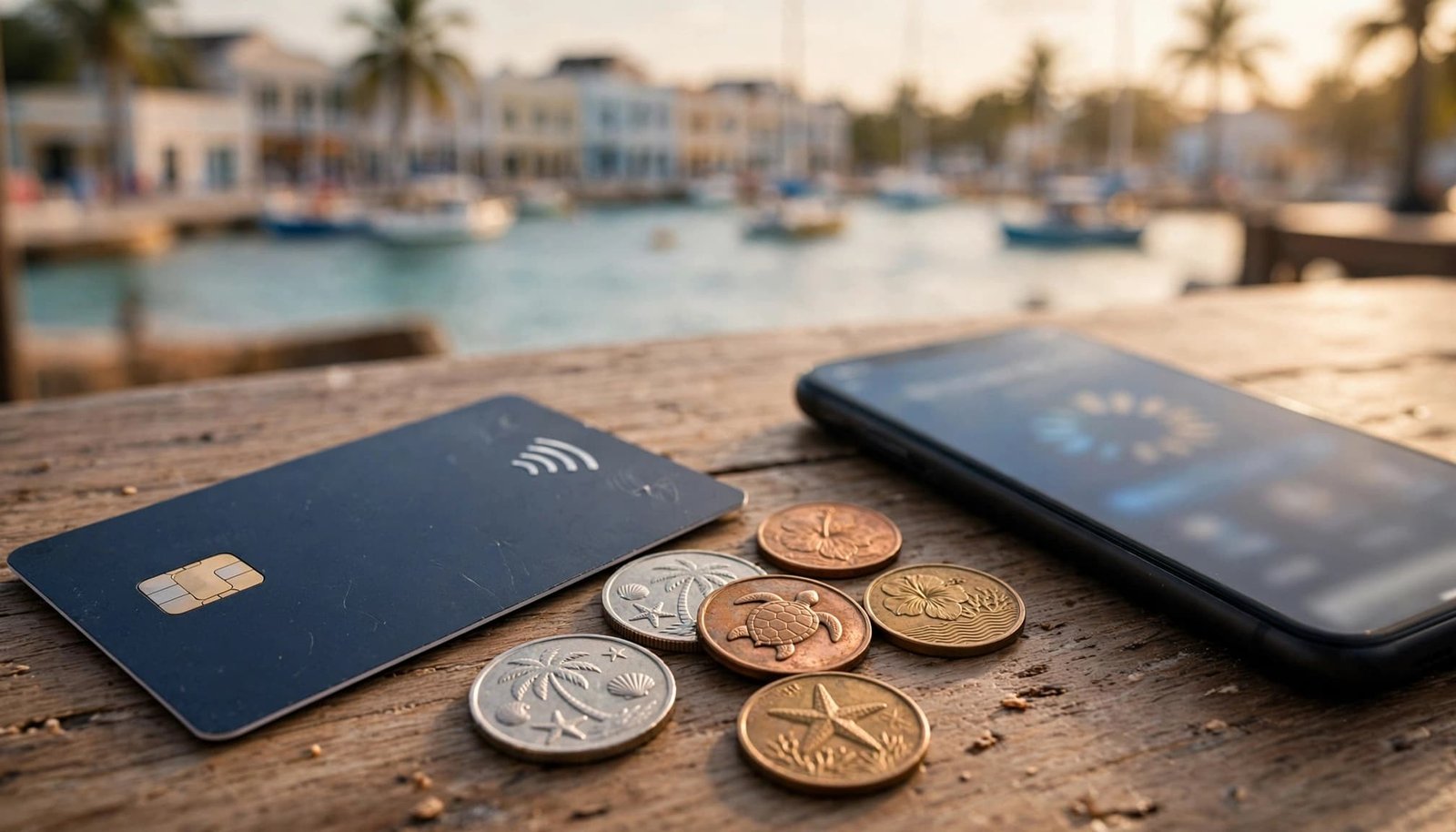
A bank card, Caribbean coins, and smartphone sit on a cafe table by the beach.

Where do cards work best?

Use credit cards for hotel bills, resort dining, grocery runs, rental cars, and activities booked through an established operator. A card with no foreign transaction fee can save money over a full week. Tell your bank where you are going before departure — a declined card at a resort check-in is a bad start, especially after a long connection.

How much cash should you carry?

Carry enough for one day, not your whole vacation. Keep the rest locked in your room safe with your passport and backup card. For a practical setup, carry your primary card, a backup card stored separately, and small notes. The Caribbean packing list has more easy travel-wallet tips that prevent one lost wallet from ruining the trip.

📱 Keep Maps and Banking Apps Working

Install travel data before departure so you can check ATM locations, message drivers, and avoid expensive roaming charges after landing.

📶 Get a Caribbean eSIM

💡 When the page opens: Select “Saint Lucia” or “Barbados” (or the regional Caribbean plan) and install before you fly.

🧮 How Do You Avoid Bad Exchange Rates and Fees?

Airport exchange counters are convenient, but they can eat into your travel money budget through foreign exchange fees and spreads. If you need cash on arrival, take out only enough for the first day or two, then compare the exchange rate before choosing your next option. Use an ATM connected to a bank when possible, and compare its conversion with the mid-market rate. Your home bank, the local ATM owner, and your card issuer may each charge a fee.

Should you decline dynamic currency conversion?

If an ATM or card terminal asks whether you want to pay in US dollars, choose the local currency when your card issuer offers fair conversion terms. The card network’s conversion for the relevant currency pair may differ from the merchant’s offered conversion. Read the screen before tapping: the option with familiar dollars is not always the cheaper option.

Should you watch the change you receive?

A restaurant may accept US$20 for a small bill and return change in XCD. That is normal in the XCD zone, but understand what happened before you walk away. I treat foreign change as spending money for later that day: use it for lunch, snacks, or a taxi. Don’t wait until departure morning and hope a shop will take it.

A traveler holds a passport wallet beside a resort counter overlooking the ocean.

🔐 How Do You Tip and Keep Cash Safe in the Caribbean?

Bring small bank notes for gratuities. Clean US$1, US$5, and US$10 notes are easy for staff to use; coins are not practical because they are hard to exchange. Some all-inclusive resorts include gratuities, while others do not — check the resort policy before you start handing out cash. For off-resort meals, drivers, and guides, local currency or small US bills both work better than a large note.

Should you buy XCD before you fly?

If you’re buying travel money before departure, availability may be limited outside the Caribbean. Compare the provider’s foreign exchange spread, fees, and any buy-back promise for leftover currency. For home delivery or click and collect, check the home delivery fee, arrival date, and collection deadline. For a short resort trip, I would not chase a large XCD order at home: bring small US bills, use a card, and withdraw local cash only if your plans call for it.

How do you keep cash safe without overthinking it?

Split your money between your day bag, hotel safe, and backup location. Never keep your passport, every card, and all your cash together. A waterproof pouch is helpful for boat days, beach bars, and sudden rain — it is a small item, but it can save a lot of stress. And the money you leave at home deserves protection too: store passports you won’t carry, backup cards, and spare cash in a fireproof, waterproof home safe while you island-hop.

🔐 Protect the Money You Leave Behind

SentrySafe FW5020 Fireproof & Waterproof Safe (~$420)

Your smartest travel-money move happens before you fly: passports you won’t carry, backup cards, spare cash, and property documents stay home in a SentrySafe FW5020. It is ETL-verified fireproof for up to 1 hour, waterproof even when fully submerged, and big enough for documents, jewelry, and a backup wallet — so the cash you split across your day bag is never your only copy of anything important.

✅ 1-Hour Fireproof Rating ✅ Waterproof When Submerged ✅ Fits Passports & Backup Cash
🛒 Check SentrySafe FW5020 Pricing

💡 When Amazon opens: Copy/paste “SentrySafe FW5020 fireproof waterproof safe” to compare the 0.9 cu ft and larger sizes.

🧭 What Is a Simple Money Plan for Island Hopping?

Island hopping creates more Caribbean currency decisions than staying on one island. Before each ferry, regional flight, or cruise stop, make a quick travel money check: confirm the currency, check what local currency is available, and decide whether you’ll need a card or ATM when you arrive. For the full spending picture, use this Caribbean vacation cost guide before you lock in flights and hotels.

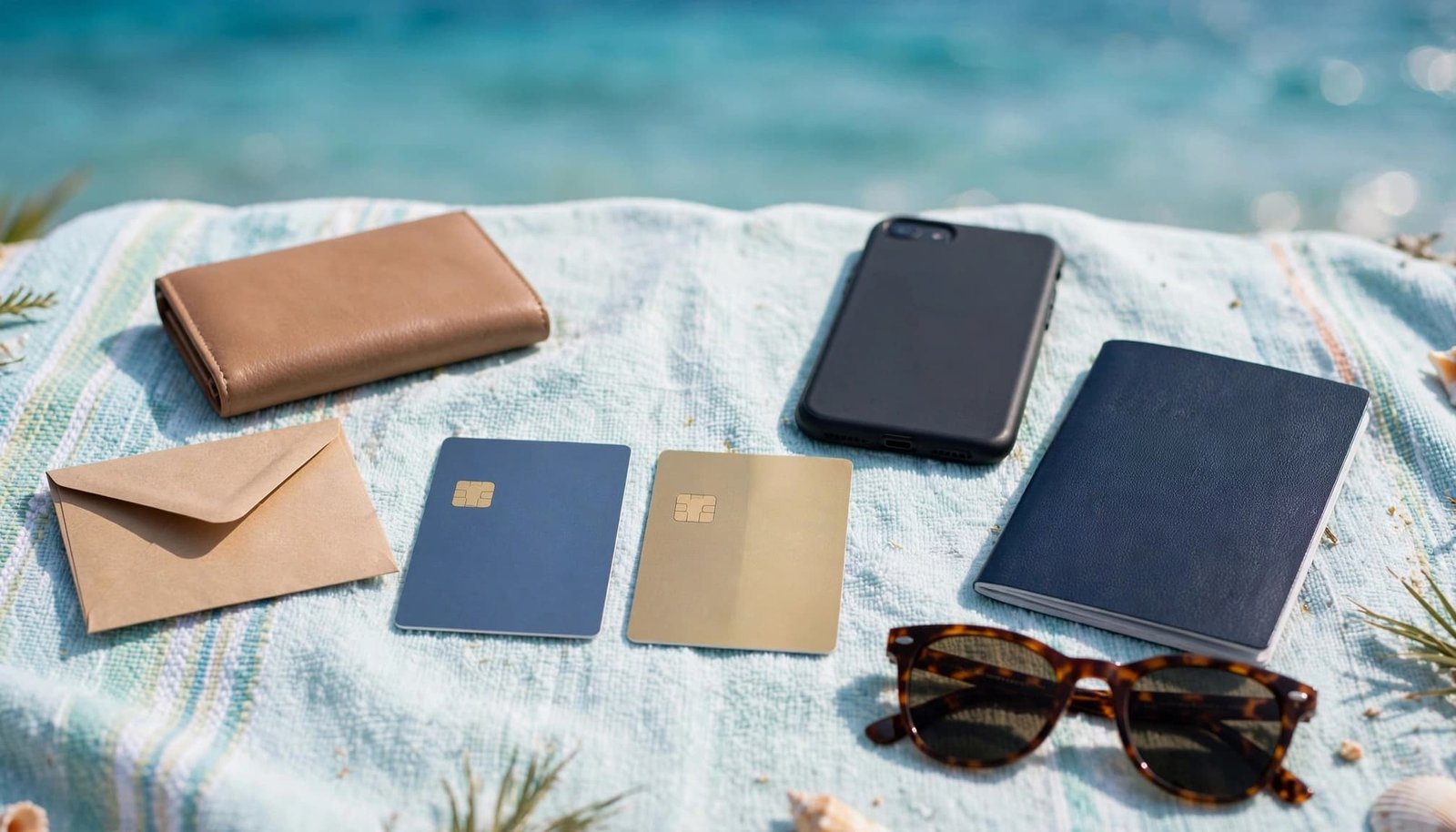
Travel money items and sunglasses arranged on a colorful beach towel.

What is a better plan for XCD island hops?

If your route stays inside the Eastern Caribbean dollar area, you can keep a small XCD float through the trip. That makes it easy to pay drivers, buy snacks, and cover quick local purchases. An itinerary within this currency union is simpler than one crossing into Barbados, Jamaica, Puerto Rico, or a French Caribbean island. If one of those destinations is next, spend down XCD first — your card becomes the best bridge between different currencies.

Should you plan airport transport before arrival?

Landing with no local cash is less stressful when your airport ride is already arranged. This is useful for late arrivals, families with tired kids, and travelers who don’t want to negotiate a taxi price after a flight. Pre-booking your airport ride keeps your first local expense clear and predictable, before you find an ATM or exchange cash.

🚗 Arrive With Your Transfer Sorted

Lock a fixed-price ride from the airport to your resort so your first island expense is known before you touch an ATM.

🚙 Check Private Airport Transfers

💡 When the page opens: Type “Hewanorra Airport (UVF) to Castries” or “BGI Airport to Crane Beach” for a fixed quote.

❓ People Also Ask: Caribbean Currency FAQ

1. What Caribbean currency should I bring for Saint Lucia?

Bring small US Dollar bills and use local cash for purchases outside the resort. Saint Lucia uses XCD at a fixed rate of EC$2.70 to US$1, maintained by the Eastern Caribbean Central Bank. Cards work at many hotels and restaurants, but cash helps with taxis, markets, and tips.

2. Can I use US dollars in the Eastern Caribbean?

Usually, yes, especially in tourist zones. US cash is widely accepted, but it isn’t the island’s legal tender: merchants may apply their own exchange rate, and change often comes back in XCD. Keep small bills for convenience, then use EC dollars when you want posted prices.

3. Do I need cash at an all-inclusive resort?

Yes, but not a huge amount. Even when food and drinks are included, cash helps with airport transfers, staff tips, off-site meals, local taxis, souvenirs, and excursions. Check the resort’s gratuity policy before your trip, since tipping practices vary.

💡 Your Money Plan Should Stay Simple

The best Caribbean currency and travel money plan is not carrying every bill you might need. It is carrying the right mix: a good card, small US notes, and a little local cash when your island and travel style call for it. Check the currency before every island stop, and know whether that “$50” is US$50 or EC$50. That one habit keeps your vacation budget where it belongs — on beach days and good meals instead of avoidable fees.

🌴 Lock In Your Island Stay Before You Fly

Book a refundable stay quoted in US dollars, then build your cash plan around the island’s real currency.

💡 When the hotel page opens: Type your island + dates, then filter “Free cancellation” and read the tax and fee breakdown.

☕

Support the Blog

If you love our travel guides and vacation tips, consider buying us a coffee to fuel the next adventure!

Buy Me a Coffee

© 2026 I Need My Vacation. All rights reserved. Updated September 2026.
🍹 Caribbean Cruise Drink Packages: Are They Worth It in 2026?

Caribbean cruise drink packages are worth buying only when your all-in daily cost stays below your realistic covered-drink spending. Compare the package price plus its 18-20% service charge, applicable taxes, and excluded purchases with your actual daily spending to find your break-even point.

Affiliate Disclosure: This article contains affiliate links. If you book or purchase through these links, I Need My Vacation may earn a small commission at no extra cost to you. We only recommend services we genuinely trust and use ourselves to help you plan the perfect trip. Thank you for your support!

A package sounds simple until you see the checkout total. Your result depends on the cruise line, cruise ship, and itinerary. It also depends on your expected cocktails and other alcoholic drinks. Age requirements, cabin rules, and cancellation terms matter too. Verify 2026 prices in the line’s booking portal or official package terms, since rates can change by sailing. If you want a vacation with fewer surprise charges, check the final figures before your payment deadline.

🚢 Planning a Cruise from Florida, Texas, or Puerto Rico?

Calculate your vacation budget before you add drinks, Wi-Fi, tips, excursions, and a pre-cruise hotel. If you need a room near the port, compare refundable hotel options.

💡 When the hotel search page opens: Type “Port Canaveral hotels” or “Miami cruise port hotels” and filter by “Free Cancellation”.

💡 When the flight search page opens: Enter your home airport and “MIA” (Miami) or “FLL” (Fort Lauderdale), then toggle “Flexible dates”.

🎯 Quick Takeaways Before You Buy

  • 🍹 Buy a beverage package when you normally order five or more paid drinks on sea days, including cocktails, water, coffee, and wine.
  • 🧮 Compare the advertised rate with the final checkout total. Service charges (often 18-20%) can make the final price much higher.
  • 🏝️ A port-heavy itinerary changes the math. You can’t drink enough on a beach excursion to make up for an unused package day.
  • 🥤 Non-alcoholic packages can be the better deal for soda drinkers and mocktail lovers. Specialty coffees and bottled water add up fast.
  • 📱 Check your cruise planner first. Drink packages often cost less before sailing, but prices and inclusions can change.

📍 Jump to the Right Drink Package Answer

🍹 When Are Caribbean Cruise Drink Packages Actually Worth Buying?

The right package is not about drinking all day. It is about what you normally buy on vacation. Track cocktails, beer, bottled water, specialty coffees, wine by the glass, and other covered purchases. Free beverages in the buffet or dining room can lower that total. A package makes more sense when your usual paid drinks approach its daily price, not when you plan one unusually big day.

Should you count a normal sea day or your best party day?

Most people calculate using the day they expect to drink the most. That is where the numbers go wrong. Make a simple audit for sea days, port days, embarkation day, and disembarkation day. For illustration, a sea-day estimate might include two cocktails, a beer, bottled water, one or two specialty coffees, and wine by the glass. Port days may mean fewer cocktails and more time ashore. If most days include only one or two alcoholic drinks, paying as you go may be smarter.

Can your stateroom change the decision?

Some cruise lines require all eligible adults sharing a stateroom to buy the same alcohol package. Others may allow a documented exception or require a non-alcoholic alternative for the second guest. Packages are personal and can’t be shared between guests. One guest can’t use another guest’s package, even when the total would otherwise seem worthwhile.

🧮 How Do You Calculate Your Real Daily Break-Even Number?

Package pricing changes by sailing date, ship, itinerary, and promotions. The rate in your cruise planner is the starting point, not always the final total. Use this formula before you buy: All-in package cost = advertised rate + mandatory service charge or gratuity + applicable taxes.

🍹 Covered Purchase in One Day💵 Hypothetical Cost
Two cocktails at $14$28
Two glasses of wine at $12$24
Three waters at $4$12
Two specialty coffees at $6$12
Estimated total$90

Assume the package costs $75 before a 20% service charge, with no additional tax in this example. The all-in daily cost is $90, so it breaks even only if all five purchases are covered. For a seven-night cruise, calculate each day separately instead of multiplying one estimate by seven. Port days may have fewer onboard purchases, while sea days may have more.

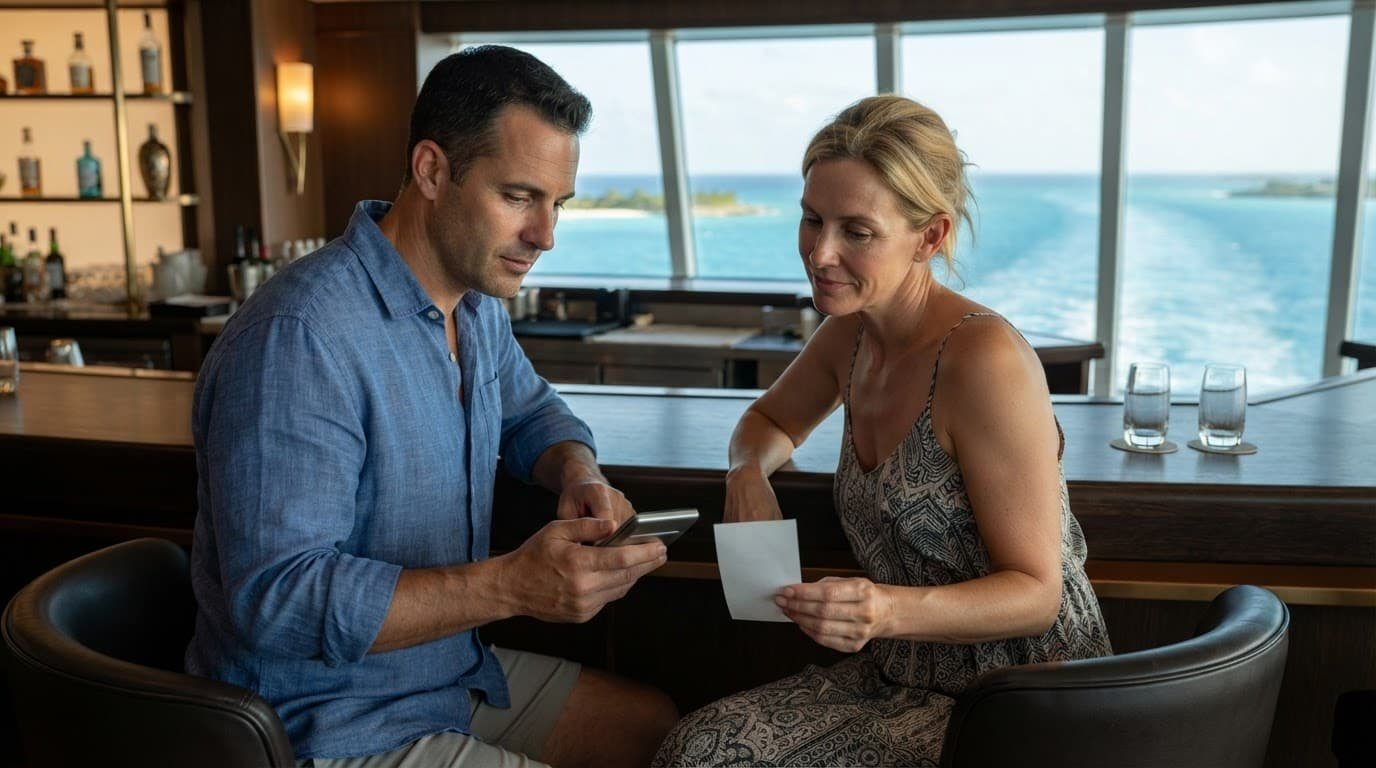
Two travelers compare a blank receipt and calculator at a ship bar overlooking the ocean.

🥤 What Drinks Are Usually Included (and Excluded) in 2026?

Alcohol packages can cover a frozen cocktail, beer, wine by the glass, and liquor-based drinks, often alongside bottled water, soda, and specialty coffees. Coverage varies by cruise line and venue, so check the beverage package’s per-drink cap, eligible venues, serving sizes, brands, and current terms. Non-alcoholic options are more useful than many travelers expect. Fresh-squeezed juices, mocktails, sparkling water, and specialty coffees may be covered differently depending on the line and venue.

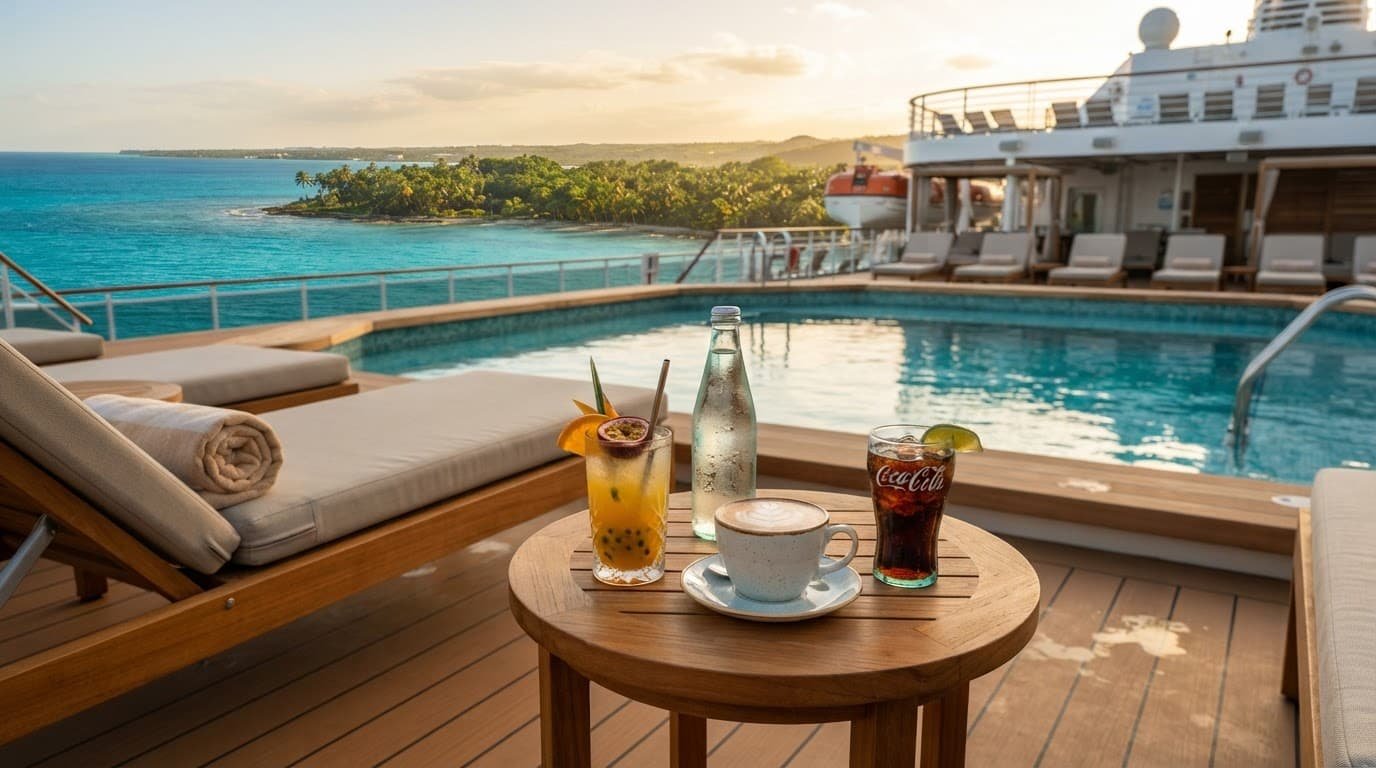
A tropical cocktail and sparkling water on a cruise ship deck overlooking the ocean.
Photo by SamFoll SF

Do alcohol packages work best for mixed drink habits?

A package is easier to justify if you enjoy more than liquor. Start with a morning latte, grab water before leaving the ship, order a frozen cocktail by the pool, and have wine with dinner. Those small orders build a real total. Ask for the brand you want when possible. Premium labels may exceed the package cap, but you usually pay only the difference.

Are soda packages always the cheap answer?

On Royal Caribbean, the Classic Soda Package can work for families or travelers who drink fountain soda all day. It doesn’t provide the broader non-alcoholic coverage available through the Refreshment Package, which is often a better fit for non-drinkers who still want vacation treats.

🚢 How Do Royal Caribbean and Carnival Drink Packages Compare?

Royal Caribbean typically lists three main choices: Classic Soda Package, Refreshment Package, and Deluxe Beverage Package. The Deluxe Beverage Package is the broadest option on eligible sailings and may include cocktails, spirits, beer, wine by the glass, fountain soda, bottled water, specialty coffees, mocktails, and fresh-squeezed juices. Watch the current drink limit: Royal Caribbean’s 2026 terms may show a $14 maximum for covered individual drinks, but some ships or sailings may show a different cap.

Drinks sit on a cruise deck table with turquoise sea and a palm-covered island behind them.

Are Starbucks and Freestyle cups included?

Licensed Starbucks locations are commonly excluded, but confirm the rule for your particular ship. Other ship cafés may follow different policies, and not every café purchase qualifies. Check Royal Caribbean’s official notice and Cruise Planner terms before assuming Coca-Cola Freestyle access is included.

How does Carnival CHEERS! and Zero Proof pricing work?

Carnival offers CHEERS! for alcoholic beverages and CHEERS! Zero Proof for premium non-alcoholic options. Carnival prices vary by sailing, so check Cruise Manager for your specific booking. Compare the beverage package price per person per day, then add Carnival’s current service charge (usually 18-20%) and any applicable taxes. Check booking and cancellation restrictions before purchasing, including the refund or cancellation deadline and the current daily limit for alcoholic drinks (often 15 drinks per 24-hour period).

🏝️ Does Your Caribbean Itinerary Change the Drink Package Math?

With Caribbean cruise drink packages, sea days help and full port days hurt. A Western Caribbean sailing with Cozumel, Grand Cayman, and Jamaica can keep you off the ship for eight hours or more. A beach club, snorkeling trip, or all-day island tour means fewer cocktails and less bottled water bought aboard the cruise ship. You may return in time for dinner, but free or separately purchased drinks ashore usually don’t count toward break-even.

A traveler relaxes in a shaded chair with drinks on a white-sand beach near a cruise ship.

Do drink packages work at CocoCay or other private islands?

Don’t assume a drink package follows you ashore. Coverage at private islands depends on the cruise line, destination, ship, and sailing. Royal Caribbean lists package use at Perfect Day at CocoCay, but other private destinations may differ. Regular Caribbean ports, independent beach clubs, and local restaurants normally use their own pricing and don’t accept a shipboard package.

🏝️ Book Port-Day Excursions & Beach Clubs

Since your ship drink package won’t work at most independent port beaches, book your day passes and tours in advance.

🗺️ Browse Caribbean Shore Excursions

💡 When the tour search page opens: Type “Cozumel beach club” or “Nassau day pass” to find port-day excursions where drinks aren’t covered by your ship package.

⚠️ What Fine Print Can Ruin Your Drink Package Deal?

Before buying a beverage package, run through this cruise ship checklist. Confirm that it’s for personal use only. The package is tied to your name, cruise card, and sailing, so it usually can’t cover a round for the group. Check the exact price cap for each eligible drink. If drink prices exceed that limit, you’ll pay a premium surcharge, often with an additional service charge. Then confirm which venues and purchases are excluded. Common exclusions include minibar items, vending-machine purchases, room service, some specialty venues, and a souvenir cup charge.

⚠️ Harsh Truth: Check the cancellation and refund deadline. Policies may differ for pre-cruise purchases, onboard purchases, and promotional fare benefits. Save a screenshot of the checkout terms, and record the date and sailing because package rules can change. I also leave room in the budget for things a package can’t cover. Our guide to hidden cruise costs helps put drinks beside gratuities, Wi-Fi, and excursions.

When is paying per drink the smarter move?

Buying drinks one at a time isn’t a budget failure. Skip the beverage package if you have a port-heavy schedule, order few alcoholic drinks, or prefer free dining-room and buffet beverages. Set aside a daily amount, such as $35 to $60 per person per day, as an illustrative estimate for your itinerary. An insulated tumbler and refillable bottle can help you stay comfortable on hot Caribbean days.

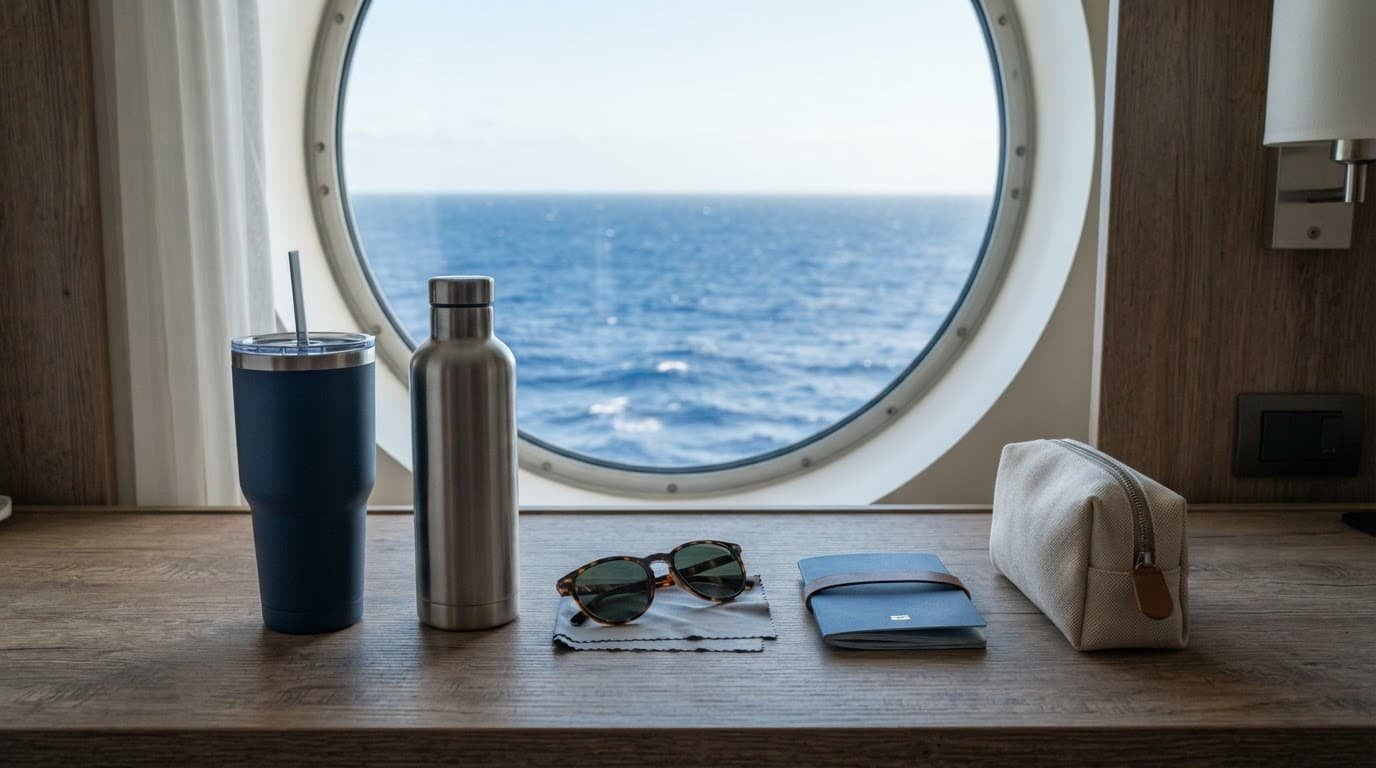
Cruise cabin desk with reusable drinkware, sunglasses, passport, and travel pouch by an ocean view.

🎒 Pack Smart for Your Cruise Cabin

Bring your own insulated tumbler to avoid buying plastic cups on the ship. Check our cruise carry-on packing guide for more tips.

🛒 Shop Cruise Packing Gear

💡 When the packing gear store opens: Copy/paste “insulated cruise tumbler with handle” or “collapsible water bottle for travel”.

❓ People Also Ask: Caribbean Cruise Drink Package FAQ

1. How do you calculate if a cruise drink package is worth it?

Add the advertised daily rate plus the mandatory 18-20% service charge and any taxes. Then, tally the realistic cost of the exact drinks, coffees, and bottled waters you will consume on an average sea day. If your daily tally exceeds the all-in package cost, the package is worth it.

2. Do Caribbean cruise drink packages work on private islands like CocoCay?

It depends on the cruise line. Royal Caribbean’s drink packages generally work at their private destination, Perfect Day at CocoCay. However, packages rarely work at independent port beaches, local bars in Cozumel or Nassau, or independent beach clubs.

3. Are gratuities and service charges included in the advertised drink package price?

Usually, no. The advertised price is often the base rate. Cruise lines like Carnival and Royal Caribbean typically add an 18% to 20% service charge or gratuity at checkout. Always look at the final checkout total before confirming your purchase.

🌅 The Best Drink Package Is the One You Will Use

The best Caribbean cruise drink packages aren’t universal. They fit travelers whose real vacation habits match the price. Count sea days, compare likely purchases such as cocktails, add service charges, and review venue exclusions. Check the official cruise planner and line-specific rules, then compare the total with your personal budget. A clear budget feels better than chasing a break-even number every day of your cruise.

© 2026 I Need My Vacation. All rights reserved.

Support the Blog

If you love the travel tips and content, consider buying me a coffee or fueling my next adventure!

Support via Cash App

How to Maximize Travel Rewards for Luxury Upgrades

Cash prices can make luxury travel feel like a velvet rope you are not meant to cross. One business-class seat, one suite night, or one balcony cabin can cost more than the rest of the trip.

I use points and miles to get past that price wall without burning rewards on weak redemptions. The goal is simple: better seats, better rooms, and better cruise perks with a plan that still works in 2026. If I focus on flexible points, strong bonuses, and smart transfers, luxury gets a lot closer.

🎯 TL;DR – Your Quick Win Strategy

  • I earn flexible bank points first because they give me more upgrade paths.
  • In 2026, sign-up bonuses are still the fastest way to build a luxury travel balance.
  • I transfer points only after I compare award value, cash price, taxes, and portal pricing.
  • For flight pricing before I redeem, I like to search flexible-date flights on Aviasales.

Affiliate Disclosure: This article contains affiliate links. If you book or purchase through these links, I Need My Vacation may earn a small commission at no extra cost to you. We only recommend services we genuinely trust and use ourselves to help you plan the perfect trip. Thank you for your support!

📋 Table of Contents

📺 Watch: How to Use Travel Miles and Points for Luxury Vacations

Start by Earning the Right Points, Not Just More Points

Why flexible points give me more upgrade choices

When I want luxury travel, I do not chase random points. I start with currencies that can move. Chase Ultimate Rewards, Amex Membership Rewards, Capital One Miles, and Citi ThankYou Points matter because I can transfer them to airline and hotel partners.

That freedom changes everything. A single-brand card can lock me into one airline or hotel chain. Flexible points let me go where the best award space is. That might mean a lie-flat flight on one trip, then a luxury resort on the next.

I also get more room to compare value. If a transfer partner gives me a better seat or a better room for the same stash of points, I win twice. For a broader look at how travelers use points for premium trips, I like this luxury vacation guide.

How I earn points faster with sign-up bonuses and bonus categories

In April 2026, big sign-up bonuses still do most of the heavy lifting. Public offers on premium travel cards often land around 75,000 points, and targeted offers can go higher. That can cover a serious chunk of a premium cabin or a high-end hotel stay.

After the bonus, I keep it simple. I use the right cards for travel, dining, groceries, and portal bookings. I also watch application limits and issuer rules, because one rushed application spree can close doors later. Most importantly, I only do this if I can pay the balance in full every month. Interest wipes out the upgrade fast.

Use Everyday Spending and Travel Portals to Build a Luxury Travel Balance

The easiest spending habits that grow my points balance every month

I do not buy more to earn more. I move spending I already have. Groceries, dining, streaming, gas, phone service, insurance, and other recurring bills can build points quietly over time.

Rent can help too, if the fee makes sense. Sometimes it does, sometimes it does not. I run the math first.

This works because points behave like drops in a bucket. One drop looks small. A few months later, the bucket starts to matter.

How I stack card offers, shopping portals, and travel bookings

The easiest win is stacking. I click through a shopping or travel portal, then pay with the right card, then collect rewards from both sides. That is one purchase doing two jobs.

Issuer offers help too. If I see a useful hotel, airfare, or cruise offer, I add it before I book. In 2026, portal bookings and direct travel spend can still trigger strong bonus rates on many premium cards. I also keep an eye on which upgrades genuinely improve the trip, because flashy extras are not always worth the points. This piece on upgrades that actually improve a trip is a good reality check.

💡 Pro Tip: Before booking luxury hotels, I always compare rates on Booking.com and check Agoda for exclusive deals to ensure I’m getting the best value for my points or cash.

Know When to Transfer Points and When to Book Direct

When airline transfers are best for business and first class upgrades

Airline transfers often give me the best value on premium cabins. A coach redemption may be fine, but a business-class seat can turn the math upside down in my favor, especially on long-haul routes.

Saver space matters here. So do partner awards. One airline may show nothing, while a partner has the same seat for fewer points. Still, I never transfer first and search later.

⚠️ Golden Rule: I transfer points only after I find real award space and compare the full cost, because most transfers are one-way and final.

Elegant business class seat in airplane cabin with passenger relaxing, wide angle view showing luxury amenities like large screen and bedding, soft cabin lighting, realistic photography style, high detail.

When hotel points are worth using for suite nights and elite perks

Hotel points shine when cash rates spike. I look hardest at peak dates, resort stays, and luxury city hotels where nightly prices get painful. A points booking can become even better when it comes with breakfast, lounge access, late checkout, or a room upgrade through status.

Photorealistic luxurious hotel suite with ocean view balcony, king bed featuring plush bedding, modern decor, spacious layout showcasing amenities, afternoon sunlight and warm lighting, no people or text.

I compare the award rate to the cash rate every time. If I would pay $900 cash but only 60,000 points, that can be strong value. If the paid rate is low, I may save points and compare luxury hotel rates on Booking.com instead.

When booking through a travel portal makes more sense

Portals work better than many people expect. If award space is poor, cash fares are cheap, or I want elite credit on a paid stay, a portal booking can beat a transfer. Some card programs still boost portal value by 25% to 50%, depending on the card.

My booking strategy: I always check Expedia for package deals and compare Trip.com prices before making any luxury travel purchase.

Here is the quick comparison I use:

OptionBest forMain riskMy rule
Transfer to airlinePremium flightsIrreversible transferTransfer only after finding space
Transfer to hotelExpensive staysLower value on cheap datesUse when cash rates are high
Travel portalCheap fares, easy bookingLower upsideCompare before every redemption

Match the Right Reward to the Luxury Upgrade You Actually Want

For lie-flat flights, I focus on airline partners and flexible dates

If I want the bed in the sky, I search early and stay flexible. Midweek dates, alternate airports, and partner airlines can open the door to better award space. I do not need to know every program on earth. I need a few good partners and a little patience.

🔍 Research tip: I use Aviasales to find the best flight deals and track price trends before redeeming points.

For luxury hotels, I watch cash prices, free night rates, and status benefits

A suite is not only about square footage. Breakfast for two, late checkout, resort credit, and room upgrades can turn a decent redemption into a great one. I weigh the full stay value, not only the room rate.

Where I book: I always compare Booking.com, Agoda, and Expedia to ensure I’m getting the best luxury hotel deal.

For cruises, I compare points bookings with cruise perks and cash deals

Cruises are less tidy than flights or hotels. Sometimes the best play is paying cash with the right travel card, earning points on the purchase, then booking through a portal or agency that adds onboard credit or extra perks. If I am comparing premium sailings, I also like this guide to the best luxury Alaska cruises for 2026, because cruise upgrades often feel most worthwhile when the itinerary itself is exceptional. For added context, The Points Guy has a useful guide on cruise points and perks.

🚢 Cruise booking tip: I check Expedia for cruise packages that bundle flights and hotels for maximum value.

Elegant balcony suite interior on a luxury cruise ship with large windows overlooking a serene glacier fjord in Alaska, plush seating, soft evening light on icebergs, high detail realistic style, no people.

For luxury experiences and tours

Once you’ve booked your luxury trip, don’t forget the experiences. I use GetYourGuide for premium tours and Klook for exclusive activities that enhance the luxury experience without breaking the bank.

🎭 Don’t miss: I also check Tiqets for skip-the-line attraction tickets and Go City passes for multi-attraction savings.

Mistakes That Shrink the Value of Your Points

Transferring too soon, chasing flashy offers, and ignoring fees

Transfer bonuses can tempt me into bad math. A 20% bonus does not help if the award itself is weak. I also watch annual fees, taxes, fuel surcharges, resort fees, and interest. Those hidden costs can eat the win before the trip starts.

Using points for low-value redemptions when cash is the smarter move

Cheap travel is often better paid with cash. If a flight is inexpensive or a hotel rate is modest, I usually save points for premium cabins, pricey resorts, or peak dates. Luxury redemptions often give the biggest payoff later.

💰 Smart move: I always search for flexible-date flights on Aviasales to find the cheapest cash options before deciding to use points.

A Simple 90-Day Plan I Would Follow to Earn My First Luxury Upgrade

Month one: Pick one rewards goal and one flexible points card

I start with one target. Maybe it is a business-class flight to Europe. Maybe it is two nights at a luxury resort. A narrow goal keeps me from collecting random points with no clear use.

Month two and three: Hit the bonus, track points, and compare redemption options

I meet the spending requirement with normal bills, not panic spending. Then I track points, watch award space, and compare transfer value to portal value before I book. If I want a cash benchmark for a premium trip, I might check premium cruise and hotel pricing on Expedia or look at Trip.com for flight prices first. Patience usually brings better seats and better rooms than rushing.

🎯 Ready to Start Your Luxury Travel Journey?

Here’s your action plan:

  1. Choose one flexible points card with a strong sign-up bonus
  2. Pick one luxury upgrade goal (business class flight, suite upgrade, or cruise)
  3. Use Booking.com and Expedia to research cash prices
  4. Track award space and transfer only when you find value
  5. Book your luxury experience with GetYourGuide or Klook

📚 Want to learn more? Check out our complete guide on how to maximize luxury travel rewards for more tips and strategies.

FAQ: Luxury Travel Rewards and Upgrades

Are flexible points better than airline miles?

For me, yes. Flexible points give me more ways to book flights, hotels, and sometimes cruises.

What is the fastest way to earn enough for a luxury upgrade?

A strong sign-up bonus is usually fastest, as long as I can meet the spend with normal bills.

Should I always transfer points for better value?

No. I compare transfer value, portal value, taxes, and cash price every time.

Can I use rewards for cruises?

Yes, but cruise value varies. Cash bookings with the right card and extra perks can beat a points redemption.

Luxury travel gets easier when I stop treating points like spare change and start treating them like a plan. The best results usually come from flexible points, a clear upgrade goal, and the discipline to skip weak redemptions.

If I were starting today, I would choose one trip, earn one strong bonus, and compare every redemption before I move a single point. That is how points become flat-bed seats, suite keys, and premium cruise perks instead of forgettable statement credits.

Copyright 2026 I Need My Vacation. All rights reserved.
Pin It on Pinterest

Seraphinite AcceleratorOptimized by Seraphinite Accelerator
Turns on site high speed to be attractive for people and search engines.