🌊 Caribbean Beach Safety 2026: Rip Currents, Flags & Swimming Guide
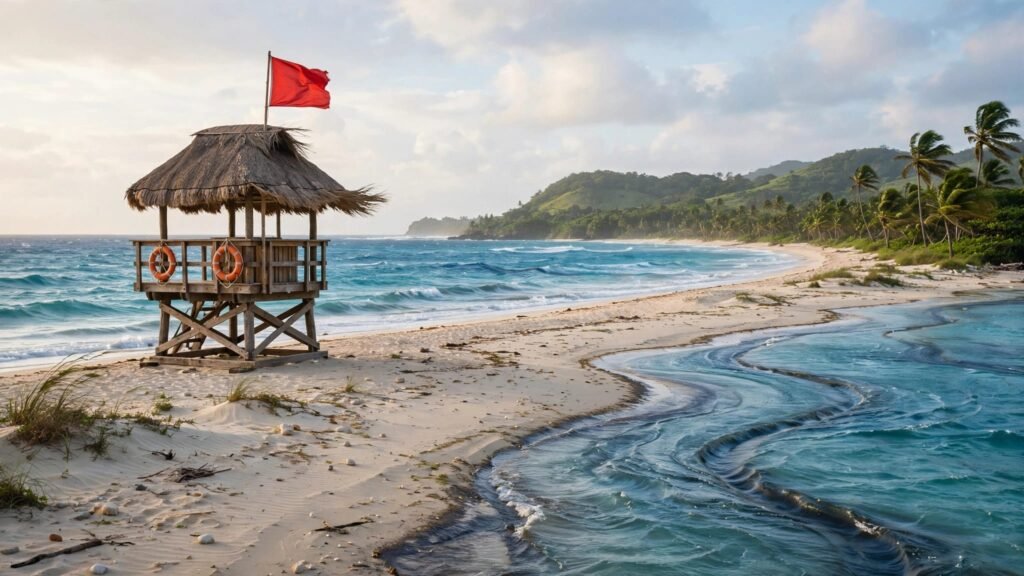
Caribbean beach safety requires swimming only in lifeguarded zones, understanding local warning flags, and identifying rip currents before entering the water. Always avoid swimming during double-red flag closures, hurricane season swells, or when sargassum seaweed and bacteria warnings are active.
🌴 Give Your Beach Trip a Backup Plan
Compare stays with pools and flexible rates, or book guided water activities matched to your comfort level. A booking never overrides a beach closure.
💡 When the hotel page opens: Type your destination, select your dates, and filter by “Free cancellation” and “Swimming pool” to ensure you have a safe backup if the ocean is rough.
🎯 Key Takeaways Before You Swim
- 🚩 Read the posted flag legend at local beaches; colors and meanings aren’t identical everywhere in the Caribbean.
- 👨🚒 Choose a swimming area watched by lifeguards, and keep children within close, touch-distance adult reach.
- 🌊 A smooth gap between breaking waves can hide a dangerous, fast-moving rip current.
- 🛟 If carried offshore, float and signal for help. Avoid fighting directly against the current to prevent exhaustion.
- 🦠 Keep open wounds out of seawater, and leave immediately when thunder, closures, or sargassum buildup interrupt your swim.
📍 Jump to the Right Answer
🚩 How Do You Read Caribbean Beach Flags?
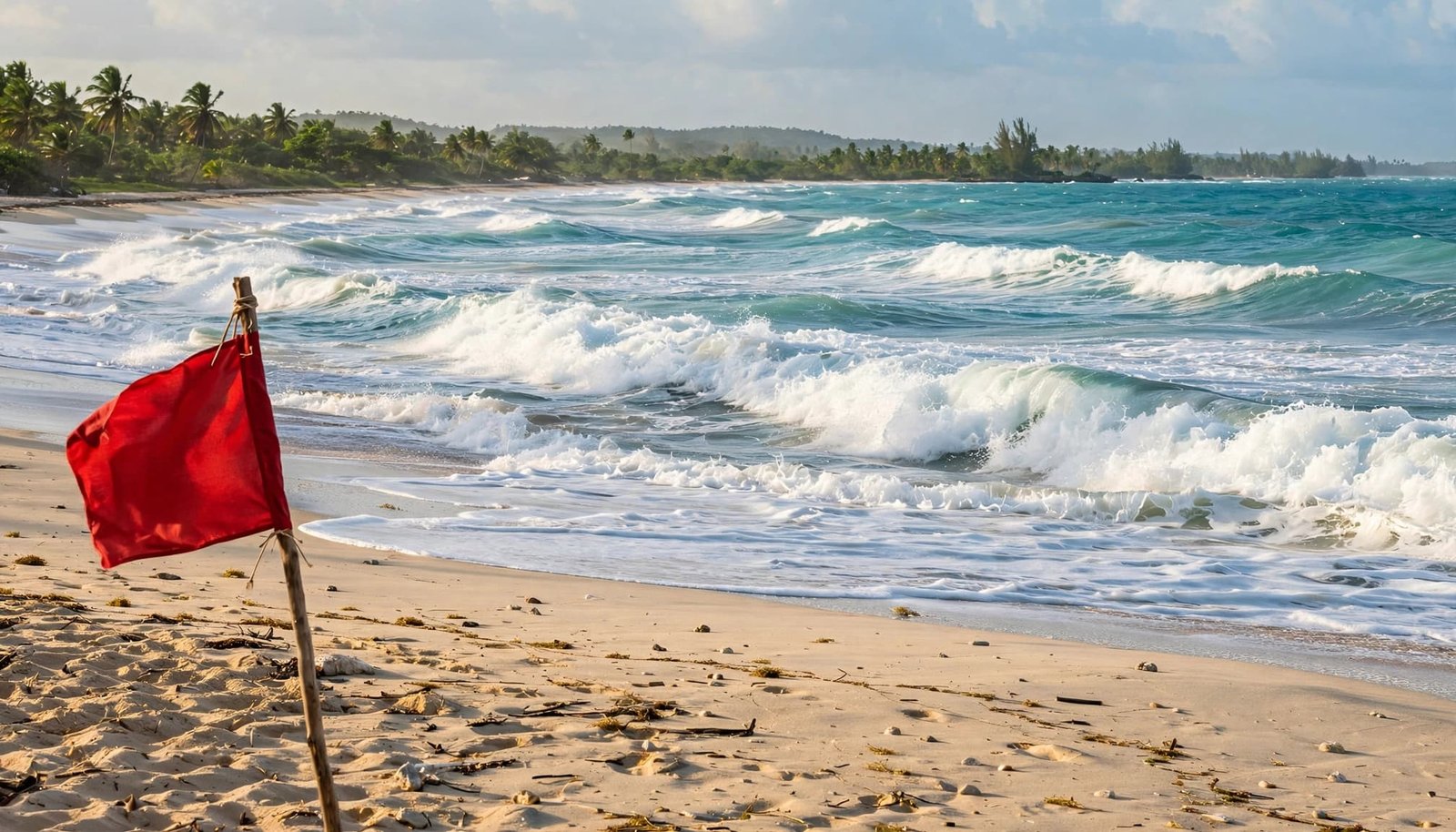
Beach flags are your first filter, but the local legend controls the meaning. Across the Caribbean, beaches use international-style symbols, simpler systems, or additional restrictions. A colored flag describes conditions or restrictions, but it doesn’t confirm that lifeguards are watching or that the water is safe. No flag means no information, not automatic permission. An empty flagpole, faded sign, or quiet stretch of sand offers no safety guarantee. If the forecast, flag, and visible conditions disagree, choose the more cautious decision. A sunny afternoon doesn’t cancel an offshore swell.
🌊 How Can You Spot a Rip Current?
Rip currents are narrow flows that carry water away from shore. In the Caribbean, the strongest can exceed 5 mph, faster than most swimmers can sustain. They move people offshore rather than pulling them underwater. Exhaustion and panic make swimming especially dangerous. Watch for warning signs such as a darker channel, a break in the line of breaking waves, or foam traveling seaward. A quieter-looking channel isn’t necessarily safe; waves may break less there because the water is deeper, while an outgoing current occupies the gap.
⚠️ Hidden Trap Warning: A smooth, flat gap between crashing waves is often the most dangerous part of the beach. It looks like the easiest place to swim, but it is usually the exact location of a fast-moving rip current pulling water back out to sea.
🆘 What should you do if a current carries you offshore?
Recognize an early warning sign: you’re swimming toward shore, but the beach keeps getting farther away. Stop spending energy on the same unsuccessful movement. Scripps oceanographer Falk Feddersen advises conserving energy and floating with the current, then returning once you’re clear of its active flow.
- Control your breathing and float or tread water. Keep your mouth above water.
- Raise one arm and call for help when you can do so without losing flotation.
- Swim parallel to shore to leave the narrow current. Don’t force the attempt if you’re tiring.
- Once free, swim toward shore at an angle away from the current.
- If you can’t escape, keep floating and signaling rather than exhausting yourself.
🏖️ Which Beaches and Seasons Need Extra Caution?
Travel reporting has identified strong-current hazards at Condado in Puerto Rico, Maracas and Manzanilla in Trinidad and Tobago, and Rendezvous, Little Bay, and Carr’s Bay in Montserrat. Treat those names as reasons for caution, not a complete danger list. Atlantic hurricane season runs June 1 through November 30. During hurricane season, distant storms can send dangerous swell toward the Bahamas before local rain or wind arrives. Winter also brings powerful North Atlantic swells to exposed Caribbean shores. December sunshine doesn’t guarantee flat water.
👨🚒 Why Do Lifeguards Matter More Than Beachfront Luxury?
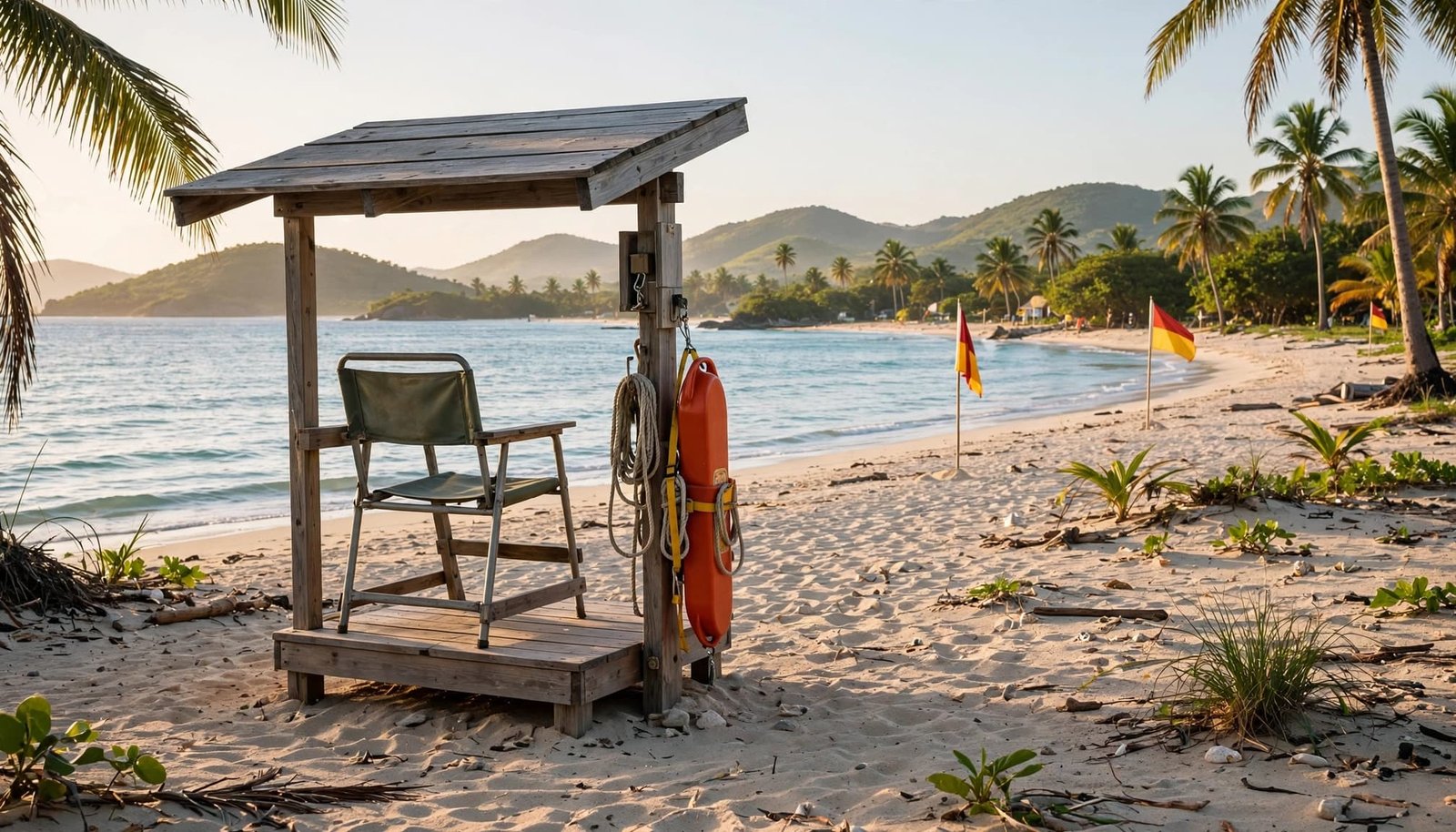
A beautiful resort frontage can sit beside an exposed shoreline. Towels, loungers, and a beach bar don’t confirm that lifeguards are on duty. Our practical rule is simple: choose an actively patrolled swimming area. Staffing shortages and limited patrol hours affect some Caribbean beaches. For families, assign one adult to watch the water without a phone or drink. Swap responsibility clearly. Solo travelers should avoid swimming alone. A busy beach isn’t a substitute for an attentive swimming buddy. And keep alcohol for after your final swim.
🦈 How Worried Should You Be About Sharks and Stingrays?
Sharks deserve sensible precautions, but shark attacks shouldn’t distract you from currents and drowning prevention. Only about 30 of more than 500 shark species have been associated with attacks on people. Avoid turbid water and shiny items that resemble fish scales. Stingray tours operate in Antigua, Turks and Caicos, and the Cayman Islands. In sandy shallows where stingrays may be present, shuffle your feet rather than taking heavy steps to avoid a defensive barb strike. A puncture needs prompt medical attention; don’t pull out a deeply embedded barb yourself.
🦠 What About Sargassum, Bacteria, and Water Quality?
🌿 When should you avoid sargassum seaweed?
Dense floating mats can obstruct swimming and hide hazards. Decaying piles can release irritating hydrogen sulfide gases, especially where seaweed accumulates heavily. Leave if the smell causes coughing, eye irritation, or breathing discomfort. Don’t let children play in decomposing piles. Also avoid swimming near storm drains, sewage outfalls, or discolored runoff after heavy rain.
🩸 Why do open wounds change the decision?
CDC guidance is direct: keep open wounds out of saltwater and brackish water. This includes recent tattoos, piercings, surgical wounds, and ordinary cuts. Vibrio vulnificus can cause severe wound infections and necrotizing fasciitis. Seek urgent care for spreading redness, severe pain, swelling, blisters, or fever after seawater exposure. Protect your trip with comprehensive travel medical insurance via VisitorsCoverage to cover emergency evacuations.
🎒 What Should You Book and Pack for Safer Beach Days?
A cheap room loses value when every usable swimming spot requires another taxi. Match your accommodation to your comfort in the water and access to beaches. Prioritize a pool backup, straightforward beach access, and flexible cancellation terms. For snorkeling, use our Caribbean shore-snorkeling guide to plan entry points, exits, and buddy arrangements. Never stand on coral. Our first-time Caribbean island guide helps balance beach priorities with transport and activities. Pack a whistle, sun protection, drinking water, and a waterproof pouch for valuables.
✅ Quick Win: Weak swimmers need properly fitted, activity-appropriate approved flotation, not inflatable toys. Water shoes protect against sharp coral but don’t prevent rip currents.
❓ People Also Ask: Caribbean Beach Safety FAQ
1. Is it safe to swim in the Caribbean Sea?
Yes, swimming is suitable at beaches when conditions, supervision, and your ability line up. Choose designated lifeguarded areas and obey closures. Sheltered water can be more comfortable, but no beach offers permanently safe ocean conditions.
2. Does a green flag mean children can swim alone?
No. Green commonly indicates lower hazard, not a guarantee of safety. Children still need attentive adult supervision while swimming. Keep young children and inexperienced swimmers within close reach, and leave when conditions worsen or patrol ends.
3. Should beginners book guided snorkeling tours?
A guided outing can help with equipment, site selection, and supervision. Choose an activity suitable for your ability. A guide can’t make rough water safe, and flotation doesn’t remove the need for an exit plan and a swimming buddy.
4. Does travel insurance cover swimming accidents?
Coverage depends on the policy and activity. Emergency treatment, evacuation, snorkeling, diving, and organized water sports may have different conditions or exclusions. Alcohol-related incidents and disregarding safety restrictions can also affect claims.
Support the Blog
If you love our travel guides and vacation tips, consider buying us a coffee to fuel the next adventure!
Buy Me a Coffee🌅 Keep the Beach Day Flexible
For Caribbean beach safety, check local flags, swim near active lifeguards, and skip swimming when conditions aren’t safe. A pool afternoon costs less than turning a warning into an emergency. Protect your booking budget, but don’t treat insurance as permission to ignore warnings. If the ocean is rough, utilize your resort’s pool or book a guided inland excursion instead.
🛡️ Finalize Your Safety & Logistics
Compare flexible hotels with pool backups, secure your medical travel insurance, and book guided water activities.
💡 When the insurance page opens: Enter your total trip cost and ensure the policy explicitly covers “Emergency Medical Evacuation” and “Water Sports”.
© 2026 I Need My Vacation. All rights reserved.