
🚢 Best Cruise Cabins for Seasickness: Location, Upgrades & Prevention
The best cruise cabin for seasickness is a lower-deck, midship stateroom, as this location experiences the least pitch and roll motion. While ocean-view windows help orient your senses, cabin location must be paired with proven preventative medications for reliable relief.
🚢 Compare Cruise Cabins & Ship Layouts
Focus on location, ship stabilizers, and sea days before getting excited about a premium suite upgrade.
💡 When the search page opens: Select “Cruises”, enter your departure port, and strictly filter by “Newer Ships” (which feature advanced stabilizers) and review the deck plans for midship cabins.
🎯 Key Takeaways for a Comfortable Cruise
- 📍 Choose a lower cabin near the ship’s midpoint, rather than a high room far forward or aft.
- 💊 Arrange suitable medicine before departure. Prevention generally works much better than treating established nausea.
- 🪟 Pay extra for a window or balcony only after comparing its physical location on the deck plan.
- 🗓️ Favor itineraries with fewer sea days, docked ports, and a weather-conscious sailing date.
📍 Jump to the Right Answer
💊 Which Seasickness Medicines Work Best for Cruises?
For travelers with a strong history of motion sickness, a suitable seasickness medicine is generally more dependable than wristbands or ginger. Discuss your health conditions, pregnancy status, and other medicines with a pharmacist or clinician before choosing your prevention strategy.
🩹 Is the scopolamine patch a good choice?
Transderm Scop is a prescription scopolamine seasickness patch worn behind one ear for up to three days. Plan ahead: allowing about eight hours is sensible, while the FDA prescribing instructions specify at least four hours before protection is needed. Side effects include dry mouth, blurry vision, drowsiness, and dizziness. Wash your hands thoroughly after applying or removing the patch, as medication transferred to your eyes can severely blur vision. Don’t cut the patch or wear multiple patches, and note that it isn’t suitable for people with angle-closure glaucoma or approved for children.
💊 How do Dramamine and Bonine compare?
Dramamine Original contains dimenhydrinate, usually taken 30 to 60 minutes before travel, with repeat doses every four to six hours. Bonine contains meclizine, generally taken about an hour beforehand with once-daily dosing. “Less drowsy” doesn’t mean non-drowsy. Dramamine also sells meclizine products, so always read the active ingredient. Drowsiness is the main trade-off, and alcohol can worsen it significantly. Never apply adult dosing to children.
⚠️ Hidden Trap Warning: Caribbean heat matters immensely. The FDA’s scopolamine heat warning describes reduced sweating and dangerous overheating. Seek immediate medical help for overheating, confusion, or severe dizziness while wearing a patch in tropical climates.
🌿 Which Drug-Free Methods Actually Prevent Motion Sickness?
👀 Does looking at the horizon help?
A distant, steady visual reference helps your eyes and balance system receive more consistent information. Choose a safe, sheltered outdoor seat near midship and look outward. Fresh air can ease discomfort, although it doesn’t change the ship’s physical movement. Stop reading and scrolling on your phone when nausea starts; a screen held close to your face provides the exact opposite visual reference your brain needs.
⌚ Do Sea-Bands prevent seasickness?
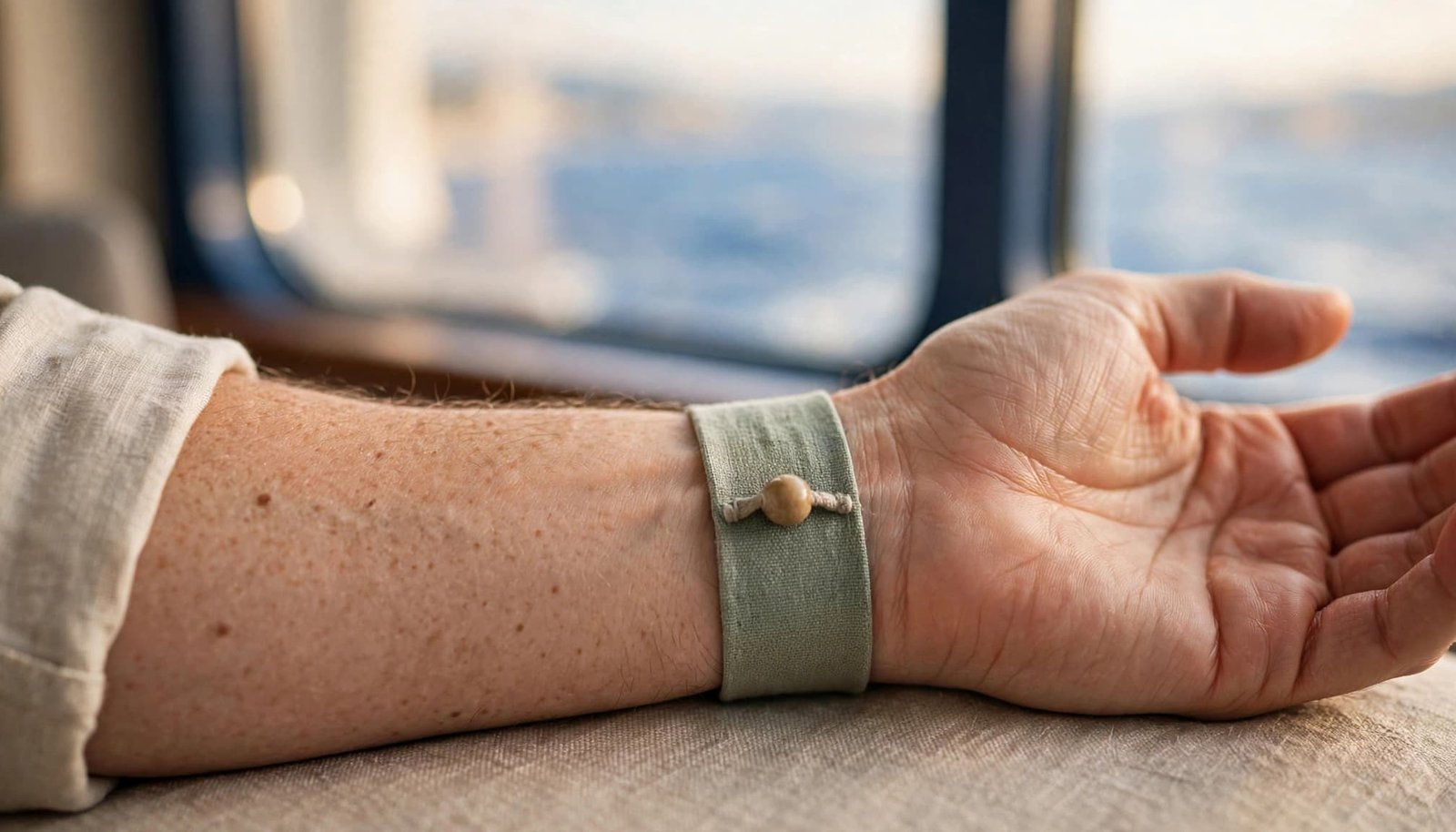
Sea-Bands are nonprescription acupressure wristbands where a plastic bead presses against the Nei-Kuan (P6) point on the wrist. They don’t cause medication-related drowsiness and can be used during pregnancy. However, clinical evidence for preventing severe motion sickness is inconsistent. Treat them as an optional backup, rather than the only protection for someone who regularly gets sick.
⚓ Why Does Cabin Location Affect Seasickness on a Ship?
Seasickness is motion sickness caused by conflicting sensory information. Your inner ear detects movement while your eyes may see a cabin interior that appears completely still. Ships move in three primary rotations: Pitch (bow and stern rising/falling), Roll (side-to-side rotation), and Yaw (turning around the vertical axis). Cabins near the midpoint travel through less up-and-down motion during pitching, and lower decks are closer to the ship’s roll axis than upper decks, drastically reducing the pendulum effect.
🗺️ Where Exactly Should You Book Your Caribbean Cruise Cabin?
My first choice is always a low, midship ocean-view cabin, provided it offers a clear view outside. Next comes a low, midship interior room or a moderately low midship balcony. Use this hierarchy when comparing cabins on the same ship. Remember: “Midship” means near the middle along the ship’s length, not necessarily a middle-numbered deck. Choose the lowest practical passenger accommodation deck near midship, but balance that against noise; a room beneath a nightclub or beside the engine machinery can make resting difficult.
🪟 Is an Ocean-View Window or Balcony Worth the Upgrade?
🌅 Can an ocean-view cabin help with nausea?
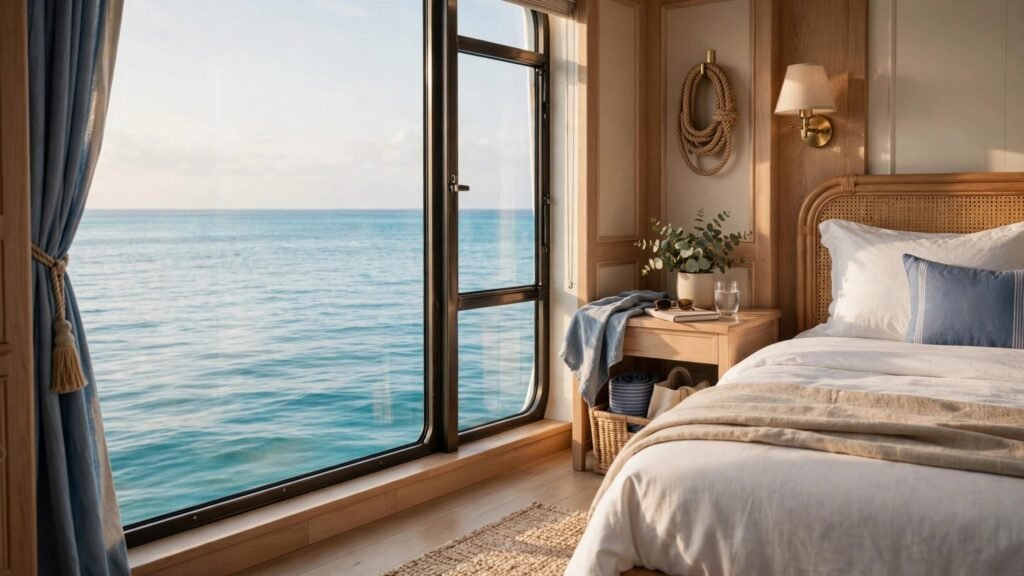
A genuine sea-facing window cabin gives you a horizon reference without leaving your room, which helps immensely. However, it only helps when the horizon is actually visible. An obstructed lifeboat window, nighttime darkness, or a view dominated by nearby ship structures limits that benefit. A virtual balcony (an interior screen) doesn’t provide a reliable real-world vestibular reference.
🛋️ Does a balcony prevent seasickness?
A balcony cabin gives you convenient outdoor air and a sea view, but it doesn’t reduce the cabin’s physical movement or replace medication. A high forward balcony may move violently compared to a lower midship interior cabin. For budget travelers, paying for a central location is vastly more useful than paying for private outdoor space.
✅ Quick Win: A balcony upgrade can actually put you farther from the ship’s center of motion. Always compare the actual room position on the deck plan before paying extra for “comfort.”
🚢 Do Bigger Cruise Ships Move Less in Rough Waters?
Larger ships often respond more gently to some waves, but there’s no reliable 75,000-gross-ton threshold above which lower cabins barely move. Gross tonnage measures enclosed volume, not weight. Modern ships above 100,000 gross tons commonly have stabilizers (retractable fins that counter rolling), but they don’t cancel pitching or vertical movement. Royal Caribbean’s Icon of the Seas and Carnival Celebration are examples of massive, stabilized ships, but neither offers a motion-free guarantee. For a motion-sensitive traveler, a larger stabilized ship, central cabin, and suitable itinerary form a stronger combination than any single feature.
🗓️ Which Caribbean Itineraries Reduce Motion Exposure?
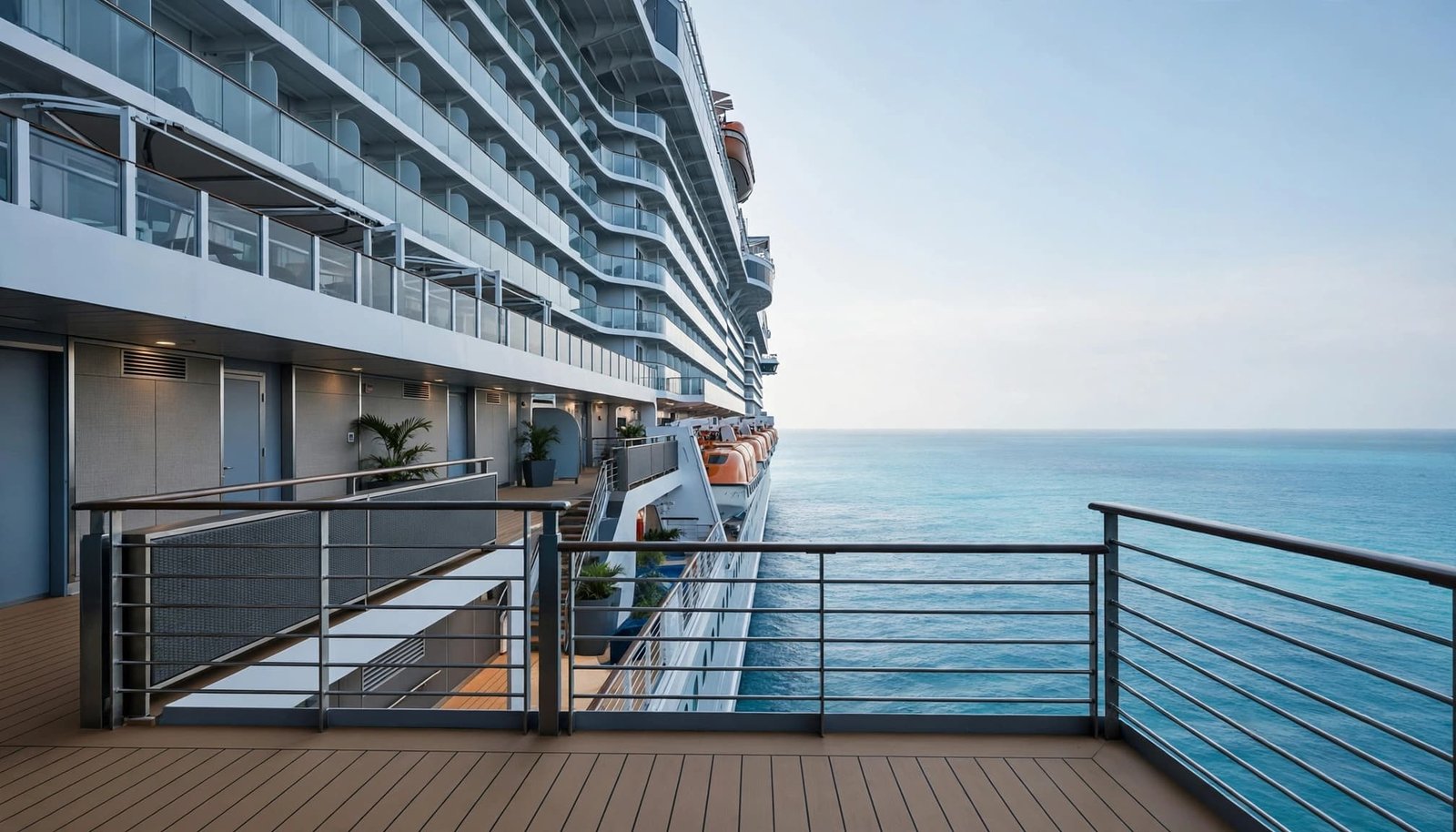
Port-intensive itineraries, with more port days and fewer sea days, usually reduce time exposed to open-water motion. Docked ports are highly useful because tender boats and small-boat excursions can create their own severe motion problems. Atlantic hurricane season runs June 1 through November 30; September and October bargains come with greater disruption and rough-sea risk. Read our Caribbean cruise weather guide for seasonal trade-offs. Southern routes featuring Aruba, Bonaire, and Curaçao (the ABC islands) sit below the hurricane belt and generally offer calmer waters. Furthermore, a storm reroute may add unexpected sea days, which our cruise itinerary changes guide explains in detail.
📝 How Should You Book Without Losing the Right Location?
Choose an assigned cabin number when location is a priority. A “Guarantee” (GTY) fare lets the cruise line allocate your room and may place you high, forward, or aft to fill empty space. Don’t assume a complimentary upgrade improves your motion situation; a larger room in a less suitable position is the wrong upgrade. Read our cruise booking timing guide to balance promotions against cabin choice. Finally, secure comprehensive medical coverage via VisitorsCoverage if onboard treatment or disrupted travel could strain your budget, though ordinary seasickness doesn’t automatically qualify for cancellation reimbursement.
🎒 What Should You Pack, and Does Ginger Actually Help?
Keep suitable medicine in your carry-on, together with its original packaging. Don’t depend on accessing your checked luggage before sailing. Ginger comes as powder, tea, pills, and candy; some studies report reduced motion-related nausea, but findings are mixed and there’s no established cruise-specific dose that reliably prevents seasickness. Green apples and crackers are optional comfort snacks, not proven medical treatments. Pack a small kit with optional wristbands, ginger candy, and sealable sickness bags.
🚨 What Should You Do If You Are Already Seasick on Board?
Act early rather than waiting through dinner. Stop reading, scrolling, and drinking alcohol. Move safely to a sheltered midship area on an open deck and look out toward the horizon. Sit with your head supported. Take small sips of fluid if tolerated, and use only medicines already approved for you. Contact the ship’s medical center if vomiting continues or you can’t keep fluids down; a physician may use suppositories or injections when tablets won’t stay down. Seek urgent care for confusion, severe pain, blood in vomit, or signs of severe dehydration.
- Stop all screen time and reading to remove conflicting visual signals.
- Move to a sheltered, midship outdoor deck and focus on the distant horizon.
- Sit or lie down flat with your head supported to stabilize your inner ear.
- Take small sips of water or electrolyte fluids to prevent dehydration.
- Visit the medical center if symptoms are severe or you cannot keep oral medication down.
❓ People Also Ask: Cruise Seasickness FAQ
1. Is the back (aft) of a cruise ship bad for seasickness?
Far-aft cabins can feel the ship’s pitching and sometimes experience propulsion vibration from the thrusters. They aren’t automatically terrible, but a lower midship cabin is the much safer, more conservative choice for someone with strong motion sensitivity.
2. Is an interior cabin better than a balcony for seasickness?
Location matters vastly more than the cabin category. A low midship interior cabin will feel much steadier than a high forward balcony. The only trade-off is losing a convenient, private view of the sea horizon to help orient your senses.
3. Does having a window mean I can skip seasickness medicine?
No. Seeing outside can help orient your brain, but it doesn’t stop the physical motion of the ship or reliably prevent severe symptoms. Green apples and ginger are not substitutes for the medical prevention plan recommended for your specific health history.
4. Should I choose the port (left) or starboard (right) side of the ship?
Neither side is consistently better for motion sickness, as wave direction and wind change constantly during a voyage. Always prioritize lower decks and a midship position before worrying about choosing the left or right side of the vessel.
Support the Blog
If you love our travel guides and vacation tips, consider buying us a coffee to fuel the next adventure!
Buy Me a Coffee🌅 Book the Location Before the Upgrade
A lower midship cabin gives you a sensible, stable starting point. Add appropriate medical prevention and an itinerary with manageable open-water exposure. I strongly recommend protecting those core choices before paying for extra square footage or a premium view. Choose the exact cabin number first, then decide which upgrades actually deserve the rest of your vacation budget.
🚢 Secure Your Midship Cabin Today
Compare ship deck plans and lock in a lower-deck, midship stateroom before they sell out.
🏨 Compare Stays & Cruises on Booking.com💡 When the page opens: Filter by your exact travel dates and look for “Ocean View” or “Balcony” cabins located in the middle third of the ship’s deck plan.
© 2026 I Need My Vacation. All rights reserved.