Thailand Travel Deals for Summer 2026: Your Complete Booking Guide
What are the best Thailand travel deals for summer 2026? Start with flexible flight searches to Bangkok, Phuket, or Chiang Mai, then compare hotel rates in popular destinations before booking fixed-price airport transfers. Book flights first for maximum savings, add accommodations with free cancellation, and secure transfers to avoid arrival hassles and hidden costs.
🎯 Quick Answer: If I want the best Thailand trip deal fast, I search flexible flights first, compare round-trip and multi-city options, look at hotel sales in Bangkok, Pattaya, Phuket, and Chiang Mai, book airport transfers early for fixed pickup and free waiting, and only add car rentals if I actually need a road trip.
Affiliate Disclosure: This article contains affiliate links. If you book or purchase through these links, I Need My Vacation may earn a small commission at no extra cost to you. We only recommend services we genuinely trust and use ourselves to help you plan the perfect trip. Thank you for your support!
I start with flights because that’s where a lot of the savings sit. I compare round-trip fares, one-way flights, and multi-city trips to find the best value. When I’m testing dates, I usually search Bangkok first, then Phuket, Chiang Mai, Pattaya, and Krabi. That gives me a quick picture of where prices are soft and where they spike.
✈️ Find Cheap Thailand Flights Now
Compare flexible dates and save on round-trip, one-way, or multi-city bookings
Bangkok’s Suvarnabhumi Airport (BKK) is usually the cheapest entry point with the most flight options. Phuket International Airport (HKT) works well if you’re heading straight to the beaches. Chiang Mai International Airport (CNX) is perfect for northern Thailand exploration. I always check all three to compare prices before booking.
💡 Pro Tip: Use our vacation budget calculator to estimate your total Thailand trip cost before booking flights.
Which Thailand Destinations Have the Best Hotel Deals?
I check hotel deals next, because the room rate can change the whole budget. The best picks usually come from the main tourist spots first, then the smaller towns. The places I look at most often are Bangkok, Pattaya, Phuket, Chiang Mai, Koh Samui, Krabi Town, Hua Hin, and Chiang Rai.
I also pay attention to longer stays. If I’m staying 2 nights or more, I look for extra savings, free cancellation, and properties close to the beach, city center, or transport.
🏨 Compare Thailand Hotel Deals
Find the best rates in Bangkok, Phuket, Pattaya, Chiang Mai and more
Bangkok offers the best city deals with endless shopping and street food. Phuket and Krabi provide beachfront value with island-hopping access. Chiang Mai delivers budget-friendly culture and mountain views. Pattaya works for quick beach getaways from Bangkok. Each destination has distinct advantages depending on your travel style.
Should I Book Airport Transfers in Thailand?
I like airport transfers when I land late, travel with luggage, or just want one less thing to think about. The main benefit is simple: fixed pickup points and free waiting. These are the transfer options I’d check first: Standard car from $19.87, Medium car from $24.74, Minivan from $25.36, and Medium van from $59.06 (all taxes and fees included).
I’d use this most in Phuket, Bangkok, Chiang Rai, Hat Yai, Koh Samui, Krabi Town, Pattaya, and Chiang Mai. It’s the easiest way to move from the airport to the hotel without haggling or waiting around.
🚖 Book Thailand Airport Transfers
Fixed prices, free waiting, and hassle-free pickup at all major airports
I only book a car when the trip needs it. If I’m staying in one city, I usually skip it. If I’m hopping between beaches, viewpoints, and smaller towns, a rental can make more sense. I’d check car rental options in Bangkok, Phuket, Chiang Rai, Chiang Mai, Khon Kaen, Hat Yai, Udon Thani, Ubon Ratchathani, Krabi Town, and Koh Samui.
If the inventory looks empty for my dates, I switch back to transfers or check another pickup city. No point forcing it.
⚠️ Important: Thailand drives on the left side of the road. Make sure you’re comfortable with this before renting. An international driving permit may be required.
What Should I Pack for Thailand Summer Travel?
For Thailand, I keep my packing list simple. I want light clothes, easy shoes, and one or two things that make travel days less annoying. I usually bring a universal travel adapter, a compact day bag, a power bank, lightweight clothes, and a refillable water bottle.
If I need a basic travel accessory before I leave, I use Amazon for it:
Must-haves: Light, breathable clothing for hot weather, comfortable walking shoes, sunscreen (SPF 50+), insect repellent, a scarf or shawl for temple visits, and a waterproof bag for boat trips. Don’t forget copies of your passport and travel insurance documents.
Book Your Complete Thailand Trip
Find flights, hotels, transfers, and more in one place
I’d start with the flight search, pick the best arrival city, then lock in the hotel and airport transfer before I start shopping for extras. That keeps the trip clean, affordable, and easy to manage.
I start with flights, then compare hotels in Bangkok, Phuket, Pattaya, and Chiang Mai. After that, I add transfers only if I need them. That keeps the total cost under control. Booking flights and hotels together can sometimes save 10-15%.
Which Thailand destinations usually have the best hotel deals?
Bangkok, Pattaya, Phuket, Chiang Mai, and Krabi often give me the widest range of prices. If those are full, I move to Koh Samui, Hua Hin, or Chiang Rai. Bangkok typically has the most competitive rates year-round.
Should I book airport transfers in Thailand in advance?
Yes, I do if I’m landing late, traveling with family, or carrying a lot of luggage. It makes arrival day much easier, and I know the price before I land. Pre-booked transfers cost $19-60 depending on vehicle size.
🇹🇭 Ready to Explore Thailand?
Start planning your perfect Thailand adventure today with the best deals on flights, hotels, and transfers.
🏝️ Caribbean Vacation Deals 2026: When I Book for the Best Price
Caribbean prices move fast, especially for winter sun and spring break dates. One day the resort feels like a steal, the next day the same room costs enough extra to pay for airport tacos, two cocktails, and a cab.
If I’m trying to save money without settling for bad weather, I don’t wait and hope. In May 2026, this is a smart time to shop shoulder-season deals for late spring and early summer, and it’s also the right moment to start planning ahead for peak winter travel.
🎯 TL;DR – Your Caribbean Booking Strategy
I usually book Caribbean trips 3 to 6 months ahead
For December through April, I book 6 months out or earlier
Best value months in 2026: May, early June, and early November
Cheapest months: September and October (but storm risk is higher)
Affiliate Disclosure: This article contains affiliate links to Aviasales, Booking.com, Expedia, Agoda, Trip.com, GetYourGuide, Klook, Economybookings, QEEQ, Compensair, and AirHelp. If you book or purchase through these links, I Need My Vacation may earn a small commission at no extra cost to you. We only recommend services we genuinely trust and use ourselves to help you plan the perfect trip. Thank you for your support!
🗓️ What the 2026 Caribbean Booking Window Looks Like
Here’s the short answer I keep coming back to: 3 to 6 months ahead is usually the sweet spot for Caribbean deals. That window gives me enough time to catch decent airfare, compare resorts, and avoid the ugly prices that show up when popular dates start filling.
💡 Pro Insight: Recent pricing coverage, including Yahoo Travel’s Caribbean price drop window, points to the same pattern. Off-peak trips can price well closer in, but peak Caribbean travel usually rewards earlier planning.
⏰ Why 3 to 6 Months Ahead Usually Saves Money
Flights are usually the first thing to get weird. A fare can jump fast, then sit there like it owns the place. When I book a few months ahead, I have more flight times, better layovers, and a better shot at lower total trip cost.
The same goes for resorts and all-inclusive packages. Popular islands, good room categories, and family-friendly dates don’t stay open forever. If I’m watching all-inclusive Caribbean vacations for 2026, I know the better-value rooms often disappear first.
🎄 When I Would Book Even Earlier for Peak Season
If I want to travel from December through April, I don’t play chicken with the calendar. That’s peak season, and it’s expensive for a reason. The weather is more reliable, the water is calmer, and everybody else wants the same thing.
⚠️ Peak Season Rule: For Christmas week, New Year’s, spring break, and school vacation periods, I book 6 months ahead or more. If those dates matter, I move first and fine-tune later.
Waiting for a miracle sale during peak season usually means worse flights, fewer resorts, and prices that only go one direction.
💰 The Cheapest Months to Visit the Caribbean in 2026
The cheapest month isn’t always the best month. I care about value, not bragging rights for buying the absolute lowest rate and spending the whole week tracking storms.
📊 Quick Breakdown: Price vs. Weather Tradeoffs
Travel Window
Price Level
Weather Tradeoff
My Take
May to early June
Low-Moderate
Warm, some rain later in June
⭐⭐⭐⭐⭐ Best overall value
September
Lowest
Highest storm risk
Only if very flexible
October
Very Low
Better balance than September
⭐⭐⭐⭐ Strong budget pick
Early November
Moderate-Low
Weather starts improving
⭐⭐⭐⭐⭐ Sneaky good deal
If I want the cleanest mix of savings and comfort, May and early November stand out.
🌸 Why May and June Can Be a Smart Sweet Spot
May is one of my favorite windows, and that feels even more true right now in May 2026. Peak-season crowds have eased, prices often soften, and the weather is still good enough for a real beach trip, not a compromise trip.
💡 My Take: Early June can work the same way, though I get a bit more cautious later in the month. Price of Travel’s look at cheap months versus weather lines up with what I see most years: late spring to early summer can hit a sweet spot between cost and comfort.
🌀 Why September and October Are the Lowest-Price Months
If my only goal is the cheapest possible rate, September and October usually win. Resorts cut prices because demand drops, and plenty of travelers don’t want to roll the dice during hurricane season.
⚠️ Weather Reality: September is the riskier play. October often gives me a better bargain-to-stress ratio. Recent May 2026 travel snapshots show that October can still bring strong discounts with a little less weather anxiety than September.
🍂 Why November Can Be a Strong Value Month
November doesn’t always get enough love. The first half of the month, in particular, can offer lower rates, lighter crowds, and improving weather before holiday pricing barges back in.
I like early November for people who want a deal but don’t want peak storm-season nerves. Florida Getaways’ off-peak timing guide makes the same basic point: late fall can be a smart compromise when budget still matters but weather starts looking better.
🎯 How I Choose the Best Time Based on My Travel Goal
I don’t book the “best” month in some abstract way. I book the month that matches what I care about most: weather, budget, crowd levels, or water clarity.
☀️ Best Weather Goal
Book: December through April
Drier days, clearer water, calmer seas. Perfect for snorkeling and easy beach time. Book earlier and expect to pay more.
💰 Best Deal Goal
Book: April, May, June, early November
Cut the price without turning the trip into a weather gamble. Shift by a week for even better savings.
🧘 Fewer Crowds Goal
Avoid: Christmas, New Year’s, Easter, spring break
🔐 What I Book First to Lock In the Lowest Total Trip Cost
Once I pick the travel window, I don’t book in random order. That is how a “good deal” turns into death by a thousand add-ons.
✈️ Step 1: Start with Flights
Airfare usually moves first, so I start by checking flexible-date Caribbean flights on Aviasales. If I see a fare I can live with, I hold onto that baseline and build the trip around it.
🛡️ Step 3: Watch for Free Cancellation and Price Drops
✅ Smart Move: Early booking works better when I keep my exits open. A refundable rate gives me room to breathe if a better deal shows up later or if plans shift. I don’t want a cheap room that turns expensive the second life happens.
🚗 Step 4: Plan Extras Early on Islands with Limited Supply
Some islands are easy. Others have tight inventory on the things that matter: rental cars, airport transfers, catamaran trips, or a good beachfront room.
Smaller islands and peak-season dates get squeezed first. When I find solid current Caribbean deals, I also check whether the extras are likely to sell out, because a cheap base rate can stop looking cheap once the only transfer left costs a fortune.
The booking rule I trust most is still the simplest one. For most Caribbean trips in 2026, I book 3 to 6 months ahead, and for winter or holiday travel, I go even earlier.
If I want the best value, I don’t chase the absolute cheapest headline. I look at May, early June, and early November, where price, weather, and crowd levels usually get along.
If I’m serious about saving, I start comparing dates now and lock the trip before prices move again.
❓ FAQ: Caribbean Vacation Deals
Should I wait for a last-minute Caribbean deal in 2026?
I usually don’t. Last-minute deals still exist, but for popular islands and winter dates, waiting often means fewer choices and worse flights. Check current flight prices now.
Is May a good month for a Caribbean vacation?
Yes, for a lot of travelers it’s one of the best value months. Rates often drop after peak season, crowds thin out, and the weather is still beach-friendly. Browse May resort deals.
Is October too risky for the Caribbean?
It depends on my comfort level. October can be one of the cheapest months, but I only book it if I’m flexible and willing to monitor weather. Compare October packages.
What matters more, the month I travel or how early I book?
Both matter, but travel month sets the ceiling. Early booking helps most when I’m aiming for peak season or I care about specific resorts, room types, and flight schedules.
What if my Caribbean flight gets delayed or canceled?
🌺 Hawaii Flight Deals in 2026: Cheapest Months to Book Early
Hawaii is one of those trips people dream about for years, then nearly talk themselves out of after seeing flight prices. I get it. A cheap fare to Honolulu can feel like a mirage—there one minute, gone the next.
If I want the best shot at a deal, timing does most of the heavy lifting. Hawaii fares usually soften in the shoulder seasons and climb fast in summer and around the holidays. That pattern is still holding in 2026, which means a little planning can save real money.
🎯 TL;DR – Your Hawaii Flight Strategy
My favorite cheap-flight months for Hawaii in 2026 are May, September, and October
The best value windows are late April to early June and September to mid-December
I start watching fares 3 to 6 months ahead, and book summer trips about 8 to 10 weeks out
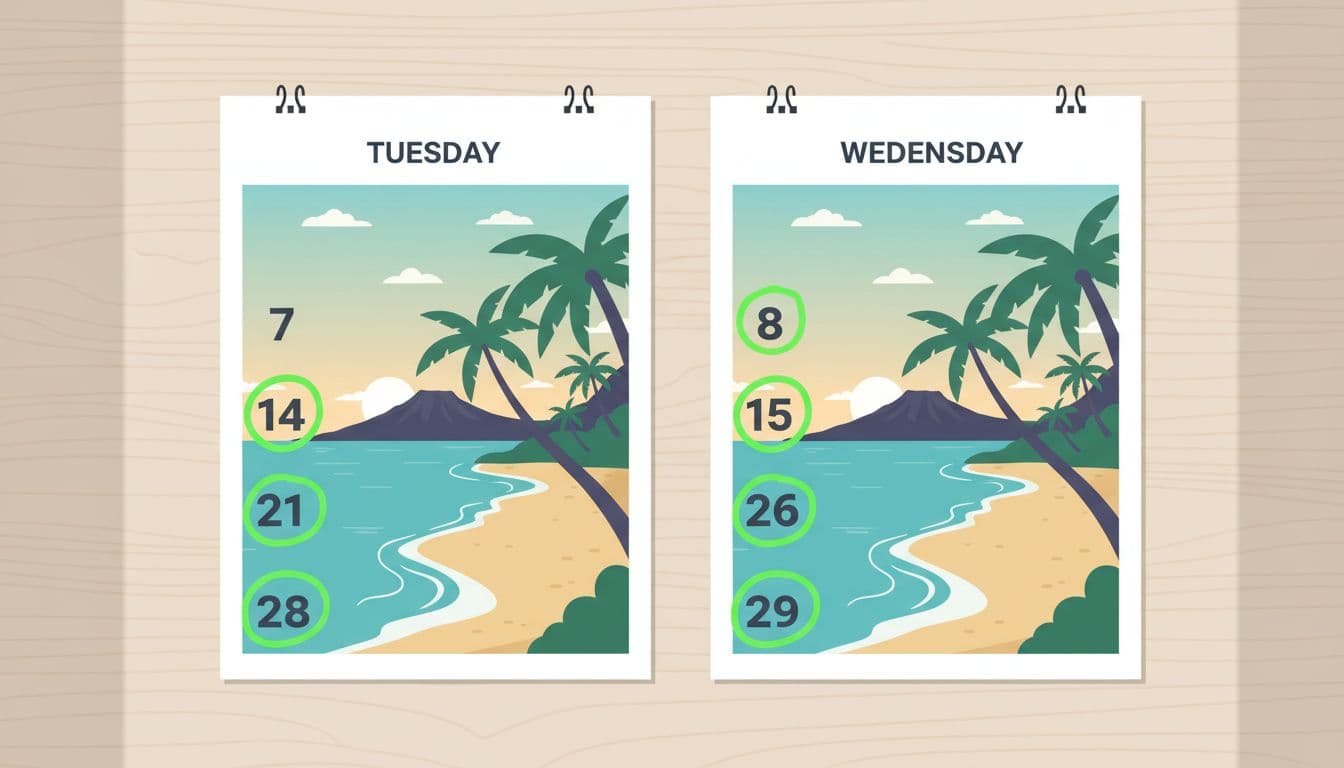
Tuesday and Wednesday departures often beat Friday and Saturday prices
Affiliate Disclosure: This article contains affiliate links to Aviasales, Booking.com, Expedia, Agoda, Trip.com, GetYourGuide, Klook, Economybookings, QEEQ, GetRentacar, Compensair, and AirHelp. If you book or purchase through these links, I Need My Vacation may earn a small commission at no extra cost to you. We only recommend services we genuinely trust and use ourselves to help you plan the perfect trip. Thank you for your support!
📅 Which Months Are Usually Cheapest for Hawaii Flights in 2026?
When I watch Hawaii airfare patterns, the same three months keep rising to the top: May, September, and October. Those are the pockets where demand often eases up, but the trip still feels like Hawaii—warm, sunny, and worth the flight.
💰 Current 2026 Pricing: Real-time fare trends show September and October as the cheapest overall, with May close behind. West Coast: $320-$520 round-trip. East Coast: $580-$850.
From the West Coast, round-trip summer fares are often around $320 to $520, while East Coast travelers can see $580 to $850. That gap is why California, Oregon, and Washington flyers usually spot the lowest deals first, but the timing logic works from anywhere in the U.S.
🗓️ Quick Reference: Best Hawaii Travel Periods
Travel Period
Value Rating
Why It Works
Late April to early June
⭐⭐⭐⭐ Strong
Spring shoulder season, lighter demand
May
⭐⭐⭐⭐⭐ Excellent
Before summer rush, perfect weather
September to October
⭐⭐⭐⭐⭐ Best
After summer, before holidays
November to mid-December
⭐⭐⭐⭐ Good
Cheaper than holiday weeks
That matches broader fare tracking from Cheapflights’ Hawaii fare data, which also shows summer and holiday periods pricing much higher than fall.
🌸 Why May Often Gives Me the Best Balance of Price and Weather
May is the month I circle first when I want savings without sacrificing the trip. It’s warm, the islands aren’t slammed yet, and flights are often cheaper than what I see in June and July.
💡 My Take: May feels like catching Hawaii before everyone else remembers it exists. Beaches are calmer, hotel choices are better, and airfare hasn’t hit peak-season muscle yet.
🍂 Why September and October Are Often the Cheapest Months Overall
September and October are usually where the best bargains live. Summer break is over. Holiday travel hasn’t started. That dead zone between peaks is where flight prices often loosen up.
I also like these months because the savings don’t stop with airfare. Hotels are easier to book, crowds are thinner, and the whole trip feels less rushed. If price matters most, fall is usually the cleanest win.
⏰ When Should I Book Early to Get the Best Hawaii Flight Deals?
I don’t book Hawaii flights a year out unless it’s a holiday trip. Most of the time, my best results come from watching fares 3 to 6 months ahead and then booking when the numbers finally look right.
🎯 The Sweet Spot for Summer 2026:
8 to 10 weeks before departure is your golden window. June trip? Book late March/April. July? Early May. August? Late May/early June.
For summer 2026, current pricing patterns still support a sweet spot of 8 to 10 weeks before departure. That means a June trip often books best in late March or April, July by early May, and August by late May or early June. Once you drift too close to departure, the price curve tends to get ugly fast.
Momondo’s recent Hawaii search data also points to cheaper fall pricing and better value when travelers avoid peak dates, especially around weekends and school breaks. You can see that pattern in Momondo’s Hawaii flight trends.
“If I’m flying at Thanksgiving, Christmas, or New Year’s, I book as early as I comfortably can. Those weeks do not reward patience.”
📆 How Far Ahead I Should Book for Summer, Fall, and Holiday Trips
☀️ Summer Trips
Start checking early. Get serious about booking around 8-10 weeks before. Those seats move because families lock in dates.
🍁 Fall Trips
More breathing room. September and October let you watch fares, compare airports, and book without panic.
🎄 Holiday Trips
Don’t mess around. Late December is one of the priciest windows. Early booking matters more than perfect timing.
⚠️ Why Waiting Too Long Can Make Hawaii Fares Jump Fast
Airlines don’t need many cheap seats to sell before the leftovers get expensive. That’s the whole problem. Hawaii routes, especially nonstop flights, can shift from “pretty fair” to “why is this $300 more?” in a hurry.
📊 The Data: Prices often start climbing after roughly 54 to 70 days before departure. Inside three weeks, late bookers can pay about 22% more.
Waiting also shrinks your choices. Suddenly the only “deal” left lands at midnight or adds a long layover you didn’t want.
📅 What Days and Flight Times Usually Save the Most Money?
The month matters most, but smaller timing choices can shave more off the total. If I’m flexible, I look at departure day and flight time next.
💰 Best Days to Fly to Hawaii
Tuesday & Wednesday
Save 10-20% compared to Friday/Saturday flights
In 2026, Tuesday and Wednesday flights still tend to beat Friday and Saturday for Hawaii trips. Real-time pricing trends show potential savings in the 10% to 20% range, depending on route and season.
🌙 Why Midweek Departures Are Often Cheaper Than Weekend Flights
Weekend flights carry more vacation demand. That’s the plain answer. More people want to leave after work on Friday or start a trip on Saturday, so those fares hold higher.
When I shift the same trip to Tuesday or Wednesday, I often get a lower price without changing the hotel length at all. Same island, same number of nights, less money.
🌃 When Red-Eye Flights to Hawaii Are Worth It
A red-eye from the West Coast can be a sneaky good deal. I’ve seen overnight departures save around $40 to $80, and they can give you a full first day once you land.
✈️ The Trade-off: Sleep vs. savings. If I know I’ll be useless without rest, I skip it. But if the goal is landing in Hawaii with more daylight and lighter airfare, red-eyes deserve a look.
KAYAK’s Hawaii fare trends also line up with that broader pattern of cheaper off-peak travel and pricier summer months.
🔍 How I Compare Flight Deals So I Do Not Overpay
A cheap Hawaii fare can still be a bad deal. I’ve learned that the hard way. The headline price means nothing if the bag fees are ridiculous, the layover is brutal, or the arrival time burns the first day of the trip.
So before I book, I compare a few basics side by side. I check total price, not just base fare. I compare nonstop against one-stop. I look at nearby departure airports if I have them. And I always open the month view, because moving the trip by one or two days can change the price more than people expect.
If you want a second layer of price checking, Skyscanner’s Hawaii fare search is useful for spotting date swings across a wider calendar.
✅ What to Compare Before I Book a Hawaii Ticket
My Hawaii Flight Checklist:
✅ Total trip cost, after baggage and seat fees
✅ Layover length, especially on eastbound returns
✅ Nonstop versus one-stop value
✅ Departure airport, if I can drive to another one
✅ Arrival time in Hawaii, because half a day still counts
If I’m booking a connection-heavy itinerary, I also keep Compensair for eligible flight disruption claims in the back of my mind. Hawaii isn’t the place where I want a missed connection to turn into chaos.
🎯 How Flexible Dates Can Turn a Fair Fare into a Great Deal
This is the simplest trick I know, and it works all the time. Shift the trip by a day or two and check again.
💡 Pro Tip: A Friday outbound and Sunday return can price like a luxury purchase. Move that same trip to Tuesday and Wednesday, or slide it a week later into early October, and the fare can look like a completely different market.
That’s why I don’t judge a Hawaii trip by one date search.
If I want Hawaii without overpaying, I keep the plan simple. I aim for May, September, or October, book before the rush, and avoid peak summer and holiday weeks when price is the top priority.
The biggest mistake is waiting for some magical last-minute drop. Hawaii usually rewards people who watch early, stay flexible, and book when a good fare appears.
❓ FAQ: Hawaii Flight Deals
Is September the cheapest month to fly to Hawaii in 2026?
Most signs point to yes. September is showing up as the cheapest overall month more often than any other, with October close behind. Check September flights now.
How early should I book Hawaii flights in 2026?
I like a 3 to 6 month watch window for most trips. For summer, 8 to 10 weeks before departure is often the sweet spot.
Are nonstop flights to Hawaii worth paying more for?
Usually, yes, if the price gap is reasonable. A nonstop can save hours, lower stress, and protect your first day on the island.
What is the cheapest day to fly to Hawaii?
Tuesday and Wednesday are often the best bets. Friday and Saturday usually cost more because more leisure travelers want those dates.
What if my Hawaii flight gets delayed or canceled?
If the disruption is serious and your itinerary qualifies, I look at AirHelp for flight delay claims. Long Hawaii trips are expensive enough without eating avoidable costs too.
⏰ Time to Make Your Hawaii Dream a Reality!
The best deals won’t last. Start planning your perfect Hawaiian getaway today!
How to Use AirHelp to Get Paid for Your Delayed Spring Break Flight (Passenger Rights Deep Dive)
Spring break travel has a special talent for falling apart at the gate. One minute I’m scanning the departure board, the next I’m watching my flight bounce from Gate B12 to C4, then back again. The line at customer service curls around a kiosk like a theme park ride, and my “quick connection” turns into a missed one.
Here’s the calm truth: cash compensation isn’t based on how miserable the delay feels. It depends on where you flew, which airline you flew, and why the delay happened.
In this guide, I’ll share my simple plan to check if getting paid is realistic (especially for EU and UK protected routes), what proof I save, and how I use AirHelp when the airline won’t play nice.
📋 TL;DR
Who can get paid: Many EU and UK protected flights arriving 3+ hours late (when the airline is at fault).
What to save: Boarding pass, booking email, screenshots, and receipts for meals or hotels.
What AirHelp does: Checks eligibility, files the claim, follows up, and may escalate legally.
Typical timeline: Often 3 to 4+ months, sometimes longer if the airline fights back.
Affiliate Disclosure: This article contains affiliate links. If you book or purchase through these links, I Need My Vacation may earn a small commission at no extra cost to you. We only recommend services we genuinely trust and use ourselves to help you plan the perfect trip. Thank you for your support!
I treat the gate like a paperwork moment, because details disappear fast, created with AI.
When a Delayed Flight Turns Into Real Cash: Passenger Rights in Plain English
I think of flight compensation like a lock with three tumblers. Route, arrival delay, and cause all have to click into place.
In the US, most delays don’t trigger automatic cash compensation. You may get rebooked, refunded (in some cases), or offered meals and hotels depending on the situation, but “cash for a delay” usually isn’t a built-in rule.
However, EU and UK rules can still apply even for spring break trips that start in the US. For example, if I fly into the EU or UK on an EU or UK airline, those protections may follow me across the Atlantic. AirHelp’s overview of EU and UK passenger rights rules is a helpful reference when I’m sorting out which law might apply.
Here’s the simple version of the EU261 and UK261 delay setup many travelers run into:
Rule (EU261/UK261)
Trigger
Airline fault required?
Typical payout range (per person)
Arrival delay compensation
3+ hours late at final destination
Yes
About £220 to £520, based on distance and delay
AirHelp commonly focuses on flights from the past 3 years for its eligibility tools and claim handling, which is why I don’t wait until the memory fades.
If the delay reason lives outside the airline’s control, the cash claim usually dies there, even if the delay wrecked my whole trip.
“Extraordinary circumstances” usually means things like severe weather, air traffic control restrictions, or airport closures. On the other hand, crew scheduling, many technical problems, and maintenance or operational issues often sit on the airline’s side of the fence.
While I’m planning trips, I also try to reduce the odds of a missed connection by picking routes with fewer moving parts. If you want ideas for easier itineraries, I keep a running list of cheap quiet spring break trips that tend to be simpler to reach.
What I save the moment a delay starts
Boarding pass (or a screenshot of it)
Booking confirmation email
Screenshots of the delay and new departure time
Receipts for meals, hotels, and transport
The spring break version of “hurry up and wait,” created with AI.
How I Use AirHelp to File a Claim, Step by Step
When I’m tired, traveling with family, or dealing with a complicated reroute, I don’t want a second job arguing with an airline. That’s when I use AirHelp. It’s a service that checks eligibility and handles the back-and-forth, and if needed, it can push the claim further.
Run the free eligibility check and confirm the route and date.
Enter flight details (airline, flight number, and final destination).
Upload documents (boarding pass, booking email, and any reroute info).
Describe what happened in plain language (when the delay started, what I was told).
Add expenses if I paid out of pocket for food or lodging.
Track status while AirHelp contacts the airline.
Get paid if you win, usually by bank transfer or another payout method.
Timelines vary, but in real life I expect 3 to 4+ months. Some airlines respond quickly. Others stretch it out, then suddenly fold when pressure rises.
AirHelp’s fee model is typically no win, no fee, and the cut can be roughly 25 to 50 percent depending on the case and whether legal action becomes necessary. I’m fine with that trade when the alternative is me giving up halfway through.
When I skip AirHelp
Sometimes I keep it direct:
US domestic delays where EU and UK rules don’t apply
Situations where the airline already offers fair cash or an easy resolution
Times I only need a fast refund, not a compensation fight
Then I shift into prevention mode for the next trip. For spring break, I look for flexible dates, nonstop options, and longer connection buffers.
I file while the details are fresh, before the airline story changes, created with AI.
Common Spring Break Claim Mistakes That Cost You Money
Spring break delays feel chaotic, so it’s easy to make small choices that later cost real cash. These are the mistakes I watch for:
Taking a voucher without reading terms: Some offers can affect what you can claim later.
Not tracking arrival time: Compensation often depends on arrival at the gate, not takeoff.
Tossing the boarding pass: I keep paper or screenshots until the whole trip is settled.
Not asking for the delay reason in writing: Even a short message from staff helps.
Mixing up delay vs cancellation rights: The rules and remedies can differ.
Filing when weather caused it: If it’s truly extraordinary circumstances, the claim may fail.
Missing time limits: Don’t wait until you can’t prove anything.
Skipping receipts: Meals, hotels, and transport can matter for reimbursements.
Filing twice in conflicting ways: Airline claim plus a claim company can create a mess.
A smart move for protecting the rest of the trip is booking stays that won’t punish you for a late arrival. I lean toward refundable options when spring break flights are packed.
Sometimes, yes. I focus on the final arrival delay at my last destination. If that’s 3+ hours late and the airline caused it, I may still qualify.
What if the airline says “weather”?
I don’t accept that line automatically. I ask what the specific issue was, and I keep screenshots and messages. If it’s truly weather or air traffic control, cash compensation often won’t apply.
Can I claim for a family of four?
Yes, compensation is usually per passenger, not per booking. I keep every boarding pass and attach proof for each traveler.
How far back can I claim?
It depends on which rules apply, but AirHelp commonly focuses on flights from the past 3 years for its standard tools. I submit sooner because evidence gets harder with time.
How long does payout take?
I plan for months, not weeks. Many claims resolve around 3 to 4+ months, and harder cases can run longer.
Do I still get meals and hotel help at the airport?
Often, yes, especially during long waits or overnight delays. I ask at the desk and keep receipts either way.
Wrap-Up: Get Your Claim Started and Book Smarter for Next Time
When a spring break flight goes sideways, I stick to one flow: check eligibility, gather proof, submit the claim, then wait. That’s it. The hardest part is starting while the details are still clear, so I don’t lose track of times, receipts, and what the airline actually said.
If your delay hit that 3-hour mark and the cause smells like an airline problem, run the AirHelp check today and decide if it’s worth pursuing.
Then I protect the landing, too. A late arrival feels even worse when I’m hunting for a ride at midnight.
On my last long flight, I did that familiar airport shuffle—stiff legs, dry eyes, and a sad snack that cost more than it should’ve. I remember thinking, “I’m already here, in a major hub city… why does this feel like wasted time?”
That’s when stopovers started to make sense. A stopover is a planned break in your trip, often anywhere from about 24 hours up to several days (sometimes longer), that can add little to no extra airfare on certain airlines and routes. A layover is just the connection time between flights, usually a few hours, and it’s not always designed for leaving the airport.
This guide is my low-stress shortlist of affordable stopover cities for 2026 that are easy to exit, easy to enjoy, and actually worth the effort. I’ll share quick picks, simple booking steps, and budget-friendly mini-itineraries, so your “dead time” turns into a small trip you’ll remember.
TL;DR: My top 5 affordable stopover picks for 2026
Reykjavik: Icelandair stopover often costs no extra airfare—you just cover lodging.
Panama City: Copa Stopover can add days in Panama without changing the fare much.
Helsinki: Finnair routes make it a clean, calm “reset” city between continents.
Istanbul: Big sights on a budget, and Turkish Airlines can be stopover-friendly (rules vary).
Abu Dhabi: Etihad sometimes runs stopover promos—watch for hotel deals (confirm at booking).
Not sure where to start? Search flexible multi-city flights to any of these cities—you’ll often find stopover-friendly fares with free cancellation.
Affiliate Disclosure: This article contains affiliate links. If you book or purchase through these links, I Need My Vacation may earn a small commission at no extra cost to you. We only recommend services we genuinely trust and use ourselves to help you plan the perfect trip. Thank you for your support!
Why Stopovers Beat Airport Waiting (And Save You Money)
A good stopover city does two things well: it saves you money (or at least doesn’t inflate your fare), and it saves your sanity (simple transit, easy sightseeing, not a complicated puzzle).
Before you choose, remember this: stopover rules can change by fare type, travel dates, and route, and some perks only show up during booking. If you want a broader directory to compare programs, I keep a tab open with resources like this airline stopover program guide by Andrew Kunesh, Jessica Merritt, and Keri Stooksbury while I shop.
Once you’ve picked a city, always compare refundable hotel options near the city center—many offer free cancellation and late check-in, which is essential for short stopovers.
Top 8 Affordable Stopover Cities for 2026
Use this quick-reference table to compare stopover cities by time and budget. For route details, airline tips, and mini-itineraries, see the city guides below.
When I plan a stopover, I’m not trying to “do a destination.” I’m trying to feel human again while still making my main trip.
First, I pick the length. My two sweet spots are 18 to 36 hours (one proper sleep) or 2 to 3 nights (enough to explore without rushing). If possible, I arrive in the morning or early afternoon. Landing late makes everything harder—food choices shrink, transit slows, and the bed becomes the only plan.
My baggage strategy is blunt: carry-on only when possible. If I must check a bag, I verify whether it will be tagged to my final destination. For short stopovers, luggage storage is worth the small fee to keep hands free.
I always verify visa and entry rules using official government sources for my passport, and I view travel insurance as “missed connection protection,” not just medical coverage. Then I map the airport-to-city transfer before booking the hotel. A hotel near a central transit hub with breakfast included and flexible cancellation lowers stress fast.
My Stopover Booking Checklist (Copy-Paste Ready)
Confirm airline’s stopover rules for my specific route and fare type
Add stopover using “multi-city” search (not round-trip)
Choose hotel with late check-in and free cancellation policy
Map airport transfer time + backup option (ride app, taxi, transit)
Confirm luggage plan (through-check, storage, or carry-on only)
Screenshot all confirmations and save offline
Set two alarms for return to airport (with buffer time)
Check entry requirements for my passport nationality
Red flags I never ignore:
Tight connections on return leg (under 3 hours)
Split tickets without protection
Last flight of the night
Peak immigration times at arrival
Peak season pricing that kills affordability
Landing after midnight with no transit plan
Packing Essentials That Make Stopovers Easier (and Cheaper)
Stopovers feel cheap when I don’t re-buy basics at airport prices. These go-to items reduce friction fast without taking much space. And don’t forget to confirm your hotel’s luggage storage policy—many offer free storage even before check-in, so you can explore hands-free.
All Amazon links below use my affiliate tag so I earn commissions on qualifying purchases:
What I skip for stopovers: Too many outfits, heavy shoes, and “just in case” items that turn my bag into a brick. If it doesn’t support sleep, walking, or charging my phone, it stays home.
Why Stopovers Are the Smart Traveler’s Secret Weapon in 2026
Stopovers solve three major travel pain points simultaneously: they reduce jet lag by breaking up long flights, maximize vacation value without extra airfare, and transform stressful connection time into meaningful experiences. With rising flight costs in 2026, airlines like Icelandair, Copa, and Qatar Airways continue to offer structured stopover programs because travelers increasingly value experiences over speed. The key is selecting cities with efficient airport-to-city transit, manageable entry requirements, and concentrated attractions near accommodation—exactly what this guide delivers.
Turn Your Next Long Flight Into a Mini-Vacation
My decision rule stays simple: route first, then the stopover program perk, then my stress level. When I follow that order, I stop forcing airport hours to “count,” and I start treating them like a real travel bonus.
You don’t need a fancy plan to win a stopover. You need one good night of sleep, one walkable neighborhood, and one small list of sights that feel like a postcard.
Stopover vs layover: what’s the difference for booking?
A layover is your connection time between flights (usually hours). A stopover is a planned break (24+ hours to several days) that may cost little/no extra airfare on certain airlines when booked correctly. To access stopover pricing, use multi-city search and confirm rules during checkout.
How do I book a stopover without paying extra airfare?
Start with airlines that fly through your desired hub city. Book as multi-city (not round-trip) and compare prices. Programs like Icelandair Stopover often add no extra airfare—just hotel costs. Always verify during booking as rules vary by route, date, and fare class.
Do I need a visa to leave the airport on a stopover?
It depends on your passport nationality and destination country. Many stopover cities offer visa-free entry for short stays (e.g., Qatar for 96 hours, Turkey for certain passports). Always check official government immigration websites before booking non-refundable hotels. When in doubt, choose a stopover city with visa-free entry for your passport.
Are stopover cities safe for solo travelers?
Most featured cities rank high for traveler safety. Reduce risk by: arriving in daylight when possible, staying near central transit hubs, using official taxis/ride apps, avoiding isolated areas late at night, and sharing your itinerary with someone. Cities like Reykjavik, Helsinki, and Doha are particularly solo-traveler friendly.
Do airlines really give free hotel nights on long layovers?
Some airlines (like Qatar Airways, Turkish Airlines, Emirates) occasionally offer free hotel stays for long connections on eligible tickets, but availability is limited and rules change frequently. Never book based on outdated blog posts. Always verify current policies during booking or contact the airline directly. Treat any free hotel as a bonus, not a guarantee.
What’s the best stopover length for a long flight?
For most travelers: 18–36 hours (one good sleep + half-day exploration) or 2–3 nights (enough to explore without rushing). Less than 12 hours only works if the airport is very close to the city center with efficient transit and quick immigration. When unsure, choose the shorter option and keep plans simple.
Best Time to Book Last-Minute Flights 2026 (Price Patterns, Day-by-Day Checklist, and When to Stop Waiting)
Last-minute trips never start calmly. For me, it’s usually one of three moments: a wedding invite that lands late, a burnout week where I can’t stare at one more email, or a surprise stretch of time off that feels like a lifeline. That’s when the flight search begins, chasing last-minute deals, and the numbers on the screen can feel like they’re taunting me.
Here’s the hard truth about last-minute flights in 2026: airlines don’t price like they used to. Fares move faster, “empty seats” don’t automatically mean “cheap,” and waiting can cost real money. Still, I’ve learned there’s a way to play this with flexible travel without panic-buying at the worst moment.
In this guide, I’m sharing the real price patterns I see most often, a simple day-by-day checklist for the booking window of the final 30 days, and the rule I use to decide when to stop waiting and book.
Affiliate Disclosure: This article contains affiliate links to Booking.com, Trip.com, Expedia.com, aviasales.com, and Amazon. If you book or purchase through these links, I Need My Vacation may earn a small commission at no extra cost to you. We only recommend services we genuinely trust and use ourselves to help you plan the perfect trip. Thank you for your support!
The truth about last-minute flight prices in 2026 (and why the old myths don’t work)
People still repeat the same old line: “Airlines will drop prices if the plane isn’t full.” I wish that were reliable. In 2026, it’s not. Airlines price for what they think you’ll pay, not for what they wish they could sell.
When I say “last-minute,” I mean inside 21 days of departure. That’s the zone where fares can jump overnight, sometimes even in the same day. Airlines now react quickly to demand signals: search volume, booking pace, seasonality, and how many seats are left in each fare bucket, especially for domestic flights and international flights. If a flight looks half-empty, it might still be priced high because the airline expects late-booking business travelers, event travelers, or people with no flexibility.
That’s why the “clear your cookies” myth doesn’t help much. The bigger drivers are inventory and demand, plus dynamic pricing that updates constantly. Recent coverage of Google Flights airfare insights (summarized in this report) backs up what I see in real searches: booking windows still matter, especially for domestic trips, and close-in booking usually costs more (Google Flights timing summary).
If you’re shopping last-minute, you’re not trying to find the mythical secret day when flights become cheap. You’re trying to avoid the moments when prices usually step up hard, and you’re trying to keep your options open long enough to catch a fair fare.
If you want a fast reality check, compare prices right now on Expedia.com and Trip.com, then decide your next move:
If you also want one place to bundle options quickly (flight plus hotel), I use this page for Last‑minute flight deals 2026 when I’m trying to move from “browsing” to “booking.”
The three price cliffs that hit fast, 21 days, 14 days, and 7 days
An at-a-glance timeline of the common 21-day, 14-day, and 7-day price cliffs (created with AI).
Over and over, I see the same pattern: the 21-day Goldilocks Window is safer than 14, and 14 is safer than 7. It’s not magic, it’s how airlines manage remaining seats. As the departure date gets close, cheap fare classes sell out, and what’s left is priced for urgency.
Here’s what I do at each cliff:
At 21 days out: I decide if this trip is “must happen” or “nice if cheap,” then I set my max price.
At 14 days out: I widen the search (nearby airports, one-stops) and I prepare to book quickly if I see a fair fare.
At 7 days out: I stop expecting a deal, I focus on reducing damage (timing, fees, baggage, and total trip cost).
When last-minute deals still happen (and when they almost never do)
Deals can still happen, but they’re picky. Off-peak travel, less popular routes, and flights at odd hours have the best chance. On the other hand, peak travel weeks punish procrastination. Spring break, major holidays, and summer weekends are the classic traps where waiting often means paying more and flying worse.
I keep this mini checklist in my head:
Waiting can pay off when: it’s an off-peak week, I can fly Tuesday or Wednesday, I’m open to a one-stop, and I have 2 or 3 alternate airports.
Red flags that prices will jump: holiday weeks, big events in the destination, only a few nonstop flights per day, and tight seating (few options left at decent times).
If you need a season-by-season view of how far ahead people are booking in 2026, this breakdown is useful for context, even if you’re already inside the window (2026 booking timing guide).
Best time to book a last-minute flight: the simple timing rules I use
I don’t try to outsmart every price move. I follow a few timing rules that keep me calm and keep my wallet from taking the biggest hit.
First, the context: for many trips, “best time to book” isn’t last-minute at all. Data-based reporting keeps pointing back to a similar range: domestic flights often price best about 1 to 3 months out, and international flights often do better around 2 to 8 months out (with a common sweet spot around 3 to 5 months). Once I’m inside 21 days, the booking window is a gamble and I focus on controlling what I can.
The biggest lever is flexibility, particularly in shoulder season versus peak times. If I can adjust even one thing (departure day, nearby airport, time of day, one-stop vs nonstop), I usually find a better option than someone locked into Friday at 5:00 pm.
Also, I stay honest about day-of-week patterns. Midweek travel often costs less, and it’s been widely reported for 2026, but it’s not a law of nature. Sometimes the cheapest flight is the weird one at 6:10 am, and sometimes Sunday night drops because demand shifts. This overview is a helpful reminder that day-of-week savings exist, but they vary route to route (cheapest days to fly in 2026).
When I’m ready to move from “watching” to “winning,” I check hotel and flight bundles on Booking.com to lock the whole trip.
If I’m 30 to 21 days out, here’s the sweet spot that still gives me options
This is when I still have leverage. I can watch prices without feeling trapped.
What I do fast:
Set 2 price alerts (one for my ideal flight, one for a “good enough” backup).
Test alternative airports (even 60 to 90 minutes away can change fares).
Compare one-stop vs nonstop because last-minute nonstop prices can turn ridiculous.
Check a date grid for cheaper travel dates, then decide if shifting one day is worth it.
If I’m inside 14 days, my goal changes from “deal hunting” to “damage control”
Inside two weeks, I stop chasing perfection. I start protecting the trip. I widen airports, accept early departures, and I consider split tickets if it’s meaningfully cheaper (but only if layovers are safe and bags won’t be a mess).
This is also when I watch add-ons like a hawk. A “cheap” base fare can lose its charm fast once you add a carry-on, a checked bag, and seat selection. I compare total trip cost, not just the headline price.
My day-by-day checklist for the final 30 days (so I don’t panic-buy at the worst moment)
A simple countdown routine for the final month before departure (created with AI).
I like a plan that feels like brushing my teeth. Small, consistent checks beat one giant spiral at midnight when chasing last-minute deals. Here’s the routine I use, grouped by time windows so it stays doable.
30 to 22 days: Track prices daily with a price monitoring tool, but don’t obsess. Identify your top two itineraries, then set your budget ceiling.
21 to 15 days: This is the decision zone. Set flight alerts for your travel dates. If the fare is fair for your route and season, take it. If not, widen airports and flight times.
14 to 8 days: Reduce risk. Start prioritizing total cost (bags, seats, and change fees). Consider one-stops or one-way tickets.
7 to 3 days: Sprint mode. Short daily checks only. Grab “good enough” before options collapse.
48 hours to day of: I only wait this long if I truly don’t care where or when I fly, or I’m willing to cancel the trip.
Here’s the compact version I keep on one screen for flexible travel:
Window
What I do
What I avoid
“Book now” trigger
30 to 22 days
Price alerts, compare airports, set budget
Refreshing all day
Price is under my ceiling
21 to 15 days
Narrow to 2 options, watch totals
Betting on a huge drop
Any “fair” fare appears
14 to 8 days
Expand times, accept one-stop
Ignoring bag fees
Nonstop jumps, one-stop still fair
7 to 3 days
20-minute daily check
Panic-buying at night
Only bad times left
48 hours to day of
Buy only if necessary
Hoping for empty-seat deals
Price rises twice in 24 hours
When I’m in that final-month window, I compare side-by-side on Expedia.com and Trip.com, then I book the option that fits my ceiling.
The “7-day squeeze” feeling is real, which is why I rely on rules instead of vibes (created with AI).
The 21-day decision, the moment I either book, or I choose a different plan
At 21 days, I treat it like a fork in the road. If I’m still waiting, it’s a choice, not a habit.
My quick “if this, then that” rules:
If it’s a must-attend trip, then I book when the fare is reasonable, not perfect.
If prices are high and schedules are shrinking, then I switch airports or add a one-stop.
If the destination is flexible, then I price-check a second city and compare total trip cost.
If nothing looks good, then I shorten the trip by a day or shift to midweek.
The 7-day sprint, what I check every morning until I hit ‘purchase’
When I’m inside a week, I keep it simple and I keep it short. I check once in the morning, set a 20-minute timer, and stop when it rings.
My routine:
Check a price calendar for cheaper day pairs.
Check nearby airports (both ends).
Check one-stop options with sane layovers.
Confirm baggage and seat fees, then compare totals.
Re-confirm my max price, and buy if it’s met.
The timer matters. It prevents the late-night doom scroll that leads to bad decisions.
When to stop waiting and book (even if it doesn’t feel perfect)
A “book now” moment, when the numbers finally match the plan (created with AI).
Waiting feels productive because it’s a decision you don’t have to make yet. But last-minute flight shopping has a hidden cost: once the good departure times disappear, you don’t just lose access to cheap airfare, you pay more and also lose comfort.
These are my “book now” triggers:
Seats are clearly thinning (choices drop, prices rise).
The fare hits my ceiling (including bags and seat selection).
It’s a peak travel week (holiday travel, spring break, summer vacation).
Only terrible flight times remain (overnights, brutal layovers).
Hotel prices are rising too, and the whole trip is getting expensive.
I’m traveling with kids or anyone who needs predictability.
It’s an important event, and showing up matters more than saving $40.
Here’s the simple trade-off I remind myself of:
Choice
Pros
Cons
Waiting
Chance of a small dip
Higher risk, fewer good round-trip flights
Booking today
Certainty, better schedules
Might miss a minor drop
If you want more big-picture context on 2026 pricing trends, including how fares have been moving overall, this reporting is a useful reference point (when to book flights in 2026).
When my triggers hit, I lock it in on Booking.com or cross-check quickly on Expedia.com, then I stop shopping. If cash prices are too high, I check award space using points and miles from airline loyalty programs as a backup strategy.
The budget line rule, I pick my number, and I don’t second-guess it
I set one ceiling price for the whole ticket, not just the base fare. That means bags, seats, and any add-ons I know I’ll pay. If the fare comes in at or under that number, I buy and I move on. Peace of mind has value, and I treat it like part of the deal.
The peak date rule, if it’s a holiday week, I stop waiting sooner
Peak dates are ruthless because demand is baked in. For holiday weeks, I aim to book before 21 days when I can, and I rarely wait past 14 days. Inside two weeks on a peak route, the odds shift hard against you.
Conclusion
Mastering the Best Time to Book Last-Minute Flights 2026 doesn’t reward wishful thinking, it rewards timing and flexibility. I watch the three cliffs (21 days, 14 days, 7 days), I use a calm 30-day routine so I don’t panic-buy at midnight, and I follow clear “stop waiting” triggers when the trip matters.
If you’re close to departure, don’t aim for perfect. Aim for booked within the optimal booking window to snag last-minute deals. Lock in your trip now on Booking.com while you still have decent flight times and choices. Then cross-check quickly on Trip.com and Expedia.com to confirm you’re not missing a better routing. Finally, secure travel insurance to protect your high-cost last-minute booking.
FAQ
What’s considered a last-minute flight in 2026?
For my planning, “last-minute” means within 21 days of departure for domestic flights and international flights. That’s when price jumps become more common and good flight times disappear fast.
Is it cheaper to book flights at the last minute in 2026?
Sometimes, but it’s not the norm, especially during peak travel. Last-minute deals on domestic flights are most likely on off-peak routes with extra empty seats, not on holiday weeks or high-demand cities.
Should I book at 21 days out or wait longer?
If the price is within your budget and the schedule works, the 21-day mark is the Goldilocks Window to book. If you wait and hit 14 days, your options usually shrink and prices often rise.
What’s the best site to book last-minute cheap airfare for round-trip flights and hotels together?
When I want to lock the whole trip quickly, I start with Booking.com for trip planning and compare round-trip flight options across platforms. If you’re ready, book now.
What should I do if I’m booking within 7 days?
Switch from “deal hunting” to “damage control.” For flexible travel, expand airports, accept one-stops, set up flight alerts, and compare total costs with bags and seats included, then check options on Expedia.com.
Do flights get cheaper at midnight or on a specific weekday?
There’s no reliable “magic hour.” Midweek travel can be cheaper on many routes, but prices move based on demand and inventory, so check price history on Google Flights for your travel dates, set a budget ceiling for your travel dates, and book when it’s met.
Best Last-Minute International Flights Under $500 Round Trip (2026 Deals) That I’d Actually Book
My calendar doesn’t care that I’m burned out. Deadlines still hit, laundry still piles up, and winter can feel like it’s set to “gray” for weeks. When I get that itchy, restless feeling for a winter getaway, I don’t want a someday trip. I want a plane ticket that gets me out of my routine in the next two weeks, without making my bank account cry. That’s why I hunt for best last-minute international flights under $500 round trip, those cheap flights under $500 and I book fast when the math on that round-trip flight works.
In January 2026, sub-$500 round trips do exist for spontaneous getaways, especially to Mexico, parts of the Caribbean, and Canada. Europe can happen too if I’m flexible and realistic about timing and connections. In this guide, I’m sharing the exact way I screen deals (so a “cheap fare” doesn’t turn into an expensive mess), plus real-world destination examples I’d watch right now and a simple plan you can copy today.
Affiliate Disclosure: This article contains affiliate links to Booking.com, Trip.com, Expedia.com, aviasales.com, and Amazon. If you book or purchase through these links, I Need My Vacation may earn a small commission at no extra cost to you. We only recommend services we genuinely trust and use ourselves to help you plan the perfect trip. Thank you for your support!
Checking a sudden fare drop on a phone at home, created with AI.
What defines real last minute deals for international travel?
When spotting last minute deals, I mean 0 to 14 days out, sometimes up to 21 if the route has a lot of seats or a seasonal lull. Unlike domestic flights, international trips see prices swing wildly. One morning it’s $289 round trip, by lunch it’s $517, and by dinner it’s gone.
A true under-$500 deal needs to be round trip (or “return”), including outbound and inbound flights. Unlike one-way tickets that often double the cost, round trips keep things efficient.
But 2026 pricing often hides the real cost in small add-ons. If the fare is Basic Economy from budget airlines, I treat it like a menu item with extra charges, not a full meal.
Here’s the checklist I use before I book:
Total trip cost stays under $500, including taxes and charges, not just the base fare.
One stop max for shorter international routes (Caribbean, Mexico, Canada); I’ll consider a two-stop indirect flight only if savings are huge and layovers are sane.
Layovers aren’t risky, enough time to handle delays, especially on the return.
Bags are clear, confirm carry-on rules and personal item size.
Airport logistics make sense, a “cheap” flight to a far airport can cost more in transfers than savings.
For deeper info on smart last-minute timing and traps, check NerdWallet’s breakdown on how to find cheaper last-minute flights. Flexibility wins, and fees matter.
The hidden charges that can push a $399 flight over $500
The fastest way a $399 fare turns into regret is forgetting the small stuff. Usual suspects include seat selection fees (big for couples). Bags hit hard. Some low fares allow only a personal item; carry-on costs extra each way. Checked bags vary by airline and route. Add “ground truth” costs: airport transfers, tolls, parking, overnight layovers. A long connection may need a hotel. Far airports mean $60 to $120 rides each way.
Questions before booking:
What’s included: personal item, carry-on, checked bag?
Pay for seats, or accept random assignment?
Arrival airport close to my stay?
Layovers safe but not wasting a day?
Return so early it needs an expensive taxi?
My fast search setup that finds deals in 10 minutes
I keep it quick since deals vanish fast. Start with flexible dates (plus or minus two days helps), check nearby airports. A different departure can save $120; the drive is worth it.
My filter stack to compare flight deals is simple:
Round trip
1 stop max
Decent departure dates (avoid 5:00 a.m. unless it saves a lot)
Layovers that don’t ruin the trip (pay $40 more over losing a day)
I cross-check itineraries across travel sites since pricing and policies differ. Compare on Expedia, Trip.com, and aviasales.com; pick clearest baggage rules and best cancellation terms. For 2026 tools, see Frommer’s cheapest airfare search sites for 2026.
Using a flexible-date calendar to spot the cheapest week, created with AI.
Last-minute international flights under $500 round trip I’d book in early 2026
Prices change fast, so I’m sharing these as inspiration, not promises. Still, in current January 2026 searching, it’s realistic to find under-$500 round trips to international destinations like Mexico, the Caribbean, and Canada. Europe is harder, but not impossible, especially when I’m okay with midweek travel and a one-stop routing.
The emotional payoff is the whole point. I’m not chasing a number on a screen. I’m chasing warm air that smells like salt, street food that ruins airport snacks forever, and that first quiet night in a hotel room where nobody can reach me.
Fast wins close to home, Mexico, Canada, and the Caribbean for quick escapes
Cancun (often $200 to $315 round trip in January): This is one of my favorite “book it and breathe” options. Popular airlines like United, Delta, American, and JetBlue compete hard here.
Toronto (around $391 round trip example): Toronto feels like a clean break from my usual routine, great food, neighborhoods, and museums.
San Juan (around $396 round trip example): San Juan gives me color, ocean air, and incredible food fast. It’s a great “I need warmth now” move.
That moment you realize you can be in the sun this weekend, created with AI.
Can you find Europe deals for under $500?
Europe under $500 round trip isn’t an everyday thing, but cheap airfare shows up when I stay open to odd timing. Midweek departures help. One-stop flights from budget carriers like Frontier Airlines help.
Scanning midweek dates to make Europe prices behave, created with AI.
How I turn a cheap flight into a full trip without blowing my budget
A cheap flight is only step one. Once I find a fare I trust, I secure lodging next so the rest of the trip has a home base. I also keep my “budget leak” list short: airport transfers, daily food, and one paid experience. That’s it. Everything else is walking, markets, and free views.
Comparing booking options quickly before a fare disappears, created with AI.
Packing essentials I buy for last-minute international trips
Universal travel adapter, buy on Amazon: Don’t land with a dead phone.
Compression packing cubes, buy on Amazon: Keep your bag small to avoid carry-on fees.
Carry-on toiletry bottles set, buy on Amazon: Refill in two minutes.
Portable charger power bank, buy on Amazon: Airport outlets are always taken.
RFID travel wallet, buy on Amazon: Keep passport and cards in one spot.
Time to Make Your Dream Vacation Happen
Last-minute doesn’t have to mean reckless. When I stay flexible on dates, check nearby airports, and screen for baggage, I can find cheap flights under $500. Ready to make this trip real? Book your stay on Booking.com now and then lock in your round-trip flight.
FAQ
Are last-minute international flights under $500 round trip real in 2026? Yes, they are real in 2026, especially to Mexico, the Caribbean, and Canada. Europe works too with flexible dates. Always watch total cost, not just base fare. Factor in fees to keep it a bargain.
What does “last-minute” mean for flight deals? For me, last-minute is 0 to 14 days before departure. Prices drop suddenly from unsold seats and vanish fast.
How do I avoid Basic Economy mistakes when I book cheap? I always confirm carry-on rules, seat fees, and cancellation terms before paying. Read the fine print every time.
Should I book my hotel or flight first on a last-minute trip? I book the flight first since it’s scarce last-minute, then hotel right after on Booking.com.
Which site is best for comparing last-minute flights quickly? Start with Expedia.com, then cross-check dates on Trip.com. It catches the best deals across airlines.
Can I really do Europe under $500 round trip? Yes, score cheap airfare to Europe under $500 round trip by going midweek and using shoulder season windows.
How many days do I need for a last-minute international trip to feel worth it? I find 3 to 5 nights perfect for quick international escapes. Enough to relax and recharge without hassle.
My Guide to Booking Cheap Flights to Costa Rica 2025
Craving Costa Rica’s beaches but worried flights will drain your budget? Here’s the good news: booking cheap flights to Costa Rica 2025 is real, and I’ve scored round-trips under $300 more than once. As a travel expert who hunts deals for IneedMyVacation.com, I’ve learned how timing, airport choice, and a few simple tricks can cut hundreds from your fare.
Here’s the fast plan. Time it right, then choose the airport that fits your route. Book 2 to 8 months ahead for international routes, aim for off-peak windows like May to June and September to October, and avoid December to early January. Use price alerts, keep dates flexible, and do not fear a smart layover, it often saves 20 to 30 percent.
Airports matter. San José (SJO) is best for central hubs like La Fortuna and the cloud forests. Liberia (LIR) puts you closer to Guanacaste’s beaches and surf towns. In 2025, more value routes are showing up from key U.S. hubs, and UK flyers can find solid options into SJO with a single connection. I’ll show you which routes hit the lowest averages and when to pounce.
Trends for 2025 favor eco-tourism and off-peak travel, which lines up with lower fares and lighter crowds. That means greener tours, carry-on travel, and shoulder-season dates that keep prices down. In this guide, I’ll map out the best months, highlight direct flights from the U.S. and UK, and share the exact tools I use to spot sub-$300 round-trips before they vanish. For more on traveling light and smart, see my guide to travel packing cubes that save space in 2025.
You’ll also get an interactive map of US and UK routes to SJO and LIR, plus a clean infographic that breaks down average prices by month and airport. Want to jump ahead and start searching? Compare live deals now on Expedia.
Search flights now and lock the fare while seats are wide open. I’ll keep it clear, fast, and focused on savings so you can touch down, breathe the warm tropical air, and spend your cash on volcano hikes and Pacific sunsets, not on airfare.
This post contains affiliate links. If you make a purchase through these links, we may earn a commission at no extra cost to you.
Timing Is Everything: How Far in Advance to Book Flights to Costa Rica
Image created with AI: a 2025 travel calendar showing low and high fare periods to help with booking cheap flights to Costa Rica 2025.
Timing sets the floor for your fare. When I plan trips for 2025, I use a simple rule: book international flights to Costa Rica 2 to 8 months ahead, then aim for shoulder or low season dates to unlock the biggest savings. September and October often deliver the lowest round-trip fares, and May to June is another sweet spot. For holidays or peak dry season, I move earlier, closer to the 6 to 8 month mark. If you want data-driven confidence, this matches current fare guidance for international bookings and what I am seeing on live trackers for 2025 trends.
I keep this part simple: pick your travel month, set alerts, and watch the fare for two weeks. When it dips, buy. If the dip does not come by the 60 to 90 day mark, I lock the best available price.
Prime booking window by season
High season (mid December to April): book 6 to 8 months ahead for the best shot at value seats.
Shoulder season (late April to June, late November to early December): book 2 to 4 months ahead.
Low season (September to October): book 1.5 to 3 months ahead, and be flexible by a few days.
I avoid buying too early for low season because airlines often release promos closer in, and competition between routes intensifies.
Cheapest months at a glance
Best months for savings: September and October, with consistent drops thanks to the green season.
Also strong: May and early June, plus late November before holiday spikes.
Most expensive: the holiday stretch from mid December to New Year’s, plus spring break weeks.
If your goal is booking cheap flights to Costa Rica 2025 without stressing your budget, September and October are your power months.
Quick timing cheat sheet
Travel month goal
When I book
Why it works
January to March
6–8 months ahead
Peak demand and strong leisure travel
April to June
2–4 months ahead
Shoulder savings and better seat choice
September to October
1.5–3 months ahead
Lowest demand and promo fare windows
Late November
2–4 months ahead
Pre-holiday lull with solid inventory
December holidays
6–8 months ahead
Prices climb fast near Christmas and NYE
Day-of-week and departure city tactics
I see steadier dips on midweek departures, especially Tuesday and Wednesday. If you can shift by one day, you often shave a double-digit percentage off the fare. Departing from a competitive hub also helps. If your home airport is pricey, compare fares from nearby hubs like Miami, Atlanta, or New York, then weigh the drive or a short positioning flight.
When to book holiday and spring break trips
Holiday and spring break flights have a short fuse. I start tracking 8 months out, set alerts in multiple tools, then buy the first solid drop I see. Waiting until 45 days before these periods often results in a jump. For family travel or limited school windows, lock early and protect your schedule.
Smart tools to hit the right window
Set and forget alerts. Track prices on Expedia, then validate dips with a second source.
Use flexible date grids. A 3-day shift can save 20 percent or more, especially outside holidays.
Watch for promo cycles. Airlines push sales midweek and after new schedules load, so check often on Tuesdays and Wednesdays.
Bottom line, if you target shoulder or low season and buy 2 to 8 months out, you will put yourself in the best spot for value. Stack that with midweek departures and flexible dates, and you are on track for the kind of sub-$300 round-trips I highlight throughout this guide.
SJO or LIR? Decoding Costa Rica’s Gateways for Direct Flights
Image created with AI: a realistic comparison of SJO and LIR to visualize flight options for booking cheap flights to Costa Rica 2025.
Choosing between San José’s SJO and Liberia’s LIR sets the tone for your trip and your fare. SJO handles more long-haul and East Coast traffic, which often means better schedules and occasional fare dips. LIR is smaller and closer to Guanacaste’s beaches, ideal if Tamarindo, Papagayo, or Nosara is your plan. For booking cheap flights to Costa Rica 2025, I match the airport to my itinerary first, then pick the nonstop that keeps my ground transfer short.
Direct Routes from Major Hubs
Here are the nonstop routes I track most for low stress arrivals and solid off-peak pricing. Off-peak round-trips often average about $360 to $470 when you buy in the sweet spot and fly midweek.
Delta, Atlanta (ATL) to San José (SJO)
Reliable daily schedules and smooth connections if you position via ATL.
I watch this route for steady pricing outside holidays.
Spirit and American, Miami (MIA) to San José (SJO)
Frequent nonstops with sharp deals in May to June and September to October.
MIA also serves Liberia on select days with American, useful for Guanacaste plans.
United, Los Angeles (LAX) to San José (SJO)
Strong West Coast option that avoids red-eye layovers.
Prices swing more around holidays; off-peak weeks deliver the best value.
JetBlue, New York (JFK) to San José (SJO)
Competitive fares and solid onboard experience.
Midweek departures often price best; I shift one day when I can.
UK to Costa Rica, one-stop options
London Gatwick (LGW) to SJO via British Airways partner options or seasonal schedules.
London Heathrow (LHR) to SJO often routes via Madrid with partners like Iberia.
Some UK itineraries also price to Liberia; American lists options that can surface on certain dates.
Example strategy I use: if my trip is beach-first, I price MIA to LIR and compare the ground transfer from SJO. When the nonstop to SJO is cheaper by more than the shuttle cost, I fly SJO and ride up to Guanacaste. If my route is volcano and cloud forest, I land SJO and keep transit short.
Key takeaways I stick to:
SJO wins for frequency, wider nonstop choices, and consistent pricing.
LIR wins for beach access and time savings on the ground.
Off-peak months, flexible days, and early alerts keep these nonstops in the $360 to $470 range.
Pro Tips to Slash Your Costa Rica Fare in 2025
Image created with AI: traveler tracking fares for booking cheap flights to Costa Rica 2025.
Finding real savings on booking cheap flights to Costa Rica 2025 comes down to working with the calendar, not fighting it. I time my search around demand swings, track prices for two weeks, then pounce when the fare dips. Peak dates inflate costs, while the green season opens wide for eco-travel and price drops. Here is the context you need before you start setting alerts.
Why Flights to Costa Rica Feel Expensive
Peak season pressure: Mid December through April is dry season and prime vacation time. Holiday weeks and spring breaks pull prices up fast. Flights on Saturdays tend to price higher, while midweek often dips. Recent snapshots show round-trip prices swinging from sub-$200 sales to four figures during heavy demand.
Fuel and operational costs: When jet fuel rises, base fares and surcharges follow. Limited aircraft availability on key days adds another squeeze, especially around holidays and school breaks.
Route structure and UK constraints: From the UK, nonstop options to San José are limited or seasonal, and many itineraries route via Madrid or U.S. hubs. Fewer directs mean less competition and higher averages on peak dates.
Volatility is real: Live pricing has ranged from budget-friendly promos to last-minute spikes that triple the fare. I plan early for peak months, then rely on alerts for off-peak steals.
Green season advantage: From May through November, Costa Rica’s landscapes turn lush, wildlife activity pops, and crowd levels drop. That drop often extends to airfare. The rainy pattern usually brings sun in the morning and showers in the afternoon, so you still get full adventure days.
Macro price pressure: Broader travel costs in 2025 have felt higher due to currency shifts and inflation, which carries over to trip budgets and demand pacing.
What I do in practice:
I avoid buying during the mid December to early January rush unless I am locked into those dates, then I book 6 to 8 months ahead.
I target May to June and September to October for the best blend of weather, availability, and price drops.
I keep UK itineraries flexible with one-stop routes and compare SJO against LIR, since availability can shift by week.
I choose Tuesday or Wednesday departures when I can, then hold my nerve while tracking for a two-week window. If a solid dip shows up, I grab it.
From Airport to Adventure: Next Steps After Booking
Image created with AI: landing at SJO and moving from airport to adventure fast.
You scored the fare. Now it is all about smooth moves from arrivals to your first beach sunset. Here is how I turn a confirmed ticket into a stress-free start, whether I land at SJO for volcano country or LIR for Guanacaste’s coast. Use this checklist right after booking cheap flights to Costa Rica 2025 to stay on budget and on time.
Lock Your Ground Transfer Before You Fly
SJO to La Fortuna: shared shuttle about $54 to $55 per person, 3.5 to 4 hours. Public bus is $5 to $7 from downtown San José, slower but cheap. Private shuttle runs $180 to $233 per vehicle.
SJO to Guanacaste: renting a car often wins for time and flexibility. Roads are paved and simple once you clear the metro area.
LIR to Tamarindo or Papagayo: shared shuttles and taxis are easy, but I still book ahead in peak months.
Typical Transfer Choices from SJO
Route
Best Value Option
Typical Cost
Duration
Good For
SJO to La Fortuna
Shared shuttle
$54–$55 pp
3.5–4 h
Easy door-to-door
SJO to La Fortuna
Public bus
$5–$7 pp
3.5–4 h
Rock-bottom price
SJO to La Fortuna
Private shuttle
$180–$233 per group
~3 h
Families or gear-heavy
SJO to Guanacaste
Rental car
Varies
3–4 h
Flexibility and stops
Prices reflect current 2025 averages and shift a bit by provider and season.
Pick the Right First-Night Base
Landing SJO for the rainforest: overnight near Alajuela, then roll out early to La Fortuna or Monteverde.
Landing LIR for beaches: stay in Liberia if you arrive after dark, or go straight to Tamarindo, Playa Hermosa, or Papagayo if landing mid-afternoon.
Pro tip: if the nonstop into SJO is much cheaper than LIR, I fly SJO and spend the savings on a comfortable shuttle north.
Money, Mobile, and Must-Do Logistics
Immigration and forms: keep your return ticket and hotel details handy. Border officers may ask for proof of exit.
Cash and cards: colones are helpful, but cards work widely. I pull a small ATM amount on arrival for tips and small shops.
Mobile buy an eSIM before you land or use airport Wi-Fi to load rides and maps.
Luggage plan: if you booked Basic Economy to save, confirm carry-on rules and weight. That avoids a surprise fee at the gate. Pack smart with packable puffer jackets and lightweight stroller travel bags to stay under limits.
Time Your Arrival and Connections
Midday arrivals reduce traffic and help you reach the coast before dark.
Leave buffer time if you are catching a shared shuttle. They often run at fixed hours, like 8 a.m. or 2 p.m. If your flight misses that window, switch to a private ride or an airport hotel.
For early tours the next morning, pick a hotel close to your pickup zone.
Plan Easy, Eco-Friendly Day One Activities
San José area: coffee farm tastings, Poás Volcano viewpoints, artisan markets.
Guanacaste: sunset on the beach, gentle surf lesson, catamaran sail.
La Fortuna: soak in hot springs, short hanging bridge walks, chocolate tours.
Light rain jacket—Costa Rica’s green season means afternoon showers.
Offline maps for your road segment, plus saved WhatsApp contacts for your shuttle.
Copy of your passport stored in your bag and in the cloud.
Tie It Back to Your Flight Savings
Every choice after landing should keep your budget gains intact. Booking cheap flights to Costa Rica 2025 set the tone. Pre-book your transfer, choose the right first-night stop, and plan gentle day-one activities. You will arrive calm, on time, and ready for that first warm breeze on the Pacific.
I grouped the most common questions I get about booking cheap flights to Costa Rica 2025 into quick, practical answers. Use this as your cheat sheet when you set fare alerts, pick your airport, and time your purchase.
How far in advance should I book to get the lowest fare?
I see the best sweet spot 2 to 8 months before departure for international routes. For peak holiday weeks, go earlier. For shoulder or low season, buy closer in if you can wait for a dip. To compare live prices while you track, I like the fare snapshots on Expedia.
Which airport is better for price, SJO or LIR?
SJO (San José) usually has more flights and sharper pricing thanks to higher frequency.
LIR (Liberia) is closer to the Guanacaste beaches, which can save ground time.
What months are usually the cheapest to fly?
September and October often deliver the lowest round-trip prices. May and early June also price well. Avoid mid December through early January if you want to keep costs down. Flexibility helps, so aim midweek and avoid holiday weekends.
Are midweek flights to Costa Rica really cheaper?
Often, yes. Tuesday and Wednesday flights have fewer leisure travelers, so fares dip more often. I also shift by one day if possible. A one-day move can cut double-digit percentages off the final price during shoulder and low season.
Is a layover worth it to save money?
If saving is the goal, a smart layover can reduce the fare by 20 to 30 percent compared to some nonstops. Keep total travel time and connection quality in mind. I choose longer layovers only when the savings are strong and the connection is reliable.
How can I avoid surprise fees on low-cost fares?
Confirm carry-on allowance and size.
Factor bag fees into the total trip cost.
Bring a compact personal item to keep essentials handy.
Keep travel days flexible by 1 to 3 days for the best results.
Do hurricanes or weather affect prices to Costa Rica?
Storm season in the wider region can impact demand and schedules, which sometimes nudges prices lower in the green season. Costa Rica is outside the main hurricane belt, but weather patterns still influence traveler behavior. The result is more deals in September and October, plus steady shoulder-season value in May and early June.
What are quick ways to cut my fare without changing dates?
Fly into SJO instead of LIR, then shuttle to the coast if the fare gap is large.
Try nearby departure airports within a few hours’ drive.
Book a one-stop itinerary if the nonstop is pricey.
Image created with AI: a visual reminder that September and October often unlock the best deals when booking cheap flights to Costa Rica 2025.
Conclusion
I kept this guide focused on booking cheap flights to Costa Rica 2025 by timing the purchase window, picking the right airport, and using flexible tools that actually move the needle. The playbook is simple. Aim for May to June or September to October, watch fares 2 to 8 months ahead, choose midweek flights, and compare SJO against LIR based on your route. Add a smart layover when it saves 20 to 30 percent, and lock the fare when your alerts flag a real dip.
That approach keeps more cash for hot springs, surf lessons, and cloud forest mornings. It also lines up with lighter crowds and greener landscapes, which means better photos and easier travel days. You now have the pieces to fly for less and land calm, so the adventure can start the minute you step out of arrivals.
Ready to turn your Costa Rica dream into reality—without overspending? I’ve helped thousands of travelers find sub-$300 round-trips by using the exact strategies in this guide. For more smart travel planning, including family travel guides, romantic getaways, and seasonal deals, visit IneedMyVacation.com. Then book your flight with confidence on Expedia and keep the savings for volcano hikes, beach days, and sunset toasts.