

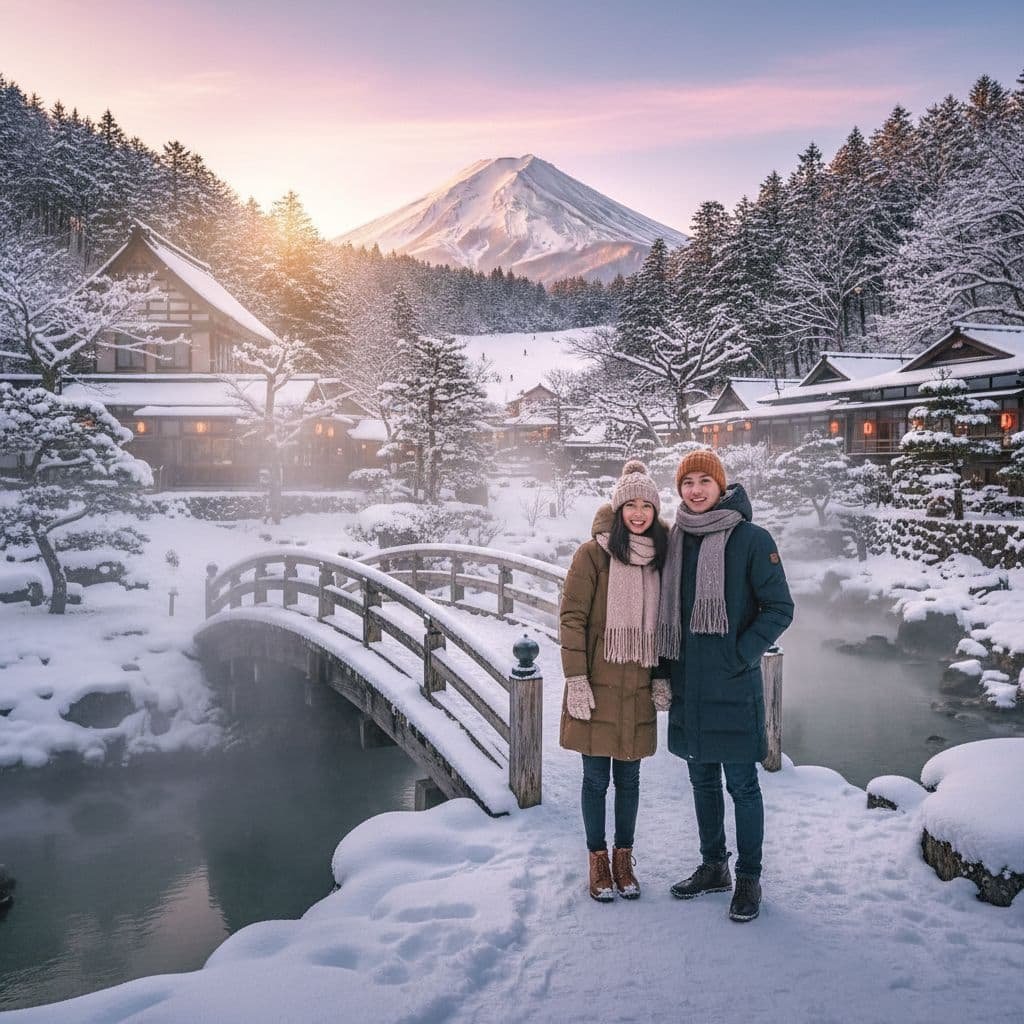
All-Inclusive Japan Winter Vacation 2026: Snow Temples, Onsens, and Ryokan Packages That Feel Like a Warm Exhale
Snow changes Japan’s sound. Streets get quieter, temple roofs look softer, and even busy stations feel a bit calmer when flakes start sticking. My favorite winter moment is simple: I’m outside in hot water, shoulders loose, watching steam curl into cold air while lantern light warms the snow.
That’s the promise of an all-inclusive japan winter vacation 2026 when it’s done right: less logistics, fewer “did we book that?” stress spirals, and more time for the good parts, ryokan dinners, temple walks, and soaking until your hands prune.
This style of trip is for:
- Couples who want romance without planning fatigue
- First-timers who want help with trains, transfers, and pacing
- Families who need meals handled and nights predictable
- Solo travelers who want support, but still want freedom
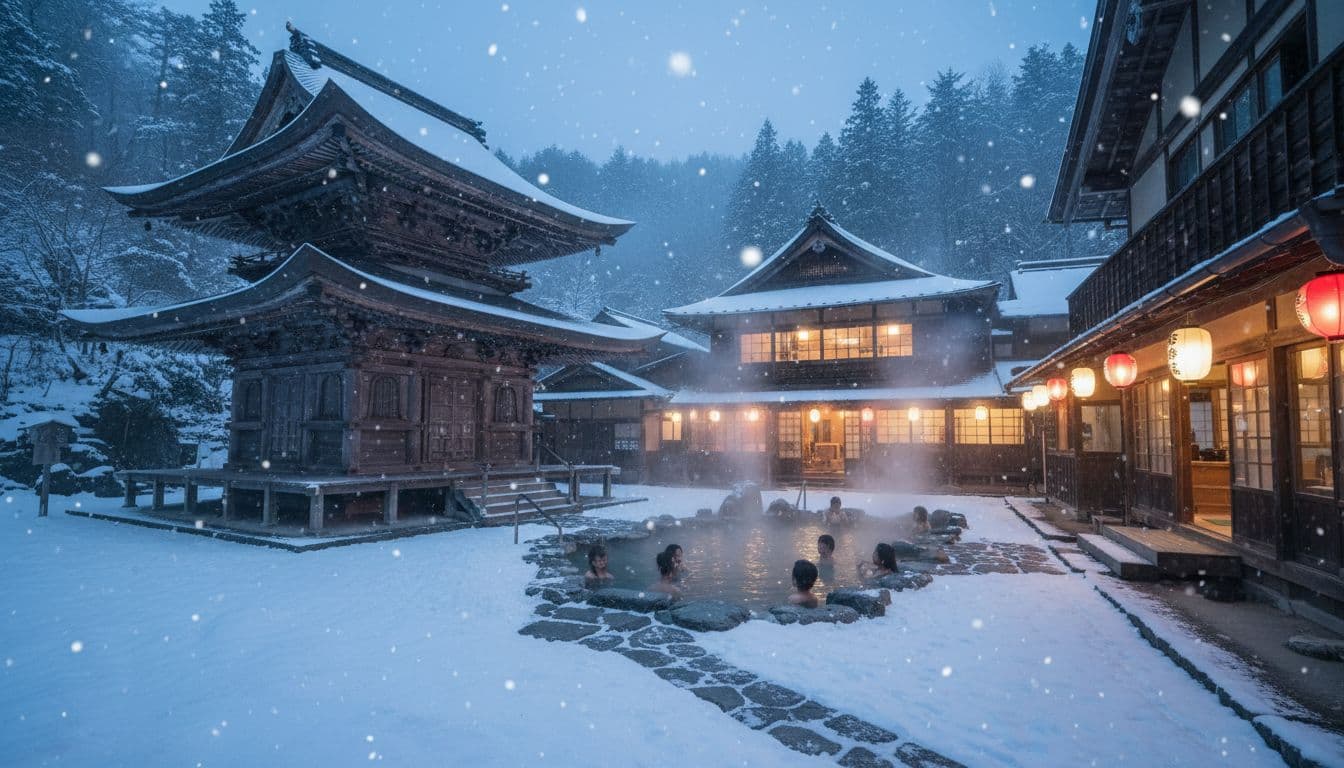
Snowy temple roofs and a steaming outdoor onsen near a cozy ryokan, created with AI.
If you’re ready to start comparing winter stays and lock in the best cancellation terms early, I’d begin here: [Search Japan winter stays on Booking.com]
Affiliate Disclosure: This article contains affiliate links to Booking.com, Trip.com, Expedia.com, and Amazon. If you book or purchase through these links, I Need My Vacation may earn a small commission at no extra cost to you. We only recommend services we genuinely trust and use ourselves to help you plan the perfect trip. Thank you for your support!
What “All-Inclusive” Really Means in Japan (and what it usually doesn’t)
In Japan, “all-inclusive” can mean a few different things. Some packages feel truly handled end-to-end, and others are more like smart bundles. I treat the words like a label on a snack: helpful, but I still read the back.
Here are the most common winter package styles I see:
1) Guided all-inclusive tours (closest to true all-inclusive)
Usually includes hotels, a guide, major transport between cities, and many meals. It’s the lowest-stress option, especially in snowy regions where transfers matter. If you like having a built-in plan, browse winter departures on pages like Japan Christmas and New Year tours for 2026.
2) Ryokan half-board bundles (the classic winter upgrade)
This is my personal favorite. “Half-board” almost always means dinner and breakfast included, often a multi-course kaiseki dinner. You handle your own sightseeing, but your evenings are taken care of.
3) Ski plus onsen hotel packages
Common in mountain areas. They might bundle lift tickets, breakfast, and a shuttle. Great if you want one home base and easy snow days.
4) Flight plus hotel “package deals”
These can be cheaper than booking separately, but they’re not usually meal-inclusive. Think of them as a price play, not a fully hosted experience.
What’s often not included (even when the listing sounds generous):
- Alcohol at dinner
- Local buses and short-hop transit
- Temple and museum entry fees
- Ski rentals and lesson costs
- Private onsen fees (some ryokan charge for reservable baths)
- Luggage forwarding (takkyubin) between hotels
- Local accommodation taxes and onsen bathing fees
Before I pay, I do one thing: I open the “What’s included” section and look for line items, not vibes. Winter storms happen, so I also aim for flexible cancellation whenever possible.
My quick booking checklist for winter ryokan and onsen packages
- Dinner and breakfast included (look for kaiseki, half-board, or “2 meals”)
- Private bath vs shared bath (and whether private reservations cost extra)
- Tattoo rules (policies vary, even within the same town)
- Room type (futon on tatami vs Western beds)
- Station pickup (some ryokan offer a timed shuttle, which helps in snow)
- Snow gear rental (rare at ryokan, common at ski hotels)
- Kid policies (meal portions, age cutoffs, and bathing rules)
- Cancellation terms (watch the penalty window in winter)
- Taxes and onsen fees included (or collected at check-in)
Best time to go in winter 2026 (snow quality, festivals, and prices)
Late December: Pretty lights, holiday energy, higher prices, and fuller trains.
January: Deep winter mood with calmer crowds after New Year, strong snow in the north.
Early February: Prime time for festival travel, including the Sapporo Snow Festival (Feb 4 to Feb 11, 2026), and prices jump fast.
Late February: Still snowy in many regions, a touch milder, sometimes better value.
If you want festival week, I’d book earlier than you think you need to. Rooms disappear first, then airfare follows.
The best places for snow temples, onsens, and ryokan stays in winter 2026
I plan winter Japan by feeling, not checklists. Do you want bright city lights with snow festivals, or a quiet street where your footsteps squeak? Here are four regions that consistently deliver the winter version of Japan people daydream about, plus what an “all-inclusive style” stay looks like in each.
Hokkaido for peak snow, hot springs, and the Sapporo Snow Festival
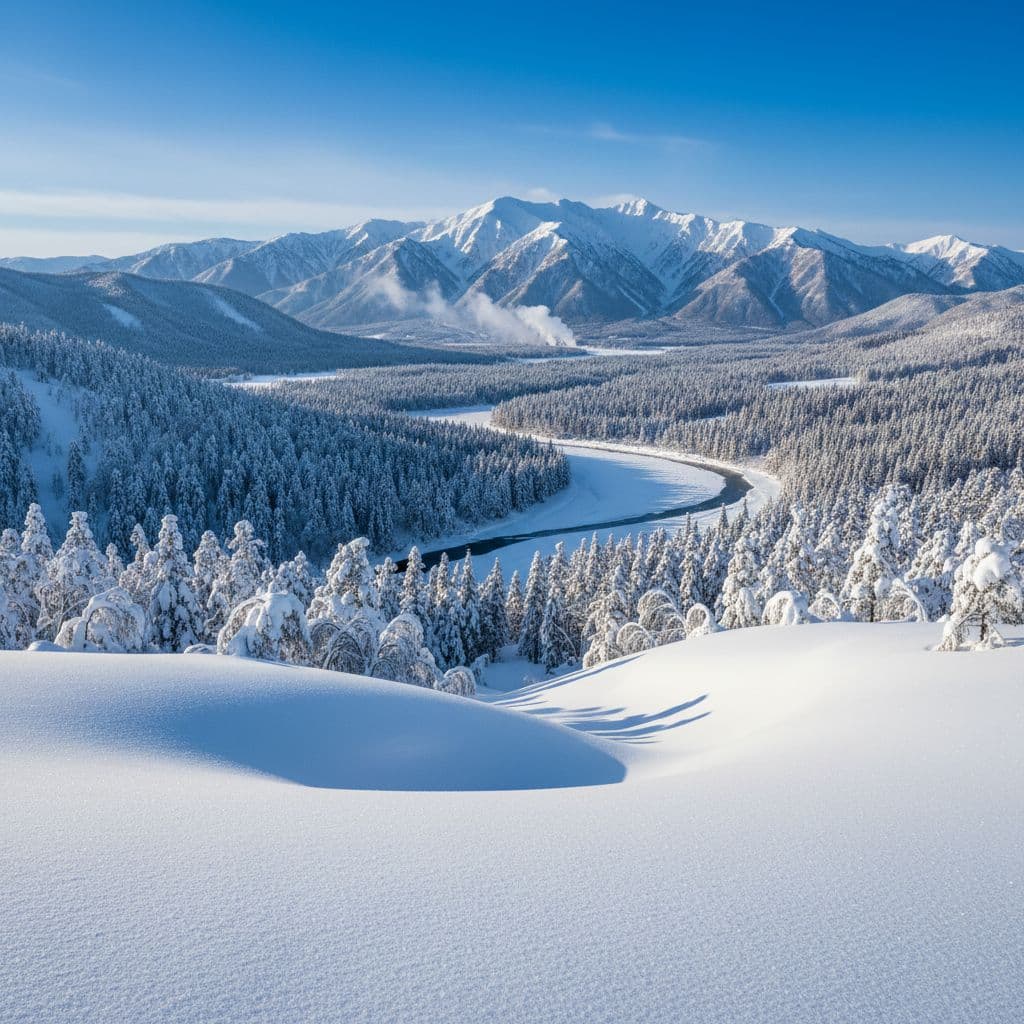
Photo created with AI.
Hokkaido feels like Japan turned the snow dial up. The air is crisp, the sidewalks sparkle, and the food feels built for winter (ramen, seafood, warm pastries you eat outside without even noticing your gloves got messy).
Best for: festival chasers, skiers, first-timers who want reliable snow.
What an all-inclusive style stay looks like: a city hotel in Sapporo plus a 1 to 2-night onsen town add-on (places like Noboribetsu or Jozankei are popular), with transfers handled so you’re not wrestling luggage on icy platforms.
Mini-itinerary idea (2 to 3 days):
- Day 1: Arrive Sapporo, night stroll near Odori Park
- Day 2: Snow Festival venues (Odori, Susukino, Tsudome)
- Day 3: Onsen night outside the city, soak and sleep early
The festival itself is a real magnet, and those dates matter when you price things out. If you’re comparing flight plus hotel bundles, I like having a second tab open here: [Compare winter Japan stays and bundles on Trip.com]
If you’re curious about packaged winter tours that mix cities and snowy highlights, pages like Japan Winter Tours 2025-2026-2027 can help you see what “included” often looks like.
Nagano for snow monkeys, mountain onsens, and cozy ryokan towns
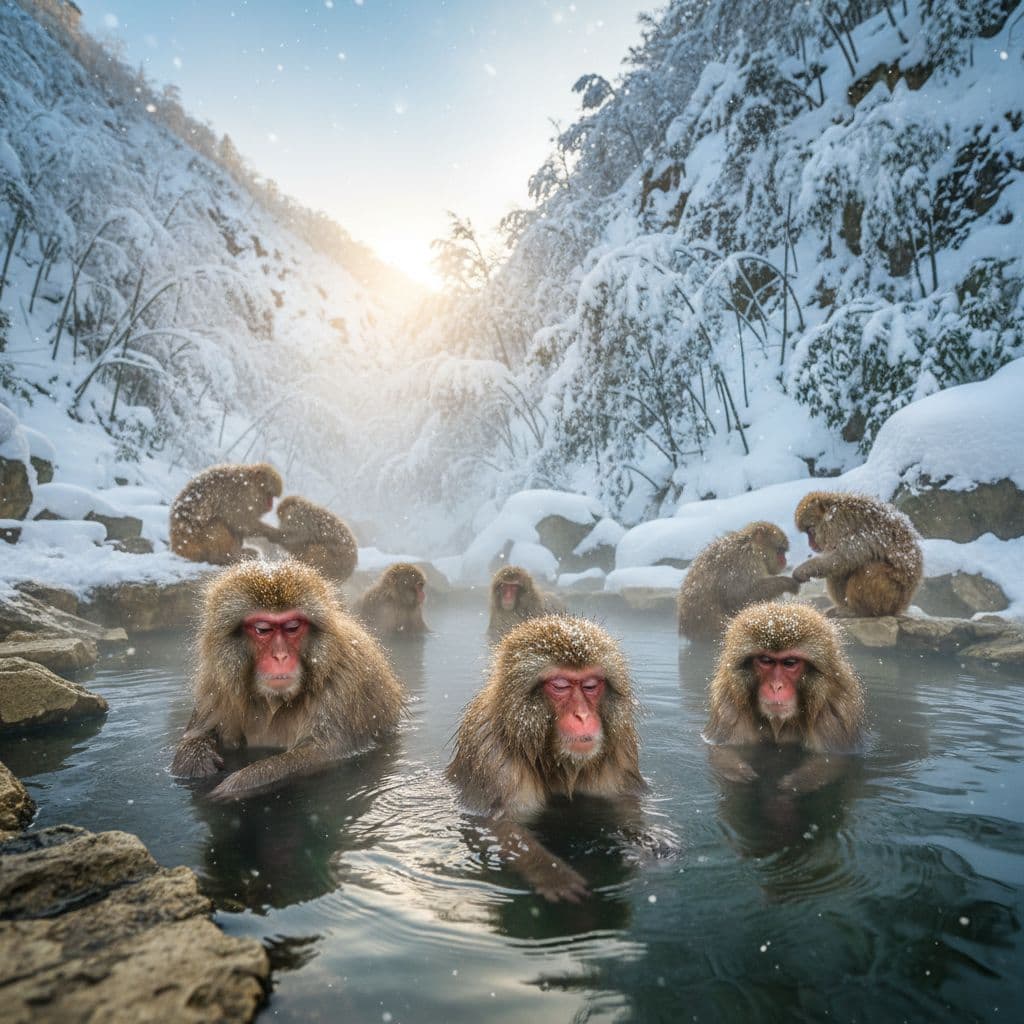
Photo created with AI.
Nagano is my go-to when I want that classic scene: snow on pine branches, a small town with wooden inns, and hot water so warm it makes your cheeks pink. It’s also where many travelers pair ryokan life with the famous snow monkey area (often tied to Jigokudani visits in winter itineraries, like this Onsens and snow monkeys tour overview).
Best for: couples, nature lovers, travelers who want a ryokan night without flying north.
What an all-inclusive style stay looks like: Tokyo base plus a pre-arranged transfer to an onsen town, one ryokan night with half-board, then an easy return. When the ryokan includes station pickup, it’s a big stress reducer.
Mini-itinerary idea (2 to 3 days):
- Day 1: Train from Tokyo to Nagano area, check in to ryokan, kaiseki dinner
- Day 2: Early visit to the monkey area (morning light is the best), onsen round two
- Day 3: Slow breakfast, return to Tokyo
Good to know:
- Footwear: bring traction or soles with grip, side streets get slick.
- Early mornings: cold, yes, but calmer and more photogenic.
- Onsen manners: rinse first, go slow, and keep towels out of the bath.
Kyoto and nearby for winter temples with fewer crowds (plus a warm onsen escape)
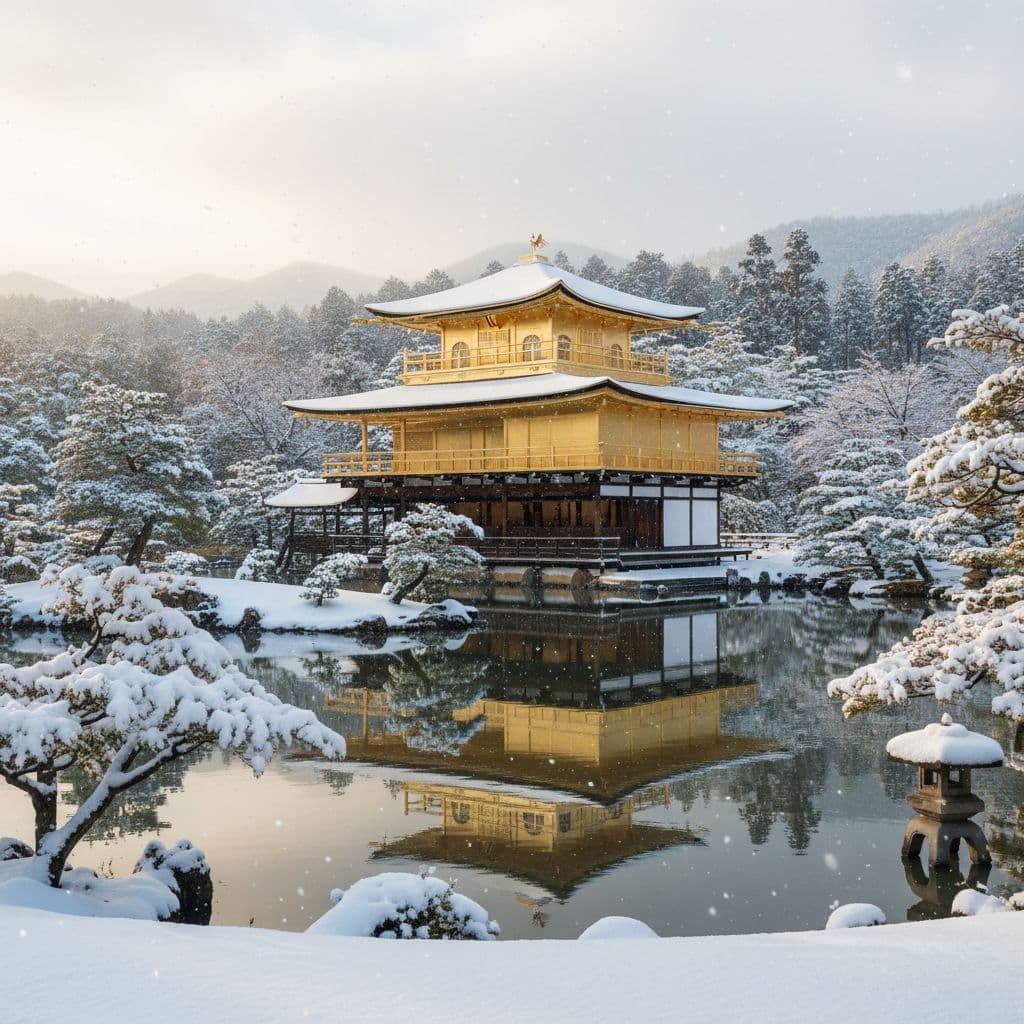
Photo created with AI.
Kyoto in winter feels like a quieter museum. Snow isn’t guaranteed, so I don’t plan a “snow temple” trip around Kyoto alone. But I do plan for calmer pathways, colder air that makes incense smell sharper, and gardens that look more sculpted in winter light.
Best for: first-timers who want Kyoto’s icons, repeat visitors who want a calmer pace.
What an all-inclusive style stay looks like: a well-located Kyoto hotel with breakfast included, plus a one-night onsen town escape nearby (think the vibe of an onsen village stay, without needing to cram too many stops into one day).
Mini-itinerary idea (2 to 3 days):
- Day 1: Kyoto temple morning, warm café break, evening stroll
- Day 2: Day trip pace, then check into an onsen inn for dinner
- Day 3: Breakfast, one last soak, return to Kyoto
For flexible date searches and quick hotel comparisons, I use: [Check Kyoto winter hotel deals on Expedia]
If you like the idea of a winter group route that mixes Kyoto with northern snow stops, scanning an itinerary page like Japan winter highlights from Trafalgar’s 2026 guide can give you a sense of pacing.
Tohoku for deep snow culture and quiet, local ryokan nights
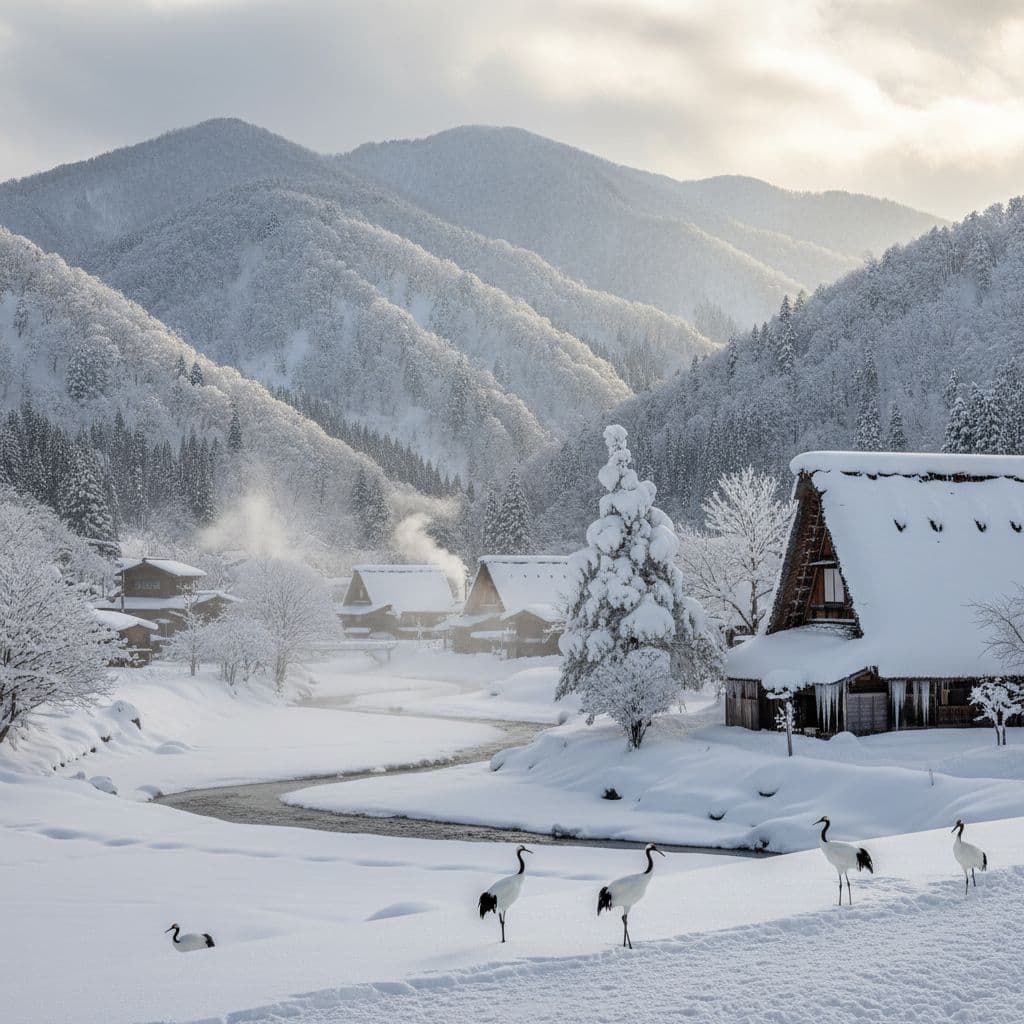
Photo created with AI.
Tohoku is the part of Japan I pick when I want fewer crowds and more hush. Winter towns here can feel like a snow globe, with small stations, steamy streets, and ryokan dinners that stretch time.
Best for: repeat Japan travelers, slow travelers, anyone craving calm.
What an all-inclusive style stay looks like: fewer hotel changes, more transfer support. In storms, transport can slow down, so having transfers bundled (or staying put longer) is the whole win.
Mini-itinerary idea (2 to 3 days):
- Day 1: Train into the region, check into a ryokan before dark
- Day 2: Local strolls, long onsen session, early dinner
- Day 3: Late breakfast, travel onward when roads are clearer
High-intent booking plan: how I’d build an all-inclusive Japan winter vacation 2026 (without overpaying)
Winter Japan is one of those trips where “last minute” often means “last choice.” My strategy is simple: I book what sells out first, then I shop for upgrades.
Here’s what I lock in first:
- Ryokan nights (limited rooms, strict cancellation windows)
- Festival week hotels (especially Sapporo Feb 4 to Feb 11, 2026)
- Key transfers (airport, onsen shuttle, or regional connections)
- Tours only if they solve a real problem (snow day logistics, language support)
Then I price-check bundles. Sometimes a flight plus hotel deal is cheaper than piecing it together. Other times, separate bookings win because you can change plans.
Book Now on Booking.com and Save: [Compare Japan winter ryokan and onsen stays]
Best Platforms for Booking Japan Winter 2026
Best for: Ryokan, onsen hotels, flexible cancellation
Why I use it: I can filter by breakfast, guest reviews, and cancellation fast
[Link]
Best for: Flight plus hotel bundles, quick comparisons
Why I use it: Handy for bundling and scanning options by dates
[Link]
Best for: Flexible date hotel shopping
Why I use it: Easy to browse price swings across nearby dates
[Link]
When I’m ready to commit, I do one last check for value: does the price difference cover meals and transfers? If yes, I book the bundle and stop thinking about it.
If you want to start with the simplest stress-free move, do this first: [Lock in a winter ryokan stay on Booking.com]
If you’re watching total trip cost, I’d also compare: [Japan winter flight plus hotel bundles on Trip.com]
Sample 7-night winter package blueprint (ryokan nights included)
- Day 1: Arrive Tokyo, easy hotel night (airport transfer upgrade helps)
- Day 2: Tokyo day trip (guided tour upgrade helps when it’s cold)
- Day 3: Train to Nagano area, check into ryokan (half-board is the payoff)
- Day 4: Snow day activity (monkey area or mountain views), second ryokan night
- Day 5: Back to Tokyo, or fly/train onward depending on your region pick
- Day 6: Optional snow add-on (Hokkaido festival day or a ski area day)
- Day 7: Buffer day for weather, shopping, and a slow final dinner
- Day 8: Fly home
Where all-inclusive upgrades matter most: airport transfers, daily breakfast, bundled trains, and one guided snow day so you’re not problem-solving in freezing wind.
Packing essentials I never skip for Japan in winter (Amazon picks)
- [Thermal base layers (men/women)]
- [Ice cleats for boots (packable)]
- [Packable down jacket]
- [Reusable hand warmers]
- [Moisture-wicking wool socks]
A good winter trip to Japan doesn’t feel rushed. It feels like quiet snow on a temple path, the soft clack of wooden sandals, the first bite of a hot ryokan dinner, and waking up to fresh white outside your window. That’s the kind of all-inclusive japan winter vacation 2026 I’d build again and again.
If you want the big winter moments, choose Hokkaido for festivals and deep snow, Nagano for onsens and the snow monkey route, Kyoto for calm temples with an onsen escape, and Tohoku for quiet towns that feel personal. The next step is simple: lock in your best stay before the best rooms disappear.
Ready to book while winter inventory is still good? Start here: [Find Japan winter deals on Booking.com now]
FAQ
Is an all-inclusive Japan winter vacation 2026 actually worth it?
If you’re booking ryokan nights, festival dates, or snowy transfers, it’s often worth it because it reduces mistakes and time spent coordinating. I pay extra when it includes meals and reliable transport help.
What’s usually included in a ryokan package in winter?
Most ryokan packages are half-board, meaning dinner and breakfast. Drinks, private bath reservations, and local taxes or onsen fees may be extra, so I confirm those before booking.
Where should I book ryokan and onsen stays for winter 2026 deals?
For hotel-heavy planning, I start with Booking.com because it’s fast to compare cancellation terms and meal plans. Then I price-check bundle options if flights are part of the decision.
When should I book Sapporo Snow Festival 2026 hotels?
As early as you can if you want location and value. The festival runs Feb 4 to Feb 11, 2026, and that week tends to sell out quickly, so I compare bundles on Trip.com and lock a cancellable hotel right away.
Can families do an all-inclusive winter Japan trip with kids?
Yes, but I look closely at kid meal policies, room layouts, and bathing rules. A normal hotel base with breakfast, plus one ryokan night, is often the sweet spot for families.
What if a winter storm disrupts trains or flights?
This is where flexible cancellation pays for itself. I build a buffer day, avoid too many one-night hops, and book refundable options when possible, especially through Expedia.com for date flexibility.
© 2025 I Need My Vacation. All rights reserved.
