...

IneedMyVacation.com

/* AFFILIATE CTA BUTTONS – HIGH CONVERTING */
.aff-cta {
display: inline-flex;
align-items: center;
justify-content: center;
gap: 8px;
background: linear-gradient(135deg, #667eea 0%, #764ba2 100%);
color: #ffffff !important;
font-weight: 700;
font-size: 1rem;
padding: 14px 28px;
border-radius: 50px;
text-decoration: none !important;
box-shadow: 0 6px 20px rgba(102,126,234,0.4);
transition: all 0.3s cubic-bezier(0.25, 0.8, 0.25, 1);
margin: 8px 4px;
border: 2px solid transparent;
position: relative;
overflow: hidden;
cursor: pointer;
will-change: transform, box-shadow;
}

/* Stronger hover effects */
.aff-cta:hover {
transform: translateY(-4px) scale(1.03);
box-shadow: 0 12px 40px rgba(102,126,234,0.6);
background: linear-gradient(135deg, #764ba2 0%, #667eea 100%);
color: #ffffff !important;
}

/* Click feedback */
.aff-cta:active {
transform: translateY(-1px) scale(1.01);
transition: all 0.1s ease;
}

/* More pronounced arrow animation */
.aff-cta::after {
content: “→”;
font-weight: 900;
transition: transform 0.3s ease, margin-left 0.3s ease;
display: inline-block;
}

.aff-cta:hover::after {
transform: translateX(6px);
margin-left: 2px;
}

/* Shine/glint effect on hover */
.aff-cta::before {
content: “”;
position: absolute;
top: 0;
left: -100%;
width: 100%;
height: 100%;
background: linear-gradient(90deg, transparent, rgba(255,255,255,0.3), transparent);
transition: left 0.5s ease;
}

.aff-cta:hover::before {
left: 100%;
}

/* Color variants */
.aff-cta.hotel {
background: linear-gradient(135deg, #4facfe 0%, #00f2fe 100%);
box-shadow: 0 6px 20px rgba(79,172,254,0.4);
}
.aff-cta.hotel:hover {
background: linear-gradient(135deg, #00f2fe 0%, #4facfe 100%);
box-shadow: 0 12px 40px rgba(79,172,254,0.6);
}

.aff-cta.package {
background: linear-gradient(135deg, #fa709a 0%, #fee140 100%);
box-shadow: 0 6px 20px rgba(250,112,154,0.4);
}
.aff-cta.package:hover {
background: linear-gradient(135deg, #fee140 0%, #fa709a 100%);
box-shadow: 0 12px 40px rgba(250,112,154,0.6);
}

.aff-cta.flight {
background: linear-gradient(135deg, #f093fb 0%, #f5576c 100%);
box-shadow: 0 6px 20px rgba(245,87,108,0.4);
}
.aff-cta.flight:hover {
background: linear-gradient(135deg, #f5576c 0%, #f093fb 100%);
box-shadow: 0 12px 40px rgba(245,87,108,0.6);
}

.aff-cta.activity {
background: linear-gradient(135deg, #43e97b 0%, #38f9d7 100%);
box-shadow: 0 6px 20px rgba(67,233,123,0.4);
}
.aff-cta.activity:hover {
background: linear-gradient(135deg, #38f9d7 0%, #43e97b 100%);
box-shadow: 0 12px 40px rgba(67,233,123,0.6);
}

.aff-cta.insurance {
background: linear-gradient(135deg, #ffecd2 0%, #fcb69f 100%);
color: #333 !important;
box-shadow: 0 6px 20px rgba(252,182,159,0.4);
}
.aff-cta.insurance:hover {
background: linear-gradient(135deg, #fcb69f 0%, #ffecd2 100%);
box-shadow: 0 12px 40px rgba(252,182,159,0.6);
}

.aff-cta.gear {
background: linear-gradient(135deg, #a8edea 0%, #fed6e3 100%);
color: #333 !important;
box-shadow: 0 6px 20px rgba(168,237,234,0.4);
}
.aff-cta.gear:hover {
background: linear-gradient(135deg, #fed6e3 0%, #a8edea 100%);
box-shadow: 0 12px 40px rgba(168,237,234,0.6);
}

/* Mobile optimization */
@media (max-width: 768px) {
.aff-cta {
display: block;
width: 100%;
margin: 8px 0;
text-align: center;
justify-content: center;
padding: 16px 24px;
font-size: 1.1rem;
}
.aff-cta::after {
display: none;
}
}

/* CTA CONTAINER */
.cta-container {
background: linear-gradient(135deg, #f5f7fa 0%, #c3cfe2 100%);
border-radius: 16px;
padding: 25px;
margin: 30px 0;
text-align: center;
box-shadow: 0 8px 25px rgba(0,0,0,0.1);
}
.cta-container h3 {
margin-top: 0;
font-size: 24px;
color: #333;
}
.cta-container p {
font-size: 16px;
color: #555;
margin-bottom: 20px;
}

/* INFO BOXES */
.info-box {
background: white;
border-left: 5px solid #667eea;
border-radius: 12px;
padding: 20px;
margin: 25px 0;
box-shadow: 0 4px 15px rgba(0,0,0,0.08);
}
.info-box.warning { border-left-color: #f5576c; background: #fff5f5; }
.info-box.success { border-left-color: #43e97b; background: #f0fff4; }
.info-box.tip { border-left-color: #4facfe; background: #f0f9ff; }

/* TABLE STYLING */
.comparison-table {
width: 100%;
border-collapse: collapse;
margin: 25px 0;
font-size: 0.95em;
box-shadow: 0 4px 15px rgba(0,0,0,0.08);
border-radius: 12px;
overflow: hidden;
}
.comparison-table th {
background: linear-gradient(135deg, #667eea 0%, #764ba2 100%);
color: white;
padding: 15px;
text-align: left;
font-weight: 600;
}
.comparison-table td {
padding: 12px 15px;
border-bottom: 1px solid #e2e8f0;
}
.comparison-table tr:nth-child(even) { background: #f8fafc; }
.comparison-table tr:hover { background: #f1f5f9; }

/* FAQ SECTION */
.faq-item {
background: white;
border-radius: 12px;
margin: 15px 0;
padding: 20px;
box-shadow: 0 3px 12px rgba(0,0,0,0.08);
}
.faq-item h3 {
color: #667eea;
margin-top: 0;
font-size: 20px;
}

/* IMAGE STYLING */
img {
max-width: 100%;
height: auto;
border-radius: 15px;
box-shadow: 0 8px 25px rgba(0,0,0,0.15);
margin: 25px 0;
}

/* RESPONSIVE */
@media (max-width: 768px) {
.cta-container {
padding: 20px;
}
.comparison-table {
font-size: 0.85em;
}
.comparison-table th, .comparison-table td {
padding: 10px;
}
}

Best Time to Visit Cancun for Weather, Value, and Crowds

When is the best time to visit Cancun? The best overall time is November to early December or late April to May for perfect weather, lower prices, and smaller crowds. For guaranteed sunshine, choose January or February. For the absolute cheapest rates, visit September or October, but expect higher hurricane risks.

Cancun can feel like paradise or a pricey, crowded sweatbox. Same beach, same water, totally different trip, depending on the month you choose.

If you want the short answer, the best overall times to go are November to early December and late April to May. Those windows usually give you the best mix of weather, smaller crowds, lower prices, and less stress. If perfect beach weather matters most, winter wins. If cheap rates matter most, fall is where the bargains show up, with more weather risk attached.

Here’s how to pick the month that fits your trip, not someone else’s.

🎯 Quick Answer: November to early December is the safest all-around pick. Late April to May is the value sweet spot. January and February are best for postcard beach weather. September and October are cheapest, but they carry the most hurricane risk.

Affiliate Disclosure: This article contains affiliate links. If you book through these links, I Need My Vacation may earn a commission at no extra cost to you. We only recommend services we trust and use ourselves.

Table of Contents

What Does the Best Time to Visit Cancun Depend On?

There isn’t one perfect month for everyone. The right answer usually comes down to four things: weather, price, crowds, and whether you care about calm beach time or a busier party vibe.

For most travelers, the best balance lands in November to early December or late April to May. Winter, especially January and February, usually has the nicest beach weather. Fall, especially September and October, usually has the lowest prices.

Why Does Weather Matter More Than the Calendar?

Cancun stays warm all year, but “warm” can mean two different things. In winter, it often feels breezy and comfortable. In summer, it can feel sticky by breakfast and blazing by noon.

Rain also scares people more than it should. A lot of the time, showers come fast, hit hard, and move out. You can get a wet afternoon and still have a beautiful beach morning.

How Do Crowds and Prices Change Together?

In Cancun, crowds and prices usually move as a pair. When more people want the same hotel rooms and flights, rates jump. That happens around Christmas, New Year’s, spring break, and Easter.

Slower months often give you better deals on both airfare and hotels. If your dates are flexible, it’s smart to compare prices before you commit.

✈️ Search Flexible-Date Flights to Cancun

Compare prices across multiple dates to find the cheapest way to reach Cancun this year.

🔍 Search Flights Now

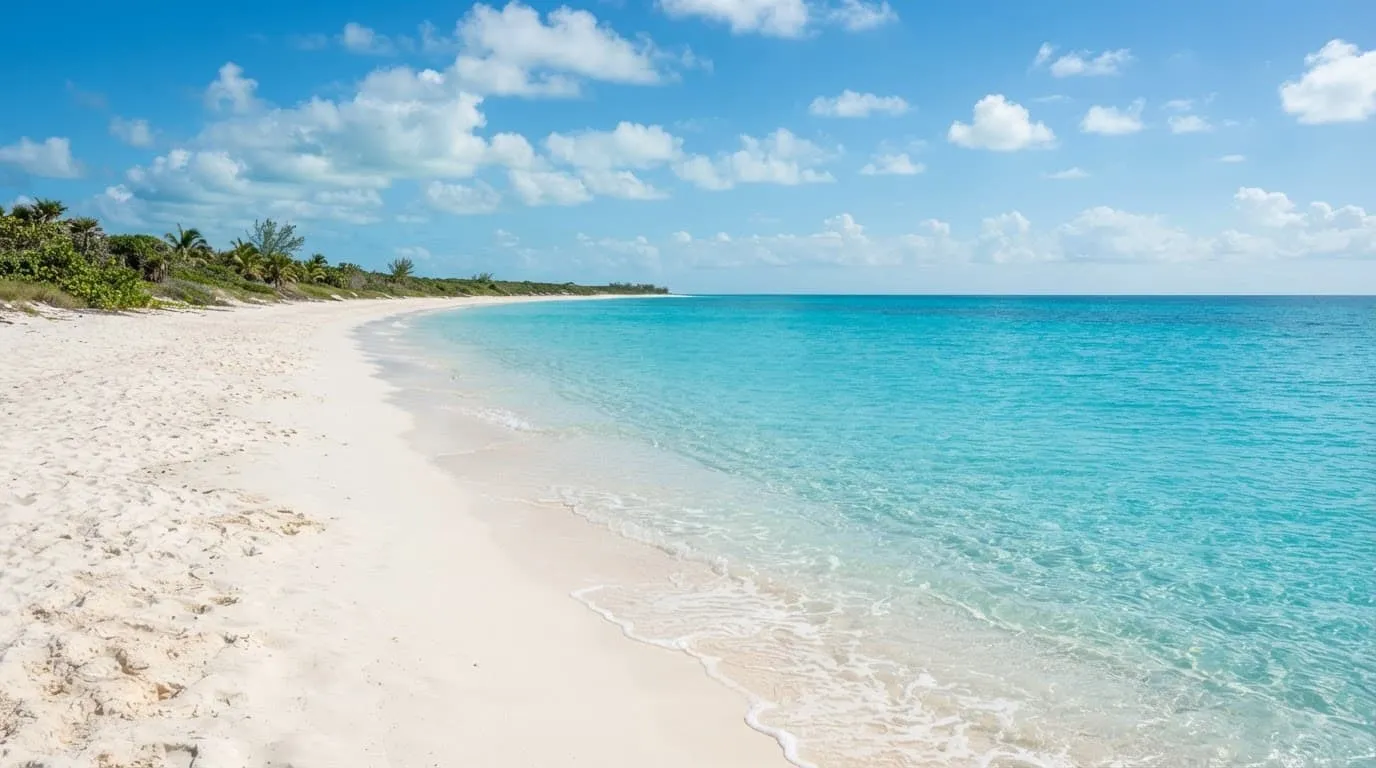
Vibrant turquoise waves gently roll onto the bright white sands of a secluded Mexican shoreline with sun-bleached umbrellas scattered along the vast coastal stretch under a deep azure sky.

Month-by-Month, When Is Cancun at Its Best?

Think in travel windows, not single dates. That’s how you avoid overpaying for weather you didn’t need, or rolling the dice when you wanted a calm vacation.

This quick table makes the trade-offs easy to see.

Travel Window Weather Feel Crowds Best For
Dec to Apr Sunny, drier, comfortable High First-timers, beach trips
May to Aug Hot, humid, more rain Medium Better value, fewer crowds
Sep to Oct Wettest, storm risk Low Cheapest flexible trips
Nov to early Dec Warm, improving, less rain Low to Med Best overall balance

If you want one clean takeaway, winter is best for weather, fall is best for price, and shoulder season is where the smartest trade-off usually lives.

Is December to April Best for Beach Weather?

This is Cancun at its prettiest. Days are usually sunny, rain chances are lower, and the humidity is easier to handle. If you want long beach walks, pool time, and water that still looks like someone edited it, this is your season.

The catch is price. Christmas, New Year’s, spring break, and Easter can send hotel and flight costs flying. Resorts also fill faster, which means less choice and fewer bargains.

Is May to August Best for Good Value and Fewer Crowds?

Summer gets hot, no sugarcoating it. Humidity climbs, the sun feels stronger, and brief storms become more common. Still, many travelers like this window because beaches are less packed and rates often come down.

This is a good time for people who don’t mind heat and want more room to breathe. If you’re trying to keep costs down, our guide to affordable Cancun vacation packages shows how shoulder and off-season dates can change the whole math of a trip.

Is September to October Best for the Cheapest Trips?

If price is your top priority, this is usually the cheapest time to go. Flights drop, hotel deals get better, and some resorts offer rates that look almost suspiciously low.

There is a reason. September and October sit in the heart of hurricane season, so weather is less predictable. Flexible travelers can save a lot here. Travelers who want calm, dependable beach days usually shouldn’t.

Is November and Early December the Sweet Spot?

For a lot of people, this is the answer. Rain starts easing up, the worst storm risk fades, crowds stay manageable, and winter pricing hasn’t fully kicked in yet.

It’s not a secret, but it still feels more reasonable than January. It lines up perfectly with what budget-minded travelers usually want.

Sun-drenched patio furniture sits amidst swaying palm trees on a tropical restaurant terrace with bright sunlight illuminating polished tables in this tranquil seaside dining venue.

How Do I Pick the Right Time Based on My Trip Style?

The best month gets clearer when you stop asking, “What’s best?” and start asking, “Best for what?” Beach weather, savings, and low stress don’t all peak at the same time.

Should I Choose Winter for the Most Reliable Beach Days?

January and February are the safest picks for first-time visitors. You get the best shot at sunny, pleasant days without the heavier summer humidity.

You’ll pay for that comfort. Still, if this is a special trip and you don’t want weather drama, winter is the simplest choice.

✅ Winter Travel Pros:
• Lowest humidity and most comfortable temperatures
• Minimal rain chances
• Perfect ocean conditions for swimming and snorkeling
• Ideal for honeymoons, anniversaries, and first-timers

Should I Choose Shoulder Season for Better Value?

Late April, May, and November are smart months for couples, families, and anyone who wants a smoother trip. You can still get great beach time without walking into peak-season prices or peak-season chaos.

If your dates are set and you need the rest of the trip mapped out, this comprehensive Cancun 2026 travel guide can help with where to stay, how to move around, and where to save money.

Should I Choose the Off-Season to Save Money?

Summer and early fall work for travelers who are flexible and realistic. You might get a steal on a resort. You might also get a humid week with pop-up rain and rougher seas.

That doesn’t mean “don’t go.” It means go with a plan, flexible booking terms, and lower expectations about perfect weather.

Stone Mayan ruins perch upon a rugged cliffside overlooking a vast blue ocean with lush tropical vegetation surrounding the weathered architecture under a brilliant clear sky.

How Do Events, Holidays, and Hurricane Season Affect My Trip?

A good month can still become a bad deal if you book the wrong week. Holiday spikes and storm season matter more than many travelers expect.

Should I Watch Out for Spring Break and Major Holidays?

Spring break, Christmas, New Year’s, and Easter often bring the highest rates and the busiest resorts. If you want quiet beaches, easier restaurant reservations, and a calmer pool scene, skip those weeks.

If March is your only option, go in with your eyes open. Our Cancun spring break safety tips can help you avoid the usual scams, noise, and transport hassles.

⚠️ Peak Pricing Weeks to Avoid:
• Spring Break (March)
• Christmas & New Year’s (Late Dec – Early Jan)
• Easter / Semana Santa (March or April)
• US Thanksgiving (Late November)

What Does Hurricane Season Mean for My Trip?

Hurricane season runs from June 1 through November 30, with the highest risk usually in September and October. That doesn’t mean every day is stormy, or that every trip gets hit. It means you should book smart.

If you’re traveling in summer or fall, it’s smart to book refundable options and protect your investment with travel insurance.

🛡️ Protect Your Trip with Travel Insurance

Get peace of mind with comprehensive coverage for cancellations, medical emergencies, and weather disruptions.

🛡️ Check Insurance Plans

Dark heavy storm clouds hang over a tropical beach as rain streaks fall in the distance with churning ocean waves lapping against the sandy shore under an ominous moody sky.

Conclusion: When Should You Book Your Cancun Trip?

If you want the strongest all-around answer, go in November to early December or late April to May. Those windows usually give you the cleanest mix of good weather, fair prices, and manageable crowds.

If your dream trip is all sunshine and easy beach days, choose December to April. If you’re chasing the lowest prices and can handle uncertainty, September and October can work. For most people, the right time isn’t the cheapest month or the prettiest month—it’s the month that matches what you care about most.

A tranquil swimming pool reflects the golden hues of a setting sun at a Cancun resort with soft ambient lights illuminating the pristine stone terrace and calm turquoise water during twilight hours.

🚀 Ready to Book Your Perfect Cancun Escape?

Start with flights, compare hotels, and unlock package savings—all in one place.

People Also Ask: Best Time to Visit Cancun FAQ

What is the best month to visit Cancun for good weather?

January and February usually give you the most comfortable mix of sunshine, lower humidity, and lower rain chances. The ocean is calm, and the evenings are breezy and pleasant, making it the absolute best window for beach lovers and first-time visitors.

What is the cheapest time of year to go to Cancun?

September and October are often the cheapest months to visit Cancun. Because these months fall in the peak of hurricane season, hotel rates and airfare drop significantly. If you are flexible and willing to book refundable rates, you can score massive luxury upgrades for budget prices.

When is hurricane season in Cancun, and should I avoid it?

Hurricane season officially runs from June 1 to November 30, with the highest statistical risk in September and October. You don’t necessarily need to avoid it entirely—many travelers visit with zero issues—but you should absolutely purchase travel insurance and choose hotels with flexible cancellation policies if you book during these months.

🎒 Pack Smart for Your Cancun Trip

Get reef-safe sunscreen, quick-dry towels, water shoes, and other Cancun travel must-haves delivered fast.

🛒 Shop Amazon Essentials

© 2026 I Need My Vacation. All rights reserved.
// Smooth scroll for internal links
document.querySelectorAll(‘a[href^=”#”]’).forEach(anchor => {
anchor.addEventListener(‘click’, function (e) {
e.preventDefault();
const target = document.querySelector(this.getAttribute(‘href’));
if (target) {
target.scrollIntoView({ behavior: ‘smooth’, block: ‘start’ });
}
});
});

Curaçao Is the Top Caribbean Island to Visit in 2026

Why is Curaçao the top Caribbean island for 2026? Curaçao offers stunning beaches, colorful Willemstad architecture, world-class snorkeling, rich culture, and easy island exploration. With more flight options, diverse activities from beaches to hiking, and a perfect mix of relaxation and adventure, it’s ideal for couples, families, and solo travelers seeking an authentic Caribbean experience.

Curaçao is getting a lot of attention for 2026, and it makes sense. It gives you beach time, culture, easy island exploring, and more flight options than a lot of travelers expect.

If you’re trying to decide whether it’s the top Caribbean island for your next trip, this guide keeps it simple. You’ll see what Curaçao does best, who it’s best for, and why it’s showing up on more shortlists for couples, families, and solo travelers.

It’s not about chasing hype—it’s about picking an island that feels worth the money and the flight. Here’s what makes Curaçao stand out now.

🎯 Quick Answer: Curaçao is the top Caribbean island for 2026 because it combines pristine beaches, UNESCO-listed Willemstad, excellent snorkeling/diving, rich Dutch-Caribbean culture, and easy accessibility. Perfect for travelers wanting variety—beach relaxation, cultural exploration, and outdoor adventure—all in one destination.

Affiliate Disclosure: This article contains affiliate links. If you book through these links, I Need My Vacation may earn a commission at no extra cost to you. We only recommend services we trust and use ourselves.

Table of Contents

What Makes Curaçao Different From Other Caribbean Islands?

Curaçao has the same postcard appeal people want from the Caribbean, but it does more than sit there and look pretty. You get beaches, yes, but you also get a real city to explore, a strong cultural mix, and an island layout that makes it easy to do more than one kind of trip in a single stay.

That mix is what sets it apart. Some islands lean almost entirely on resorts, while others feel remote and quiet in a way that limits your options. Curaçao gives you both, without making you choose too early.

🏨 Compare Curaçao Hotels & Resorts

Check real-time availability, read verified reviews, and lock in free cancellation options before prices rise.

🔍 Search Hotels Now

What Makes the Beaches, Blue Water, and Calm Coves Special?

Curaçao still has the classic Caribbean beach look people picture first: bright blue water, soft sand, and that easy, slow rhythm that makes you want to stay a little longer. The difference is the variety. You can spend one day at a lively beach with food, music, and activity, then switch to a quiet cove the next morning.

That matters if you want options without extra planning. Some beaches are made for a full beach day, while others feel better for reading, swimming, or just floating in clear water with almost nobody around. In Curaçao, the beach scene feels more flexible than fixed.

A serene coastal cove in Curaçao featuring calm turquoise waters, rocky shores, and lush green vegetation under a clear blue sky.

✅ Top Curaçao Beaches:
Cas Abao: Lively beach with facilities and activities
Playa PortoMari: Family-friendly with calm waters
Mambo Beach: Popular spot with restaurants and amenities
Grote Knip: Secluded cove perfect for quiet relaxation
Playa Piskado: Best for sea turtle snorkeling

How Does Willemstad Add Color, History, and Walkable Charm?

Willemstad gives Curaçao a different kind of depth. Its UNESCO World Heritage feel comes through in the Dutch-Caribbean architecture, the waterfront setting, and the way the old streets still feel alive instead of frozen in time. It looks like a European harbor town that got a Caribbean color palette and a lot more sun.

You can walk through the historic center, stop for shopping, grab dinner, and take in street art and painted facades along the way. That makes the island feel more layered than a beach-only destination. The trip does not end at the shoreline, which is part of the appeal.

Vibrant yellow, pink, and blue Dutch colonial buildings lining the waterfront in Willemstad, Curaçao, reflecting in the harbor water.

💡 Willemstad Must-Sees:
• Queen Emma Bridge (Floating Bridge)
• Handelskade waterfront (iconic colorful buildings)
• Floating Market
• Mikvé Israel-Emanuel Synagogue (oldest in Americas)
• Street art and murals throughout Pietermaai district

Why Is It Easy to Pair Relaxation with Adventure?

Curaçao works well when you want a lazy trip that still leaves room for a little action. Snorkeling, diving, hiking, and sunset cruises all fit naturally into the same vacation, and none of them feel hard to add.

That balance is rare. You can keep your days slow and still fill them with a few good experiences, which is exactly why Curaçao feels so easy to book and so easy to enjoy.

If you want a Caribbean island that gives you beaches, culture, and activities without forcing you to pick just one, Curaçao gets the mix right.

📦 Save 15-20% on Flight + Hotel Packages

Bundle your Curaçao vacation and unlock exclusive deals you won’t find booking separately.

💰 View Package Deals

What Are the Best Things to Do in Curaçao in 2026?

Curaçao is easy to enjoy because the trip can be as slow or as active as you want. One day can be all sand and sea, the next can be caves, hills, and a dinner table in Willemstad. That mix is a big reason the island keeps landing on more 2026 travel lists.

If you want the biggest payoff, focus on the things Curaçao does best: beaches, snorkeling, nature, and a night out that still feels relaxed. You do not need to cram the island. Just pick a few strong experiences and let the rest of the trip breathe.

How Do I Spend a Day at the Island’s Best Beaches?

Curaçao’s beaches are not one-note. Cas Abao, Playa PortoMari, Mambo Beach, and Grote Knip each give you a different kind of day, so you can match the beach to your mood. Some are better for families because the water stays calm and the setup is easy. Others feel better for couples or solo travelers who want more quiet.

If snorkeling is on your list, look for beaches with clear water and reef access close to shore. Playa Piskado is a favorite for spotting sea turtles, while other coves are great for a slow swim and a long float.

The best beach days here are simple. Bring reef-safe sunscreen, water shoes, and a plan to stay longer than you think. Curaçao makes that easy.

A pristine tropical beach in Curaçao with bright sunlight illuminating calm, shallow turquoise water washing over clean white sand.

✅ Beach Day Essentials:
• Reef-safe sunscreen (required to protect coral)
• Water shoes for rocky entry points
• Snorkel gear (or rent at popular beaches)
• Cash for beach bars and food vendors
• Towel and shade (some beaches have limited facilities)

How Do I Explore Underwater Life with Snorkeling or Diving?

Curaçao is a strong pick for water lovers because the conditions are usually clear and the reefs are close enough to reach without a complicated setup. That matters whether you are trying snorkeling for the first time or you already know your way around a dive mask. The underwater scenery does a lot of the work for you.

Expect colorful coral, good visibility, and plenty of spots where the sea life shows up fast. If you want an easy way to book a guided outing, see Curaçao tours and snorkeling trips on GetYourGuide. Guided options help if you want a boat, gear, or a local who knows where the current stays calm.

Diving also fits Curaçao well because the island has a strong reputation for shore dives and reef access. That makes it a good match for travelers who want more than a pretty surface. You can stay near the shore and still feel like you got a full ocean day.

A vibrant underwater coral reef in the Caribbean with colorful fish swimming among textured polyps under shimmering sunlight.

If you only do one water activity, make it snorkeling first. It gives you a quick read on how much more time you want in the water.

🎫 Book Curaçao Tours & Activities

Enhance your trip with guided snorkeling, boat tours, and cultural experiences at the best prices.

🗺️ Browse Activities

How Do I Add Hiking, Nature, and Sunset Views to the Trip?

If you want Curaçao to feel balanced, add some inland time. Christoffel Park is the big one for hikers, and it gives the island a different pace. The views feel earned, which is a nice change after a few beach-heavy days.

You can also look for scenic overlooks, wild coastline, and stops like Shete Boka National Park if you want crashing waves and open views. These places give the island some edge. They also stop the trip from feeling too polished or too predictable.

The best part is how well these spots fit into a relaxed itinerary. A morning hike, a lazy lunch, and a sunset drive can make the whole day feel full without being busy. That is the sweet spot for a lot of Curaçao trips.

A winding dirt hiking trail traversing grassy hills overlooking the expansive blue ocean and distant island peaks in Curaçao.

💡 Top Nature Spots:
Christoffel National Park: Hike to highest point (372m) for panoramic views
Shete Boka National Park: Dramatic coastal blowholes and crashing waves
Hato Caves: Underground limestone caves with ancient Arawak drawings
Westpunt: Scenic peninsula with multiple viewpoints and beaches

How Do I Try Local Food and Evening Spots in Willemstad?

Willemstad gives you a solid evening plan without turning the trip into a nightlife marathon. You can start with local food, move to a relaxed cafe, and end the night with a walk by the water. The energy stays lively, but it does not get loud for the sake of being loud.

Look for places serving fresh seafood, local dishes, and island drinks, then save time for a stroll through the colorful center. The Floating Market and nearby streets are also worth a look if you want a quick taste of daily life before dinner. Willemstad feels best when you let it unfold slowly.

If you like a city break inside your beach trip, this is where Curaçao pulls it off. You get dinner, music, and people watching, but you still sleep like you’re on vacation. That’s a good balance, and it works well for couples, friends, and solo travelers alike.

Vibrant colonial buildings with glowing windows lining a dark canal in Willemstad at night, casting colorful reflections on the water.

✅ Must-Try Curaçao Foods:
Keshi Yena: Stuffed cheese (national dish)
Stoba: Goat or beef stew
Pastechi: Fried dough pockets with fish or cheese
Blue Curaçao liqueur: Famous citrus liqueur
• Fresh seafood at waterfront restaurants

How Do I Plan a Smooth Curaçao Vacation?

A smooth Curaçao trip comes down to a few smart choices made early. Pick the right base, book the pieces that sell fast, and keep transportation simple. Do that, and the island feels easy instead of scrambled.

How Do I Choose the Best Area to Stay for My Travel Style?

Where you stay shapes the whole trip. If you want long beach days and a resort feel, look at Jan Thiel, Mambo Beach, or Blue Bay. These areas fit travelers who want easy sand access, pool time, and a simple, low-effort schedule.

If you like having restaurants, museums, and colorful streets close by, Willemstad is the better fit. It works well for couples, solo travelers, and anyone who wants to walk out for dinner without planning a full drive. For a calmer stay, the west side and quieter resort zones give you more space and less noise.

A quick way to decide is to match the area to your trip style:

Stay Area Best For Why It Works
Beach zones
(Jan Thiel, Mambo, Blue Bay)
Beach lovers, families, resort travelers Easy water access and a relaxed pace
Willemstad
(Historic center)
City walkers, food lovers, short stays Restaurants, shopping, and sightseeing close together
Quiet resort areas
(West side, Santa Barbara)
Couples, low-key travelers Less traffic, more space, slower mornings

If you want hotel options that match your pace, compare Curaçao stays on Booking.com and filter for free cancellation. That keeps your plans flexible if you want to shift dates later.

What Should I Book Early for 2026?

Flights and well-located hotels are the first things to lock in. Curaçao gets more attention every year, and the best room types, beach-facing stays, and convenient flight times can disappear before peak travel dates even arrive.

Tours are worth booking early too, especially boat trips, snorkeling outings, and guided experiences with smaller group sizes. Those are the kind of plans that fill up when the island gets busy. If you wait too long, you may still find something, but it will cost more and leave you with fewer choices.

Book the non-negotiables first, then build around them. A simple order works best:

✅ Booking Priority Order:
1. Flights with the best schedule and price
2. Hotel or villa in the right area
3. Popular tours and day trips (snorkeling, boat trips)
4. Car rental or airport transfer, if needed
5. Restaurant reservations for popular spots (optional)

How Do I Make Island Travel Easier with a Car or Transfer?

Curaçao is easier when you treat it like an island that rewards movement. Beaches, restaurants, and viewpoints are spread out, so a rental car usually saves the most time. It also gives you more freedom to change plans when the weather shifts or a beach feels too busy.

That said, not every traveler needs to drive every day. If you are staying mostly in Willemstad or only need airport pickup and a few rides, a pre-booked transfer can be the calmer choice. It cuts out the back-and-forth and gets you to your hotel without hunting for a taxi.

If you want to see more than one beach or town, a car is usually the easier move.

For most visitors, the sweet spot is simple: rent a car for the island, use a transfer for arrival, and walk when you are already in town. If you want to keep the process simple, book a car rental for Curaçao ahead of time so you are not stuck comparing options after you land.

🚗 Book Car Rental for Curaçao

Compare rental car prices and reserve your vehicle in advance for the best rates and availability.

🚙 Reserve Car Now

How Do I Pack for Sun, Wind, and Active Days?

Curaçao does not need an overstuffed suitcase, but it does reward smart packing. Bring reef-safe sunscreen, swimwear, light clothes, water shoes, and a day bag. Those basics cover beach time, short hikes, and the kind of day where you go from sand to lunch to sunset without changing much.

A few extras also help:

  • Sunglasses and a hat for strong sun
  • Refillable water bottle for beach and road days
  • Light cover-up or shirt for wind and sun protection
  • Dry pouch or small tote for phone, cash, and keys
  • Snorkel gear (or rent at beaches)

If you want to keep packing simple, grab a few basics before you go. Shop compact travel essentials on Amazon so you are not scrambling in the airport shop.

🎒 Shop Travel Packing Essentials

Get reef-safe sunscreen, water shoes, dry bags, and other Curaçao travel must-haves delivered fast.

🛒 Shop Amazon Now

Is Curaçao the Right Caribbean Island for My Next Trip?

Curaçao is a strong fit if you want a Caribbean trip with more than one mood. It gives you beaches, culture, easy exploring, and a city that actually feels worth your time. If you want a resort-only escape, there may be better fits. If you want a trip that feels balanced, Curaçao is hard to beat.

The island also has momentum in 2026. Curaçao has more attention, more flight interest, and a stronger travel profile than it did a few years ago, which helps if you want a destination that feels current without feeling crowded.

Why Does Curaçao Work Best for Travelers Who Want Variety?

Curaçao is a good match if you like beach time but don’t want the whole trip to revolve around the beach. You can swim in the morning, eat in Willemstad at lunch, and end the day at a cliffside viewpoint or a quiet cove. That kind of mix is the island’s biggest strength.

It also suits travelers who like a little structure without a rigid itinerary. The island is easy to manage, especially if you rent a car, but it still feels relaxed. You get enough to do without feeling rushed from one attraction to the next.

✅ Curaçao Is Perfect For:
• Couples wanting beach + culture mix
• Families seeking variety and kid-friendly beaches
• Solo travelers who want independence and exploration
• Snorkelers and divers (world-class reefs)
• Food lovers interested in Dutch-Caribbean fusion
• Active travelers who enjoy hiking and outdoor activities

When May Curaçao Not Be the Best Pick for Pure Resort Ease?

If your idea of a Caribbean vacation is checking into a large all-inclusive and never thinking about logistics again, Curaçao may feel a little more hands-on. The island has resorts, but it doesn’t revolve around them the way some destinations do. That is a plus for some travelers and a drawback for others.

The same goes for nightlife. Curaçao has good restaurants and pleasant evenings out, but it is not trying to be a nonstop party island. If you want loud clubs and late-night energy every night, you may prefer somewhere else.

⚠️ Curaçao May NOT Be Ideal If You:
• Want an all-inclusive-only experience
• Prefer nonstop nightlife and party atmosphere
• Don’t want to rent a car or navigate the island
• Seek only beach time with no cultural exploration
• Want a completely secluded, remote island experience

What’s a Quick Way to Decide?

If you are still on the fence, this simple comparison helps. Think of Curaçao as the island you book when you want your trip to feel full, not forced.

If You Want This… Curaçao Is a Fit? Why
Beaches and snorkeling ✅ Yes Clear water, easy access, strong shoreline variety
Culture and city time ✅ Yes Willemstad adds color, food, and history
A mostly quiet trip ✅ Yes Easy to keep the pace slow
Big all-inclusive convenience ⚠️ Sometimes Possible, but not the island’s main draw
Loud nightlife ❌ Not really The vibe is more relaxed than wild

The short answer is simple: if you want one Caribbean island that gives you beach time, culture, and flexibility, Curaçao is a very smart choice. If you want only one note for the whole trip, it may not be the best match.

Conclusion: Why Curaçao Deserves the Top Spot in 2026

Curaçao deserves the attention it’s getting for 2026 because it gives travelers the right mix of beaches, culture, adventure, and easier access. You can spend the morning in clear water, the afternoon in Willemstad, and still feel like the day had room to breathe.

That balance is the real reason it stands out. If you want a Caribbean trip that feels full without feeling overdone, Curaçao is a smart pick.

Plan early so you get better prices, better flights, and more choice on where to stay.

🚀 Ready to Book Your Perfect Curaçao Escape?

Start with flights, compare hotels, and unlock package savings—all in one place.

People Also Ask: Curaçao Travel FAQ

Is Curaçao safe for tourists?

Yes, Curaçao is generally safe for tourists. The island has a low crime rate against visitors, and most areas are safe to explore. Standard precautions apply: don’t leave valuables in cars, avoid isolated areas at night, and use common sense. Willemstad and resort areas are particularly safe and well-patrolled.

Do I need a visa to visit Curaçao?

It depends on your nationality. U.S., Canadian, and EU citizens can visit Curaçao visa-free for up to 90 days. You’ll need a valid passport (valid for at least 6 months beyond your stay) and proof of onward travel. Check current entry requirements based on your citizenship before booking.

What is the best time to visit Curaçao?

December through April is peak season with the best weather (dry, 80-85°F). May-June and November offer good value with fewer crowds. July-October is hurricane season, but Curaçao sits outside the main hurricane belt, making it safer than many Caribbean islands. Prices are lowest in fall.

Is Curaçao better than Aruba?

Both are excellent, but they offer different experiences. Curaçao has more cultural depth (UNESCO Willemstad), better hiking, and more diverse beaches. Aruba has more resorts, drier weather year-round, and a more developed tourism infrastructure. Choose Curaçao for variety and culture; Aruba for resort ease and guaranteed sunshine.

Can you drink the tap water in Curaçao?

Yes, the tap water is safe to drink. Curaçao has a desalination plant that produces high-quality drinking water. Most locals and visitors drink tap water without issues. However, if you have a sensitive stomach, bottled water is widely available.

© 2026 I Need My Vacation. All rights reserved.



Best Summer 2026 Adventures by Budget

What are the best summer 2026 destinations by budget? Low-budget travelers should choose Vietnam, Laos, Albania, or Oaxaca for daily costs under $50. Mid-budget sweet spots include Georgia, Colombia, and Egypt at $75-125 daily. Higher-budget travelers get maximum comfort in Portugal, Spain’s Canary Islands, Madeira, or Japan with superior infrastructure and ease.

🎯 Quick Answer: Best budget picks: Vietnam, Laos, Albania, Oaxaca under $50/day. Best mid-value: Georgia, Colombia, Egypt at $75-125/day. Best comfort: Portugal, Canary Islands, Madeira, Japan for easy logistics and premium experiences. Book early for best prices before summer 2026 demand spikes.

Affiliate Disclosure: This article contains affiliate links. If you book through these links, I Need My Vacation may earn a commission at no extra cost to you. We only recommend services we trust and use ourselves.

Table of Contents

How Do I Choose the Right Summer Trip Before Prices Rise?

Summer 2026 travel follows a simple pattern: shorter trips are popular, quieter beach towns are trending, and peak-week prices still hit hard. Flights matter, but they aren’t the whole story. Lodging, local transport, food, and crowds in July and August can change your total by hundreds of dollars.

A person looks at a digital map on a smartphone inside a sunlit coffee shop.

✈️ Find Cheap Summer Flights Now

Compare flexible dates and secondary airports to save hundreds on summer 2026 airfare

🔍 Search Aviasales Flights →

What’s the Best Way to Budget for a Summer Trip?

Think in buckets. A smart starting split: flights at 35-45%, accommodations at 25-35%, food at 15-20%, and activities with whatever remains.

This changes how you compare trips. A $450 flight to Vietnam can beat a $220 flight to Portugal if your hotel, meals, and transport cost half as much once you land. Same $1,800 budget, completely different outcome.

💡 Pro Tip: Use our vacation budget calculator to estimate your total trip cost before booking flights or hotels.

What Are the Cheapest Summer 2026 Destinations?

If your goal is simple—spend as little as possible without having a boring trip—these are the heavy hitters. They work because daily costs stay low after arrival. That’s the part many travelers miss.

A sunlit market stall displays colorful fresh fruits and local goods under warm daylight.

🏆 Top Low-Budget Picks Under $60/Day

  • Vietnam: Street food $2-5, guesthouses $10-25/night, temples & beaches included
  • Laos: River towns, nature treks, slow travel vibe, minimal tourist markup
  • Chiang Mai (Thailand): Cheap guesthouses, amazing food, digital nomad friendly
  • Albania: Mediterranean beaches at Balkan prices, fresh seafood, hidden gem status
  • Oaxaca (Mexico): World-class food culture, markets, day trips, authentic experiences

Why these stand out: Daily costs stay under $60 even in peak summer. You get authentic experiences, rich culture, and stunning scenery without the Western Europe price tag. Perfect for backpackers, solo travelers, and culture seekers.

🏨 Book Low-Cost Stays with Free Cancellation

Compare guesthouses, hostels, and budget hotels before summer prices jump

🔥 Check Booking.com Deals →

Which Mid-Budget Destinations Give the Best Value?

This is the sweet spot for many travelers. You want better rooms, better meals, and more than one paid activity, but you still don’t want the trip eating your savings.

A quaint mountain village features vibrant houses lining narrow streets surrounded by lush green slopes.

🌟 Top Mid-Budget Picks $75-125/Day

  • Georgia: Old towns, Caucasus mountains, wine country, incredible food at low prices
  • Colombia: Cities + coast options, vibrant culture, growing tourism infrastructure
  • Egypt: Pyramids, Luxor, Nile cruises at a fraction of European historical site costs
  • Reno (USA): Easy US access, Lake Tahoe outdoors, no international hassle
  • Croatia (off-peak): Adriatic beauty without Dubrovnik peak prices, explore lesser-known towns

Why these deliver value: You get comfortable accommodations ($40-70/night), great meals ($15-25/day), and room for paid experiences. These destinations feel generous without breaking the bank—smarter than a cheap flight to an expensive place.

🎫 Reserve Tours & Skip the Lines

Book activities in advance to lock in prices and avoid summer crowds

🎟️ Browse GetYourGuide Tours →

What Higher-Budget Destinations Are Worth the Cost?

Sometimes paying more buys peace. Easier transport, cleaner logistics, better beach infrastructure, more reliable service, fewer annoying surprises. That’s not wasteful if comfort matters to you.

A tranquil golden beach meets turquoise ocean waters under a clear sunset sky.

✨ Top Comfort Picks for Easy Travel

  • Portugal (Algarve): Stunning beaches, great food, English-friendly, excellent value for Western Europe
  • Spain (Valencia/Canary Islands): City + beach balance, reliable weather, easy transit, family-friendly
  • Madeira: One-base perfection, hiking, coastal drives, safe, compact, incredibly scenic
  • Japan: Unmatched efficiency, cleanliness, convenience, unique culture, organized travel rhythm

Why these are worth it: You gain time, comfort, and fewer planning headaches. Perfect for families, couples celebrating milestones, or travelers who value seamless logistics over rock-bottom prices.

📦 Save 15-20% on Flight + Hotel Bundles

Bundle your summer trip for package deals that beat booking separately

💰 View Expedia Packages →

Which Destination Fits My Travel Style Best?

A cheap trip that doesn’t match your style won’t feel cheap—it’ll feel annoying. This quick guide makes the shortlist easier.

A couple enjoys a quiet evening meal at an outdoor table overlooking a historic city square.

What’s the Best Destination for My Travel Style?

🎯 Quick Match Guide

  • Cheap Beach: Albania • Lower-cost Mediterranean feel, clear water, fresh seafood
  • Food & Culture: Oaxaca • Great meals, markets, day trips, authentic experiences
  • Adventure: Laos or Vietnam • Nature, movement, low daily spend, off-the-beaten-path
  • Easy Beach Comfort: Algarve or Valencia • Smooth planning, solid infrastructure, reliable weather
  • Family-Friendly: Madeira or Reno • Simple logistics, safe, varied activities, no language barrier
  • Solo Travel: Chiang Mai or Georgia • Easy transport, social hostels, plenty to do alone

If you want one answer in ten seconds: Albania is the beach pick, Oaxaca is the culture pick, and Laos or Vietnam is the adventure pick.

🚗 Need wheels? Compare car rental prices for summer road trips on AutoEurope.

🚀 Ready to Book Your Summer 2026 Adventure?

Start your search now with the best tools for flights, hotels, and tours

People Also Ask: Summer Travel FAQ

When should I book summer 2026 travel?

For most summer trips, earlier is better—especially for August dates and popular beach areas. Start comparing flights and hotels now, then lock in when the total trip price (not only the flight) looks right. For international trips, book 3-6 months ahead. For domestic or nearby destinations, 1-3 months works.

What’s the cheapest kind of summer trip in 2026?

Trips with low on-the-ground costs usually win. Southeast Asia (Vietnam, Laos, Thailand), parts of the Balkans (Albania, Bosnia), and culture-focused Mexico trips (Oaxaca, Mérida) often beat “cheap flight, expensive destination” math. Aim for destinations where you can eat well for under $15/day and find lodging under $30/night.

Is Albania cheaper than Croatia in summer?

In most cases, yes. Albania usually gives budget travelers a better shot at lower room rates ($25-40 vs $60-100 in Croatia’s hotspots) and cheaper meals ($10-15 vs $20-30). This is especially true if you’re comparing Albania to Croatia’s better-known coastal spots like Dubrovnik or Split in peak season.

✨ Your Perfect Summer 2026 Awaits

Pick your budget tier, compare dates, and book before prices climb. Your adventure starts now.

🔥 Start Searching Flights Now →

© 2026 I Need My Vacation. All rights reserved.

Luxury Private Villa Rentals in Mallorca for the 2026 Total Solar Eclipse (Complete Booking Guide)

I can already feel it: bare feet on warm stone, a pool that’s gone mirror-still, and that soft Mallorca breeze that smells like salt and rosemary. Out beyond my terrace, the sea turns molten gold as the Sun drops low, almost skimming the horizon. Then, on August 12, 2026, something rare happens. The daylight thins, the temperature dips, and the Sun begins to disappear.

Mallorca is special for this eclipse for one reason that changes everything: totality arrives close to sunset, with the Sun very low. That low horizon creates drama you don’t get at midday, a glowing ring hanging over the sea, like the sky is holding its breath.

This complete guide walks you through securing luxury private villa rentals in Mallorca for 2026 Total Solar Eclipse viewing—without the guesswork that costs you the perfect west-facing terrace. I’ll walk through where to stay for the best west-facing views, what matters most in a villa (and what doesn’t), what to book first, and how I’d lock in the right place before the best terraces are gone.

Affiliate Disclosure: This article contains affiliate links. If you book or purchase through these links, I Need My Vacation may earn a small commission at no extra cost to you. We only recommend services we genuinely trust and use ourselves to help you plan the perfect trip. Thank you for your support!

Why Mallorca is a dream place to watch the 2026 Total Solar Eclipse (and what the timing means for your villa)

Luxury private villa infinity pool terrace in Mallorca during August 12 2026 total solar eclipse at sunset, family of four viewing west-facing Mediterranean horizon, eclipse corona visible over sea
Sunset totality over the sea from a luxury villa terrace, created with AI.

Mallorca sits in a sweet spot for the August 12, 2026 eclipse, with the path of totality crossing just south of Palma. The timing is what makes it feel cinematic. In Palma (local CEST), the partial eclipse starts about 7:37 to 7:38 p.m., totality hits about 8:30:57 to 8:32:33 p.m., and the partial phase ends about 8:49 to 8:51 p.m. Totality lasts about 1 minute 36 seconds, and the Sun is only about 2 to 3 degrees above the horizon.

That last detail is the make-or-break. With the Sun so low, a villa that’s “sunny” at noon can still fail you at 8:31 p.m. if there’s a ridge, a hotel block, a line of tall pines, or even a hilltop just a few degrees high. If you want the bigger story behind the “Sun on the horizon” effect, Sky & Telescope’s Mallorca eclipse notes capture why this one is so unusual.

Here’s what I look for in a view, fast and simple:

  • Open sea horizon to the west (or south-west), not a bay backed by hills
  • Rooftop terrace or upper balcony so I’m above walls and trees
  • Cliff, headland, or gentle hill with nothing higher in the viewing direction

The single most important detail: a clear west-facing horizon at sunset

If you remember one thing, make it this: the eclipse doesn’t care how pretty your pool is. It cares about your line of sight.

Inland fincas can be stunning, but valleys and mountain-backed terraces can betray you late. Everything looks perfect at 6:00 p.m., and then at 8:31 p.m. the Sun slides behind a distant ridge and your totality becomes “I think it happened?” from behind a hill.

This is the checklist I copy into my notes before I book:

  • Stand where you will watch test: I ask myself, “Where will my feet be at 8:31 p.m.?”
  • Compass phone check: I confirm the terrace faces west or south-west
  • Confirm the sightline: I want open sky down to the sea line
  • Ask for August sunset photos: if possible, taken from the exact terrace (not a drone)

Best areas to base yourself for luxury eclipse viewing, without fighting the biggest crowds

Mallorca gives you options. I’m choosing based on view reliability, logistics, and how much I want to drive.

  • Palma and the south coast: Pick this if I want easy arrivals, dining, and a strong shot at totality near the centerline.
  • Playa de Palma: Pick this if I want the simplest horizon, beaches are flat, the sea line is clean.
  • Port de Sóller: Pick this if I want harbor sunsets and upscale comfort, with careful villa placement for the west view.
  • Deià: Pick this if I want cliffside luxury and privacy, but I double-check mountain angles before paying.
  • Pollensa area (north): Pick this if I want a quieter base and I’m okay driving to a west-facing coast viewpoint for eclipse night.

    For more area ideas from villa specialists, I skim guides like Insider Villas’ Mallorca eclipse locations to cross-check coastlines and viewpoints.

How I choose a luxury private villa in Mallorca that feels five-star and works for eclipse night

Luxury Mallorca villa terrace setup for August 2026 solar eclipse viewing: lounge chairs, telescope, certified eclipse glasses, infinity pool, string lights, clear west horizon at dusk
An eclipse-ready terrace setup with a clear horizon, created with AI.

Luxury can mean marble bathrooms and designer chairs. For eclipse week, luxury also means I’m not stressed. I want the kind of villa that lets me host an easy dinner, keep the kids happy, and step outside to a view that actually works at 8:31 p.m.

I also think about the “after” moment. Totality ends fast. People cheer, laugh, maybe cry a little, and then you want to sink into comfort. A villa nails that in a way a crowded viewpoint can’t.

When I’m scanning listings, these are the features that keep me from overpaying for the wrong thing:

  • Outdoor space that fits my group (real seating, not two chairs for eight people)
  • A strong viewing platform (rooftop access, upper terrace, or open pool deck)
  • Privacy and quiet so the night feels personal, not like a public event
  • Reliable air-conditioning (August heat is not the time to “see how it goes”)
  • Parking or easy taxi access, especially if I’m away from Palma

    If you want a quick reality check on how villa-focused eclipse travel is shaping up, Mallorca Collection’s eclipse villa guide is a useful snapshot of what higher-end travelers are prioritizing.

Must-have villa features for eclipse week: outdoor space, privacy, and a smart layout

I plan for the terrace like it’s the main event, because it is. I want room for chairs facing west, a small table for snacks and glasses, and space so people aren’t bumping into tripods.

A smart layout matters more than most people think. I love villas with blackout bedrooms (jet lag is real), a cool indoor lounge for kids, and a kitchen that can handle a catered meal without chaos. Strong Wi-Fi is also a quiet hero, even if I’m trying to “unplug,” because someone always needs to message the host or check timing.

Nice-to-haves that actually feel good that week:

  • Pergola shade for the partial phase while the Sun is still bright
  • Outdoor shower for quick rinses before dinner
  • Hot tub if it’s available (not common, but memorable if it is)

Questions I always ask before I pay: views, rules, deposits, and who helps if something breaks

I don’t book luxury villas on vibes alone. I send a short message and judge the response. Fast, clear answers usually mean good management.

Here’s the script I use:

  • “Can you share the exact map pin or address before I confirm?”
  • “Do you have west-facing photos from the terrace, ideally at sunset?”
  • “What’s the check-in window, and is late checkout possible?”
  • “How does the security deposit work, and when is it returned?”
  • “What are the cancellation terms for the week of August 12, 2026?”
  • “Who is on-call if AC, Wi-Fi, or the pool pump fails?”

    I also ask about minimum stays. Around August 12, I expect stricter rules, and I’d rather know now than get boxed into dates that don’t fit my flights.

Book it like a pro: where to find the best luxury villa deals for eclipse week and lock them in fast

Traveler comparing luxury villa booking options for Mallorca August 2026 solar eclipse on laptop: Booking.com Trip.com Expedia filters visible, eclipse glasses and Mallorca map beside coffee cup
Comparing villa options early helps you secure the right terrace, created with AI.

Eclipse week overlaps with peak August travel. In my experience, the villas that sell first are not always the “most expensive,” they’re the ones with the clearest sunset horizon and the best outdoor setup. If I’m traveling August 8 to August 15, 2026, I assume availability tightens early.

I start by comparing luxury private villa rentals in Mallorca across multiple platforms. I filter for “entire villa,” “pool,” “west-facing terrace,” and “free cancellation” to narrow options fast. For flights to Palma de Mallorca, I check flexible date grids to find the best value. And for peace of mind, I always consider travel insurance for family trips to Europe.

My simple booking plan for August 12, 2026 (so I do not lose the villa I want)

I keep it boring on purpose. Boring gets results.

  1. I set dates around the eclipse (I like Aug 8 to Aug 15 as a starting frame).
  2. I shortlist five villas that truly fit my group.
  3. I verify the west or south-west horizon (photos, map, terrace direction).
  4. I check cancellation terms, deposits, and house rules.
  5. I book with a card, then I save screenshots of the listing and policy.
  6. I message the host right away about the eclipse viewing setup and sunset sightline.

How I save money without losing the ‘luxury’ part (smart upgrades, group splits, and flexible terms)

Luxury doesn’t have to mean careless spending. My favorite trick is renting for a group of 8 to 12 and splitting the cost. A villa with four to six bedrooms can feel like a private resort when everyone chips in.

I also save by stepping one micro-location back, while keeping the view. For example, a hillside villa with a clean west horizon can cost less than a famous waterfront address, and still deliver the same eclipse moment.

These are the upgrades I’ll actually pay for:

  • The view (no view, no eclipse, no point)
  • Outdoor space (comfort and photos)
  • Strong AC (sleep matters)
  • A responsive host or manager (problems happen, fixes should be fast)

Turn eclipse night into a villa experience you will talk about forever (food, photos, safety, and a smooth itinerary)

Panoramic map illustration of Mallorca west coast eclipse viewing spots: Palma south beaches Port de Soller Deia cliffs luxury villas marked for August 12 2026 sunset totality
Mallorca’s west-facing coastlines and terraces create unforgettable eclipse vantage points, created with AI.

I treat eclipse day like a mini-wedding. Not in a stressful way, in a “let’s make it easy and beautiful” way. I shop early, chill in the pool, and keep dinner simple. Then I set the terrace like a little outdoor theater aimed at the horizon.

One safety rule matters: eclipse glasses during the partial phases, and it’s only safe to look with the naked eye during totality. Once the bright edge of the Sun returns, glasses go back on.

If you want a very specific example of timing and how it’s discussed for the north of the island, this Pollensa eclipse timing post is handy for cross-checking expectations.

My no-stress eclipse evening timeline from the villa (based on Palma times)

By the time the partial phase starts, I want zero errands left. I want everyone relaxed, fed, and already standing in the right spot.

  • Before 7:15 p.m.: chairs out, drinks poured, glasses ready, cameras set.
  • Around 7:37 to 7:38 p.m.: partial begins, glasses on, I take a few test shots.
  • Around 8:20 p.m.: I move everyone to the exact viewing line and confirm the horizon.
  • Around 8:30:57 to 8:32:33 p.m.: totality, glasses off only during this window, soak it in.
  • Around 8:49 to 8:51 p.m.: partial ends near sunset, I switch to “just enjoy Mallorca” mode.

    Kids do great if they have a role. I let them be the “time callers” and the “snack team.” It keeps the mood light and stops the tripod bumping.

Packing essentials that make eclipse week easier (and protect my photos and eyes)

I pack light, but not careless. These five items save the day, especially with a low-horizon sunset eclipse where you might be shooting through warm haze near the sea.

  • Certified eclipse glasses – I order ISO-certified eclipse glasses on Amazon well in advance
  • Sturdy tripod – a stable travel tripod from Amazon keeps my shots sharp
  • Phone clamp or camera mount – I get a reliable phone tripod mount on Amazon
  • Portable power bank – a high-capacity power bank from Amazon keeps devices charged
  • Microfiber lens cloth – I buy a microfiber lens cloth set on Amazon to keep optics clean

Time to Make Your Dream Vacation Happen

Luxury private villa infinity pool terrace in Mallorca during August 12 2026 total solar eclipse at sunset, family of four viewing west-facing Mediterranean horizon, eclipse corona visible over sea
That once-in-a-lifetime horizon moment from a private terrace, created with AI.

If I’m going to travel for a total solar eclipse, I want it the Mallorca way: private space, warm air, and the Sun dropping low over the sea right as the sky turns strange and beautiful. The trip comes down to three decisions I can control: base myself where the west-facing horizon stays clear, choose a villa with outdoor space that’s made for viewing, and book early with terms I understand.

Ready to make this dream vacation real? Start exploring luxury private villa rentals in Mallorca today—and lock in your eclipse week before prices jump.

FAQ

When is the 2026 total solar eclipse in Mallorca?

It’s on August 12, 2026. In Palma, the partial phase starts around 7:37 to 7:38 p.m., totality is around 8:30:57 to 8:32:33 p.m., and the partial phase ends around 8:49 to 8:51 p.m..

What’s the best villa view for luxury private villa rentals in Mallorca for 2026 Total Solar Eclipse viewing?

I prioritize a clear west or south-west horizon, ideally over the sea. Rooftop terraces and cliffside homes often work well, but I still confirm sunset sightlines before booking. Areas like Port de Sóller, Deià, and southwest Palma offer some of the most reliable views.

How early should I book a luxury villa for eclipse week in Mallorca?

If I want the best terraces and sea horizons, I book as early as I can for Aug 8 to Aug 15, 2026. Availability for verified west-view properties is already tightening.

Do I need eclipse glasses if I’m watching from my villa terrace?

Yes, for the partial phases. It’s only safe to look without glasses during totality, then glasses go back on as soon as the bright Sun returns. Never view the partial phases unprotected.

© 2026 I Need My Vacation. All rights reserved.


All-Inclusive Japan Winter Vacation 2026: Snow Temples, Onsens, and Ryokan Packages That Feel Like a Warm Exhale

Snow changes Japan’s sound. Streets get quieter, temple roofs look softer, and even busy stations feel a bit calmer when flakes start sticking. My favorite winter moment is simple: I’m outside in hot water, shoulders loose, watching steam curl into cold air while lantern light warms the snow.

That’s the promise of an all-inclusive japan winter vacation 2026 when it’s done right: less logistics, fewer “did we book that?” stress spirals, and more time for the good parts, ryokan dinners, temple walks, and soaking until your hands prune.

This style of trip is for:

  • Couples who want romance without planning fatigue
  • First-timers who want help with trains, transfers, and pacing
  • Families who need meals handled and nights predictable
  • Solo travelers who want support, but still want freedom

Snowy Japanese temple roofs and a steaming outdoor onsen beside a warmly lit traditional ryokan in winter, representing an all-inclusive Japan winter vacation 2026.
Snowy temple roofs and a steaming outdoor onsen near a cozy ryokan, created with AI.

If you’re ready to start comparing winter stays and lock in the best cancellation terms early, I’d begin here: [Search Japan winter stays on Booking.com]

Affiliate Disclosure: This article contains affiliate links to Booking.com, Trip.com, Expedia.com, and Amazon. If you book or purchase through these links, I Need My Vacation may earn a small commission at no extra cost to you. We only recommend services we genuinely trust and use ourselves to help you plan the perfect trip. Thank you for your support!

What “All-Inclusive” Really Means in Japan (and what it usually doesn’t)

In Japan, “all-inclusive” can mean a few different things. Some packages feel truly handled end-to-end, and others are more like smart bundles. I treat the words like a label on a snack: helpful, but I still read the back.

Here are the most common winter package styles I see:

1) Guided all-inclusive tours (closest to true all-inclusive)
Usually includes hotels, a guide, major transport between cities, and many meals. It’s the lowest-stress option, especially in snowy regions where transfers matter. If you like having a built-in plan, browse winter departures on pages like Japan Christmas and New Year tours for 2026.

2) Ryokan half-board bundles (the classic winter upgrade)
This is my personal favorite. “Half-board” almost always means dinner and breakfast included, often a multi-course kaiseki dinner. You handle your own sightseeing, but your evenings are taken care of.

3) Ski plus onsen hotel packages
Common in mountain areas. They might bundle lift tickets, breakfast, and a shuttle. Great if you want one home base and easy snow days.

4) Flight plus hotel “package deals”
These can be cheaper than booking separately, but they’re not usually meal-inclusive. Think of them as a price play, not a fully hosted experience.

What’s often not included (even when the listing sounds generous):

  • Alcohol at dinner
  • Local buses and short-hop transit
  • Temple and museum entry fees
  • Ski rentals and lesson costs
  • Private onsen fees (some ryokan charge for reservable baths)
  • Luggage forwarding (takkyubin) between hotels
  • Local accommodation taxes and onsen bathing fees

Before I pay, I do one thing: I open the “What’s included” section and look for line items, not vibes. Winter storms happen, so I also aim for flexible cancellation whenever possible.

My quick booking checklist for winter ryokan and onsen packages

  • Dinner and breakfast included (look for kaiseki, half-board, or “2 meals”)
  • Private bath vs shared bath (and whether private reservations cost extra)
  • Tattoo rules (policies vary, even within the same town)
  • Room type (futon on tatami vs Western beds)
  • Station pickup (some ryokan offer a timed shuttle, which helps in snow)
  • Snow gear rental (rare at ryokan, common at ski hotels)
  • Kid policies (meal portions, age cutoffs, and bathing rules)
  • Cancellation terms (watch the penalty window in winter)
  • Taxes and onsen fees included (or collected at check-in)

Best time to go in winter 2026 (snow quality, festivals, and prices)

Late December: Pretty lights, holiday energy, higher prices, and fuller trains.
January: Deep winter mood with calmer crowds after New Year, strong snow in the north.
Early February: Prime time for festival travel, including the Sapporo Snow Festival (Feb 4 to Feb 11, 2026), and prices jump fast.
Late February: Still snowy in many regions, a touch milder, sometimes better value.

If you want festival week, I’d book earlier than you think you need to. Rooms disappear first, then airfare follows.

The best places for snow temples, onsens, and ryokan stays in winter 2026

I plan winter Japan by feeling, not checklists. Do you want bright city lights with snow festivals, or a quiet street where your footsteps squeak? Here are four regions that consistently deliver the winter version of Japan people daydream about, plus what an “all-inclusive style” stay looks like in each.

Hokkaido for peak snow, hot springs, and the Sapporo Snow Festival

Hokkaido winter landscape with deep snow, cedar trees, and mountain hot springs during peak Japan snow season 2026
Photo created with AI.

Hokkaido feels like Japan turned the snow dial up. The air is crisp, the sidewalks sparkle, and the food feels built for winter (ramen, seafood, warm pastries you eat outside without even noticing your gloves got messy).

Best for: festival chasers, skiers, first-timers who want reliable snow.

What an all-inclusive style stay looks like: a city hotel in Sapporo plus a 1 to 2-night onsen town add-on (places like Noboribetsu or Jozankei are popular), with transfers handled so you’re not wrestling luggage on icy platforms.

Mini-itinerary idea (2 to 3 days):

  • Day 1: Arrive Sapporo, night stroll near Odori Park
  • Day 2: Snow Festival venues (Odori, Susukino, Tsudome)
  • Day 3: Onsen night outside the city, soak and sleep early

The festival itself is a real magnet, and those dates matter when you price things out. If you’re comparing flight plus hotel bundles, I like having a second tab open here: [Compare winter Japan stays and bundles on Trip.com]

If you’re curious about packaged winter tours that mix cities and snowy highlights, pages like Japan Winter Tours 2025-2026-2027 can help you see what “included” often looks like.

Nagano for snow monkeys, mountain onsens, and cozy ryokan towns

Famous Jigokudani snow monkeys soaking in a natural hot spring in Nagano, Japan during winter 2026
Photo created with AI.

Nagano is my go-to when I want that classic scene: snow on pine branches, a small town with wooden inns, and hot water so warm it makes your cheeks pink. It’s also where many travelers pair ryokan life with the famous snow monkey area (often tied to Jigokudani visits in winter itineraries, like this Onsens and snow monkeys tour overview).

Best for: couples, nature lovers, travelers who want a ryokan night without flying north.

What an all-inclusive style stay looks like: Tokyo base plus a pre-arranged transfer to an onsen town, one ryokan night with half-board, then an easy return. When the ryokan includes station pickup, it’s a big stress reducer.

Mini-itinerary idea (2 to 3 days):

  • Day 1: Train from Tokyo to Nagano area, check in to ryokan, kaiseki dinner
  • Day 2: Early visit to the monkey area (morning light is the best), onsen round two
  • Day 3: Slow breakfast, return to Tokyo

Good to know:

  • Footwear: bring traction or soles with grip, side streets get slick.
  • Early mornings: cold, yes, but calmer and more photogenic.
  • Onsen manners: rinse first, go slow, and keep towels out of the bath.

Kyoto and nearby for winter temples with fewer crowds (plus a warm onsen escape)

Kinkaku-ji Golden Pavilion in Kyoto covered in fresh snow during a quiet winter morning in Japan 2026
Photo created with AI.

Kyoto in winter feels like a quieter museum. Snow isn’t guaranteed, so I don’t plan a “snow temple” trip around Kyoto alone. But I do plan for calmer pathways, colder air that makes incense smell sharper, and gardens that look more sculpted in winter light.

Best for: first-timers who want Kyoto’s icons, repeat visitors who want a calmer pace.

What an all-inclusive style stay looks like: a well-located Kyoto hotel with breakfast included, plus a one-night onsen town escape nearby (think the vibe of an onsen village stay, without needing to cram too many stops into one day).

Mini-itinerary idea (2 to 3 days):

  • Day 1: Kyoto temple morning, warm café break, evening stroll
  • Day 2: Day trip pace, then check into an onsen inn for dinner
  • Day 3: Breakfast, one last soak, return to Kyoto

For flexible date searches and quick hotel comparisons, I use: [Check Kyoto winter hotel deals on Expedia]

If you like the idea of a winter group route that mixes Kyoto with northern snow stops, scanning an itinerary page like Japan winter highlights from Trafalgar’s 2026 guide can give you a sense of pacing.

Tohoku for deep snow culture and quiet, local ryokan nights

Tohoku region of Japan in deep winter: snow-covered cedar forests, mountains, and traditional village under soft light
Photo created with AI.

Tohoku is the part of Japan I pick when I want fewer crowds and more hush. Winter towns here can feel like a snow globe, with small stations, steamy streets, and ryokan dinners that stretch time.

Best for: repeat Japan travelers, slow travelers, anyone craving calm.

What an all-inclusive style stay looks like: fewer hotel changes, more transfer support. In storms, transport can slow down, so having transfers bundled (or staying put longer) is the whole win.

Mini-itinerary idea (2 to 3 days):

  • Day 1: Train into the region, check into a ryokan before dark
  • Day 2: Local strolls, long onsen session, early dinner
  • Day 3: Late breakfast, travel onward when roads are clearer

High-intent booking plan: how I’d build an all-inclusive Japan winter vacation 2026 (without overpaying)

Winter Japan is one of those trips where “last minute” often means “last choice.” My strategy is simple: I book what sells out first, then I shop for upgrades.

Here’s what I lock in first:

  1. Ryokan nights (limited rooms, strict cancellation windows)
  2. Festival week hotels (especially Sapporo Feb 4 to Feb 11, 2026)
  3. Key transfers (airport, onsen shuttle, or regional connections)
  4. Tours only if they solve a real problem (snow day logistics, language support)

Then I price-check bundles. Sometimes a flight plus hotel deal is cheaper than piecing it together. Other times, separate bookings win because you can change plans.

Book Now on Booking.com and Save: [Compare Japan winter ryokan and onsen stays]

Best Platforms for Booking Japan Winter 2026

Booking.com
Best for: Ryokan, onsen hotels, flexible cancellation
Why I use it: I can filter by breakfast, guest reviews, and cancellation fast
[Link]
Trip.com
Best for: Flight plus hotel bundles, quick comparisons
Why I use it: Handy for bundling and scanning options by dates
[Link]
Expedia.com
Best for: Flexible date hotel shopping
Why I use it: Easy to browse price swings across nearby dates
[Link]

When I’m ready to commit, I do one last check for value: does the price difference cover meals and transfers? If yes, I book the bundle and stop thinking about it.

If you want to start with the simplest stress-free move, do this first: [Lock in a winter ryokan stay on Booking.com]

If you’re watching total trip cost, I’d also compare: [Japan winter flight plus hotel bundles on Trip.com]

Sample 7-night winter package blueprint (ryokan nights included)

  • Day 1: Arrive Tokyo, easy hotel night (airport transfer upgrade helps)
  • Day 2: Tokyo day trip (guided tour upgrade helps when it’s cold)
  • Day 3: Train to Nagano area, check into ryokan (half-board is the payoff)
  • Day 4: Snow day activity (monkey area or mountain views), second ryokan night
  • Day 5: Back to Tokyo, or fly/train onward depending on your region pick
  • Day 6: Optional snow add-on (Hokkaido festival day or a ski area day)
  • Day 7: Buffer day for weather, shopping, and a slow final dinner
  • Day 8: Fly home

Where all-inclusive upgrades matter most: airport transfers, daily breakfast, bundled trains, and one guided snow day so you’re not problem-solving in freezing wind.

Packing essentials I never skip for Japan in winter (Amazon picks)

A good winter trip to Japan doesn’t feel rushed. It feels like quiet snow on a temple path, the soft clack of wooden sandals, the first bite of a hot ryokan dinner, and waking up to fresh white outside your window. That’s the kind of all-inclusive japan winter vacation 2026 I’d build again and again.

If you want the big winter moments, choose Hokkaido for festivals and deep snow, Nagano for onsens and the snow monkey route, Kyoto for calm temples with an onsen escape, and Tohoku for quiet towns that feel personal. The next step is simple: lock in your best stay before the best rooms disappear.

Ready to book while winter inventory is still good? Start here: [Find Japan winter deals on Booking.com now]

FAQ

Is an all-inclusive Japan winter vacation 2026 actually worth it?

If you’re booking ryokan nights, festival dates, or snowy transfers, it’s often worth it because it reduces mistakes and time spent coordinating. I pay extra when it includes meals and reliable transport help.

What’s usually included in a ryokan package in winter?

Most ryokan packages are half-board, meaning dinner and breakfast. Drinks, private bath reservations, and local taxes or onsen fees may be extra, so I confirm those before booking.

Where should I book ryokan and onsen stays for winter 2026 deals?

For hotel-heavy planning, I start with Booking.com because it’s fast to compare cancellation terms and meal plans. Then I price-check bundle options if flights are part of the decision.

When should I book Sapporo Snow Festival 2026 hotels?

As early as you can if you want location and value. The festival runs Feb 4 to Feb 11, 2026, and that week tends to sell out quickly, so I compare bundles on Trip.com and lock a cancellable hotel right away.

Can families do an all-inclusive winter Japan trip with kids?

Yes, but I look closely at kid meal policies, room layouts, and bathing rules. A normal hotel base with breakfast, plus one ryokan night, is often the sweet spot for families.

What if a winter storm disrupts trains or flights?

This is where flexible cancellation pays for itself. I build a buffer day, avoid too many one-night hops, and book refundable options when possible, especially through Expedia.com for date flexibility.

© 2025 I Need My Vacation. All rights reserved.


Best Places to Travel in 2026: Top Destinations to Book Now for Unforgettable Getaways

You know that feeling when your brain is still at your desk, but your heart is already on a beach somewhere? I’ve been there—staring at spreadsheets while dreaming of temple gates in Kyoto or the silence of Patagonia. If 2025 has stretched you thin, I truly believe 2026 can be your reset button. A fresh passport stamp, a warm sunrise, and a calendar full of new memories instead of back-to-back meetings—that’s the energy I’m chasing, and I know you are too.

After diving deep into the latest 2026 trend reports from Trafalgar, Airbnb, and the BBC, I’m convinced this is the year to go bold—but smart. The good news? Planning a best places to travel in 2026 trip has never been easier. With trusted platforms like Booking.com, Trip.com, and Expedia.com, you can compare all-inclusive vacation packages in minutes. The real challenge isn’t how to book—it’s where to go and when to lock in deals before everyone else catches on.

I’ve spent weeks analyzing expert picks, new cultural openings, and rising traveler behavior. In this guide, I’ll walk you through the destinations I’m most excited about for 2026—the ones I’m seriously considering for my own trip—and share exactly how to book them smarter, faster, and with more confidence. Because let’s be real: you don’t just want a vacation. You want a story you’ll tell for years.

Affiliate Disclosure: This article contains affiliate links. If you book through our recommended platforms, I Need My Vacation may earn a small commission at no extra cost to you. I only promote services I trust and would use myself. Thank you for supporting the site!

How I’m Using This 2026 Travel Guide to Plan My Own Trip

I’ll be honest—I used to spend weeks lost in research, comparing prices across 10 tabs, only to feel more confused. This year, I’m doing it differently. I turned to verified 2026 trend reports from Trafalgar’s travel editor Alex Allen, Airbnb’s 2026 predictions, and the BBC’s curated list. These aren’t just guesses—they’re based on real booking data, new infrastructure, and cultural moments like Egypt’s Grand Museum opening or the FIFA World Cup.

What stood out to me? Travelers in 2026 are seeking “quiet magic”—less crowds, more meaning. Winter in Japan. Late-season Greece. The wild hush of Patagonia. Or combining big events (like the World Cup) with national park escapes after the crowds leave. I’ve selected destinations that offer both wonder and practicality: good value, reliable infrastructure, and that “I can’t believe I’m here” feeling.

If you’re like me and ready to move from dreaming to doing, start by comparing all-inclusive 2026 deals now. Inventory is already tightening for top properties.
[BOOKING.COM ALL-INCLUSIVE]

The Best Places I’m Booking for 2026 (And Why)

1. Japan in Winter: Snow Shrines, Onsens & Quiet Temples

Mount Fuji with snow in winter in Japan, serene temples, and paper lanterns in mountain villages
Photo: Trafalgar

I’ve visited Japan in spring, but after reading Alex Allen’s take, I’m now planning a December trip. Why? Winter offers the Japan few see: snow-dusted shrines, mountain villages glowing with paper lanterns, and steaming onsens that feel even more magical in the cold. As Alex puts it, “The further you go from the big cities, the more Japan opens up in surprising ways.” I’m especially drawn to alpine craft towns and local sake breweries—experiences that feel deeply personal, not performative.

If you’re considering Japan too, I highly recommend bundling flights, ryokan stays, and transport into one all-inclusive package to simplify logistics.
[EXPEDIA.COM JAPAN ALL-INCLUSIVE]

2. Egypt: The Grand Museum & Nile in One Trip

The Grand Egyptian Museum in Cairo with direct view of the pyramids and full Tutankhamun collection
Photo: Trafalgar / GEM

2026 is Egypt’s year. The long-awaited Grand Egyptian Museum (GEM) is finally open—with the complete Tutankhamun collection in one place for the first time ever. I can’t imagine a more powerful cultural moment. Pair that with newly opened tombs, revitalized temples, and a sunrise Nile cruise past date palm groves? It’s the kind of trip that changes you. I’m targeting September to May, when the desert heat is manageable and the light is golden.

3. Chilean Patagonia: Wild, Untouched & Perfect for “JOMO”

Torres del Paine National Park in Chilean Patagonia with jagged peaks, glacial lakes, and guanacos grazing
Photo: Trafalgar

I’ve always wanted to disconnect completely—and Patagonia delivers. According to Trafalgar, “Patagonia still feels wild in the best way.” Guanacos graze beside empty roads, condors loop across the sky, and the air has that crisp, alpine bite. With the “JOMO” (Joy of Missing Out) trend rising, I’m leaning into remote, screen-free adventures. October to March is ideal for hiking and glacier views.

4. Sardinia, Italy: Clear Water & Villages “Frozen in Time”

Crystal clear turquoise waters and white sand beaches in Sardinia, Italy
Photo: Trafalgar

After my last overcrowded Mediterranean trip, I’m craving space. Alex Allen spent time in Sardinia and called it “the perfect reset”—quiet beaches with “crazy clear water,” then 10-minute drives to villages that feel “frozen in time.” That’s exactly what I need: beauty without the bustle. May–June or September offers warm seas and half the crowds.

5. USA & Canada: World Cup + National Parks

FIFA World Cup 2026 trophy and ball, representing the historic tournament across USA, Canada, and Mexico
Photo: FIFA / Trafalgar

I’m a huge football fan, so the 2026 FIFA World Cup across 16 cities in the USA, Canada, and Mexico is a dream. But here’s my plan: catch one match, then escape to a national park. Airbnb reports a 135% surge in solo traveler interest for the Great Smoky Mountains, Yosemite, and Shenandoah as the U.S. celebrates its 250th anniversary. Imagine watching a game in Miami, then hiking in the Everglades the next day. June–July is peak, so I’m booking now.

6. Albania: Europe’s Last Affordable Riviera

Lake Komani ferry winding through dramatic Albanian fjords surrounded by steep green mountains
Photo: Trafalgar

I’ve done Croatia and Montenegro—but Albania? It’s the hidden gem. The Albanian Riviera rivals the Amalfi Coast, but at half the price. Inland, the “Accursed Mountains” hide centuries-old villages. As Alex says, “You get the mountains, the beaches, and the history all to yourself.” I’m eyeing June–August for perfect beach weather.

Other 2026 Destinations I’m Watching Closely

  • Thailand – Easier e-visa, vibrant street food, island-hopping ease (best: Feb–Mar, Nov–Dec)
  • Portugal – Douro Valley vineyards, Lisbon charm, and Algarve cliffs (ideal: Oct–Dec)
  • Vietnam – Hoi An lanterns, Ha Long Bay, booming post-pandemic energy
  • Greece – Late-season island magic (Sept–Oct) with warm seas and half the crowds
  • Morocco – Marrakech medinas, Atlas Mountains, and mint tea sunsets

How I’m Choosing My 2026 Destination (Budget, Time & Energy)

I used to pick trips based on Instagram alone. Now, I match destinations to three things: my budget, available time off, and emotional energy. Are you looking to recharge? Explore? Celebrate? That changes everything.

Destination Cost Level Ideal Trip Length Best For
Japan (Winter) Mid to higher 10–14 days Culture, food, onsens
Egypt Mid-range 8–12 days History, luxury Nile cruise
Chile (Patagonia) Mid to higher 7–10 days Hiking, nature, solitude
Sardinia Mid-range 7–10 days Beaches, couples, road trips
USA/Canada Varies 5–14 days World Cup + national parks
Albania Budget-friendly 7–10 days Beaches, mountains, value

My Quick Match Guide: Which 2026 Trip Fits You Best?

  • If you want history + luxury → Egypt
  • If you crave silence + wild nature → Chile or USA National Parks
  • If you love food + culture → Japan, Portugal, or Vietnam
  • If you want affordable Mediterranean beauty → Sardinia or Albania
  • If you’re combining sports + adventure → USA & Canada 2026 World Cup

My Booking Strategy for 2026: Timing, Platforms & Savings

I’ve learned that when you book matters as much as where. For peak seasons (Japan winter, Patagonia summer, World Cup cities), I aim to book key stays 6–9 months ahead. For shoulder seasons (Sardinia in May, Greece in October), 3–6 months still works.

I always compare the same dates across all-inclusive platforms. Here’s how I see them:

  • Booking.com: best for flexible cancellation & diverse lodging
  • Trip.com: strong for Asia itineraries and bundled pricing
  • Expedia.com: top for flight + hotel packages with loyalty perks

I’m comparing deals right now:
[TRIP.COM ALL-INCLUSIVE]

It’s Time to Make Your 2026 Dream Real

I’ve been where you are—scrolling, dreaming, hesitating. But 2026 won’t wait. Whether it’s exploring Egypt’s new Grand Museum, hiking Patagonia, or catching a World Cup match before escaping to Yosemite, the window to book at the best rates is now.

I’ve already opened a tab to check availability. I encourage you to do the same. Top properties are filling fast for 2026. Lock in your dates with a trusted all-inclusive package today.
[BOOKING.COM ALL-INCLUSIVE]
[EXPEDIA.COM ALL-INCLUSIVE]

FAQ: Your Top 2026 Travel Questions—Answered

When should I book flights and hotels for the best places to travel in 2026?

For long-haul trips and peak seasons like Japan in winter or Patagonia in summer, I recommend booking flights and hotels 6 to 9 months in advance. For shoulder seasons and shorter routes, 3 to 6 months usually gives you solid options and fair prices. I always check real-time availability on all-inclusive platforms now to see which months are filling up fastest.

Which booking site is best for 2026 trips: Booking.com, Trip.com, or Expedia.com?

From my experience, each has strengths. Booking.com excels in flexible cancellation and a wide range of unique stays. Trip.com often wins on bundled Asia pricing and flight-hotel combos. Expedia.com shines with loyalty perks and package discounts, especially for U.S. and Europe. I compare the same dates across all three to find the best total value—including breakfast, free cancellation, and location.

What is the cheapest month to travel in 2026 to places like Japan or Portugal?

Cheaper months usually sit just outside peak seasons. For Japan, I’d look at November after fall crowds or late February. For Portugal, October or April offer mild weather and lower prices. Use the flexible date tools on all-inclusive platforms to test different weeks—you’ll often find surprising deals midweek or during school term time.

Is it safe to book non-refundable hotel deals for 2026?

Non-refundable rates save money, but they lock you in. If your time off, flights, and plans are 100% confirmed, they can be smart. But for big, faraway 2026 trips, I personally prefer free-cancellation or flexible rates until everything else is locked in. Peace of mind is worth a little extra cost.

How can I save money on a 2026 family vacation without losing comfort?

I’ve done this with my own family! Travel in shoulder season, choose apartments or family rooms, and pick hotels with free breakfast. Mixing a few splurge nights like a luxury Nile cruise in Egypt with simpler stays like a cozy Sardinian agriturismo keeps the budget balanced but the experience rich. Always filter by “family-friendly” and “high review score” on all-inclusive platforms to ensure comfort and reliability.


© 2025 I Need My Vacation. All rights reserved.


My Guide to Booking Cheap Flights to Costa Rica 2025

Craving Costa Rica’s beaches but worried flights will drain your budget? Here’s the good news: booking cheap flights to Costa Rica 2025 is real, and I’ve scored round-trips under $300 more than once. As a travel expert who hunts deals for IneedMyVacation.com, I’ve learned how timing, airport choice, and a few simple tricks can cut hundreds from your fare.

Here’s the fast plan. Time it right, then choose the airport that fits your route. Book 2 to 8 months ahead for international routes, aim for off-peak windows like May to June and September to October, and avoid December to early January. Use price alerts, keep dates flexible, and do not fear a smart layover, it often saves 20 to 30 percent.

Airports matter. San José (SJO) is best for central hubs like La Fortuna and the cloud forests. Liberia (LIR) puts you closer to Guanacaste’s beaches and surf towns. In 2025, more value routes are showing up from key U.S. hubs, and UK flyers can find solid options into SJO with a single connection. I’ll show you which routes hit the lowest averages and when to pounce.

Trends for 2025 favor eco-tourism and off-peak travel, which lines up with lower fares and lighter crowds. That means greener tours, carry-on travel, and shoulder-season dates that keep prices down. In this guide, I’ll map out the best months, highlight direct flights from the U.S. and UK, and share the exact tools I use to spot sub-$300 round-trips before they vanish. For more on traveling light and smart, see my guide to travel packing cubes that save space in 2025.

You’ll also get an interactive map of US and UK routes to SJO and LIR, plus a clean infographic that breaks down average prices by month and airport. Want to jump ahead and start searching? Compare live deals now on Expedia.

Search flights now and lock the fare while seats are wide open. I’ll keep it clear, fast, and focused on savings so you can touch down, breathe the warm tropical air, and spend your cash on volcano hikes and Pacific sunsets, not on airfare.

This post contains affiliate links. If you make a purchase through these links, we may earn a commission at no extra cost to you.

Timing Is Everything: How Far in Advance to Book Flights to Costa Rica

2025 travel calendar showing low and high fare periods to help with booking cheap flights to Costa Rica 2025Image created with AI: a 2025 travel calendar showing low and high fare periods to help with booking cheap flights to Costa Rica 2025.

Timing sets the floor for your fare. When I plan trips for 2025, I use a simple rule: book international flights to Costa Rica 2 to 8 months ahead, then aim for shoulder or low season dates to unlock the biggest savings. September and October often deliver the lowest round-trip fares, and May to June is another sweet spot. For holidays or peak dry season, I move earlier, closer to the 6 to 8 month mark. If you want data-driven confidence, this matches current fare guidance for international bookings and what I am seeing on live trackers for 2025 trends.

I keep this part simple: pick your travel month, set alerts, and watch the fare for two weeks. When it dips, buy. If the dip does not come by the 60 to 90 day mark, I lock the best available price.

Prime booking window by season

  • High season (mid December to April): book 6 to 8 months ahead for the best shot at value seats.
  • Shoulder season (late April to June, late November to early December): book 2 to 4 months ahead.
  • Low season (September to October): book 1.5 to 3 months ahead, and be flexible by a few days.

I avoid buying too early for low season because airlines often release promos closer in, and competition between routes intensifies.

Cheapest months at a glance

  • Best months for savings: September and October, with consistent drops thanks to the green season.
  • Also strong: May and early June, plus late November before holiday spikes.
  • Most expensive: the holiday stretch from mid December to New Year’s, plus spring break weeks.

If your goal is booking cheap flights to Costa Rica 2025 without stressing your budget, September and October are your power months.

Quick timing cheat sheet

Travel month goal When I book Why it works
January to March 6–8 months ahead Peak demand and strong leisure travel
April to June 2–4 months ahead Shoulder savings and better seat choice
September to October 1.5–3 months ahead Lowest demand and promo fare windows
Late November 2–4 months ahead Pre-holiday lull with solid inventory
December holidays 6–8 months ahead Prices climb fast near Christmas and NYE

Day-of-week and departure city tactics

I see steadier dips on midweek departures, especially Tuesday and Wednesday. If you can shift by one day, you often shave a double-digit percentage off the fare. Departing from a competitive hub also helps. If your home airport is pricey, compare fares from nearby hubs like Miami, Atlanta, or New York, then weigh the drive or a short positioning flight.

When to book holiday and spring break trips

Holiday and spring break flights have a short fuse. I start tracking 8 months out, set alerts in multiple tools, then buy the first solid drop I see. Waiting until 45 days before these periods often results in a jump. For family travel or limited school windows, lock early and protect your schedule.

Smart tools to hit the right window

  • Set and forget alerts. Track prices on Expedia, then validate dips with a second source.
  • Use flexible date grids. A 3-day shift can save 20 percent or more, especially outside holidays.
  • Watch for promo cycles. Airlines push sales midweek and after new schedules load, so check often on Tuesdays and Wednesdays.

Bottom line, if you target shoulder or low season and buy 2 to 8 months out, you will put yourself in the best spot for value. Stack that with midweek departures and flexible dates, and you are on track for the kind of sub-$300 round-trips I highlight throughout this guide.

SJO or LIR? Decoding Costa Rica’s Gateways for Direct Flights

Side-by-side view of SJO and LIR airports with mountains and palm-lined tarmac, ideal for planning direct routes to Costa RicaImage created with AI: a realistic comparison of SJO and LIR to visualize flight options for booking cheap flights to Costa Rica 2025.

Choosing between San José’s SJO and Liberia’s LIR sets the tone for your trip and your fare. SJO handles more long-haul and East Coast traffic, which often means better schedules and occasional fare dips. LIR is smaller and closer to Guanacaste’s beaches, ideal if Tamarindo, Papagayo, or Nosara is your plan. For booking cheap flights to Costa Rica 2025, I match the airport to my itinerary first, then pick the nonstop that keeps my ground transfer short.

Direct Routes from Major Hubs

Here are the nonstop routes I track most for low stress arrivals and solid off-peak pricing. Off-peak round-trips often average about $360 to $470 when you buy in the sweet spot and fly midweek.

  1. Delta, Atlanta (ATL) to San José (SJO)
    • Reliable daily schedules and smooth connections if you position via ATL.
    • I watch this route for steady pricing outside holidays.
  2. Spirit and American, Miami (MIA) to San José (SJO)
    • Frequent nonstops with sharp deals in May to June and September to October.
    • MIA also serves Liberia on select days with American, useful for Guanacaste plans.
  3. United, Los Angeles (LAX) to San José (SJO)
    • Strong West Coast option that avoids red-eye layovers.
    • Prices swing more around holidays; off-peak weeks deliver the best value.
  4. JetBlue, New York (JFK) to San José (SJO)
    • Competitive fares and solid onboard experience.
    • Midweek departures often price best; I shift one day when I can.
  5. UK to Costa Rica, one-stop options
    • London Gatwick (LGW) to SJO via British Airways partner options or seasonal schedules.
    • London Heathrow (LHR) to SJO often routes via Madrid with partners like Iberia.
    • Some UK itineraries also price to Liberia; American lists options that can surface on certain dates.

Example strategy I use: if my trip is beach-first, I price MIA to LIR and compare the ground transfer from SJO. When the nonstop to SJO is cheaper by more than the shuttle cost, I fly SJO and ride up to Guanacaste. If my route is volcano and cloud forest, I land SJO and keep transit short.

Key takeaways I stick to:

  • SJO wins for frequency, wider nonstop choices, and consistent pricing.
  • LIR wins for beach access and time savings on the ground.
  • Off-peak months, flexible days, and early alerts keep these nonstops in the $360 to $470 range.

Pro Tips to Slash Your Costa Rica Fare in 2025

Traveler at a beachside cafe in Costa Rica checking flight deals on a laptop, palm trees and blue water in the backgroundImage created with AI: traveler tracking fares for booking cheap flights to Costa Rica 2025.

Finding real savings on booking cheap flights to Costa Rica 2025 comes down to working with the calendar, not fighting it. I time my search around demand swings, track prices for two weeks, then pounce when the fare dips. Peak dates inflate costs, while the green season opens wide for eco-travel and price drops. Here is the context you need before you start setting alerts.

Why Flights to Costa Rica Feel Expensive

  • Peak season pressure: Mid December through April is dry season and prime vacation time. Holiday weeks and spring breaks pull prices up fast. Flights on Saturdays tend to price higher, while midweek often dips. Recent snapshots show round-trip prices swinging from sub-$200 sales to four figures during heavy demand.
  • Fuel and operational costs: When jet fuel rises, base fares and surcharges follow. Limited aircraft availability on key days adds another squeeze, especially around holidays and school breaks.
  • Route structure and UK constraints: From the UK, nonstop options to San José are limited or seasonal, and many itineraries route via Madrid or U.S. hubs. Fewer directs mean less competition and higher averages on peak dates.
  • Volatility is real: Live pricing has ranged from budget-friendly promos to last-minute spikes that triple the fare. I plan early for peak months, then rely on alerts for off-peak steals.
  • Green season advantage: From May through November, Costa Rica’s landscapes turn lush, wildlife activity pops, and crowd levels drop. That drop often extends to airfare. The rainy pattern usually brings sun in the morning and showers in the afternoon, so you still get full adventure days.
  • Macro price pressure: Broader travel costs in 2025 have felt higher due to currency shifts and inflation, which carries over to trip budgets and demand pacing.

What I do in practice:

  • I avoid buying during the mid December to early January rush unless I am locked into those dates, then I book 6 to 8 months ahead.
  • I target May to June and September to October for the best blend of weather, availability, and price drops.
  • I keep UK itineraries flexible with one-stop routes and compare SJO against LIR, since availability can shift by week.
  • I choose Tuesday or Wednesday departures when I can, then hold my nerve while tracking for a two-week window. If a solid dip shows up, I grab it.

Commercial airplane ascending with stormy clouds in Río Segundo, Costa RicaPhoto by Gustavo Salazar

From Airport to Adventure: Next Steps After Booking

Traveler arriving at San José airport, moving quickly to ground transport for Costa Rica adventureImage created with AI: landing at SJO and moving from airport to adventure fast.

You scored the fare. Now it is all about smooth moves from arrivals to your first beach sunset. Here is how I turn a confirmed ticket into a stress-free start, whether I land at SJO for volcano country or LIR for Guanacaste’s coast. Use this checklist right after booking cheap flights to Costa Rica 2025 to stay on budget and on time.

Lock Your Ground Transfer Before You Fly

  • SJO to La Fortuna: shared shuttle about $54 to $55 per person, 3.5 to 4 hours. Public bus is $5 to $7 from downtown San José, slower but cheap. Private shuttle runs $180 to $233 per vehicle.
  • SJO to Guanacaste: renting a car often wins for time and flexibility. Roads are paved and simple once you clear the metro area.
  • LIR to Tamarindo or Papagayo: shared shuttles and taxis are easy, but I still book ahead in peak months.

Typical Transfer Choices from SJO

Route Best Value Option Typical Cost Duration Good For
SJO to La Fortuna Shared shuttle $54–$55 pp 3.5–4 h Easy door-to-door
SJO to La Fortuna Public bus $5–$7 pp 3.5–4 h Rock-bottom price
SJO to La Fortuna Private shuttle $180–$233 per group ~3 h Families or gear-heavy
SJO to Guanacaste Rental car Varies 3–4 h Flexibility and stops

Prices reflect current 2025 averages and shift a bit by provider and season.

Pick the Right First-Night Base

  • Landing SJO for the rainforest: overnight near Alajuela, then roll out early to La Fortuna or Monteverde.
  • Landing LIR for beaches: stay in Liberia if you arrive after dark, or go straight to Tamarindo, Playa Hermosa, or Papagayo if landing mid-afternoon.

Pro tip: if the nonstop into SJO is much cheaper than LIR, I fly SJO and spend the savings on a comfortable shuttle north.

Money, Mobile, and Must-Do Logistics

  • Immigration and forms: keep your return ticket and hotel details handy. Border officers may ask for proof of exit.
  • Cash and cards: colones are helpful, but cards work widely. I pull a small ATM amount on arrival for tips and small shops.
  • Mobile buy an eSIM before you land or use airport Wi-Fi to load rides and maps.
  • Luggage plan: if you booked Basic Economy to save, confirm carry-on rules and weight. That avoids a surprise fee at the gate. Pack smart with packable puffer jackets and lightweight stroller travel bags to stay under limits.

Time Your Arrival and Connections

  • Midday arrivals reduce traffic and help you reach the coast before dark.
  • Leave buffer time if you are catching a shared shuttle. They often run at fixed hours, like 8 a.m. or 2 p.m. If your flight misses that window, switch to a private ride or an airport hotel.
  • For early tours the next morning, pick a hotel close to your pickup zone.

Plan Easy, Eco-Friendly Day One Activities

  • San José area: coffee farm tastings, Poás Volcano viewpoints, artisan markets.
  • Guanacaste: sunset on the beach, gentle surf lesson, catamaran sail.
  • La Fortuna: soak in hot springs, short hanging bridge walks, chocolate tours.

Quick Gear and Safety Checks

  • Leakproof water bottles for hydration and compact first-aid kits for peace of mind.
  • Waterproof phone pouch and a portable power bank for maps and photos.
  • Light rain jacket—Costa Rica’s green season means afternoon showers.
  • Offline maps for your road segment, plus saved WhatsApp contacts for your shuttle.
  • Copy of your passport stored in your bag and in the cloud.

Tie It Back to Your Flight Savings

Every choice after landing should keep your budget gains intact. Booking cheap flights to Costa Rica 2025 set the tone. Pre-book your transfer, choose the right first-night stop, and plan gentle day-one activities. You will arrive calm, on time, and ready for that first warm breeze on the Pacific.

FAQs: Booking Cheap Flights to Costa Rica

Airplane preparing for takeoff at Alajuela Airport with a dramatic sunset backdrop
Photo by Gustavo Salazar

I grouped the most common questions I get about booking cheap flights to Costa Rica 2025 into quick, practical answers. Use this as your cheat sheet when you set fare alerts, pick your airport, and time your purchase.

How far in advance should I book to get the lowest fare?

I see the best sweet spot 2 to 8 months before departure for international routes. For peak holiday weeks, go earlier. For shoulder or low season, buy closer in if you can wait for a dip. To compare live prices while you track, I like the fare snapshots on Expedia.

Which airport is better for price, SJO or LIR?

  • SJO (San José) usually has more flights and sharper pricing thanks to higher frequency.
  • LIR (Liberia) is closer to the Guanacaste beaches, which can save ground time.

What months are usually the cheapest to fly?

September and October often deliver the lowest round-trip prices. May and early June also price well. Avoid mid December through early January if you want to keep costs down. Flexibility helps, so aim midweek and avoid holiday weekends.

Are midweek flights to Costa Rica really cheaper?

Often, yes. Tuesday and Wednesday flights have fewer leisure travelers, so fares dip more often. I also shift by one day if possible. A one-day move can cut double-digit percentages off the final price during shoulder and low season.

Is a layover worth it to save money?

If saving is the goal, a smart layover can reduce the fare by 20 to 30 percent compared to some nonstops. Keep total travel time and connection quality in mind. I choose longer layovers only when the savings are strong and the connection is reliable.

How can I avoid surprise fees on low-cost fares?

  • Confirm carry-on allowance and size.
  • Factor bag fees into the total trip cost.
  • Bring a compact personal item to keep essentials handy.

What tools should I use to track and score deals?

  • Use price alerts on Expedia.
  • Keep travel days flexible by 1 to 3 days for the best results.

Do hurricanes or weather affect prices to Costa Rica?

Storm season in the wider region can impact demand and schedules, which sometimes nudges prices lower in the green season. Costa Rica is outside the main hurricane belt, but weather patterns still influence traveler behavior. The result is more deals in September and October, plus steady shoulder-season value in May and early June.

What are quick ways to cut my fare without changing dates?

  • Fly into SJO instead of LIR, then shuttle to the coast if the fare gap is large.
  • Try nearby departure airports within a few hours’ drive.
  • Book a one-stop itinerary if the nonstop is pricey.
  • Pack light to avoid bag fees that erase savings. My go-to is the TSA-approved liquid travel bottle set and family-size portable charger to stay organized and under weight.

Smartphone showing airline fare calendar with September and October highlighted as cheapest months for Costa Rica flightsImage created with AI: a visual reminder that September and October often unlock the best deals when booking cheap flights to Costa Rica 2025.

Conclusion

I kept this guide focused on booking cheap flights to Costa Rica 2025 by timing the purchase window, picking the right airport, and using flexible tools that actually move the needle. The playbook is simple. Aim for May to June or September to October, watch fares 2 to 8 months ahead, choose midweek flights, and compare SJO against LIR based on your route. Add a smart layover when it saves 20 to 30 percent, and lock the fare when your alerts flag a real dip.

That approach keeps more cash for hot springs, surf lessons, and cloud forest mornings. It also lines up with lighter crowds and greener landscapes, which means better photos and easier travel days. You now have the pieces to fly for less and land calm, so the adventure can start the minute you step out of arrivals.

Ready to turn your Costa Rica dream into reality—without overspending? I’ve helped thousands of travelers find sub-$300 round-trips by using the exact strategies in this guide. For more smart travel planning, including family travel guides, romantic getaways, and seasonal deals, visit IneedMyVacation.com. Then book your flight with confidence on Expedia and keep the savings for volcano hikes, beach days, and sunset toasts.

© 2025 IneedMyVacation.com. All rights reserved.


Pin It on Pinterest

Seraphinite AcceleratorOptimized by Seraphinite Accelerator
Turns on site high speed to be attractive for people and search engines.