
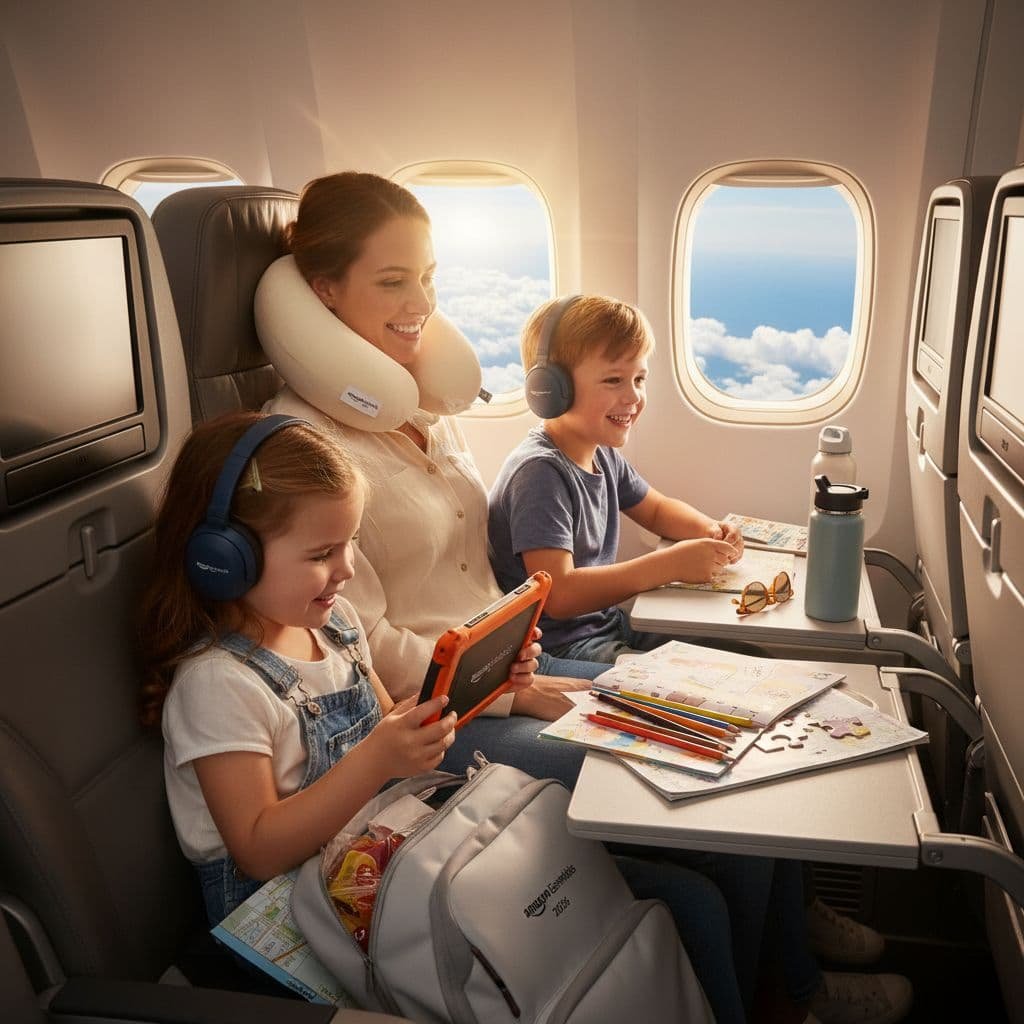
Spring Break Survival Gear for Flying With Kids: 5 Amazon Essentials for a Stress-free Flight
The gate just changed. Again. My youngest is suddenly starving, even though we ate 12 minutes ago. Meanwhile, the iPad is at 4 percent and the charging cable is buried somewhere deep in a backpack cave.
Spring break flights with kids can feel like juggling wet soap in a crowded hallway. So I keep it simple. Below is my short, tested set of Spring Break survival gear that earns its spot in my carry-on, because each item fixes one specific problem fast.
Affiliate Disclosure: This article contains affiliate links. If you book or purchase through these links, I Need My Vacation may earn a small commission at no extra cost to you. We only recommend services we genuinely trust and use ourselves. Thank you for your support!
If you’re still picking where to go, I keep a running list of spring break destination ideas that avoid the worst crowds, because the calm starts with the plan, not just the packing.
Video: Spring Break travel tips for flying with kids

My 5 Amazon Essentials for a Stress-Free Flight with Kids
I don’t pack for the fantasy flight where everyone naps. I pack for the real one, where the seat feels smaller than it should, the air is dry, and a 40-minute delay hits right when your kid’s patience runs out.
These five are my “fix it now” tools. I buy them on Amazon because I can replace lost pieces quickly before spring break week. (If you want a broader gear rabbit hole, this kids travel essentials roundup matches a lot of what works for real families.)
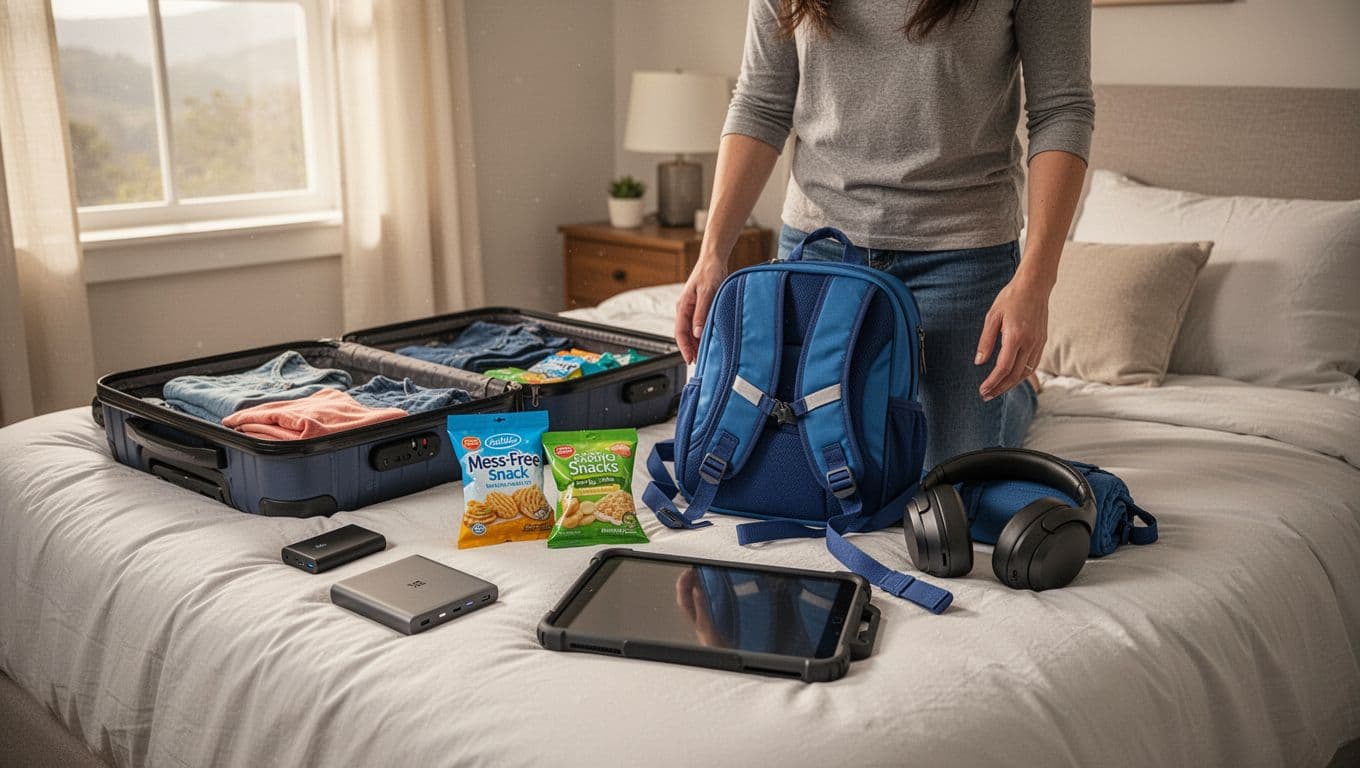
Here’s My Packing List
1. Volume-Limited Kids Noise-Canceling Headphones
- What it fixes: Loud terminals, engine roar, and “turn it down” fights
- Best for: Preschool and big kids (parents benefit too)
- How I use it: Headphones go on during boarding, before the seatbelt sign even clicks
- Buy this if: Your child melts down when things feel too loud
- Shop: Kids noise-canceling headphones on Amazon
2. Slim 10,000mAh Power Bank
- What it fixes: Dead tablets, dead phones, and desperate gate-floor charging
- Best for: Everyone, especially if you use screens for sanity
- How I use it: It stays in my personal item pocket, cable already attached
- Buy this if: You’ve ever rationed battery like it’s water in a desert
3. Shockproof Tablet Case with Stand
- What it fixes: Drops, sticky fingers, and the “hold it for me” trap
- Best for: Toddlers through big kids
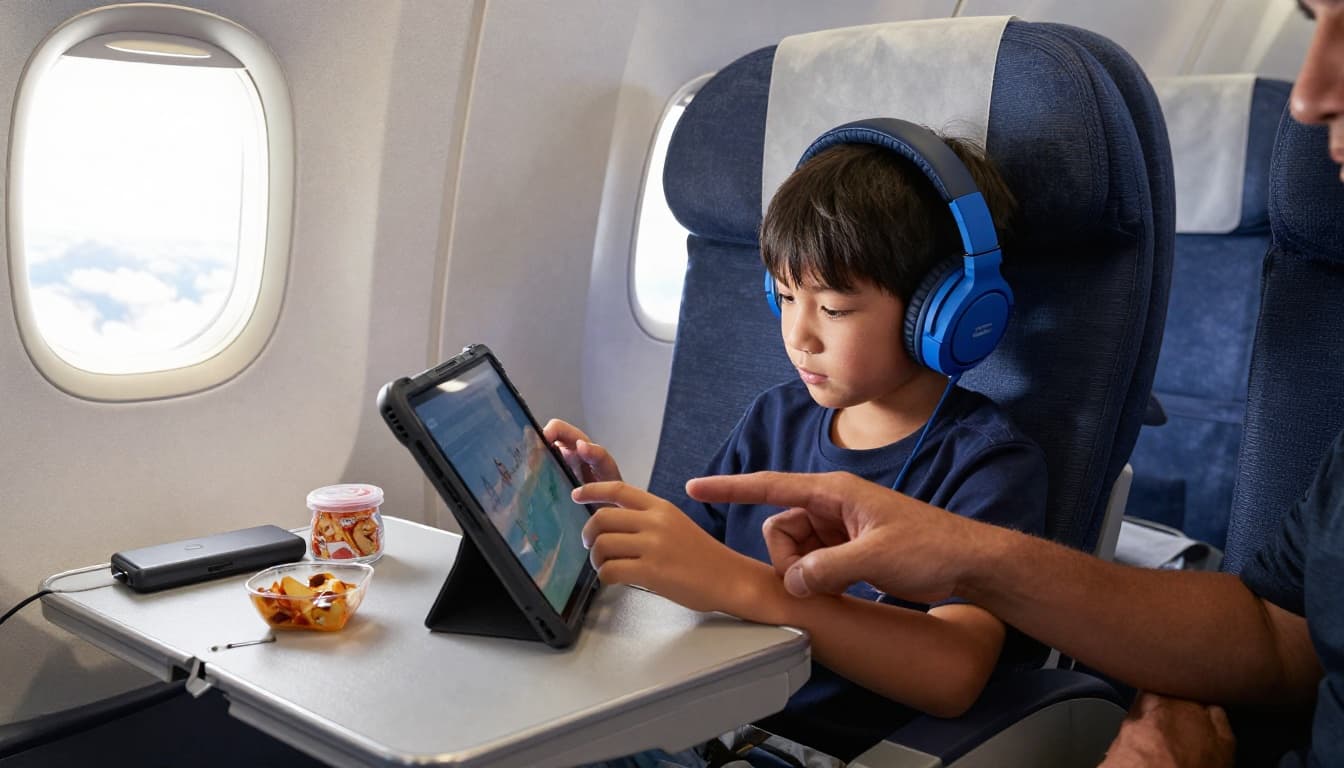
- How I use it: Stand on the tray table, screen angled slightly down, hands free
- Buy this if: Your kid treats gravity like a science experiment
4. Toddler Harness Backpack
- What it fixes: Sprinting in terminals and sudden “independent explorer” energy
- Best for: Toddlers and young preschoolers
- How I use it: I clip it on before we enter the airport, not after the first escape attempt
- Buy this if: Your child can run fast and listen slow
5. Mess-Free Snack Packs
- What it fixes: Hunger mood swings, boredom eating, and overpriced airport snacks
- Best for: All ages, including parents who forget to eat
- How I use it: I portion before we leave, then I hand them out on a schedule
- Buy this if: Your child’s mood has a snack-shaped key
What I Pack for the Plane Seat, Not the Whole Trip
My filter is strict because airplane space is cruel. If it can’t work in a cramped seat, I don’t bring it. If it can’t survive a drop, I don’t trust it. If my kid can’t use it without me becoming tech support, it stays home.
Most importantly, every item must solve one clear problem: noise, boredom, hunger, safety, or dead batteries. That’s it. Anything that tries to solve everything usually solves nothing.
Small Habits That Make These Items Work Harder
- I download shows and games at home on Wi-Fi, because airport Wi-Fi always has a personality.
- I keep a small cable pouch, so I’m not digging under granola dust for the right cord.
- I pick snacks that don’t crumble, because crumbs turn a seat into a tiny sandbox.
For product research, I like scanning guides that explain why certain travel gear lasts longer, like Wirecutter’s best travel gear recommendations. I don’t copy lists blindly, but I do steal durability ideas.
My rule is simple: If I can’t grab it with one hand while holding a boarding pass, it’s not “plane gear.”
How I Use This Gear from Curb to Cruising Altitude
Spring break 2026 travel has a “keep it simple” feel. I see more families choosing nature-forward trips and multi-generational travel. That’s great, but it also means airports still spike with families moving in clusters. So I treat travel day like a timeline, not a vague hope.
Before we even leave home, I do three things that reduce surprises: I check flexible flight options, I compare refundable stays, and I pre-book transfers when we land late. I want fewer decisions when everyone’s tired.
My Travel Day Rhythm
- Curb to check-in: Harness backpack is already on my toddler. No negotiations.
- Security line: Snacks stay in the bag until we clear, because sticky hands slow everything.
- Post-security reset: Bathroom, water, then headphones come out so the gate noise fades.
- Boarding: Tablet in the shockproof stand case, power bank accessible, cords ready.
- Taxi and takeoff: I save one snack for the moment the plane turns into a waiting room.
For carry-on rules, I keep it conservative. I pack lithium battery power banks in my carry-on, and I double-check size limits before we fly. If you want a current, plain-English overview, this list of TSA-compliant portable chargers is a helpful starting point.
At the Airport: Keeping Kids Close, Fed, and Calm
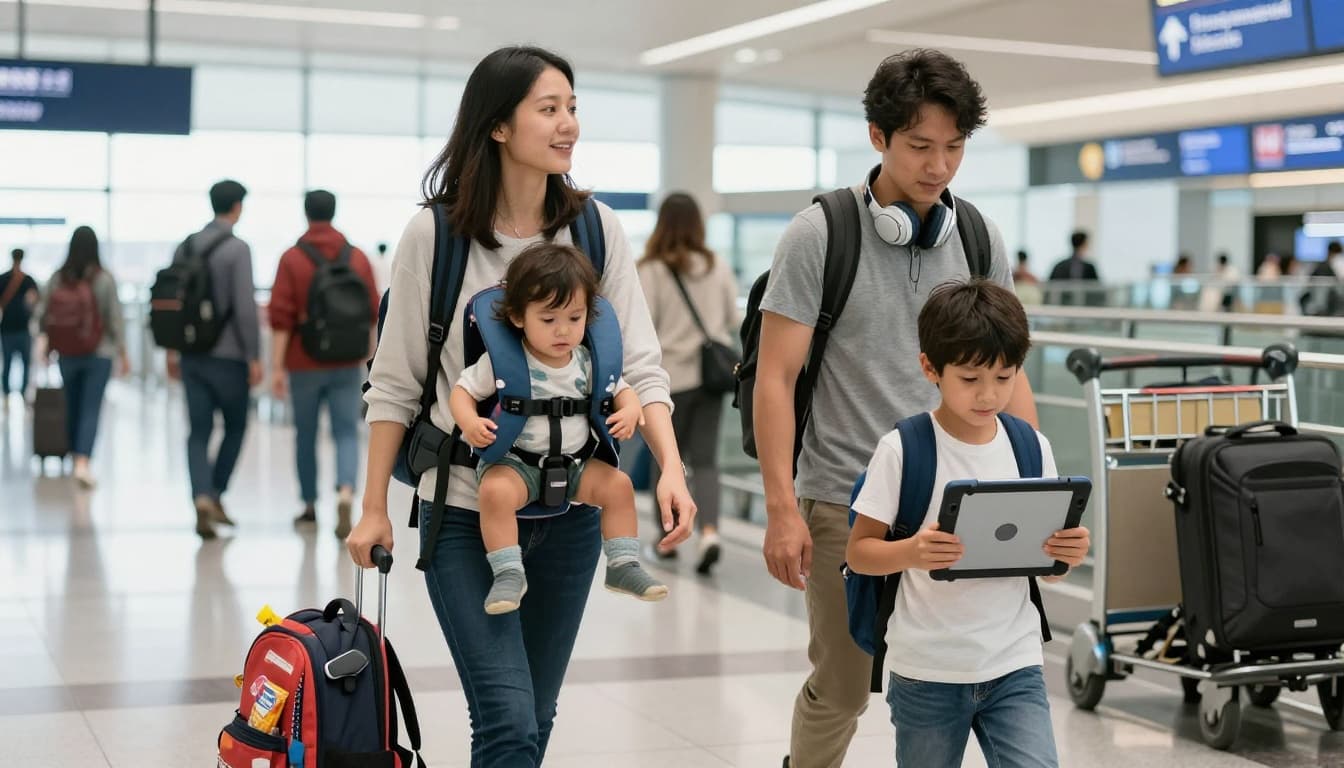
Crowds change kids. A calm child can turn jittery when the terminal feels like a mall on Black Friday. That’s why I set the rules early, while everyone still has a full battery and a decent mood.
First, the harness backpack is about safety, not control. I frame it like a job: “You’re my helper, and this keeps us together.” Next, I use snacks like punctuation. I don’t hand them out constantly, because then they lose their power.
My Snack Timing Strategy
- One small snack right after we clear security
- One at the gate when boarding is delayed
- One on the plane after takeoff
That spacing keeps hunger from stacking on top of noise and impatience.
I also set a headphone rule: headphones stay around the neck until we’re seated, then they go on. That prevents the “where are my headphones” panic at the exact wrong moment.
My Quick Gate-Change Drill (30 Seconds, No Drama)
- I put boarding passes in the same pocket every time.
- I move the kids first, then the bags.
- I promise the next snack only after we’re at the new gate.
If you want more carry-on packing logic, this guide on packing your carry-on to avoid TSA headaches explains the basics in a way that’s easy to apply.
On the Plane: My Simple Routine
Once we hit the aisle, I switch into “small moves” mode. Big lectures don’t work in row 22. So I run a routine that feels like a bedtime pattern, just louder and with snack wrappers.
Phase-by-Phase Breakdown
- During Boarding
- Headphones go on, and the tablet stays put in the stand case. I don’t start the show yet. I let boarding finish first, because pauses and announcements can trigger instant frustration.
- After Takeoff
- I start the downloaded show, then I wait five minutes before snacks. That short gap keeps snacks from becoming the opening act every time.
- Mid-Flight
- The power bank stays reachable, not buried. If turbulence hits or the cart blocks the aisle, I can still plug in fast. I also keep wipes handy, because tray tables collect mystery smudges.
- Before Landing
- I save one small snack or a simple game for descent. Ear pressure can bother kids, so I offer sips of water and something to chew. Swallowing helps many children feel better, and it gives them a “job” during that weird, floaty part of landing.
Book the Trip Around the Flight
The gear helps, but the booking choices do heavy lifting. I plan spring break trips around the flight experience first, because a late arrival with overtired kids can wreck night one.
I’m also seeing more families favor simpler, outdoor-focused plans in 2026, which I love. That style works best when the travel day doesn’t steal all your energy upfront.
To keep my arrival calm, I do three things early: I shop flights with flexible views, I pick refundable lodging when the calendar is tight, and I line up ground transportation if we land late. Even my packing choices follow that logic. If I’m stuck in a curb line at 11 pm, I want fewer problems to solve.
If you like building a personal item that actually works, this list of personal item essentials from a frequent flier has a few smart ideas, especially around staying organized.
When I Shop Flights for Spring Break
- Use flexible dates even when I think I can’t budge. Sometimes one day changes the price a lot.
- Avoid tight connections, because sprinting through airports with kids is a special kind of misery.
- Aim for arrival times that match naps, or at least don’t collide with bedtime.
- Check layover airports. Some hubs turn a simple connection into a two-hour line for food and bathrooms.
Finding Refundable Family Stays
Refundable rates matter more during spring break, because weather, school stuff, and packed flights can force changes. I also prioritize places with breakfast included, because mornings are already a lot. Laundry access helps too, even if it’s just a shared machine.
Location is the quiet money saver. If I’m close to what we’ll do each day, I spend less on rides and stress.
Pre-Booking Rides for Late Landings
Late landings feel longer with kids. The lights are harsh, the baggage carousel crawls, and everyone wants to be anywhere else. Pre-booking a transfer helps me skip decision fatigue. It also gives me a clear plan when my brain is tired.
FAQ: Quick Answers About Flying with Kids During Spring Break
What age should kids start using headphones on flights?
I start as soon as my child can keep them on comfortably, often around preschool age. For younger kids, I keep expectations low and practice at home first.
Are power banks allowed in carry-ons?
I pack them in my carry-on and avoid putting them in checked baggage. Rules can vary by airline and battery capacity, so I confirm current limits before travel day.
How many snacks should I pack for a flight with kids?
I plan for one snack per hour of total travel time, plus two extras for delays. I also pack a “gate snack” that I don’t touch until something goes wrong.
What do I do during a long delay at the gate?
I rotate in this order: bathroom, water, a short walk, then a snack, then screens. That sequence keeps kids from hitting peak frustration all at once.
Are toddler harness backpacks allowed at airports?
Yes, I use them in terminals all the time. I take it off for security screening if asked, then clip it back on right after.
How do I keep tablets charged and clean on a plane?
I keep the power bank and cable in the same pocket every time, so I can plug in fast. For cleaning, I use a wipe before we start and after snacks, because sticky screens cause extra drama.
Wrap-Up: Calm Travel Is Built from Small Saves
I can’t control gate changes or spring break crowds. I can control what’s in my bag. These five essentials reduce the five biggest flight stressors: noise, boredom, hunger, safety worries, and dead batteries.
If you want one next step, pick your dates and build the trip around the flight plan you can actually live with. Then pack like your seat is a tiny stage, and your gear is the backstage crew.
