

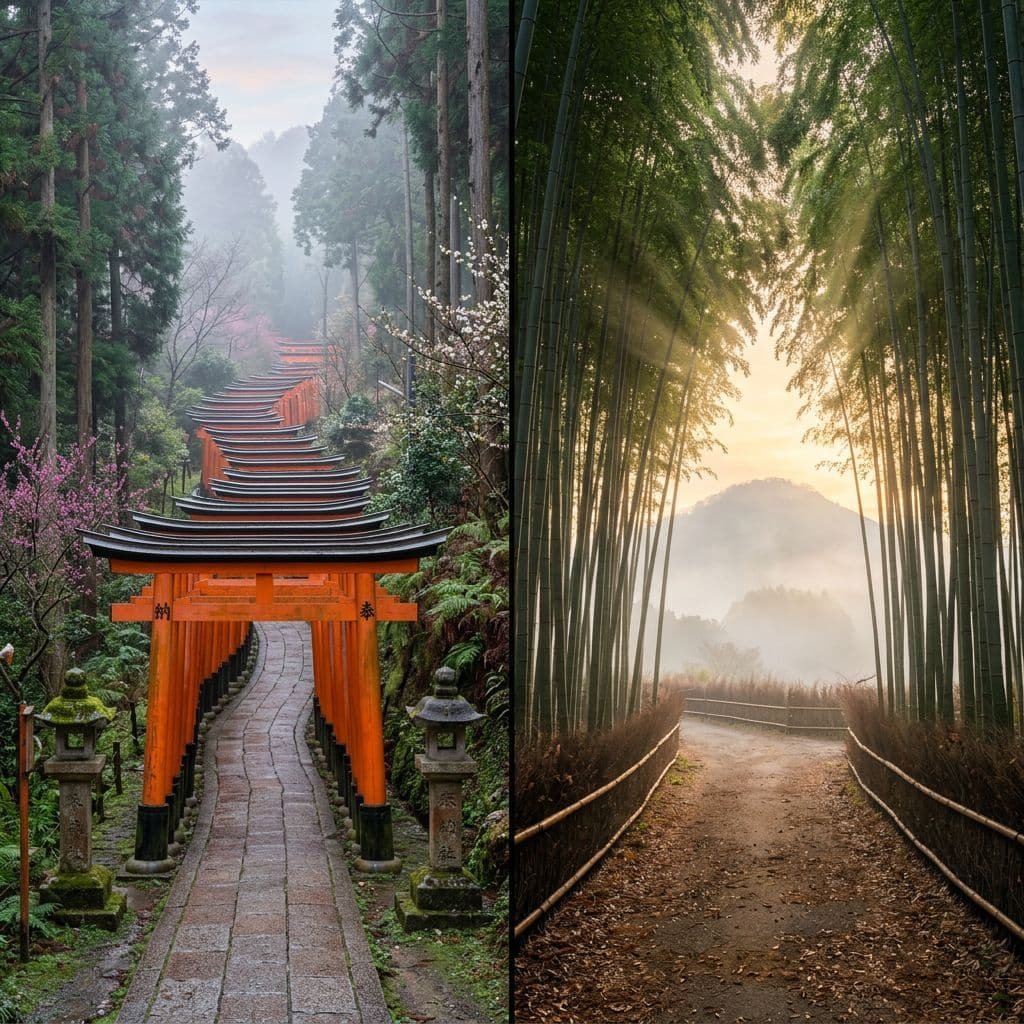
Kyoto in March: How I See Fushimi Inari Shrine and Arashiyama Without the 10:00 AM Crowds
In March, Kyoto feels like it’s waking up slowly—cool air on my cheeks, a hint of rain in the clouds, and the first blush of spring in the branches. The best moments happen before the city fully opens its eyes. That’s the trick.
Because by 10:00 AM, both Fushimi Inari Shrine and Arashiyama start to feel like a moving line, tour flags bobbing like buoys in a crowded sea. Late March gets even busier as sakura season ramps up (early March is calmer, but colder). I plan for changeable weather too, since March can swing from crisp mornings to mild afternoons, with rain always possible.
TL;DR (the plan that beats the crowds)
- Fushimi Inari: Arrive 6:45 to 7:15 AM, exit by 9:00 AM
- Arashiyama Bamboo Grove: Arrive before 8:30 AM or go after 4:00 PM
- Skip the funnels: Walk past the first “photo gate” zones fast
- Use a detour: Grab bamboo shots at Inari if Arashiyama is packed
Affiliate Disclosure: This article contains affiliate links. If you book or purchase through these links, I Need My Vacation may earn a small commission at no extra cost to you. We only recommend services we genuinely trust and use ourselves to help you plan the perfect trip. Thank you for your support!
If you’re timing your trip around blossoms, I keep a simple reference here: my cherry blossom timing guide.
Quick Navigation
- My crowd-proof plan for Fushimi Inari in March
- The exact route I take for quiet torii photos
- The hidden bamboo detour most people miss
- Arashiyama without the 10:00 AM crush
- Make it easy to book: flights, stays & transfers
- FAQ: Kyoto in March crowds & timing

My crowd-proof plan for Fushimi Inari in March (before the tour buses)
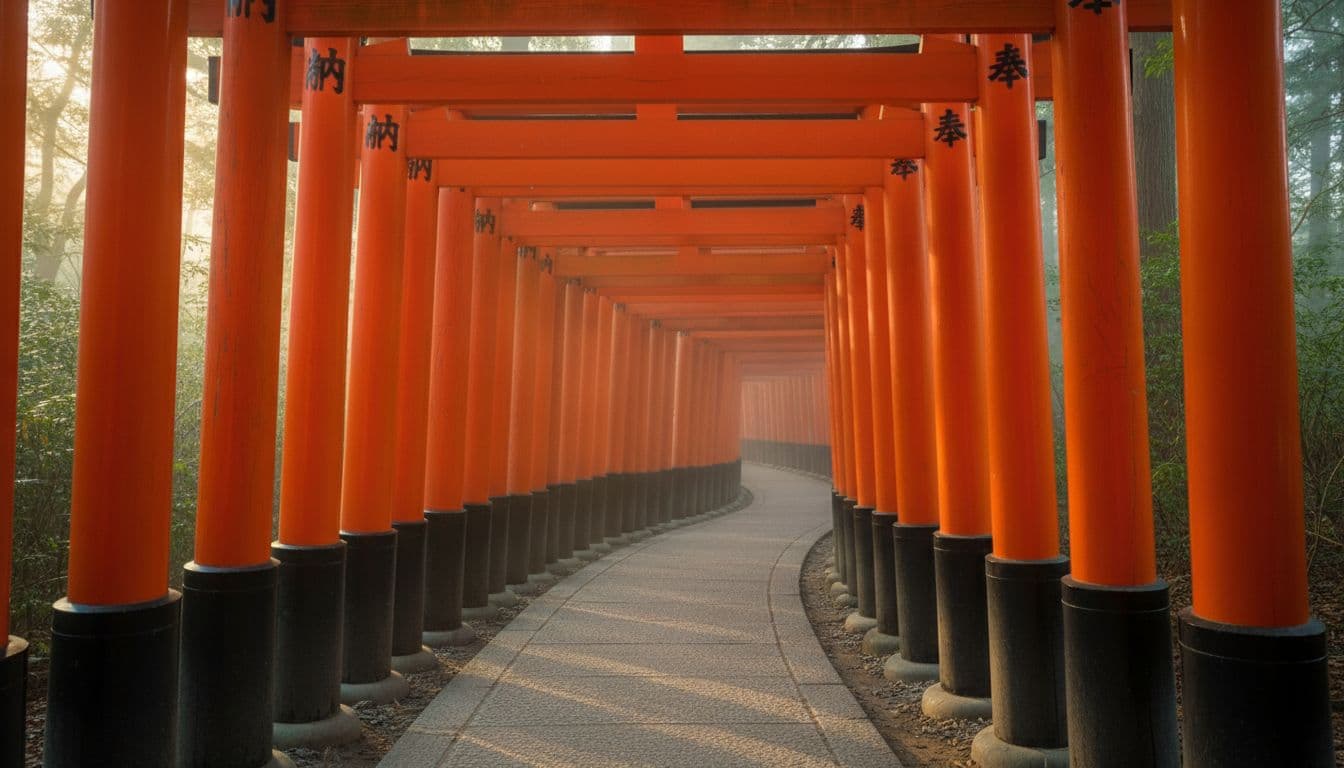
I treat Fushimi Inari like a sunrise appointment, not a casual stop. March mornings are cold enough to keep some people in bed, so I use that window.
My mini timeline that works even in late March:
- 6:45 to 7:15 AM: Arrive, quick coffee from a vending machine if I need it
- 7:30 AM: First clean torii tunnel photos
- 9:00 AM: I’m already heading out, before the wave hits
Why 10:00 AM is peak: Day tours roll in, school groups arrive, and a lot of travelers start after a slow breakfast. By then, the first torii tunnels become a human zipper.
Getting there is easy:
From Kyoto Station, I take the JR Nara Line to Inari Station (it’s fast, and the shrine is right outside). I also load an ICOCA card so I’m not fumbling with tickets while half-awake.
For calmer photos, I keep it simple:
- I step to the side near the gates where the path widens
- I shoot slightly upward to cut out heads and shoulders
- I wait for a gap instead of pushing forward
- I never stop in the narrow center (it blocks everyone)
The exact route I take for quiet torii photos fast
I enter through the main gate and keep walking past the first “famous” gate stretch. That front section fills first because it’s the shortest walk from the entrance.
After a few minutes, the crowd thins naturally. Then I pause for ten seconds, let a cluster pass, and take photos as the path clears. If I have time, I hike higher up Mount Inari, since distance spreads people out better than any trick.
I keep my voice low, and I don’t park myself under a gate. Locals and worshippers deserve space too.
The hidden bamboo detour that most people miss
Past the inner shrine area, I look for a smaller right-hand turn that feels less “tourist obvious.” There usually aren’t big English cues pulling people in, so the flow stays lighter.
The payoff is a calmer walk with a bamboo feel that surprises people. When Arashiyama is slammed, this detour scratches the bamboo itch without the shoulder-to-shoulder squeeze.
For a visual trail overview before you go, I like this Fushimi Inari hiking guide and route notes.
Arashiyama without the 10:00 AM crush: what I visit, in what order, and when
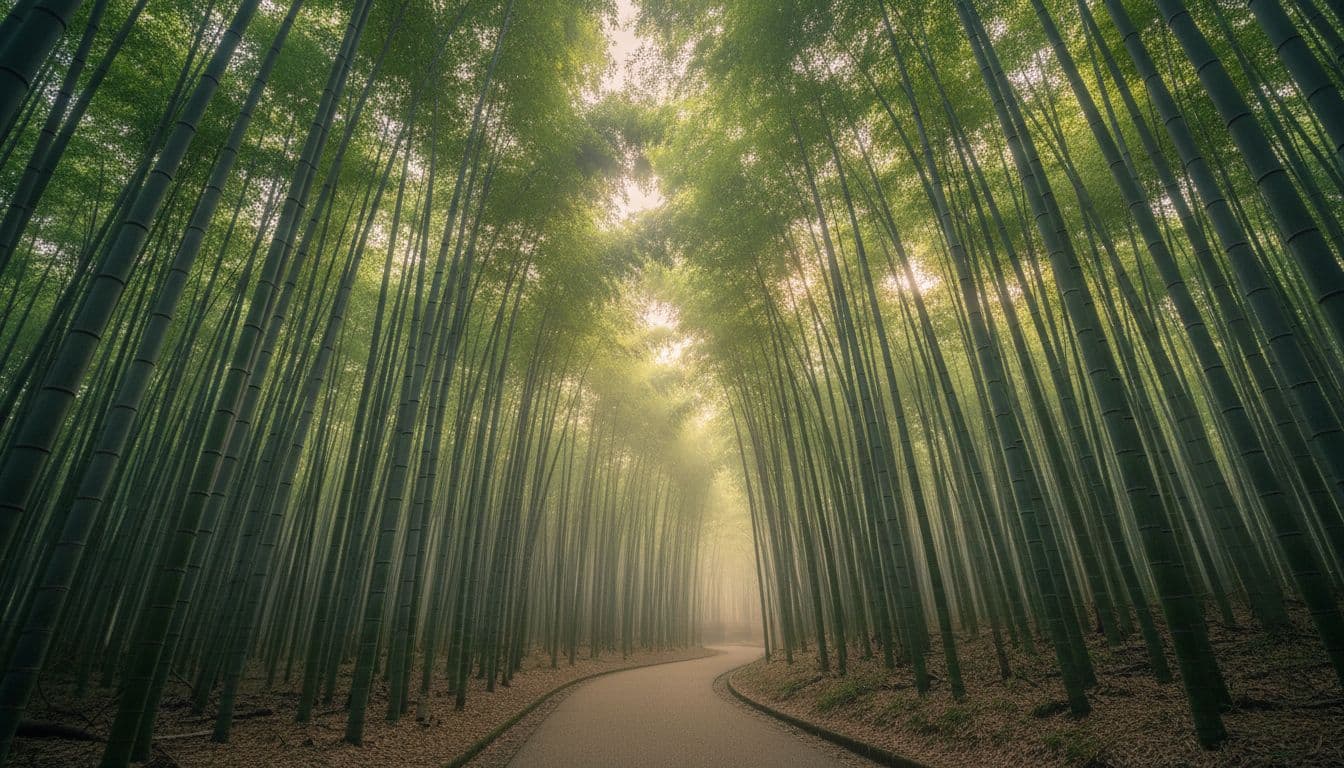
Arashiyama crowds behave like water. They pour into the bamboo grove, get stuck in the narrowest part, then spill into the same photo spots. So I plan around the funnel.
I use one of two time windows:
🌅 Sunrise plan (best for photos):
I arrive before 8:00 to 8:30 AM. From Kyoto Station, I take the JR Sagano Line to Saga-Arashiyama Station, then walk about 10 to 15 minutes.
🌆 Late-day plan (best for sanity):
I show up after 4:00 PM. In March, daylight is still workable, especially early in the month. By then, many day-trippers have already headed back.
Either way, I move beyond the main grove quickly. I treat it like a quick scene, not a long hangout. After that, I drift toward the river area and quieter side streets, which act like pressure-release zones.
My 60-minute “bamboo, then escape” loop that stays calm
First, I walk into the grove and take photos early, fast, and politely. Then I continue out and aim for the older-feeling lanes with traditional houses and a slower pace (the Saga-Toriimoto vibe, even if I only sample it).
My quick mobile photo habits:
- Portrait mode for depth, but only when the path is clear
- Shoot low through stalks to hide the ground clutter
- Wait for gaps, because the best “empty” shot is often just 8 seconds away
Quieter alternatives near Arashiyama when the main grove is wall-to-wall
If the grove feels packed, I pivot instead of forcing it. Small changes save the mood.
I usually pick places like:
- Temple grounds nearby, since people spread out across wider paths
- Back roads uphill, where tour groups rarely linger
- River paths, because everyone’s focused on bamboo, not water
I keep voices down at temples, and I never call out across a courtyard. Quiet is part of what I’m there for.
For a practical mindset on beating Kyoto congestion, this early morning Kyoto strategy guide matches how I travel.
Make it easy to book: where I check flights, stays, and simple transfers for Kyoto
Once my mornings are planned, I lock in the big pieces. That’s when Kyoto feels easy, because I’m not scrambling on my phone at midnight.
✈️ Step 1: Find flexible flights
For flights, I compare flexible dates first, since March pricing can jump around weekends and late-March blossom timing. Then I shortlist arrivals that don’t land too late.
🔍 Search Flexible Flights on Aviasales
🏨 Step 2: Book refundable stays
Next, I focus on location and cancellation terms. I’ll pay a little more for refundable rates when the forecast looks wet, or when my schedule is tight.
🏨 Compare Refundable Stays on Booking.com
🏨 Search Hotels on Agoda
🚗 Step 3: Pre-book airport transfers
Finally, if I’m landing late (or I just don’t want to think), I pre-book my ride so I’m not negotiating tired and jet-lagged.
🚗 Pre-Book Airport Pickup with Welcome Pickups
What I pack for Kyoto in March (light layers, rain backup)
Kyoto in March rewards light layers. I pack for cold mornings, warm afternoons, and surprise rain.
🛒 Shop Essential Travel Gear on Amazon
My must-haves:
- Compact umbrella – March rain is unpredictable
- Light rain jacket – Packable and waterproof
- Warm base layer – For those crisp 6:45 AM starts
- Quick-dry towel – Handy for unexpected drizzle
- Portable charger – All those photos drain batteries fast
FAQ: Kyoto in March crowds, timing, and smart alternatives

Is late March more crowded in Kyoto?
Yes. Late March often lines up with early blooms and rising sakura hype, so mornings matter even more.
What if it rains in March?
I still go early. Light rain can actually thin crowds, so I bring an umbrella and protect my phone. Wet stone paths and misty bamboo can be even more atmospheric.
Can I do Fushimi Inari and Arashiyama in one day?
Yes, if you start early. I do Inari at dawn (6:45-9:00 AM), then Arashiyama either late morning on a weekday or after 4:00 PM. It’s a long day, but doable.
What’s the best time for photos at both spots?
For clean shots, I aim for 7:00 to 8:30 AM. Soft light plus fewer people beats any filter.
Is it worth going higher up at Fushimi Inari?
If you can handle stairs, yes. The higher paths feel calmer, even on busy days. The view from the halfway point is worth the climb.
What should I wear in Kyoto in March?
Light layers are key. Mornings can be near freezing, but afternoons warm up. I wear a base layer, light sweater, and packable rain jacket. Comfortable walking shoes are non-negotiable.
Conclusion
When I get it right, Kyoto gives me quiet gifts: an empty stretch of torii gates, the hush of bamboo shifting overhead, my footsteps landing soft on damp stone. The simple rule holds every time: arrive early, move past the funnels, and use the detours when the main paths clog up.
If you’re traveling in March, especially late March, I’d book the big pieces soon, then build your mornings around them. After all, the calmest Kyoto isn’t found by luck—it’s found by timing.
🌸 Ready to Experience Kyoto Without the Crowds?
Start planning your perfect March Kyoto trip with these trusted tools:
© 2026 I Need My Vacation. All rights reserved.
YouTube reference: https://www.youtube.com/watch?v=gQeGXOUy6EE
