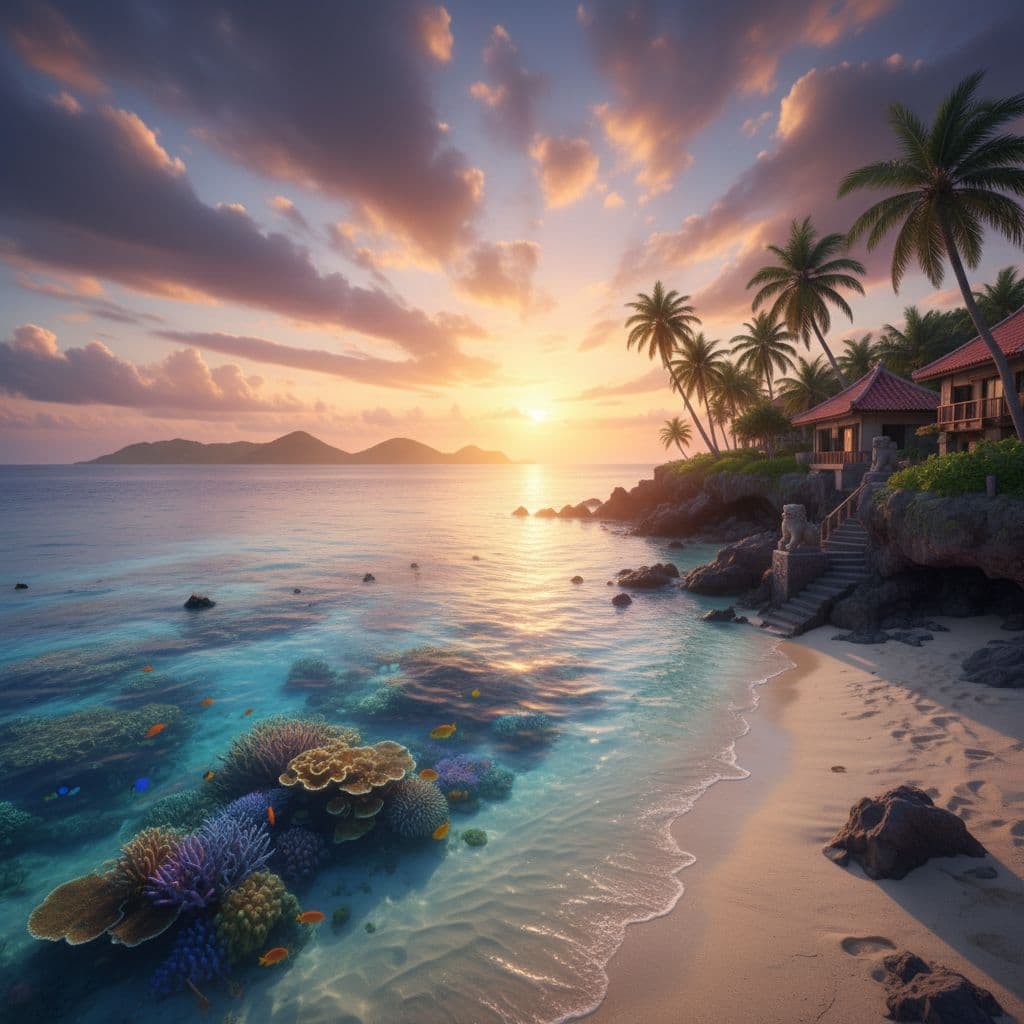
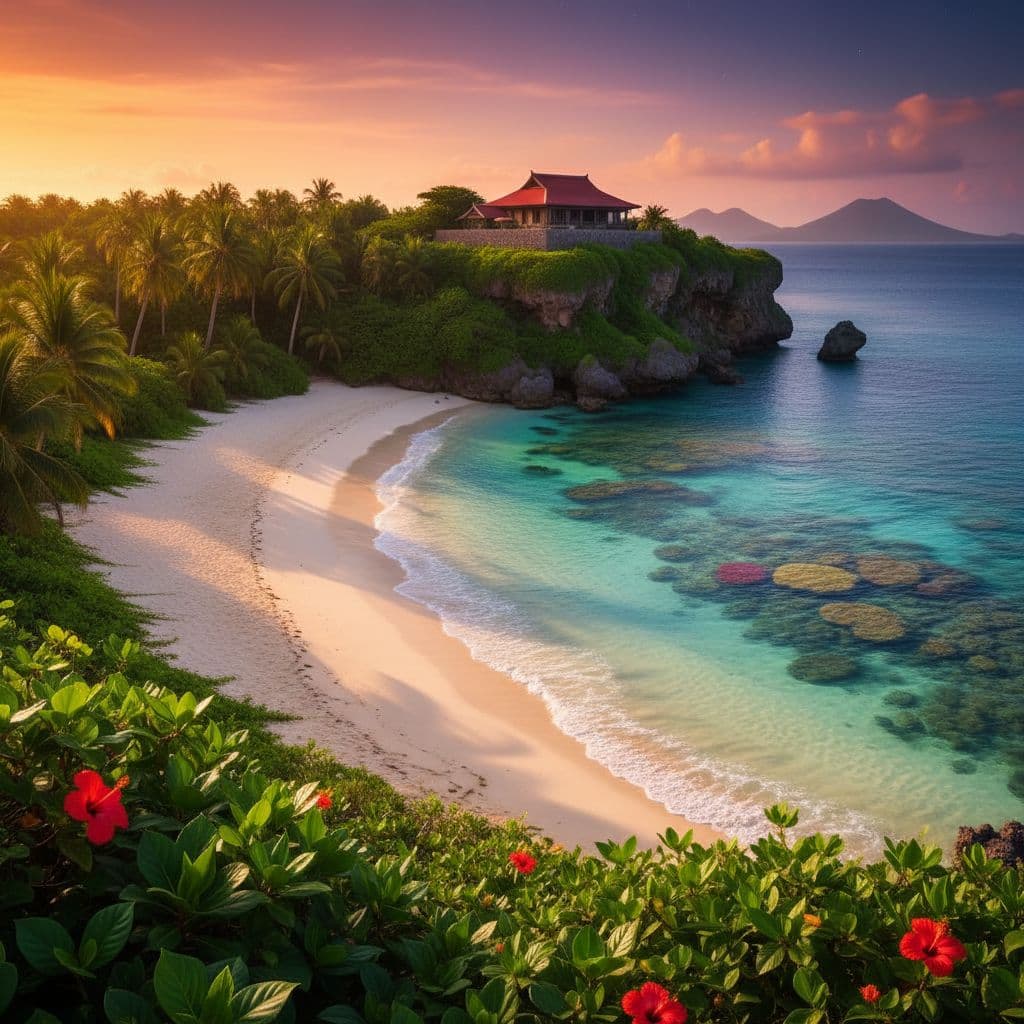
The Best eSIMs for Japan and South Korea in 2026 (Why I’m Using Airalo Instead of a Physical SIM)
I always notice the same scene right after landing in Tokyo or Seoul: sleepy eyes, one hand on a passport, the other on a phone, juggling QR codes, train tickets, and a map that won’t load. Meanwhile, the physical SIM line snakes past the kiosk, and someone drops that tiny SIM tool like it’s a needle.
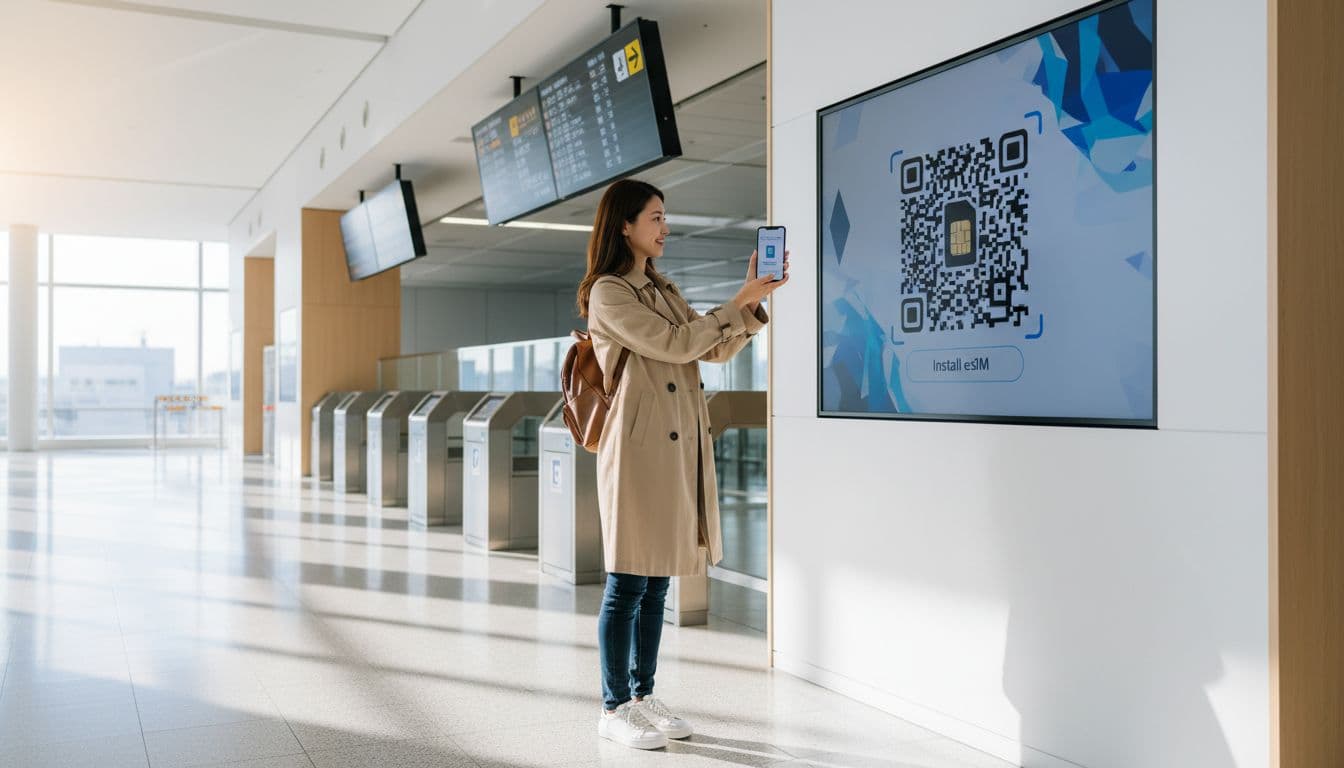
If you’re traveling in 2026, there’s a simpler move: install an eSIM before you fly, then switch it on after you land. No SIM swaps, no store hours, and far fewer “wait, why is my roaming on?” surprises.
This guide is for first-timers, cherry blossom planners, and anyone doing a multi-city Japan plus South Korea trip.
Transparency Note: This article contains affiliate links. If you book through these links, I Need My Vacation may earn a small commission at no extra cost to you. We only recommend services we genuinely trust and use ourselves. Thank you for supporting independent travel content!
TL;DR: My Top Pick for 2026 Airalo offers the best balance for most travelers—simple app, easy top-ups, dependable coverage in Japan and South Korea, with plans starting from just $4.
My 2026 Quick Picks: Best eSIMs for Japan and South Korea
Here’s the short list I’d send a friend who just texted, “What eSIM should I buy for Japan and Korea?”
🥇 1. Airalo – Best Overall
Best for: Most travelers, flexible top-ups Trip length: 5-30 days Tradeoff: Not always the cheapest on paper Get Airalo eSIM →
🥈 2. Nomad – Best for Comparisons
Best for: Plan variety and date flexibility Trip length: 5-30 days Tradeoff: More time spent choosing plans
🥉 3. Holafly – Best Unlimited
Best for: “Unlimited” simplicity Trip length: 5-20 days Tradeoff: Higher cost, fair-use policies vary
4. Ubigi & Saily – Solid Alternatives
Best for: Existing users, quick price checks Trip length: 7-30 days Tradeoff: Less flexibility if you underestimate data
Real pricing snapshot (March 2026):
Saily Japan: 20GB for 30 days around $27.19
Airalo Japan: Unlimited for 30 days around $57
Airalo South Korea: Unlimited around $23 for 7 days
Prices fluctuate like flight fares. I always check current Airalo rates before booking.
For a broader perspective, I recommend scanning TechRadar’s best eSIMs for Japan, then deciding based on your trip length and data habits.
Planning for cherry blossom season? I plan data the same way I plan parks and day trips—early. Bookmark this cherry blossom timing guide because spring routes change fast once blooms peak.
A physical SIM used to feel like a travel rite of passage. Now it feels like extra friction. I’d rather spend arrival time buying a T-money card in Seoul or finding the right train gate in Tokyo.
5 Reasons Travelers Are Switching to eSIMs:
⚡ Speed: Install before you fly, switch on after landing
🎯 Convenience: No SIM tray, no tiny tool, no “where’s my home SIM?”
🔒 Security: Zero chance of losing your main SIM in a hotel room
🔄 Flexibility: Top up in-app when you burn data during transit days
💰 Cost control: Avoid accidental roaming charges
eSIM vs Pocket WiFi vs Physical SIM: The Real Tradeoffs
Option
Pros
Cons
Best For
eSIM
Instant setup, no device to carry
Requires eSIM-compatible phone
Most travelers
Pocket WiFi
Multiple device sharing
Extra device to charge, carry, return
Groups/families
Physical SIM
Works with any unlocked phone
Store hours, ID checks, risk of loss
Backup option
My verdict:eSIM first, pocket WiFi only for heavy multi-device groups.
Airalo: My Best All-Around Pick for 2026
Airalo fits how I actually travel. I buy the plan in the app, install it in minutes, then activate it on arrival. In Japan, Airalo routes through major local networks (typically SoftBank), which delivers solid coverage in cities where I spend most of my time.
What I notice in real life:
✅ Maps load instantly on station platforms
✅ Translation apps work at dinner
✅ Last-minute ticket booking without WiFi hunting
✅ Snappy 5G speeds in Tokyo and Seoul
Reality check: No eSIM is magic. Mountains, deep subways, and long tunnels can drop signal—that’s normal. I appreciate that hotspot sharing is usually supported, so I can connect a laptop in a pinch. When my carrier allows it, I keep my home SIM active for bank codes and important texts.
When I’d Pick a Different eSIM
Only want “unlimited” and don’t care about cost? → Holafly
Want to compare specific date ranges? → Nomad
Already use another ecosystem? → Stick with Ubigi or Saily
How to Set Up Your Airalo eSIM (Works the Minute You Land)
I do this setup at home, not on airport WiFi. It takes about 5 minutes when I’m not rushed.
Step-by-Step Setup:
Check compatibility: Confirm your phone is eSIM-compatible and unlocked
Buy your plan: Get your Japan or South Korea eSIM at Airalo
Install: Install via the app or QR code, then name it something obvious like “Japan Data”
Set as data line: Make the eSIM your mobile data line
Before takeoff: Keep it OFF, then after landing turn it ON and enable data roaming for the eSIM only
Keep primary line: Leave your main SIM on for calls/texts if your carrier supports it
Pre-Flight Mini Checklist:
☐ Screenshot the installation steps
☐ Confirm the eSIM line is added
☐ Check “Cellular Data” points to the eSIM
☐ Save offline maps as backup
💡 Pro tip: After landing, restart your phone once. It fixes more issues than it should.
The 5 Mistakes That Cause “No Service” (And Fast Fixes)
❌ Activated too early ✅ Fix: Wait until you land, then toggle it on
❌ Wrong data line selected ✅ Fix: Set cellular data to the eSIM, not your home SIM
❌ Data roaming off for eSIM ✅ Fix: Turn on roaming for the eSIM line only
❌ VPN blocking portals ✅ Fix: Pause VPN, connect, then turn it back on
❌ No restart after install ✅ Fix: Restart, then toggle airplane mode once
Japan + Korea Combo Trip Strategy
I choose between two options:
Simplest: One regional Asia eSIM (if it includes both countries)
Better control: Separate country plans (often cheaper depending on data use)
Either way: Top up before transit days—airports and long train days eat data fast. Compare both options in the Airalo app before buying.
Booking Checklist: Flights, Stays & Transfers
Good data makes every booking step easier. I can pull up confirmations, translate hotel messages, and reroute when train platforms change.
Kyoto in March: How I See Fushimi Inari Shrine and Arashiyama Without the 10:00 AM Crowds
In March, Kyoto feels like it’s waking up slowly—cool air on my cheeks, a hint of rain in the clouds, and the first blush of spring in the branches. The best moments happen before the city fully opens its eyes. That’s the trick.
Because by 10:00 AM, both Fushimi Inari Shrine and Arashiyama start to feel like a moving line, tour flags bobbing like buoys in a crowded sea. Late March gets even busier as sakura season ramps up (early March is calmer, but colder). I plan for changeable weather too, since March can swing from crisp mornings to mild afternoons, with rain always possible.
TL;DR (the plan that beats the crowds)
Fushimi Inari: Arrive 6:45 to 7:15 AM, exit by 9:00 AM
Arashiyama Bamboo Grove: Arrive before 8:30 AM or go after 4:00 PM
Skip the funnels: Walk past the first “photo gate” zones fast
Use a detour: Grab bamboo shots at Inari if Arashiyama is packed
Affiliate Disclosure: This article contains affiliate links. If you book or purchase through these links, I Need My Vacation may earn a small commission at no extra cost to you. We only recommend services we genuinely trust and use ourselves to help you plan the perfect trip. Thank you for your support!
Kyoto in early March feels quiet and almost private, especially before breakfast.
My crowd-proof plan for Fushimi Inari in March (before the tour buses)
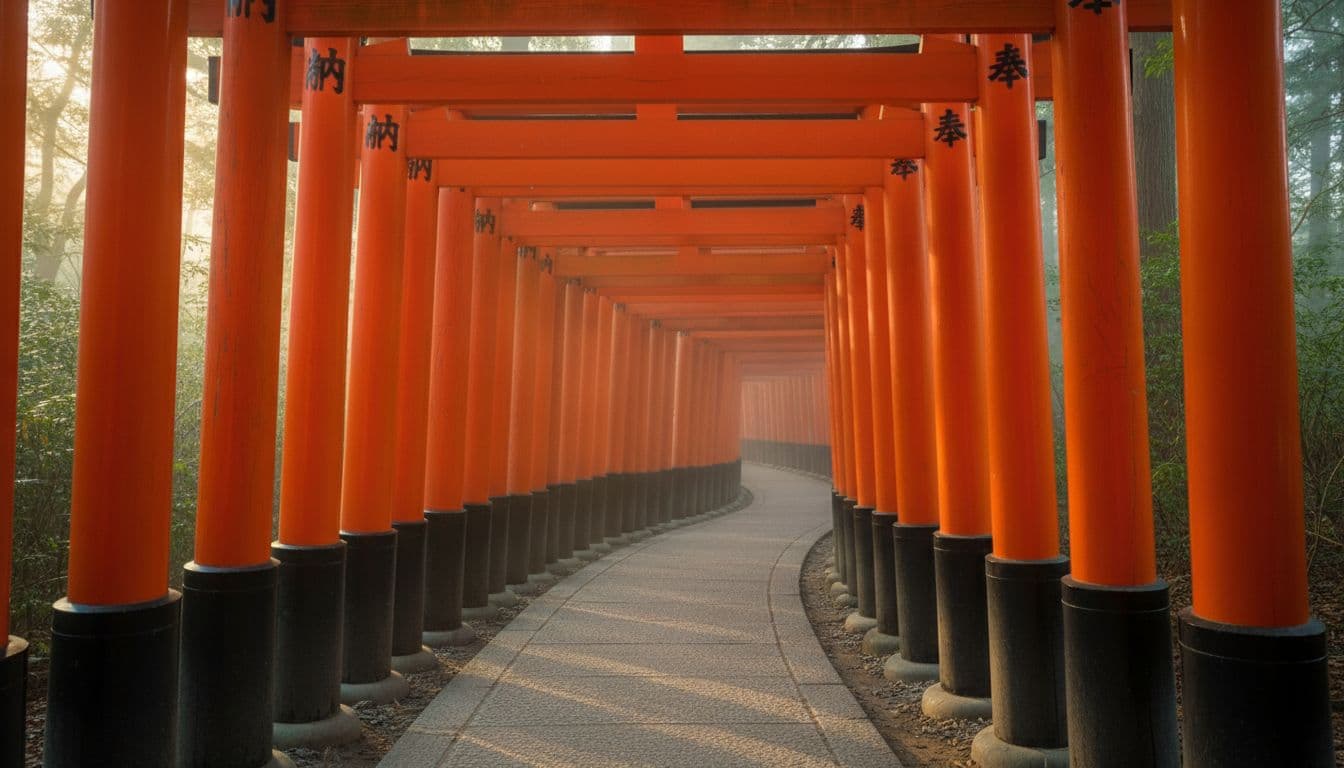
That “I can hear my footsteps” quiet at Fushimi Inari.
I treat Fushimi Inari like a sunrise appointment, not a casual stop. March mornings are cold enough to keep some people in bed, so I use that window.
My mini timeline that works even in late March:
6:45 to 7:15 AM: Arrive, quick coffee from a vending machine if I need it
7:30 AM: First clean torii tunnel photos
9:00 AM: I’m already heading out, before the wave hits
Why 10:00 AM is peak: Day tours roll in, school groups arrive, and a lot of travelers start after a slow breakfast. By then, the first torii tunnels become a human zipper.
Getting there is easy:
From Kyoto Station, I take the JR Nara Line to Inari Station (it’s fast, and the shrine is right outside). I also load an ICOCA card so I’m not fumbling with tickets while half-awake.
For calmer photos, I keep it simple:
I step to the side near the gates where the path widens
I shoot slightly upward to cut out heads and shoulders
I wait for a gap instead of pushing forward
I never stop in the narrow center (it blocks everyone)
The exact route I take for quiet torii photos fast
I enter through the main gate and keep walking past the first “famous” gate stretch. That front section fills first because it’s the shortest walk from the entrance.
After a few minutes, the crowd thins naturally. Then I pause for ten seconds, let a cluster pass, and take photos as the path clears. If I have time, I hike higher up Mount Inari, since distance spreads people out better than any trick.
I keep my voice low, and I don’t park myself under a gate. Locals and worshippers deserve space too.
The hidden bamboo detour that most people miss
Past the inner shrine area, I look for a smaller right-hand turn that feels less “tourist obvious.” There usually aren’t big English cues pulling people in, so the flow stays lighter.
The payoff is a calmer walk with a bamboo feel that surprises people. When Arashiyama is slammed, this detour scratches the bamboo itch without the shoulder-to-shoulder squeeze.
Arashiyama without the 10:00 AM crush: what I visit, in what order, and when
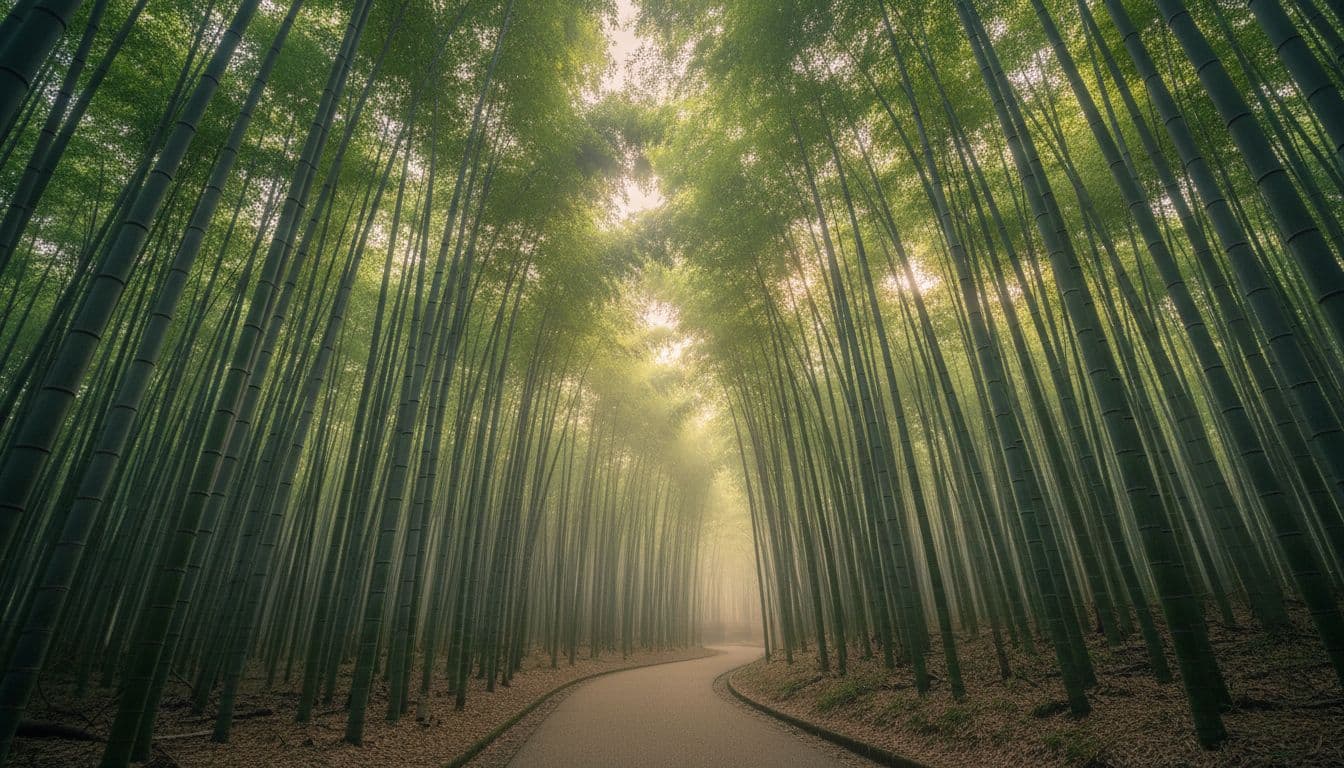
The bamboo grove is magical when it’s quiet enough to hear it move.
Arashiyama crowds behave like water. They pour into the bamboo grove, get stuck in the narrowest part, then spill into the same photo spots. So I plan around the funnel.
I use one of two time windows:
🌅 Sunrise plan (best for photos):
I arrive before 8:00 to 8:30 AM. From Kyoto Station, I take the JR Sagano Line to Saga-Arashiyama Station, then walk about 10 to 15 minutes.
🌆 Late-day plan (best for sanity):
I show up after 4:00 PM. In March, daylight is still workable, especially early in the month. By then, many day-trippers have already headed back.
Either way, I move beyond the main grove quickly. I treat it like a quick scene, not a long hangout. After that, I drift toward the river area and quieter side streets, which act like pressure-release zones.
My 60-minute “bamboo, then escape” loop that stays calm
First, I walk into the grove and take photos early, fast, and politely. Then I continue out and aim for the older-feeling lanes with traditional houses and a slower pace (the Saga-Toriimoto vibe, even if I only sample it).
My quick mobile photo habits:
Portrait mode for depth, but only when the path is clear
Shoot low through stalks to hide the ground clutter
Wait for gaps, because the best “empty” shot is often just 8 seconds away
Quieter alternatives near Arashiyama when the main grove is wall-to-wall
If the grove feels packed, I pivot instead of forcing it. Small changes save the mood.
I usually pick places like:
Temple grounds nearby, since people spread out across wider paths
Back roads uphill, where tour groups rarely linger
River paths, because everyone’s focused on bamboo, not water
I keep voices down at temples, and I never call out across a courtyard. Quiet is part of what I’m there for.
Make it easy to book: where I check flights, stays, and simple transfers for Kyoto
Once my mornings are planned, I lock in the big pieces. That’s when Kyoto feels easy, because I’m not scrambling on my phone at midnight.
✈️ Step 1: Find flexible flights
For flights, I compare flexible dates first, since March pricing can jump around weekends and late-March blossom timing. Then I shortlist arrivals that don’t land too late.
Next, I focus on location and cancellation terms. I’ll pay a little more for refundable rates when the forecast looks wet, or when my schedule is tight.
Portable charger – All those photos drain batteries fast
FAQ: Kyoto in March crowds, timing, and smart alternatives
Planning ahead is the secret to peaceful Kyoto mornings.
Is late March more crowded in Kyoto?
Yes. Late March often lines up with early blooms and rising sakura hype, so mornings matter even more.
What if it rains in March?
I still go early. Light rain can actually thin crowds, so I bring an umbrella and protect my phone. Wet stone paths and misty bamboo can be even more atmospheric.
Can I do Fushimi Inari and Arashiyama in one day?
Yes, if you start early. I do Inari at dawn (6:45-9:00 AM), then Arashiyama either late morning on a weekday or after 4:00 PM. It’s a long day, but doable.
What’s the best time for photos at both spots?
For clean shots, I aim for 7:00 to 8:30 AM. Soft light plus fewer people beats any filter.
Is it worth going higher up at Fushimi Inari?
If you can handle stairs, yes. The higher paths feel calmer, even on busy days. The view from the halfway point is worth the climb.
What should I wear in Kyoto in March?
Light layers are key. Mornings can be near freezing, but afternoons warm up. I wear a base layer, light sweater, and packable rain jacket. Comfortable walking shoes are non-negotiable.
Conclusion
When I get it right, Kyoto gives me quiet gifts: an empty stretch of torii gates, the hush of bamboo shifting overhead, my footsteps landing soft on damp stone. The simple rule holds every time: arrive early, move past the funnels, and use the detours when the main paths clog up.
If you’re traveling in March, especially late March, I’d book the big pieces soon, then build your mornings around them. After all, the calmest Kyoto isn’t found by luck—it’s found by timing.
🌸 Ready to Experience Kyoto Without the Crowds?
Start planning your perfect March Kyoto trip with these trusted tools:
My 2026 Cherry Blossom Guide for Japan and South Korea (Best Dates, Cities, and Booking Plan)
Petals drift down like soft confetti, and for a moment the whole street turns pink and quiet. I can smell spring on the breeze, hear camera shutters, and feel that familiar panic: if I’m even a few days off, cherry blossoms slip away.
That’s the problem with sakura season in Japan and South Korea—the blooms move fast, crowds move faster, and prices spike the minute spring dates look “safe.” So for spring 2026, I’m treating this like a real plan, not a wish.
In this guide, I’ll lay out the best week windows (Tokyo is often late March into early April, Seoul tends to peak in early April), the smartest city pairs, and a simple booking plan that keeps me close to the flowers without burning my budget. I’ll also point out where flexibility matters most: flights, hotels, and getting around on peak weekends.
The sweet spot: Book early, then stay flexible by a few days, because blooms don’t follow your PTO calendar.
TL;DR: 2026 Bloom Plan in 30 Seconds
Best overall Japan window: March 26 to April 6 (Tokyo, Kyoto, Osaka range)
Best overall South Korea window: March 27 to April 10 (Busan first, Seoul later)
Top city pairs: Tokyo + Kyoto, Busan + Seoul, Fukuoka + Busan (fast bloom chase)
Book now message: Lock flights and a refundable stay early, then fine-tune by forecast
Affiliate Disclosure: This article contains affiliate links. If you book or purchase through these links, I Need My Vacation may earn a small commission at no extra cost to you. We only recommend services we genuinely trust and use ourselves to help you plan the perfect trip. Thank you for your support!
2026 Cherry Blossom Forecast at a Glance: Best Dates for Japan and South Korea
Cherry blossom timing is like trying to catch snowflakes on your tongue. You can plan, you can hope, but you still need a smart window. For 2026, I anchor my trip around full bloom (peak), then I give myself a few buffer days on both sides.
Below is the quick, usable view—the dates I’d actually plan around if I’m booking flights, hotels, and train days right now.
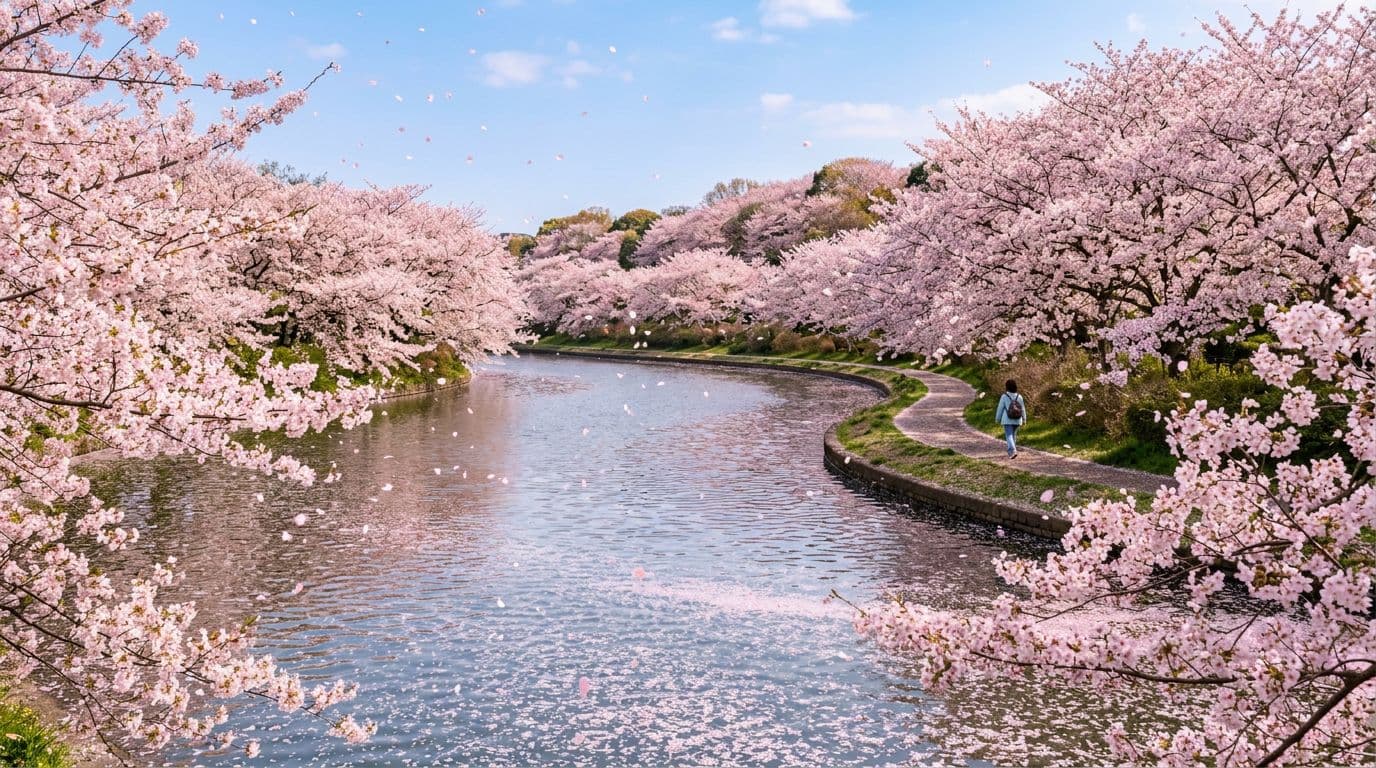
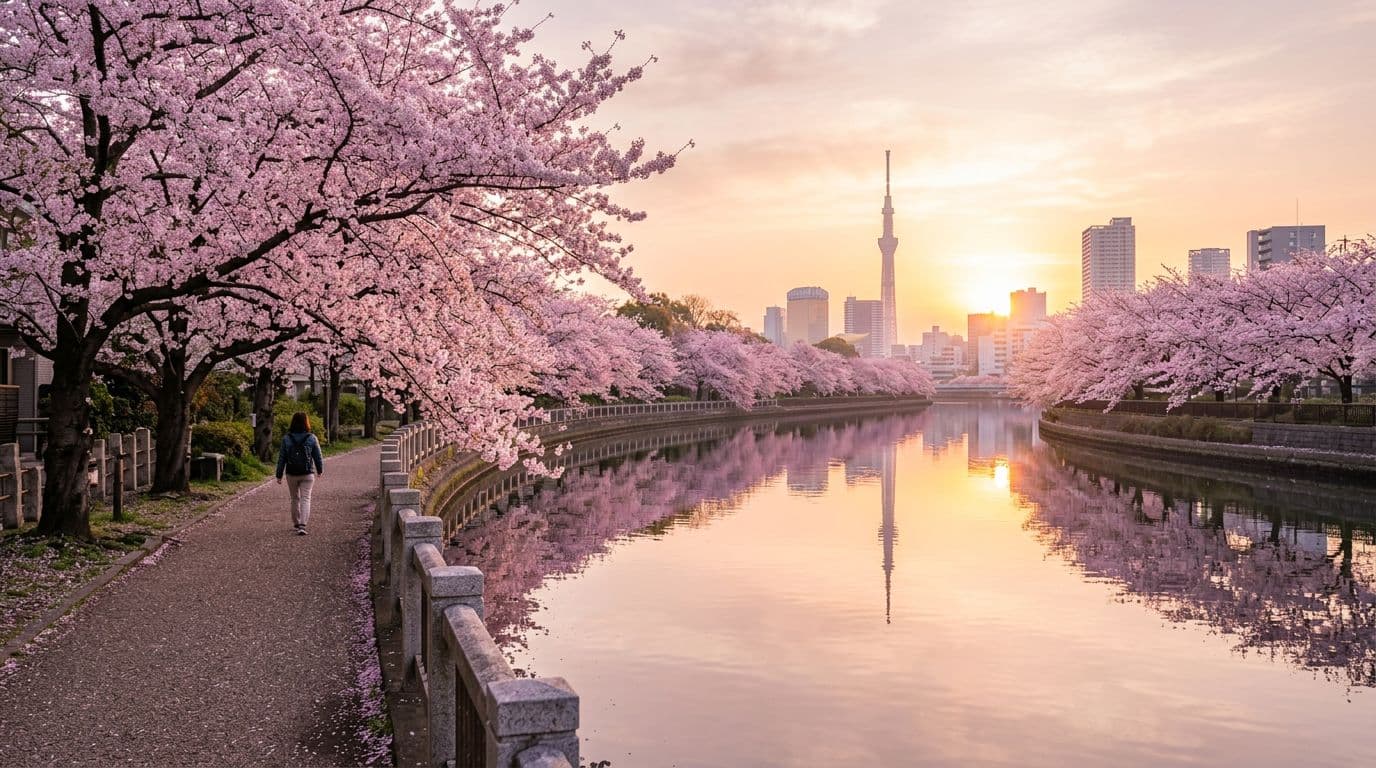
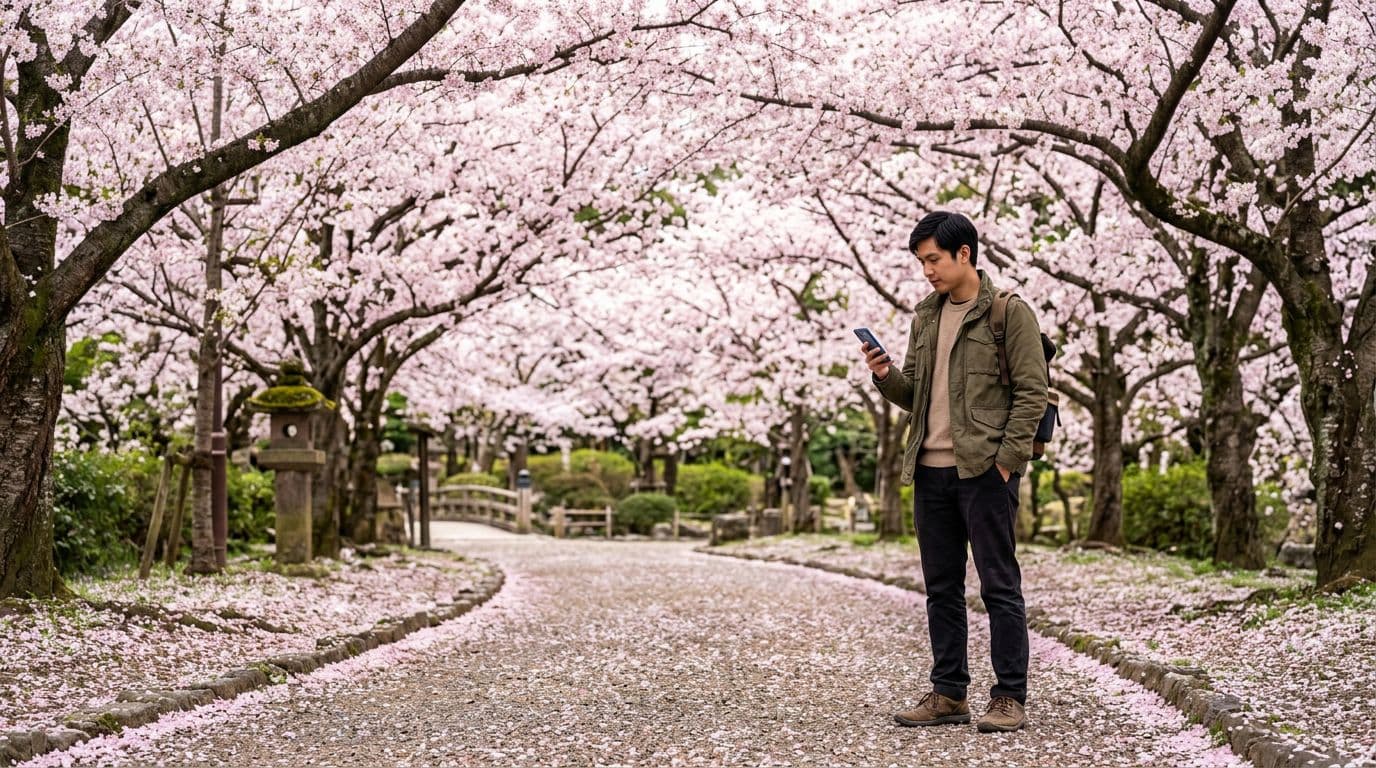
Peak sakura along a calm Tokyo river—the kind of scene I build my whole itinerary around.
Japan 2026 Peak Bloom Dates (Tokyo, Kyoto, Osaka)
Japan’s big advantage is data. Forecasts are updated often, and most travelers follow the same “golden triangle,” so getting the dates right really matters. When I say “best dates,” I mean the best trip window to be on the ground, not the exact moment the first bud opens.
City
First Bloom (Forecast)
Full Bloom (Peak)
My Best On-the-Ground Dates
Tokyo
Mar 17-19
Mar 25-28
Mar 24-30
Kyoto
Mar 23
Apr 1
Mar 30 – Apr 4
Osaka
Mar 24
Apr 1
Mar 30 – Apr 4
Key planning notes:
Full bloom is the photo week, but the “pretty week” is longer. If I arrive 2-3 days before peak, the city already feels pink.
Wind and rain can strip trees fast. That’s why I like overlapping Tokyo and Kansai windows rather than betting everything on one weekend.
My rule: I don’t book non-refundable stays for the exact peak dates unless I’m comfortable being 3 days early or 3 days late.
South Korea 2026 Peak Bloom Dates (Busan, Seoul, and Beyond)
Korea’s cherry blossom season moves like a wave from south to north. That’s perfect for travelers because it gives me a natural chase route: start in warmer coastal areas, then finish in Seoul as spring catches up.
Best Korea trip window (safe and flexible): March 27 to April 10
If I can only do one week: April 2-8, focusing on Seoul plus day trips
If I want fewer crowds and an earlier hit of spring: Start in Busan, then head north
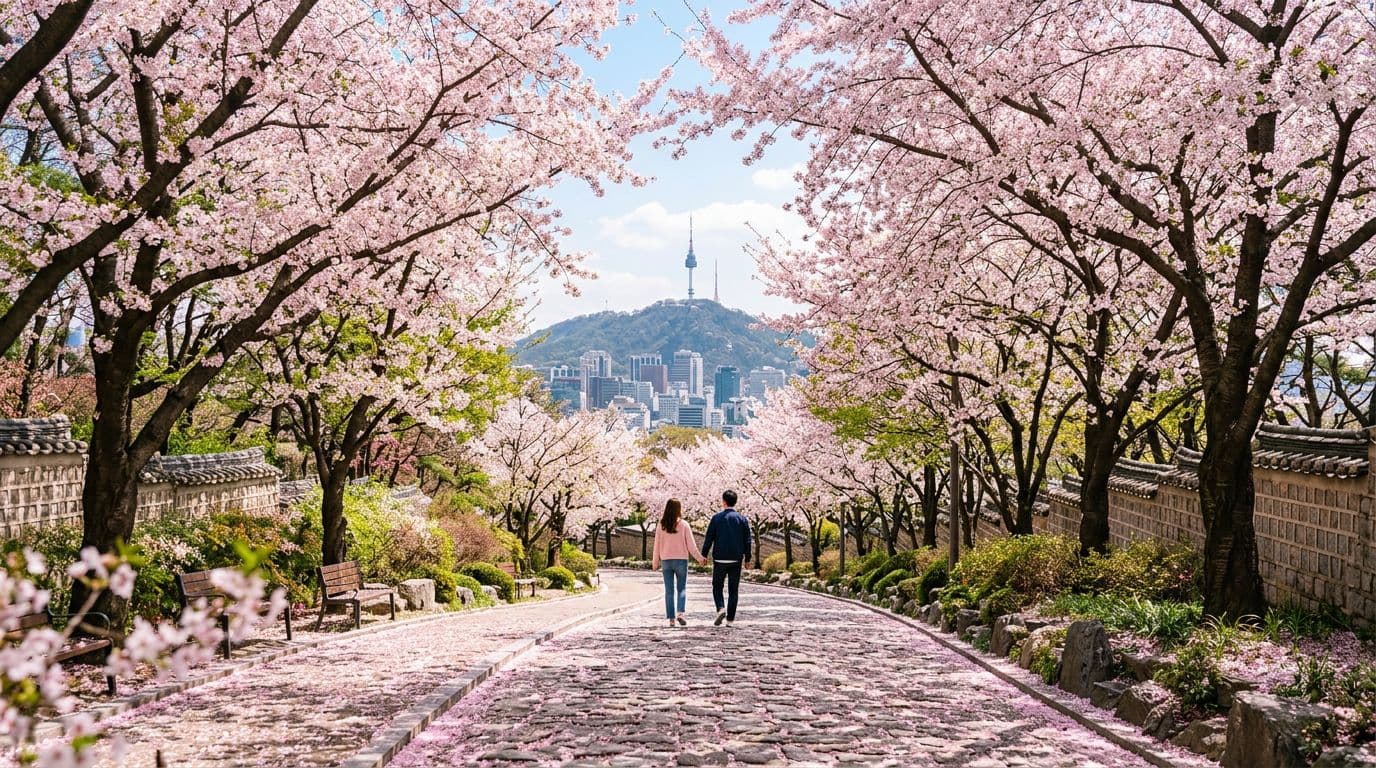
The classic Seoul cherry blossom stroll—petals underfoot and that bright early-April light.
My “Best Dates” Cheat Sheet (Easy Trip Windows That Actually Work)
Forecast tables are useful, but when I’m choosing PTO days, I need simple ranges. These are the windows I’d feel good about booking because they cover peak bloom while leaving room for weather mood swings.
🇯 Japan (Tokyo, Kyoto, Osaka)
Best overall: March 24 – April 4
Tokyo-first plan: March 23-30
Kyoto/Osaka-first plan (if arriving later): March 30 – April 5
🇰 South Korea (Busan, Seoul)
Best overall: March 27 – April 10
Busan then Seoul (classic south-to-north chase): March 28 – April 7
Seoul-focused week (minimal moving): April 2-8
If I’m doing both countries in one trip, I keep it clean:
Japan first, then Korea (Tokyo and Kansai peak, then Seoul), OR
Korea first, then Japan (Busan early, then Tokyo late)
Quick Reality Check: What Can Shift the Forecast?
I treat forecasts like a weather app for a picnic. It’s a strong guide, but it’s not a promise. Small temperature swings can nudge bloom timing by a few days.
What I watch most:
Warm late winter: Buds can open earlier, and the whole season slides forward
Cold snap in March: Bloom slows down, and peak pushes later
Heavy rain or wind during full bloom: Petals drop fast, so I aim to arrive slightly before peak
My Japan Bloom Route for 2026: Where to Stay, What to See, and How to Move Fast
When sakura hits, I travel like I’m following a moving weather front. I keep my route simple (Tokyo → Kansai → Hiroshima), I plan my best photos for quiet hours, and I build in just enough flexibility to pivot if the peak shifts.
For 2026 timing, I’m anchoring around the latest forecast windows: Tokyo full bloom around March 28, Kyoto and Osaka around April 1, Hiroshima around March 31. I keep the exact dates loose, but the order stays locked.
Tokyo, Kyoto, Osaka, Hiroshima: Can’t-Miss Sakura Spots & Best Times
A calm Tokyo river at sunrise—the easiest way to “buy” space during peak week.
I treat each city like a different flavor of spring. Here’s my quick field guide, built for getting great scenes without wasting hours in lines:
🌸 Tokyo (Picnic + Riverside Walk)
Go classic:Ueno Park for energy, then a quieter river path for photos. Ideal time slot:Sunrise (soft light, empty benches) Crowd-saver move: Skip Ueno at midday. Instead, walk the Sumida River farther from the central bridges—the trees still pop, but people thin out fast.
🌸 Kyoto (Temple Views + Old-Street Magic)
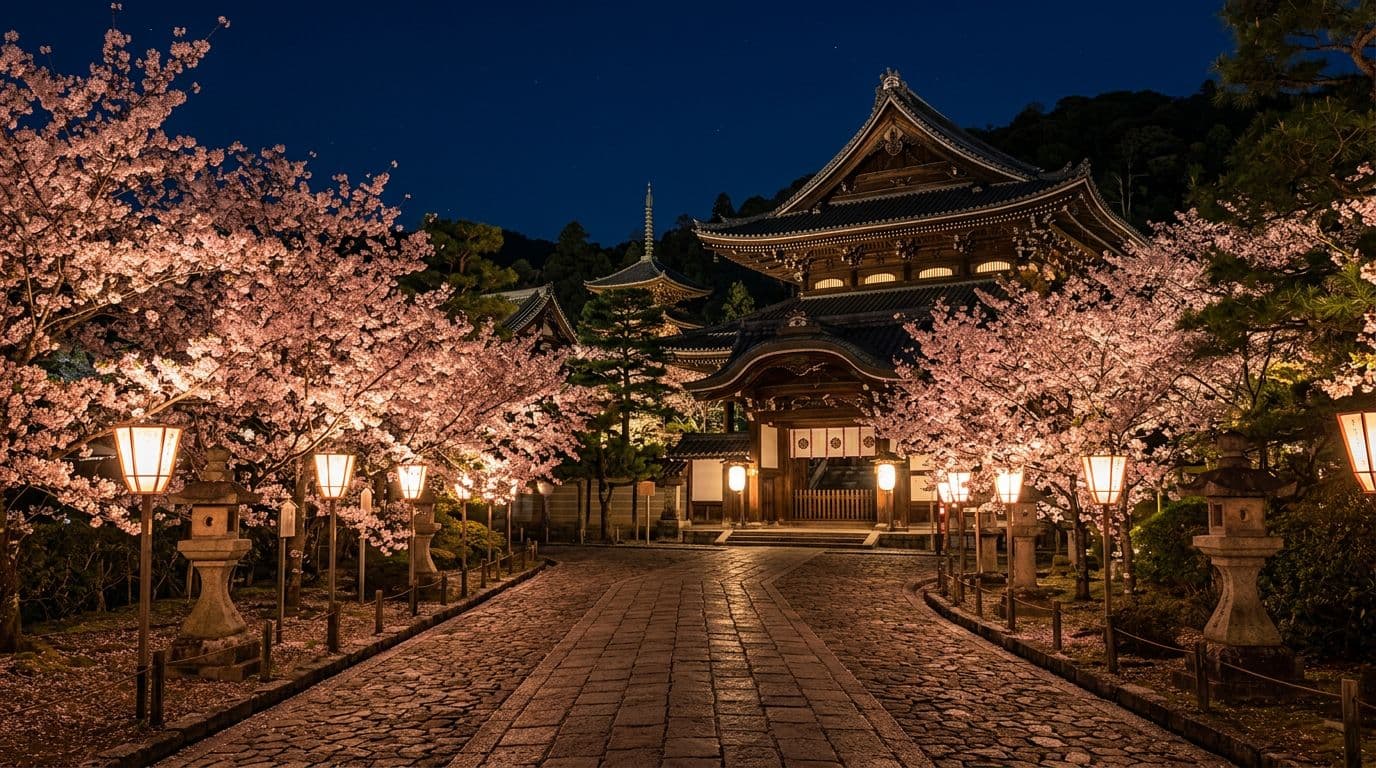
Kyoto feels like blossoms floating over history, especially around shrines and canals. Ideal time slot:Night lights (lantern glow makes petals look painted) Crowd-saver move: Go on a weekday night and start from a less obvious end of the canal route so you’re walking against the flow.
Kyoto after dark, when the crowds fade and the city feels hushed.
🌸 Osaka (Castle Views + Easy Walks)
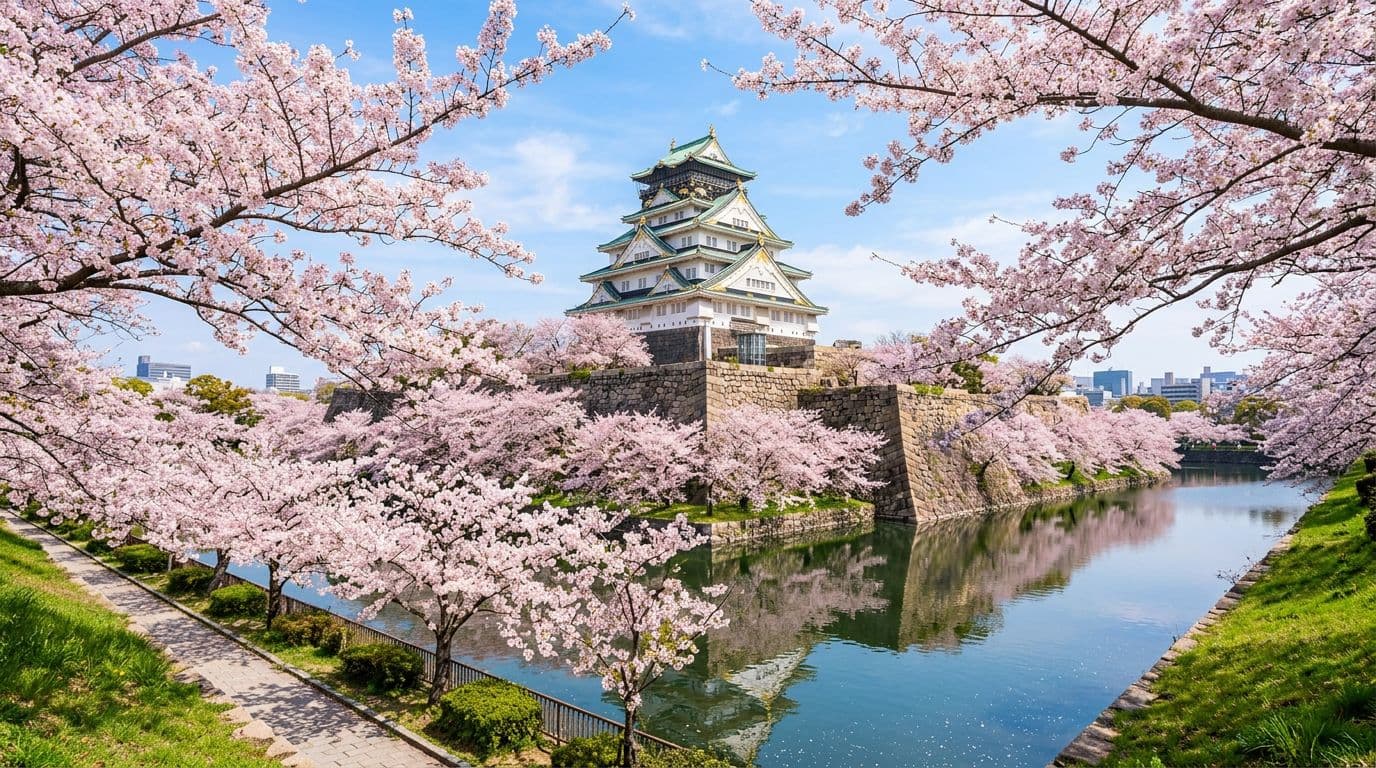
Osaka does sakura with big scenery, wide lawns, and snack stalls nearby. Ideal time slot:Late afternoon (warm light on the castle, then stay through dusk) Crowd-saver move: Circle the outer paths first, then cut in closer after peak selfie hour.
Osaka Castle framed by full bloom—a high-reward stop with minimal planning.
🌸 Hiroshima (History + Calm Riverside)
This is where my trip slows down, in the best way. I pair peace memorial visits with a gentle riverside bloom walk. Ideal time slot:Early morning (quiet, respectful, clear photos) Crowd-saver move: Visit the memorial sites right at opening, then do blossoms after when tour groups bunch up elsewhere.
How I Book Japan Stays for Sakura Season Without Overpaying
Sakura season has a cruel trick: the best neighborhoods sell out first, then the remaining rooms jump in price. So I book early, but I don’t “marry” my first pick.
My exact system:
I book cancellable first. I grab refundable hotels or apartments near train stations as soon as my dates look plausible. I’m buying a safety net, not perfection.
I split bookings by city. Tokyo gets its own stay, then Kyoto or Osaka, then Hiroshima if I’m going. This keeps my days tight and protects me if peak shifts.
I set price alerts and keep checking. If a better place drops into my budget, I upgrade and cancel the older reservation—right up until the free-cancel deadline.
I choose stations over “pretty.” During peak bloom week, a “cute” far-away hotel costs me time, and time is the real currency.
The trick is simple: I lock a flexible base, then I shop for a better view after everyone else stops paying attention.
My South Korea Bloom Plan for 2026: From Jeju to Busan and Up to Seoul
For spring 2026, I’m planning South Korea like a slow chase from warmth to cool air. I start where buds pop first, then ride the bloom line north. It’s like following a pink tide—if I time it right, I get peak blossoms more than once without living in a tour bus.
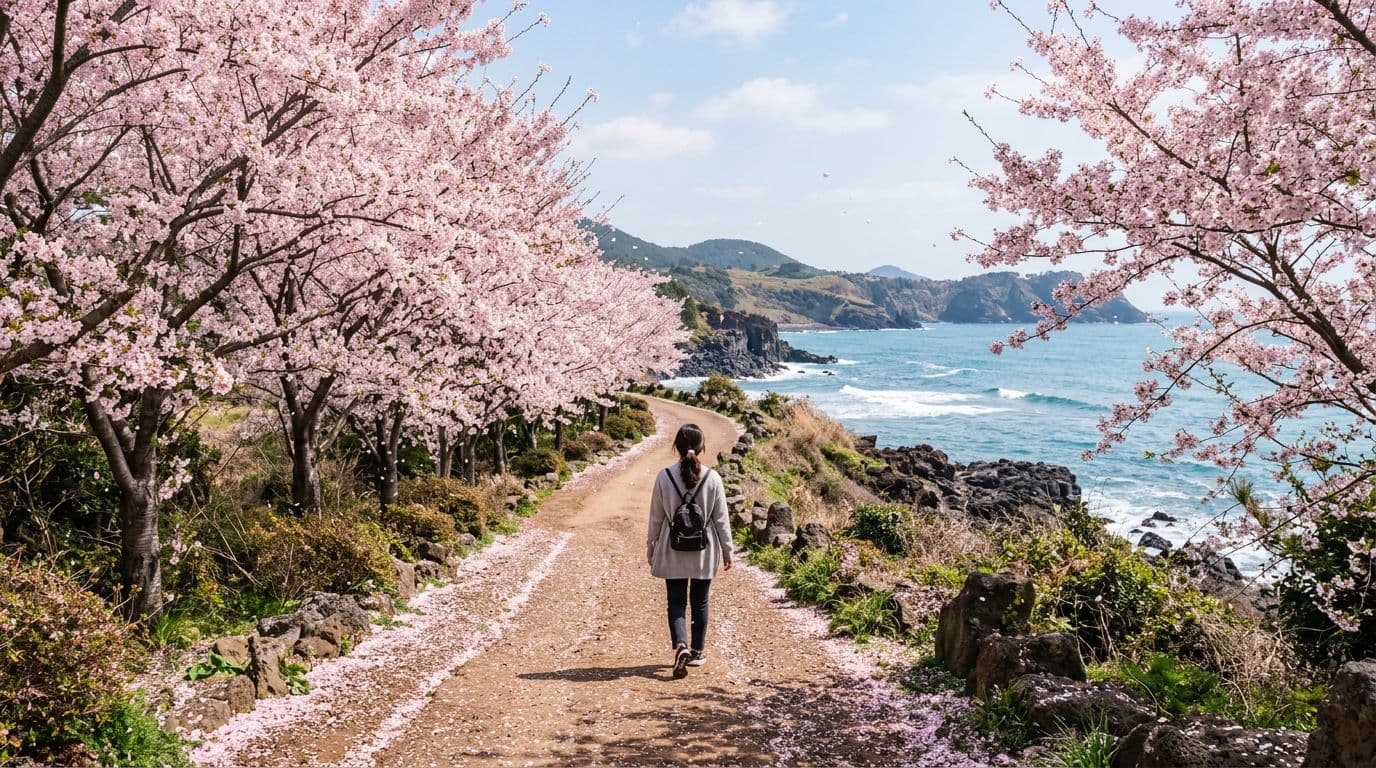
Jeju is my opener: salty air, bright light, and blossoms that feel a little ahead of the rest of the country.
Seoul, Jinhae, Busan, Jeju, Gyeongju: Best Places to See Blossoms and Still Breathe
When I only have a couple of weeks, I don’t try to do everything. I choose the type of blossom moment I want, then I pick the city that matches it.
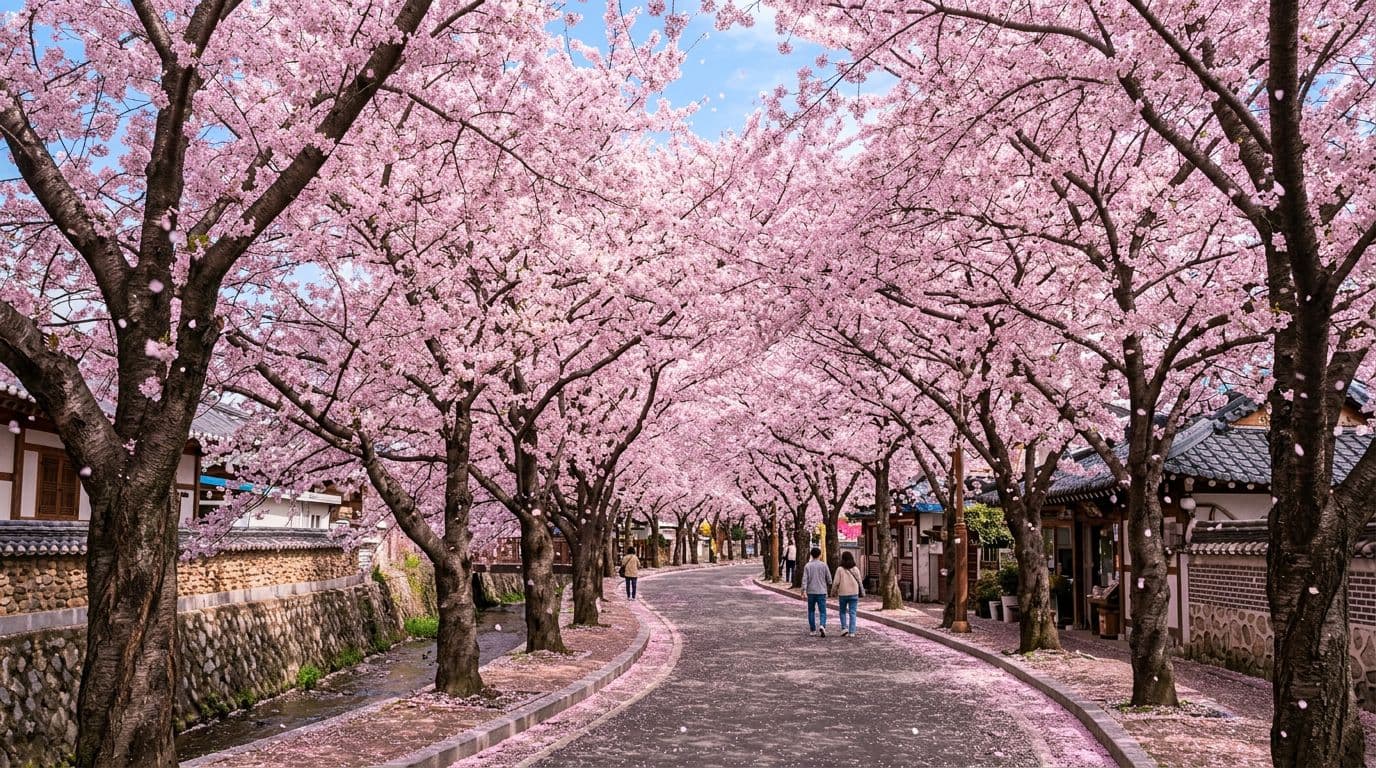
Jinhae is the classic “pink tunnel” feeling—like walking through a soft hallway of petals.
If I want a city skyline, I base myself in Seoul. I like blossom walks that end with coffee and a view of towers across the river. Big city, big energy, but I can still find quiet pockets if I go early.
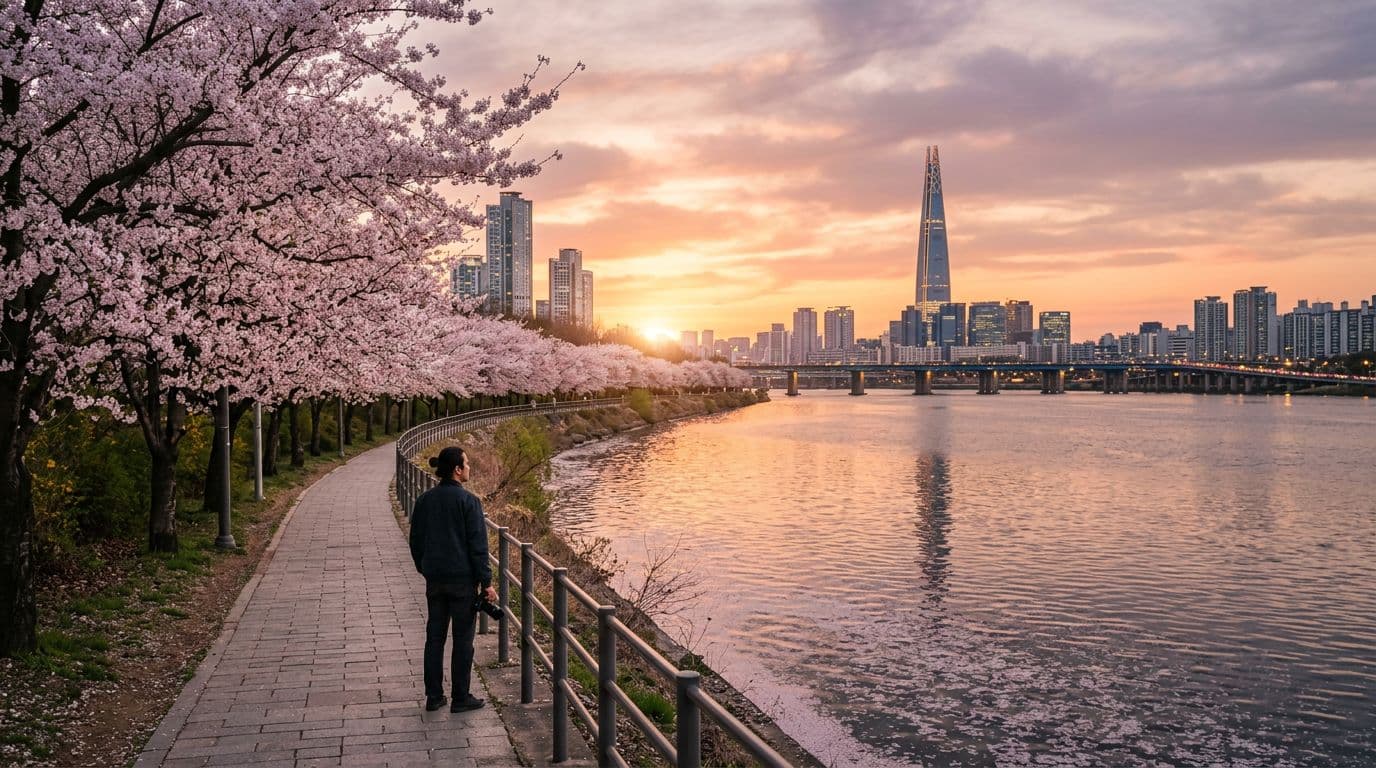
Seoul at golden hour feels calm, even in peak bloom week.
If I want a pink tunnel, I go to Jinhae. It’s famous for a reason. The trick is treating it like a photo mission, not an all-day wandering plan. I arrive early, shoot fast, then leave before lunch crowds stack up.
If I want ocean views, I start with Jeju or detour through Busan. Jeju gives me coastal roads and spring air that smells clean. Busan adds beachside neighborhoods and easy day trips without sacrificing food and nightlife.
If I want history, I choose Gyeongju. It feels like Korea’s past is sitting right under the petals—calm, spacious, and less frantic than the major festival zones.
My Crowd-Proof Timing
I do my “must-get” photos on weekday mornings, especially right after sunrise
I save festivals for one focused half-day, then I escape to a calmer neighborhood
I plan one rain-buffer day because storms can knock petals down fast
Transfers Made Simple: When I Pre-Book Rides vs Using Trains and Metros
Most days in Korea, I’m happy on trains and metros. They’re reliable, clear, and usually the fastest way across town. Still, cherry blossom trips come with a few moments where I pay for comfort—because comfort protects my schedule.
When I pre-book airport transfers:
After a long flight: I don’t want to wrestle with directions, currency, or a packed train platform. A reliable airport transfer with an English-speaking driver is the difference between arriving stressed and arriving ready to sleep.
Late-night arrivals: Subways can slow down, routes get awkward, and I don’t love dragging luggage down empty station stairs.
Traveling with kids: A transfer means car seats (when available), less walking, and fewer “we’re lost” moments.
Big luggage: Bulky suitcases, strollers, or camera gear for blossom photos.
Bad-weather days: Rain plus crowds turns stations into slippery bottlenecks.
The No-Stress Booking Playbook for 2026: Flights, Hotels, and Exact Gear I Pack
Cherry blossom season rewards calm planning and punishes last-minute panic. I treat bookings like a layered outfit: I start with a solid base, then I adjust as forecasts tighten and prices wobble.
My Flight and Hotel Checklist for Cherry Blossom Season
A simple moment that saves money later: I price flights before my dates harden into “non-negotiable.”
When sakura season gets close, airfare and hotels can jump overnight. So I plan like I’m trying to catch a moving train—I don’t need the perfect platform, I just need to be close enough to step on.
For flights, I do one quick sweep early, then I re-check in short bursts. If I’m flexible, I can avoid the priciest days without changing the whole trip.
Flexible dates: I price out my ideal week, then I check 2 days earlier and 2 days later. Those small shifts can mean big savings.
Nearby airports: I compare landing options that still get me into the city fast.
Baggage rules: Before I buy, I confirm what counts as carry-on, personal item, and checked bag. Surprise bag fees feel like stepping on a rake.
Early morning arrivals: I prefer landing early so I can reach my hotel, drop bags, and start walking under blooms the same day.
Lodging near transit: I choose hotels within an easy walk of a station. During peak bloom, being “close enough” beats being cute and far away.
My money rule: If I’m paying peak prices, I better be paying for location, not just a room.
My Spring Sakura Packing List: Light Layers, Rain Protection, and Camera Basics
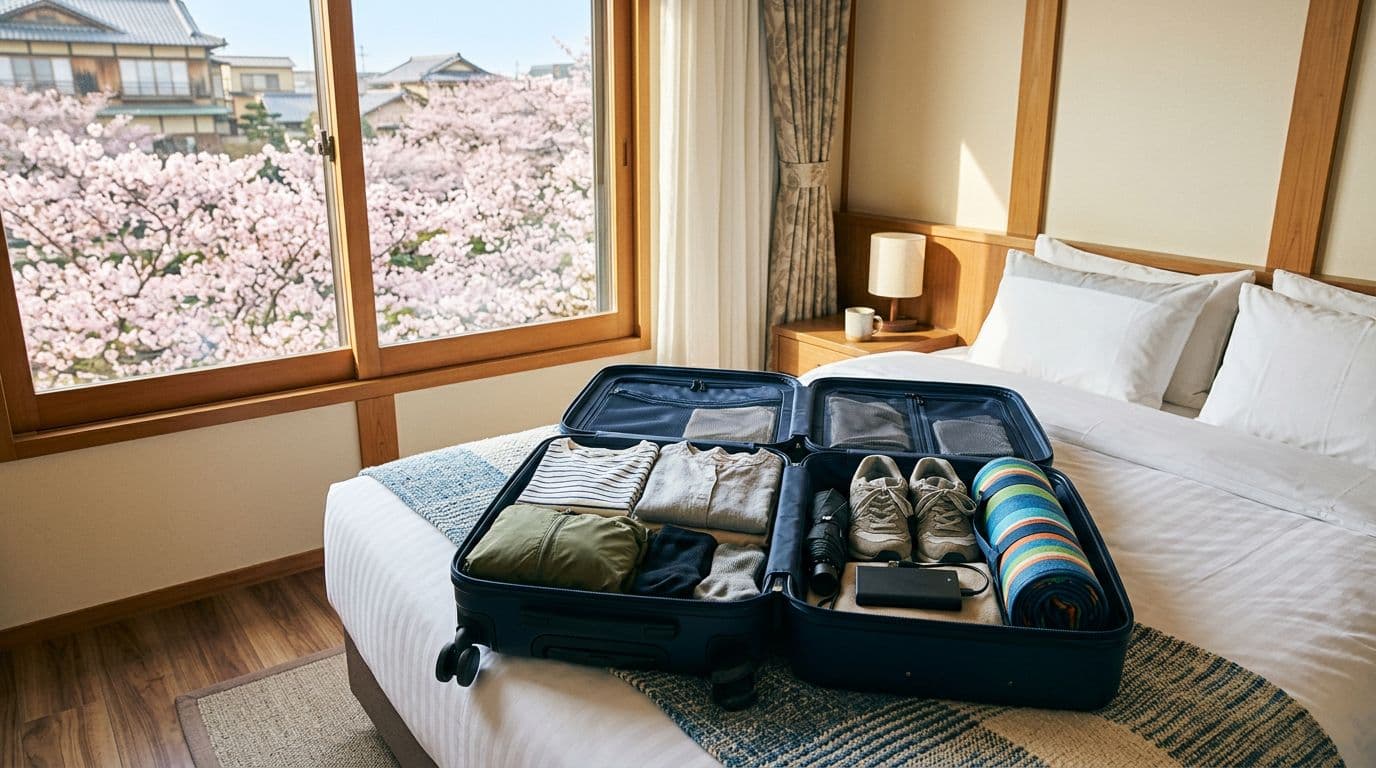
My cherry blossom suitcase looks boring on purpose—because boring gear handles surprises better.
Spring in Japan and South Korea can feel like four seasons in one day. Mornings run cool, afternoons warm up, and then a quick rain shows up like an uninvited guest. I pack for comfort first—because if my feet hurt or my jacket soaks through, I stop enjoying the petals.
I also keep my camera setup simple. I’d rather take 30 great shots than carry gear that turns every walk into a workout. A phone plus a small backup battery covers most needs.
Here’s what I pack every time (all easy to grab on Amazon):
Packable rain jacket: A thin shell I can crush into my day bag. Spring showers are common, and it’s easy to grab one on Amazon.
Compact travel umbrella: I bring a small, sturdy one that fits in my tote.
Comfortable walking shoes: I prioritize cushioning and grip because wet petals can get slick.
Portable power bank: Photos, maps, translation, and transit apps drain batteries fast.
Small picnic mat: For riverside breaks and quick park lunches.
Two tiny “quality of life” extras: Blister patches and a small microfiber cloth for my camera lens. Those weigh almost nothing, but they save entire afternoons.
FAQ: Quick Answers to the Questions I Get Every Spring
Peak-bloom calm—the exact mood I’m chasing when I plan a flexible blossom week.
When should I book if the bloom dates can shift?
I book in layers, like dressing for a cold morning that turns warm by lunch. First, I lock flights that match my best window. Then I grab refundable stays in the neighborhoods I actually want.
My rule: Book for the window, not the exact peak day. Forecasts slide, but a good window still catches magic.
Ideal buffer: 2-3 days on either side of your “best week”
Non-negotiable tickets (like timed attractions): Schedule them mid-trip, not day 1
How long do cherry blossoms last in Japan and South Korea?
Think of blossoms like a fresh croissant. Perfect is brief, but enjoyable lingers a bit.
Full bloom looks best for photos for a few days
The overall “pretty” period (some trees blooming, some petals falling) often stretches about a week
Wind and rain can shorten everything fast, especially during peak
That’s why I front-load my must-do blossom walks. If storms roll in later, I already got my best scenes.
What’s the best time of day to avoid crowds and get better photos?
I treat peak blossom spots like popular hikes. The view is great, but timing is everything.
For Japan and Korea, my easiest win is early morning. The light is softer, the paths are quieter, and I don’t have to crop strangers out of every shot. When I can’t do sunrise, I go later in the evening after families and tour groups thin out.
If I only get one shot at a famous blossom spot, I go early and I go on a weekday.
Should I do Japan or South Korea first if I’m visiting both?
I decide based on the “pink wave” moving north. Korea often starts earlier in the south, while Japan’s core cities cluster around late March and early April.
Japan first, then Korea if I’m anchoring on Tokyo and Kansai late March to early April and want Korea’s early April finish (often Seoul)
Korea first, then Japan if I want Busan or Jeju early, then Tokyo as Japan hits peak right after
What I avoid is forcing both countries into one rigid week. That’s how people end up seeing more airports than blossoms.
Is it still worth going if I miss full bloom?
Yes, and honestly, it can be better.
Full bloom is the “wow” moment, but the days around it have their own charm:
Early bloom feels hopeful—buds and first blossoms, less crowded, easier reservations
After peak can be stunning—petals fall like snow, parks turn into pink carpets
Late-season varieties (depending on location) sometimes extend the show
If I’m slightly late, I lean into places with big tree density (rivers, parks, castle grounds) because even past peak, those spots still look full in photos.
What if it rains during my cherry blossom days?
Rain is the bully of blossom season. It can also be a gift if I work with it.
On rainy days, I switch my plan instead of fighting it:
I do indoor “anchors” (museums, markets, cafés) during the heaviest rain
Then I go out right after—because wet petals on sidewalks look dreamy in close-up shots
I save my most important outdoor walk for the next clear morning
The big mistake is waiting all day for perfect weather, then realizing the best light already passed.
Are the blossom festivals worth it, or should I avoid them?
I do festivals like I do spicy food—with intention and a little caution.
Festivals are worth it if I want:
Food stalls and a party vibe
Night lighting (especially pretty when petals glow)
That “everyone is here for spring” feeling
However, I keep expectations realistic. Festivals also mean shoulder-to-shoulder sidewalks and slow transit. So I pick one festival half-day, then I balance it with quieter neighborhoods the next morning.
What should I wear for blossoms in late March and early April?
I dress for mood swings. Spring in Japan and Korea can flip fast, especially between morning and night.
My go-to approach:
Light layers I can peel off
One warm mid-layer for evenings
Comfortable walking shoes with grip (wet petals can be slick)
If you pack like it’s already summer, you’ll spend the trip hunting for a jacket instead of chasing blooms.
Conclusion
Cherry blossom season in Japan and South Korea rewards the travelers who plan like the flowers move fast—because they do. For 2026, I keep it simple:
Pick a realistic peak window (late March for Tokyo, early April for Kyoto and Osaka, then early April for Seoul)
Give yourself a 2-3 day buffer so one cold snap or one storm doesn’t steal the trip
Lock flights early, then book refundable hotels near the stations you’ll actually use
Pre-book airport transfers if you land late, travel with kids, or carry big luggage
The best sakura photos come from patience, but the best sakura trips come from flexibility. If the petals fall early, you still have food streets, night lights, and spring air worth chasing.
🌸 Ready to Plan Your 2026 Cherry Blossom Trip?
Use these tools to lock in your trip before the best options disappear:
14 Best Things to Do in Okinawa Japan for 2026: Snorkel Bays, Island Hop & Hidden Ryukyu Ruins
The first time I slid off a boat into Kerama Blue, I remember the exact feeling. Mask fogging slightly, breath echoing in my ears, and a whole garden of coral opening below me in turquoise water so clear it felt like flying. If you are looking for the best things to do in Okinawa Japan 2026, that is the moment I want you to remember when you land.
As an Okinawa reef chaser and Ryukyu castle hunter for IneedMyVacation.com, I have spent years island hopping this southern chain. I keep coming back for the same mix that keeps travelers hooked in 2026: bright coral bays, sleepy islands, and weathered stone walls from the old Ryukyu Kingdom that once traded with China and Southeast Asia. Here, Japan feels tropical and relaxed, with palm trees, taco rice, and sanshin music instead of neon and subway rush.
Okinawa sits far south of Tokyo, closer to Taiwan than to Hokkaido. The vibe is softer and slower. People linger at family restaurants. Kids play on coral sand beaches. In 2026, the island chain is extra special. The rebuilt Shurijo Castle is rising after the 2019 fire, marine protection is tightening around places like the Kerama and Yaeyama Islands, and more travelers are choosing remote island escapes and wellness focused trips instead of crowded city breaks.
In this guide I am sharing 14 hand picked experiences that I actually do, over and over. Every one fits in the 0 to 150 dollar range, from zero cost sunsets to snorkel tours and glass bottom boats. I will point you to a simple custom map, budget friendly ideas, and easy planning tips so you can mix reefs, ruins, good food, and quiet moments that let Okinawa’s Ryukyu soul sink in.
This post contains affiliate links. If you make a purchase through these links, we may earn a commission at no extra cost to you.
Okinawa’s Turquoise Reefs & Ryukyu Soul in 2026
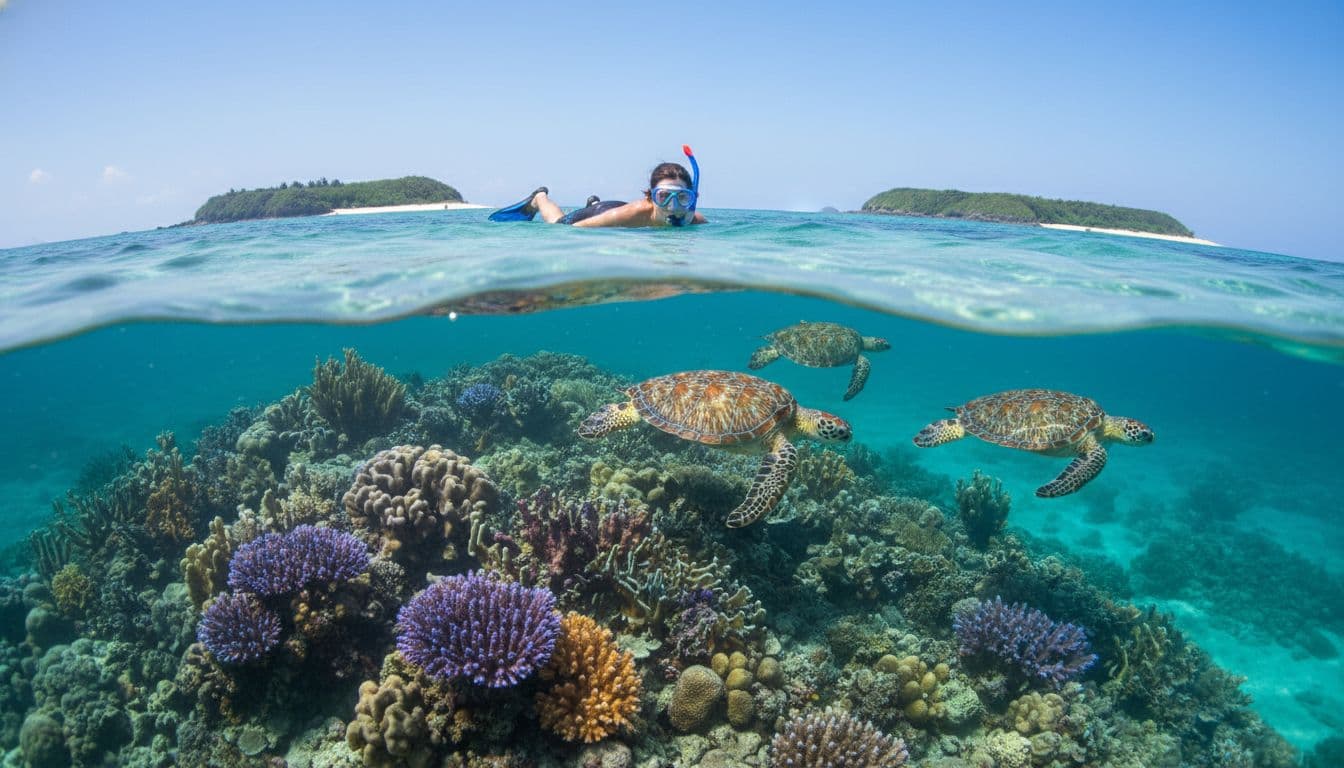
Snorkeling over “Kerama Blue” reefs in Okinawa’s outer islands. Image created with AI.
Okinawa feels like Japan’s tropical secret. Palm trees line the streets, hibiscus flowers lean over low stone walls, and the water glows in layers of blue and green. If you have only seen Tokyo or Osaka, arriving in Naha can feel like crossing into a calmer, saltier version of the country.
Life moves slower here. Locals catch up over bowls of Okinawa soba. Kids jump from small harbor piers. At night, someone almost always has a sanshin (three stringed lute) in a bar on Kokusai Dori, singing in a mix of Japanese and old Ryukyu words.
2026 is a turning point year. Shurijo Castle, once the proud red palace of the Ryukyu kings, is returning after the fire in 2019. New sections open as work continues, so you see both bright new lacquer and old stone. In the water, protected zones around the Kerama Islands and the far flung Yaeyama Islands are getting more attention, with guides focusing more on reef safety and respectful encounters with sea turtles and big fish.
Travelers are catching on. More people are adding Okinawa to multi city Japan routes, mixing Tokyo food crawls with three to seven days of island time. Official travel pages like Travel Japan’s Okinawa guide highlight the chain as a subtropical break with its own history, music, and food. Tour companies are also seeing rising demand for Okinawa add ons in 2025 and 2026, with routes that include both city stops and days by the sea, as shown in packages on sites like All Japan Tours.
A few reasons I like Okinawa for 2026:
Warm water much of the year, with good snorkeling from around April into November.
Frequent domestic flights from Tokyo, Osaka, Fukuoka, and beyond.
Plenty of free or low cost sights: beaches, viewpoints, ruins, and coastal walks.
A broad mix of moods, from bustling Naha to quiet capes and far off islands.
I also love how easy it is to keep things gentle on the reefs. I always pack reef safe sunscreen, a rash guard, and a simple mask and snorkel. I never stand on coral, and if a turtle swims close, I let it pass without reaching out. Many local guides now talk about coral health and ask guests to float calmly above the reef.
If you want more structured days, land tours around Okinawa’s main island and outer isles are easy to find. Operators like those featured on Okinawa land tours pages mix history, food, and coastal scenery in one day, which works well if you are short on time.
For flights, I like keeping it simple. Find Okinawa flights on Expedia.com
In the next sections I will share a custom map, then go straight into the 14 best things to do in Okinawa Japan 2026 so you can blend reefs, ruins, and rest in a way that fits your style.
Why Okinawa Feels Different From Mainland Japan
Okinawa once formed the Ryukyu Kingdom, a separate state that traded with Japan, China, and Southeast Asia. That past still shapes daily life. You hear different words, see different roof tiles, and taste completely different dishes.
The local food is hearty and homey. I always look for:
Goya champuru, a stir fry with bitter melon, tofu, and pork or spam.
Taco rice, a post war comfort dish with seasoned ground meat, lettuce, tomato, and cheese over rice.
Awamori, Okinawa’s strong spirit, often sipped with water and ice.
The climate is subtropical. Winters are mild, more like cool spring days in Tokyo. In summer, humidity wraps around you as soon as you step outside. It feels a bit like a smaller, Japanese flavored Hawaii, with beaches never far from daily life.
Compared with cities like Tokyo or Osaka, where trains hum and lights flash late into the night, Okinawa’s pace is softer. You can wake up, have an easy breakfast, float in the sea, then visit a castle ruin and still have time for an early dinner. That mix of culture and beach time in one trip is what makes Okinawa so strong for 2026.
2026 Travel Trends: Reefs, Remote Islands, and Wellness
By 2026, many travelers are done with crowded city trips. More people want space, nature, salt water, and simple food. Okinawa fits this shift in a few key ways.
Sustainable coral tourism: Guided snorkel tours now focus on not touching coral, keeping fins up, and using eco friendly sunscreen.
Remote island escapes: Islands like Zamami, Tokashiki, Miyako, and Ishigaki offer digital detox energy, with patchy signal in some spots and long, quiet beaches.
Wellness centered travel: It is very easy to build days around sunrise swims, slow drives to capes, hot baths, and early nights.
I like to think of Okinawa as a reset button. After a few days of early swims, simple meals, and soft sunsets, most people feel lighter. That is exactly the mood many travelers are chasing in 2026.
Practical Reasons to Add Okinawa to Your Japan Trip
Here are simple, skimmable reasons Okinawa fits into a broader Japan plan:
Frequent domestic flights from major cities.
No extra visa step if you already enter Japan normally.
Many beaches, viewpoints, and ruins are free or very cheap.
Mild winters, good for hikes and views even if you skip swimming.
Family friendly picks like Okinawa Churaumi Aquarium and shallow beaches.
If you like to read ahead, I often toss a small guidebook into my bag. One I like is this Okinawa travel guide:
In the full guide, I include a custom Google My Map with 14 pins, one for each experience I share below. I group them into simple clusters so planning routes is easier: southern main island (Naha, Shurijo, Sefa Utaki, Peace Memorial Park), central (Yomitan, Nakagusuku), northern (Cape Manzamo, Churaumi, Cape Hedo), and outer islands (Kerama Islands, Zamami, Ishigaki, Kabira Bay, Miyako).
Save the map on your phone and download it offline if you can. Then you can build a 3, 5, or 7 day route by drawing little loops around the pins, fitting two or three close by sights into one easy day.
Top 14 Okinawa Experiences for 2026: Reefs, Islands, and Ryukyu Ruins
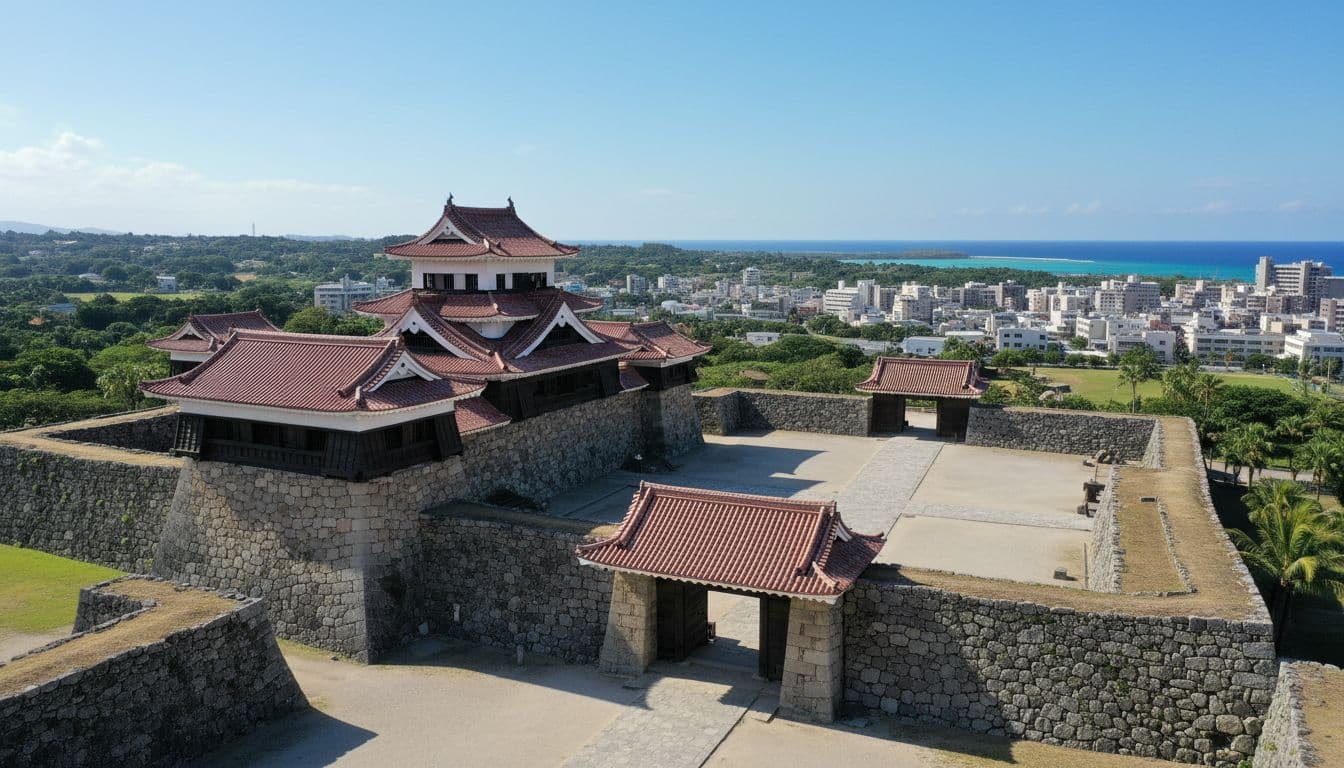
Reborn Shurijo Castle glowing above Naha in 2026. Image created with AI.
Here is my personal list of the 14 best things to do in Okinawa Japan 2026, all tested over years of reef swims and castle walks. Every item includes a quick feel, rough cost, and best timing.
1. Snorkel Kerama Blue in the Kerama Islands
Snorkeling the Kerama Islands is pure Okinawa snorkeling 2026 magic. You ride a ferry or speedboat from Naha to islands like Zamami or Tokashiki, then drop into clear, bright water. Coral heads rise like underwater bouquets, and sea turtles glide through beams of sunlight.
Rough cost: 60 to 120 dollars for a day tour with gear.
Best time: Around April to October, with calmer seas in late spring and early autumn.
Always use reef safe sunscreen, follow your guide, and keep your fins off the coral. Beginners can join guided tours, wear life vests, and simply float across the reef.
2. Visit Reborn Shurijo Castle and Its Ryukyu Past
Shurijo Castle is the red heart of the old Ryukyu Kingdom. After the 2019 fire, seeing it in 2026 feels emotional. You walk through gates, pass stone guardian lions, and look out across Naha from a high hill. Some parts are freshly rebuilt, others are still under careful work, so you sense both loss and renewal.
Plan time to explore the courtyards, small museums, and stone walls. Stand at the top and picture the days when this was a busy hub between Japan, China, and Southeast Asia.
Okinawa Churaumi Aquarium is a must for ocean lovers and families. The Kuroshio Sea tank is huge, with whale sharks and manta rays looping in deep blue water. You can watch them from a wide viewing window and from a café space that feels like a quiet theater.
Rough cost: around 20 to 25 dollars per adult.
Best time: year round, but mornings or late afternoons are calmer than midday bus hours.
Pair your visit with nearby beaches or a stop at Cape Manzamo. Outside, open air pools and tanks let you see dolphins and sea turtles, and the displays connect back to the wider Okinawa reef system.
Cape Manzamo is one of those simple stops that sticks with you. A short coastal path takes you to viewpoints over steep cliffs and the famous rock that looks like an elephant trunk. At sunset the light drops into the East China Sea and paints the water gold.
This stop is cheap, easy, and works for almost any traveler. Come a little early to find a good photo spot, then watch the sky change. Earlier in the day, you can swim at nearby beaches or visit Churaumi Aquarium.
5. Island Hop Around Ishigaki and the Yaeyama Islands
Ishigaki is my favorite base for exploring the Yaeyama Islands. Ferries fan out from the main port to spots like Taketomi, with its sandy lanes and water buffalo carts, and Iriomote, with dense jungle and mangrove rivers.
In 2026, more travelers are choosing longer stays here so they can slow down. I suggest at least two full days: one for island hopping, another for snorkeling or a short hike. Bays are calm, the water glows turquoise, and cafés keep you fueled between ferry runs.
Boat passing above a sunken wreck in clear Okinawa water. Photo by 沖縄ダイビングスクール ワールドダイビング
Kabira Bay on Ishigaki is famous for its layered shades of blue and green. You cannot swim here, which surprises some people, but you can still enjoy the underwater life from a glass bottom boat.
Tours are short and simple, usually under an hour, and cost stays well under 50 dollars. Midday sun lights up the sand and coral below, so the view through the glass feels like watching a live reef movie. This is perfect if you are not ready to snorkel, or if you travel with small kids or older parents.
Nakagusuku Castle is one of my top Ryukyu ruins for quiet walks. Curved stone walls hug a hillside, and you can look out over the sea and cities below. Compared with Shurijo, this site feels calm, with far fewer crowds.
There is a small entrance fee, and you will either drive or take a bus then walk. Late afternoon is lovely, when the sun softens and shadows slide across the walls. Bring water, good shoes, and time to just sit on the stone and breathe.
Kokusai Dori, or International Street, is Naha’s lively spine at night. Neon signs flash, awamori bottles line bar shelves, and you can find everything from simple snack stalls to live music venues.
I like to wander, grab small plates like sata andagi (Okinawan donuts) or taco rice, then stop in a bar with live sanshin. Awamori tastings are common, but keep an eye on your budget by sharing drinks and dishes with friends. If you rent a car, never drink and drive, use taxis or walk instead.
9. Join a Whale or Big Fish Snorkel Trip From Zamami Island
Zamami Island offers some of the boldest boat trips within my 0 to 150 dollar range. In winter months, tours focus on whale watching, while in warmer seasons they may target big fish snorkel spots around offshore reefs. Rules change over time, so always check current guidelines and pick licensed operators.
Sea conditions can get choppy, so bring motion sickness pills if you are prone to it. Listen closely to your guides about how close you can get to animals and how to move in the water. Respect keeps both you and the wildlife safe.
10. Explore Yomitan’s Pottery Village and Coastal Cliffs
Yomitan balances art and sea views in one easy half day. The pottery village holds small studios where you can browse plates, mugs, and bowls, many in soft ocean inspired glazes. Some places offer short workshops if you want to try the wheel.
Afterward, I like to drive out to the nearby coast, where cliffs drop into blue water and small beaches hide between headlands. It is a gentle shift from reef days, and you go home with something useful instead of a plastic keychain.
Sefa Utaki is one of the most sacred sites in the Ryukyu tradition. Paths wind through leafy forest and rock formations, and certain points look out over the sea in a way that feels like standing inside a natural chapel.
Dress modestly, speak softly, and follow signs. This is still a place of deep meaning for many locals. The walk is not long, but the air feels thick and still, a strong balance to the more touristy side of Okinawa.
12. Swim and Relax on Miyako Island’s White Sand Beaches
Miyako Island holds some of the most photogenic beaches in all of Japan. Yonaha Maehama stretches in a long sweep of white sand, while Sunayama has a rock arch that frames the sea like a painting.
Days here slide into a gentle rhythm: morning swims, café lunches, sunset drives to bridges and viewpoints. The water is usually calm, but always watch for currents and wear reef friendly footwear if you walk near rocks. Late spring to late autumn is best for clear water, with winter still mild but cooler for swimming.
Driving north through Yanbaru forest to Cape Hedo feels like crossing into wild country. The road twists through deep green hills, then ends at rugged cliffs where the East China Sea and Pacific Ocean meet.
The viewpoint has railings and clear paths, but the wind can be strong, so bring a light layer and secure your hat. Photographers love this stop, and you can pair it with small hikes or café breaks in Yanbaru on the way back.
Okinawa Peace Memorial Park sits on a bluff above the sea, full of stone walls, quiet paths, and engraved names of those who died in the Battle of Okinawa. The museum explains the brutal fighting and the long impact on local life.
I always walk here slowly, read some plaques, and sit for a while facing the water. It is heavy, but I think it is important to pair beach days with one visit that connects you to Okinawa’s war history and the strong wish for peace that runs through local culture now.
Use a Quick Comparison Table to Plan Your 14 Experiences
To help you match your budget and travel month to the right mix of activities, here is a simple comparison table. On a phone, you can scroll it sideways. Use it to pick a couple of reef days, a ruin day, and some softer scenic stops that all fit your time and budget.
Insider Tips to Explore Okinawa Like a Local in 2026
Okinawa rewards slow, simple planning. Here are the habits I use to keep costs down, crowds low, and reef time high.
1. Plan Your Okinawa Seasons Around Reefs and Typhoons
Seasons shape your days a lot.
Late spring (around May) and early autumn (late September to early November) give warm water, clear air, and fewer typhoons.
Peak summer is hot and humid, with stronger sun but also more local festivals and school holidays.
Winter is mild, fine for capes and ruins rather than long swims, though whale watching shines from around December to March.
If your dates are fixed, do not stress. You can still find good water windows on most trips by watching local forecasts and staying flexible.
2. Rent a Car and Use Ferries for Island Freedom
On the main island, renting a car makes your life much easier. Buses exist, but they can be slow for beach hopping and remote ruins. In Okinawa you drive on the left side, and roads are usually forgiving once you get out of central Naha.
Ferries connect you to side trips: Tokashiki or Zamami for Kerama Blue, Ishigaki for Yaeyama, Miyako for quiet beach days. In busy months or holidays, book boats in advance. I always pick one or two clusters instead of trying to see every island in one short visit.
To keep my phone safe on boats and beaches, I like using a waterproof phone case:
4. Respect Local Culture, Nature, and Sacred Sites
Okinawa’s charm depends on both coral health and cultural respect. Simple habits help:
Stay on marked paths at ruins and sacred sites.
Keep voices low at Sefa Utaki and in smaller village temples.
Do not touch coral, sea turtles, or other wildlife, even if they swim close.
Take your trash with you, especially from beaches and capes.
Support small local places when you buy snacks, crafts, and drinks.
These small choices add up and keep Okinawa feeling special for future travelers.
5. Balance Your Days: Mix Reefs, Ruins, and Rest
It is easy to over plan in Okinawa. I like a soft rhythm.
Pair a heavy snorkel day with a calmer one visiting a castle ruin and a café. After an island hopping run, schedule a slow morning or a picnic at a quiet beach. Leave at least one flexible block in your trip for weather, since wind or storms can shift boat schedules.
A light travel towel also helps when you move from reef to ruin:
Smart pacing lets you enjoy more of the best things to do in Okinawa Japan 2026 without feeling like you are racing the clock.
FAQs About Visiting Okinawa Japan in 2026
Quick Answers to Your Top Okinawa 2026 Questions
What are the best months for snorkeling and calm seas in Okinawa?
The sweetest windows are late spring and early autumn, roughly May and late September to early November. Water is warm, visibility is good, and typhoon risk is a bit lower than peak summer. From April to November you can usually find decent snorkeling somewhere, as long as you watch local forecasts.
How long should I stay to enjoy several of the 14 activities?
If you want a good sample, aim for at least four to five full days. That gives you time for one Kerama Blue snorkel, one Ishigaki or Miyako side trip, a castle or ruin, and a sunset cape. With a full week, you can add more islands and still keep days relaxed.
Do I need to speak Japanese to travel around Okinawa?
You can visit with basic English and a translation app. In tourist areas, many signs appear in English and staff know simple phrases. Learning a few greetings and thank you in Japanese is always kind and opens more smiles.
Is Okinawa family friendly?
Yes, very. Shallow beaches, Okinawa Churaumi Aquarium, glass bottom boats, and easy food all help families travel smoothly. Just watch sun and heat for young kids, and plan some indoor options for midday in summer.
What daily budget should I plan for food and basic transport?
For simple meals and local transport, many travelers do fine on 40 to 70 dollars per day, not counting hotels or long ferries. You can eat cheaper with convenience store lunches and casual diners, or spend more in resort areas and izakaya streets.
Can I visit Okinawa without renting a car?
Yes, especially if you stay in Naha or central resort zones and book tours with pickup. Buses connect main towns and some sights, and taxis fill gaps. For more remote capes and hidden beaches, a rental car still makes life easier.
How safe is Okinawa for solo travelers?
Okinawa feels safe for most solo travelers, including women. Normal city common sense still applies, like watching drinks and staying aware in busy nightlife areas. Outside the city, beaches, islands, and small towns feel calm and friendly.
Okinawa’s Magic in 2026: Reefs, Culture, and Quiet Space
Okinawa in 2026 feels like a rare mix of color and calm. Coral gardens shine beneath the surface, Shurijo Castle rises again over Naha, and capes like Manzamo and Hedo give wide open views that stretch your lungs and your mind.
Conservation work is still a work in progress, yet you can see real care in protected zones and tour briefings. Year round, water hovers around pleasant swimming temperatures, with many days near or above 24 degrees Celsius, especially from late spring into autumn. Outside peak holidays, beaches and islands still feel spacious compared with many tropical rivals.
Perks I keep coming back for:
Warm water much of the year and soft winter air.
A living Ryukyu culture, from music and food to sacred sites.
Enough space to actually hear the waves on many days.
For flights into and within Japan, it stays simple for me to find Okinawa flights on Expedia.com again when dates change.
When I think about the best things to do in Okinawa Japan 2026, these 14 experiences always rise to the top. Snorkeling Kerama Blue, drifting past coral that looks like stained glass. Island hopping around Ishigaki and Miyako, where each ferry ride feels like a reset. Standing by the new red halls of Shurijo Castle and the old walls of Nakagusuku, watching the light shift across centuries.
I always remember sunsets at Cape Manzamo, wind at Cape Hedo, and the deep quiet at Sefa Utaki and Okinawa Peace Memorial Park. Those moments mix into one story, a place where reefs, ruins, and everyday life still sit close together.
Use the map, the comparison table, and these insider tips to sketch your own route, whether you add three soft days to a busy Japan trip or spend a full week weaving across islands. Start with what you love most, then leave space for at least one surprise bay or side road.
If you are ready to turn turquoise daydreams into a real 2026 trip, book on Trip.com. Your mask, your towel, and your Ryukyu story will be waiting.
 Skip to content