...

IneedMyVacation.com

🛂 Caribbean Entry Requirements 2026: Passports, Visas & Digital Forms

Caribbean entry requirements for U.S. travelers in 2026 usually include a valid passport book, proof of a return or onward trip, and any destination-specific digital arrival form. The biggest mistake is treating every island like the same country; your documents change based on your exact route.

Affiliate Disclosure: This article contains affiliate links. If you book or purchase through these links, I Need My Vacation may earn a small commission at no extra cost to you. We only recommend services we genuinely trust and use ourselves to help you plan the perfect trip. Thank you for your support!

✈️ Ready to Lock In Your Island Dates?

Book your flight and stay only after your documents match every part of the itinerary, including connections and cruise ports. Compare flexible options today.

💡 When the flight page opens: Enter your home airport + your destination (e.g., “SDQ” or “BGI”) and toggle “Flexible dates.”

💡 When the hotel page opens: Type your island name, set your dates, and filter by “Free cancellation” to protect your deposit.

🎯 Key Takeaways for Caribbean Entry

  • 📘 Bring a passport book for international Caribbean flights. Confirm you have a valid passport for every destination on your route, including unexpected changes.
  • ⏳ Check passport validity by destination. Six months isn’t a universal rule, but places like the French West Indies strictly require it.
  • 📱 Save every arrival form confirmation offline. Keep copies of your travel documents available because your phone battery and airport Wi-Fi aren’t a travel plan.
  • 🚢 A closed-loop cruise exception is limited. A birth certificate and photo ID may work for U.S. re-entry, but a passport book is still the smarter, safer choice.
  • 🇺🇸 Puerto Rico and the U.S. Virgin Islands are different. Direct travel from the mainland is domestic, so U.S. citizens don’t need a passport.

✈️ How Do Your Flight Route and Travel Method Change Entry Rules?

Your route matters as much as your final beach. A direct flight from Miami to San Juan is domestic travel. A flight to St. Lucia through Canada becomes an international itinerary, even if the destination feels close to home. U.S. citizens can fly directly between the mainland and Puerto Rico or the U.S. Virgin Islands with a REAL ID-compliant driver’s license or another TSA-accepted ID. A passport book is accepted but not required on that direct domestic route. Read the full breakdown of Caribbean islands without a passport before booking a quick escape.

Why does your travel method matter first?

International travel by air usually requires a passport book. A passport card does not replace a passport book for international air travel; it may work for certain land or sea crossings, but not when you fly across an international border. Cruising has its own rules. Closed-loop voyages can have an exception for U.S. citizens, but the ship’s itinerary and the cruise line’s document policy still control your trip. Always keep your name identical everywhere: your airline ticket, passport, hotel reservation, and cruise booking should all use the exact same full name.

📘 What Are the Passport Validity Rules for Caribbean Islands?

Most travelers focus on having a passport, but the expiration date matters just as much. Some destinations accept a passport valid for your stay, while others want months left after your return date.

A family of four with passports and carry-on bags in a bright airport hall.

Should you assume every island uses the six-month rule?

The six-month rule is common travel advice, but it isn’t universal across the Caribbean. The French West Indies, including Martinique, Guadeloupe, Saint Barthelemy, and Saint Martin, require U.S. citizens to have a passport valid for at least six months. The French West Indies entry rules also list conditions for visa-free stays. My simple rule is this: if your passport expires within six months, renew it before international travel to the Caribbean. It cuts down on airport stress and protects you if you add another island later.

Why is a passport book safer for island trips?

A passport card is smaller and useful for some land and sea crossings, but it isn’t valid for international flights. That limitation matters when island hopping or arranging an emergency flight. Bring a passport book if you are flying to the Dominican Republic, Barbados, the Bahamas, Aruba, Jamaica, Curaçao, Saint Lucia, or the French Caribbean. It is also the better backup for cruise travelers who might need to fly home because of illness, weather, or a missed ship.

📝 Which Caribbean Islands Require Visas or Digital Arrival Forms?

For a regular vacation, U.S. citizens usually can visit many popular Caribbean islands without a visa. That doesn’t mean you can stay forever, work remotely without checking rules, or arrive without proof of departure. This quick comparison helps you spot common paperwork before your booking becomes nonrefundable.

DestinationPassport RuleShort-Stay Tourist VisaExtra Arrival Step
Dominican RepublicValid passportRequired beyond 30 daysE-Ticket Form
BarbadosValid passportNot required for short visitsOnline immigration form
BahamasValid passportUsually visa-freeArrival declaration
French West IndiesSix months validityNo visa up to 90 daysProof of stay and funds

How do you complete digital entry forms before flying?

Digital forms are now part of normal Caribbean travel. Complete each electronic entry form before leaving home, save the confirmation, and don’t pay a random third-party website for a form the government provides free. For the Dominican Republic, every passenger must complete the Dominican Republic E-Ticket portal, which combines immigration, customs, and public-health details. For Barbados, complete the Barbados Immigration and Customs Form when the 72-hour window opens.

A traveler sits at an airport kiosk with a passport and phone on the counter.

📱 Keep Your Travel Confirmations Available on Arrival

Download an eSIM before you fly so you can pull up your QR codes and hotel addresses at customs without relying on expensive airport Wi-Fi.

📶 Get a Caribbean eSIM

💡 When the page opens: Select the “Caribbean & Latin America” regional eSIM so one plan covers multiple island stops.

🚢 What Documents Do Cruise Passengers Actually Need?

A closed-loop voyage begins and ends at the same U.S. port. Under the Western Hemisphere Travel Initiative, eligible U.S. citizens may return to the United States with a government-issued photo ID and citizenship proof (like an original birth certificate). However, the CBP closed-loop cruise rules only cover qualifying re-entry to the United States; they don’t guarantee admission at every foreign port.

A traveler holds a closed passport wallet aboard a cruise ship near a colorful Caribbean harbor.

The passport exception can save a closed-loop trip. A passport book can save the whole vacation if you miss the ship and need to fly home.

What about minors and health requirements?

Children need valid travel documents too. When a minor travels with one parent or grandparents, carry a signed, notarized consent letter from the absent legal guardian. Regarding health, most U.S. travelers heading directly from the U.S. don’t need a yellow fever vaccination. Requirements only change if you recently visited or transited through a country with yellow fever risk. The CDC yellow fever travel guidance covers health advice for your exact route.
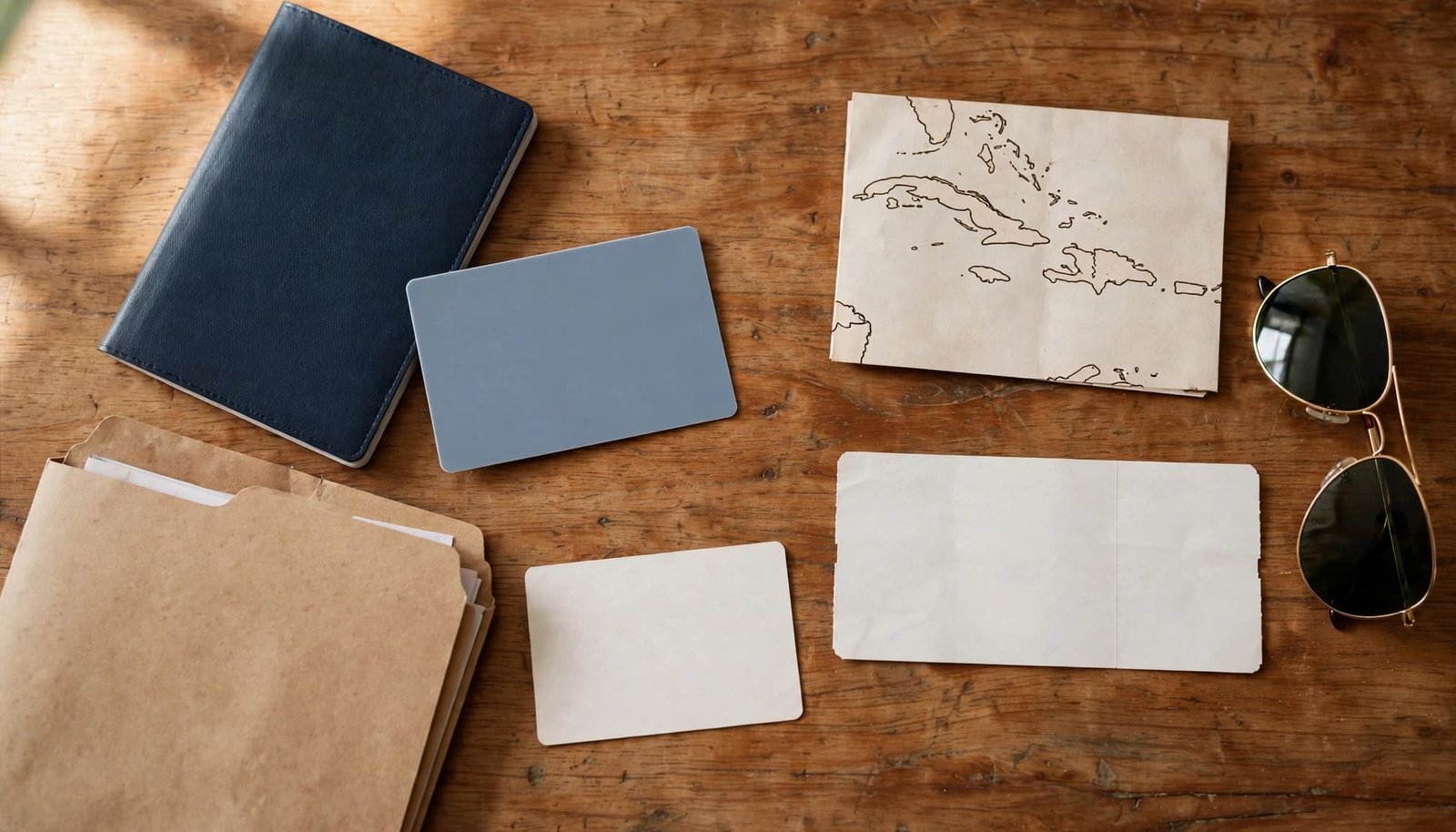
Travel documents, sunglasses, and a Caribbean map arranged on a wooden table.

✅ What Should Be on Your 48-Hour Caribbean Travel Checklist?

The last two days before departure should be boring. Check your passport expiration date, confirm the name matches your airline ticket, and complete each required immigration form. Put your passport, boarding pass, hotel confirmation, return ticket, and payment cards in one small travel folder. If your trip includes prepaid flights and resorts, compare Caribbean travel insurance coverage before you pay the final balance.

🛡️ Protect Your Nonrefundable Trip Costs

Emergency medical care, weather delays, and missed cruises can get expensive fast. Secure a policy that covers your specific itinerary.

🛡️ Compare Travel Protection

💡 When the page opens: Enter your total prepaid trip cost and verify “trip cancellation” and “medical evacuation” limits.

Solo traveler with carry-on walking toward palm trees outside a Caribbean airport.
🧳 Secure Your Documents & Gear in Transit

TUMI Alpha 3 International Expandable Carry-On (~$795)

Navigating customs with passports, E-Tickets, and laptops requires serious organization. The TUMI Alpha 3 International Carry-On features FXT ballistic nylon, a built-in USB port for keeping your phone charged for digital forms, and a dedicated, padded laptop compartment. Its integrated TSA-approved lock keeps your vital travel documents secure while moving through busy Caribbean terminals.

✅ FXT Ballistic Nylon ✅ Built-In USB Power Port ✅ Integrated TSA Lock
🛒 Check TUMI Alpha 3 Pricing

💡 When Amazon opens: Copy/paste “TUMI Alpha 3 International Expandable 4 Wheeled Carry-On” to view the black ballistic nylon edition.

❓ People Also Ask: Caribbean Entry Requirements FAQ

1. Do U.S. citizens need a passport for Caribbean travel in 2026?

Usually, yes. A passport book is required for international Caribbean flights. Puerto Rico and the U.S. Virgin Islands are exceptions for U.S. citizens flying directly from the mainland on a domestic itinerary, though adults still need a REAL ID-compliant license for airport screening.

2. Can I use a birth certificate for a Caribbean cruise?

Sometimes. A qualifying closed-loop cruise that starts and ends at the same U.S. port may accept proof of citizenship (like a birth certificate) and a government photo ID for U.S. re-entry. However, this exception doesn’t make that document valid for international flights or every foreign port. A passport is much safer.

3. Do I need to complete the Dominican Republic E-Ticket?

Yes. The Dominican Republic requires each passenger to complete the digital form for both entry and exit. Fill it out through the official government portal, use accurate passport details, and save your QR code confirmation before checking in for your flight.

🌅 Your Caribbean Trip Starts With the Right Documents

The best Caribbean trip feels easy because the hard details were handled before departure. Bring a passport book for international travel, check the exact rules for your island, complete digital forms early, and keep your return plans easy to show. A beach chair, clear water, and a cold drink are much better after a smooth arrival. Check the documents first, then book the vacation you actually want.

🌴 Ready to Plan the Rest of Your Itinerary?

Once your passport and digital forms are sorted, lock in your airport transfers so you aren’t negotiating fares after a long flight.

💡 When the transfer page opens: Type “PUJ Airport to Punta Cana” or “BGI Airport to Bridgetown” for a guaranteed fixed rate.

☕

Support the Blog

If you love our travel guides and vacation tips, consider buying us a coffee to fuel the next adventure!

Buy Me a Coffee

© 2026 I Need My Vacation. All rights reserved.

Digital Nomad Visas in Southeast Asia, 2026 Compared

What is the best digital nomad visa in Southeast Asia for 2026? Thailand’s DTV offers the most flexibility with 5-year validity and 180-day entries. Malaysia’s DE Rantau provides structured remote work clarity. Indonesia and Vietnam suit budget nomads but lack formal long-stay programs. Choose based on your income, stay length, and legal risk tolerance.

🎯 Quick Answer: Thailand wins for flexibility. Malaysia balances structure and accessibility. Indonesia and Vietnam work for budget testing phases. The Philippines requires reciprocity eligibility. Always verify official rules before applying.

Affiliate Disclosure: This article contains affiliate links. If you book or purchase through these links, I Need My Vacation may earn a small commission at no extra cost to you. We only recommend services we genuinely trust and use ourselves to help you plan the perfect trip. Thank you for your support!

Table of Contents

Which Southeast Asia Visa Fits My Remote Work Plan in 2026?

If I want the fast answer, I start with fit, not paperwork. As of May 2026, Thailand and Malaysia are the cleanest choices for people who want a visa that openly matches remote work. Indonesia and Vietnam still attract budget nomads, but they lean harder on short-stay logic or workaround behavior. The Philippines sits in the middle, with one extra hurdle that can rule people out. For a wider regional snapshot, I like this 2026 Southeast Asia visa comparison.

Which Visa Gives Me the Most Flexibility?

Thailand wins here for me. The DTV is active, it lasts five years, and each entry allows up to 180 days. That setup matters if I want to test Bangkok, Chiang Mai, and the islands without rebuilding my whole visa plan every few months.

Malaysia is the runner-up. DE Rantau is more formal, but the structure is clear, and that alone saves headaches. If I move around often, flexibility isn’t just about length. It’s about how predictable the system feels.

Person at cafe table using laptop with coffee cup and tropical plant in Southeast Asian city.

💡 Pro Tip: Planning your move? Use our vacation budget calculator to factor in visa fees, insurance, and monthly living costs before you commit.

Which Visa Works Best on a Tighter Budget?

Indonesia and Vietnam still pull in budget-minded nomads for a reason. Day-to-day life can be cheaper, and the entry cost is often lower than a premium long-stay program.

But I never judge this by visa fee alone. A cheap visa that forces constant extensions, border timing, or gray-area workarounds can cost more in the end. Bali and Vietnam can still make sense if I want to stay mobile and keep my monthly burn low, but I treat them as lighter-commitment options, not my most stable base.

Which Visa Suits Higher Remote Earners?

Higher earners usually get more value from stricter programs. Thailand is the big example. Its LTR route asks for stronger proof and is built for people who want a more secure, longer-term setup. I trade more documents for better legal clarity.

Malaysia also works well if my income fits the program range and I want something formal without going all the way to Thailand’s premium tier. If my income is strong and predictable, I stop optimizing for the cheapest visa and start optimizing for the least stress.

🚀 Ready to Plan Your Move?

Find flights, accommodations, and essential services for your Southeast Asia remote work adventure

How Do the Main Visa Options Compare Side by Side?

This is the quick comparison I use when I want the facts in one place.

CountryMain RouteTypical Stay SetupBest For
🇹🇭 ThailandDTV5 years, 180 days per entryFlexible long stays
🇮🇩 IndonesiaB211AShort stay, extension-basedBudget nomads in Bali
🇲🇾 MalaysiaDE Rantau12 monthsStructured remote work
🇵🇭 PhilippinesDNV12 months, renewable onceMid-term stays, if eligible
🇻🇳 VietnamE-visa approachShort-term, often 90 daysLow-cost testing phase

The takeaway is simple. Only Thailand, Malaysia, and the Philippines feel purpose-built enough for remote workers right now.

How Does Thailand’s DTV and LTR Work?

Thailand’s DTV is the option I would check first. As of May 2026, it’s active, costs about 10,000 THB, and asks for remote-work proof, outside income, bank funds, and health insurance. For many nomads, that’s the sweet spot between flexibility and legality.

LTR is a different animal. It’s for higher earners who want a cleaner long-term setup and can handle more paperwork. If I want a plain-English outside view of how Thailand stacks up, this ranked 2026 nomad visa guide is a useful second read.

Is Indonesia’s B211A Good for Bali Nomads?

Indonesia is still the classic Bali move, but I wouldn’t call B211A a true digital nomad visa. It’s better to think of it as a temporary path that remote workers use because Bali is attractive and the visa is familiar.

That tradeoff matters. It can be affordable and common, but common doesn’t always mean clean. If I depend on stable legality for client work, payroll, or repeated renewals, I treat Indonesia as the less secure choice.

Why Is Malaysia’s DE Rantau a Strong Choice?

Malaysia gets a lot right. DE Rantau is active, built for remote workers, and tied to a clear online process. The 12-month stay is long enough to settle in, and it’s one of the better fits for freelancers, contractors, and remote employees who want rules that make sense.

I also like Malaysia because it feels like a middle lane. It’s more formal than Indonesia or Vietnam, but less intimidating than a premium high-income visa. That balance is why many nomads keep coming back to it in regional visa roundups like this one.

Do the Philippines and Vietnam Offer Viable Options?

The Philippines now has an active digital nomad visa, with a 12-month stay and one renewal. Multiple entries help, but there is a catch: my home country needs to offer a similar visa to Filipinos. That reciprocity rule can shut the door fast.

Vietnam still doesn’t have a national digital nomad visa in force as of May 2026. That’s the key point. I can still use a short-term visitor path, often the e-visa, but I don’t treat Vietnam as my stable long-stay legal answer.

What Do I Need to Qualify Before I Apply?

Most applications fail for boring reasons: messy files, missing insurance, weak proof, or tax questions nobody asked early enough.

What Income Proof and Documents Do I Need?

I assume I’ll need clean proof of how I earn. That can mean an employment letter, freelance contracts, invoices, client agreements, recent bank statements, or proof that my income comes from outside the host country.

The exact threshold changes by country. Thailand’s DTV now expects both income and bank evidence. Malaysia has its own income range. My rule is simple: I prepare more proof than I think I need, and I make it easy to read in one glance.

What About Passport, Insurance, and Background Checks?

A passport with plenty of validity left is the first thing I check. Six months is the bare minimum I want, and more is better. I also keep digital copies of everything because consulates love simple PDFs.

Insurance is often the part people leave too late. If I need a policy that fits visa requirements, I compare options like:

💡 Pro Tip: Set up your eSIM before arrival so you can receive banking codes and immigration emails without hunting for a SIM card at the airport.

🌐 Explore Your New Home

Once settled, discover hidden gems and connect with local communities

🎯 Book Local Experiences →

What Tax Questions Should I Ask Before Moving?

“A visa approval is not the same thing as a tax-free life.”

If I stay long enough, I may trigger tax residency. I check how many days matter, whether foreign income is treated differently, and whether my home country still taxes me while I’m abroad. This 2026 remote-work visa guide is useful for comparison, but I still confirm tax details with official rules before I move money or sign a lease.

How Do I Choose the Right Country for My Work Style?

The right answer depends on how I actually live, not on which visa looks best in a headline.

Which Country Offers the Easiest Long Stay with Least Hassle?

Thailand is still my strongest pick. Malaysia is close behind. Both give me a more predictable path, and that matters once the fun part wears off and admin starts eating my week.

If I know I’ll stay put for a while, I don’t mind a more formal application. Less uncertainty later is worth more than a cheap shortcut now.

Which Country Works Best for Low-Cost Mobile Living?

Indonesia and Vietnam make the most sense here. They’re good for testing cities, keeping rent lower, and avoiding a big upfront commitment.

When I’m in that phase, I usually book a refundable first stay through:

🏨 Agoda: Flexible Southeast Asia Stays

Then compare dates and transport with my own summer 2026 travel booking guide. That’s a smarter move than locking into six months before I know the neighborhood, Wi-Fi, or noise level.

Which Country Is Safest for Full-Time Remote Work?

Malaysia and Thailand are the safest answers for most people. The Philippines can also work if I clear the reciprocity rule. Those are the options I trust more if I have clients, employer compliance checks, or zero patience for visa gray zones.

If remote work pays my bills, legal clarity matters. Fast internet is great. Cheap rent is great. Neither helps much if my visa setup falls apart.

🎯 Book Your Southeast Asia Remote Work Setup

Secure flights, accommodations, insurance, and connectivity for your digital nomad journey

Conclusion: Match Your Visa to Your Remote Work Reality

There isn’t one best digital nomad visa in Southeast Asia for everyone. Thailand is my top flexibility pick, Malaysia is my favorite middle-ground choice, Indonesia and Vietnam are cheaper but less clean, and the Philippines works for the right passport holder.

The best move is to match the visa to my budget, income, stay length, and tolerance for legal risk. Then I check the official rules one more time before I apply, because this region changes fast and yesterday’s workaround can become today’s bad idea.

💳 Earn Rewards on Your Move: Learn how to earn travel rewards on Southeast Asia bookings and turn your digital nomad journey into points for future adventures.

People Also Ask: Digital Nomad Visas in Southeast Asia FAQ

Is Thailand the best digital nomad visa in Southeast Asia right now?

For most people, yes. If I want flexibility, longer validity, and a visa built with remote workers in mind, Thailand’s DTV is hard to beat in 2026. Always verify current requirements on official government sites before applying.

Is Bali still worth it without a true digital nomad visa?

It can be, especially on a tighter budget. I just go in knowing the B211A visa route is more temporary and less clear than Thailand or Malaysia. Perfect for testing the waters before committing long-term.

Can I work remotely in Vietnam on an e-visa?

People do it, but I don’t treat that as a true remote-work visa. Vietnam’s e-visa is better for a shorter test stay than a legally stable long base. Always confirm current regulations with official sources.

🌏 Ready to Launch Your Southeast Asia Remote Work Journey?

Start planning your legal, connected, and affordable digital nomad life today with trusted booking partners.

🔥 Start Planning Now →

© 2026 I Need My Vacation. All rights reserved.

Pin It on Pinterest

Seraphinite AcceleratorOptimized by Seraphinite Accelerator
Turns on site high speed to be attractive for people and search engines.