 Skip to content
🤿 Best Caribbean Snorkeling Without a Boat: 2026 Shore-Reef Guide
The best Caribbean snorkeling without a boat in 2026 is found on Bonaire, Curaçao, Grand Cayman, Turks and Caicos, and St. John. These islands offer reliable beach entry, nearshore reef access, and diverse marine life, allowing flexible sessions without booking scheduled boat trips.
🌴 Start with the Beach Location, Not Just the Resort Name
Compare refundable stays near beach-access reefs and search flexible Caribbean flights for your 2026 dates.
💡 When the hotel page opens: Type “Kralendijk, Bonaire” or “Grace Bay, Turks and Caicos” and filter by “Beachfront”.
💡 When the flight page opens: Enter your home airport and “BON” (Bonaire) or “PLS” (Turks & Caicos), then toggle “Flexible dates”.
🎯 Key Takeaways for Shore Snorkeling
- 🤿 Bonaire offers the highest density of shore-accessible reefs for serious, independent snorkelers.
- 🚗 Curaçao requires a rental car but rewards you with secluded coves, wrecks, and varied marine life.
- 🐢 Grand Cayman and Turks & Caicos provide calm, sandy entries perfect for families and beginners.
- 🌿 St. John features protected national park waters with marked underwater trails and lush scenery.
- 💰 Always budget for marine park fees, gear rentals, reef-safe sunscreen, and potential vehicle costs.
📍 Jump to the Right Island
🏝️ What Are the Best Caribbean Islands for Snorkeling Without a Boat?
Bonaire, Curaçao, Grand Cayman, Turks and Caicos, and St. John are strong starting points because useful reef habitat is reachable directly from shore. A glossy beach photo can fool you, since some islands have pretty sand but weak nearshore habitat. Others look modest from shore, then deliver turtles, parrotfish, and coral gardens ten steps into the water.
🚶️ Why Does Shore Access Change the Snorkeling Trip?
Boat trips add cost, fixed timing, group waits, and weather dependencies. With shore snorkeling, travelers choose short sessions, return to the beach, and adapt to changing conditions. Go early when the water is glassy, return after lunch, or skip a rough afternoon. Families can swim for 20 minutes instead of committing to a three-hour outing.
A house reef is not always a good snorkel reef. Ask how far you must swim, whether the beach is exposed, and where you get out if the water changes.
🐠 Which Islands Offer the Best Reef Time for Serious Snorkelers?
Bonaire is built for independent snorkelers. The island’s dry, low-rise coastline makes the reefs feel like a road trip. Yellow roadside markers identify many entry points, and nearshore coral reefs often begin close to shore. Bari Reef is a practical starting point near Kralendijk, while Karpata offers dramatic reef structure but more exposed entry. Curaçao rewards travelers who like exploring with bright blue coves and wrecks like Tugboat Beach.
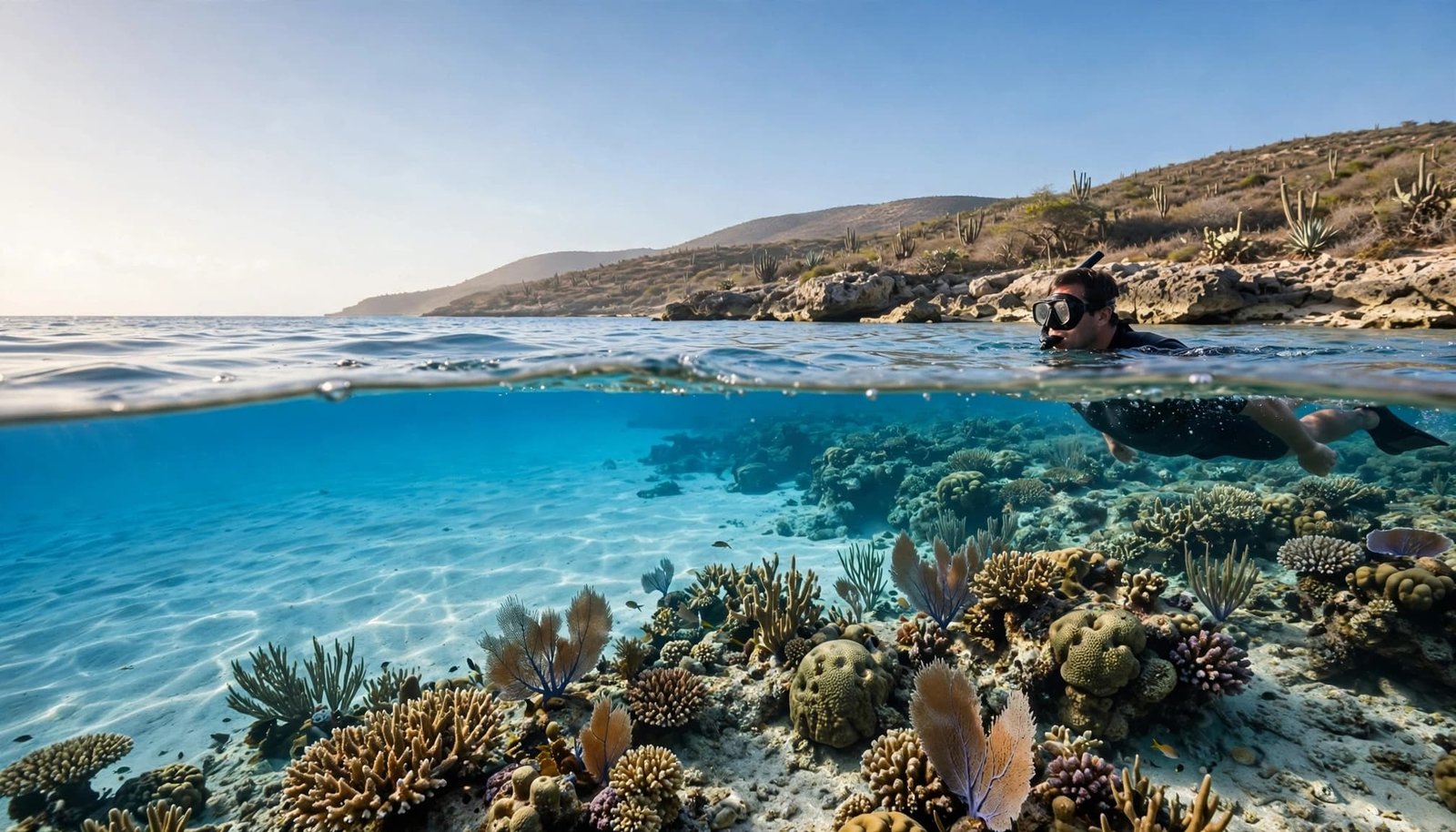
⚠️ Marine Park Fees: Bonaire’s waters are managed as a protected marine park. Check the official STINAPA Nature Fee (currently ~$40 for 2026) before you go. Curaçao also has specific marine park zones with their own rules.
🚗 Rent a Car to Reach the Best Coves
Curaçao and Bonaire reward travelers who explore. Secure an SUV or compact car before you land to access remote yellow-marker dive and snorkel sites.
🚙 Compare Island Rental Cars💡 When the rental page opens: Type “Curacao Airport (CUR)” or “Bonaire (BON)”, select your dates, and filter by “SUV” for gear space.
👨👩👦 Where Can Families Find Easy-Water Snorkeling?
Turks and Caicos, Grand Cayman, and St. John are easier sells for families. Grand Cayman’s Spotts Beach and Smith Cove offer simple entries and frequent sea turtle sightings. Turks and Caicos features Smith’s Reef and Bight Reef with soft sand and clear water. St. John’s Trunk Bay features a marked underwater trail and gentle beach entry, perfect for beginners.
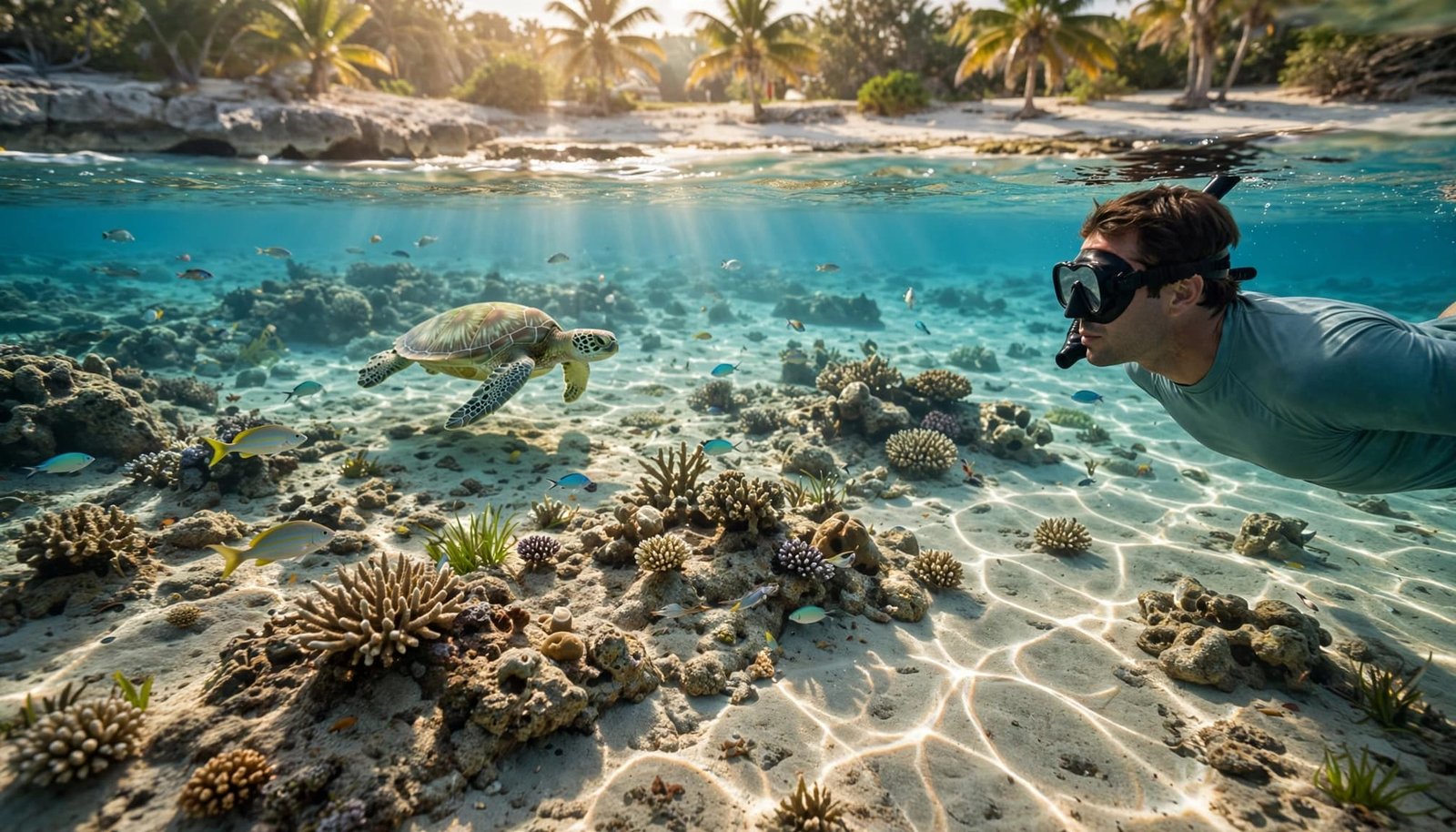
⚠️ Harsh Truth: Stingray City (Grand Cayman) and the Belize Barrier Reef are world-famous, but they generally require a boat. If your strict rule is “no boat, no problem,” focus on the shore-accessible reefs listed in this guide.
🛡️ How Do You Stay Safe and Protect the Reef?
Shore snorkeling requires a buddy, an honest assessment of your ability, and an exit plan. Watch for breathing trouble early—if you feel chest tightness or sudden breathlessness, exit immediately. Coral is living habitat; never stand on it, drag equipment across it, or use it to stabilize yourself. Prioritize shade and a rash guard, and follow local reef-safe sunscreen rules.
🤿 Pack Dependable Snorkel Gear
Bring a well-fitting mask, short travel fins, and a UPF rash guard to avoid rental fees and ensure proper hygiene.
🛒 Shop Snorkel Gear on Amazon💡 When Amazon opens: Copy/paste “anti fog snorkel mask adult” or “UPF 50 rash guard”.
📅 When Is the Best Time to Go and Where Should You Stay?
December through April is popular and comparatively drier, though May through early summer can offer better value before the Atlantic hurricane season peaks. Choose a hotel within a short walk or drive of your target reef to make short sessions easier.
✈️ 2026 Airfare Snapshot (Round-Trip Economy, from ~): JetBlue (JFK–CUR/BON connection) ~$450; American (MIA–PLS) ~$380; Delta (ATL–SJU for St. John ferry) ~$250.
🏨 2026 Accommodation Pricing: Buddy Dive Resort (Bonaire) ~$180/night; Corendon Mangrove (Curaçao) ~$200/night; Kimpton Seafire (Grand Cayman) ~$550/night; Ocean Club West (TCI) ~$450/night; Cruz Bay Vacation Rentals (St. John) ~$400/night.
📱 Stay Connected for Marine Forecasts
A local eSIM helps with beach-condition checks, tide maps, and messaging drivers without relying on spotty resort Wi-Fi.
📶 Get a Caribbean eSIM💡 When the page opens: Select the “Caribbean” or “Global” regional plan and install before you fly.
A ride-on smart suitcase turns long terminal layovers and connection sprints into the easiest part of your travel day—the ultimate airport hack for island-hopping days.

❓ People Also Ask: Caribbean Snorkeling FAQ
1. Which Caribbean island has the best shore snorkeling for beginners?
St. John (Trunk Bay) and Grand Cayman (Smith Cove) are excellent for beginners. They offer gentle, sandy beach entries, calm protected waters, and clear visibility, allowing new snorkelers to build confidence without dealing with rocky shores or strong currents.
2. Do I need to rent a car to snorkel from the beach in the Caribbean?
It depends on the island. In Bonaire and Curaçao, a rental car is highly recommended to access the best yellow-marker shore sites and secluded coves. In Turks and Caicos or Grand Cayman, you can easily rely on taxis or stay at a beachfront resort with a house reef.
3. Is it safe to snorkel from the shore without a guide?
Yes, provided you use the buddy system, check local marine weather forecasts, and stay within your swimming ability. Always identify your exit point before entering, avoid snorkeling during high winds or rough surf, and never turn your back on the ocean.
🌅 Pick the Island That Matches Your Water Comfort
The best shore snorkeling trip isn’t always on the island with the most famous reef. Choose the island and beach where you can enter comfortably, see worthwhile habitat, and exit safely. For repeat reef access, choose Bonaire; Curaçao suits variety and independent exploring. Choose Grand Cayman or Turks and Caicos for easier beach logistics, or St. John for protected scenery.
🌴 Ready to Book Your Shore-Reef Getaway?
Compare refundable stays near the best beach-access reefs before inventory shrinks for 2026.
🏨 Check Shore-Reef Hotels💡 When the page opens: Type your chosen island and filter by “Beachfront” and “Free Cancellation”.
Support the Blog
If you love our travel guides and vacation tips, consider buying us a coffee to fuel the next adventure!
Buy Me a Coffee© 2026 I Need My Vacation. All rights reserved.
