...

IneedMyVacation.com


How to Pack for a Cruise in a Carry-On Backpack (7-Day Guide)

Can you pack for a 7-day cruise in just a carry-on backpack? Yes! By using a capsule wardrobe, rolling clothes, and limiting shoes to two pairs, you can fit everything into a 40L backpack. Focus on versatile layers, travel-sized toiletries, and check prohibited items like irons and surge protectors before you go.

Packing for a 7-day cruise in one backpack sounds tight, but it’s doable, and it makes embarkation easier, faster, and a lot less stressful. If you’ve ever watched a rolling suitcase get swallowed by a baggage line while you were ready to board, you already know why cruise carry-on only is worth it.

The trick isn’t packing less for the sake of it, it’s packing smarter. This guide covers the right bag size, what to pack, what to wear, cruise rules that can trip you up, and the easy ways to avoid overpacking before you ever leave home.

Affiliate Disclosure: This article contains affiliate links. If you book through these links, I Need My Vacation may earn a commission at no extra cost to you. We only recommend services we trust and use ourselves.

🎒 Ready to Master Cruise Carry-On Packing?

Don’t let bulky gear ruin your one-bag plan. Get the best packing cubes, travel adapters, and cruise essentials delivered fast!

🛒 Shop Cruise Packing Essentials

Table of Contents

Can You Really Pack a 7-Day Cruise in a Backpack?

Yes, if you pack with intent. A 7-day cruise in a backpack is not about stuffing in more, it’s about choosing pieces that work hard, fit together, and don’t turn into dead weight by day three.

The short answer is this: you can do it, but the bag has to be the right size, and your wardrobe has to behave like a capsule, not a closet.

How Do You Pick the Right Backpack?

A good cruise backpack needs more than carry-on dimensions. It should feel comfortable on your back, hold its shape, and open in a way that lets you reach your clothes without dumping everything on the floor. Top access helps for quick grabs, while front-panel access makes packing and repacking much easier once you’re on the ship.

Size matters too. For a full week, you want enough room for clothes, shoes, toiletries, and a little flexibility, but not so much space that you keep filling it with extras. That’s why many travelers use durable carry-on backpacks from brands like Osprey, Patagonia, Cotopaxi, or Amazon Basics, but the brand matters less than the build. Look for:

💡 Backpack Must-Haves:
Structured straps that won’t dig into your shoulders
A padded back panel for long walks through terminals
Separate pockets for shoes, cords, and small items
A shape that stays manageable, even when full

Your backpack should feel like luggage you can wear, not a gym bag you’re dragging uphill.

A personal item still matters, even if your main bag does the heavy lifting. Keep passports, medications, phone, charger, glasses, jewelry, and other valuables in a smaller bag you can access fast. On embarkation day, that one detail saves you from digging through your whole pack at security or check-in.

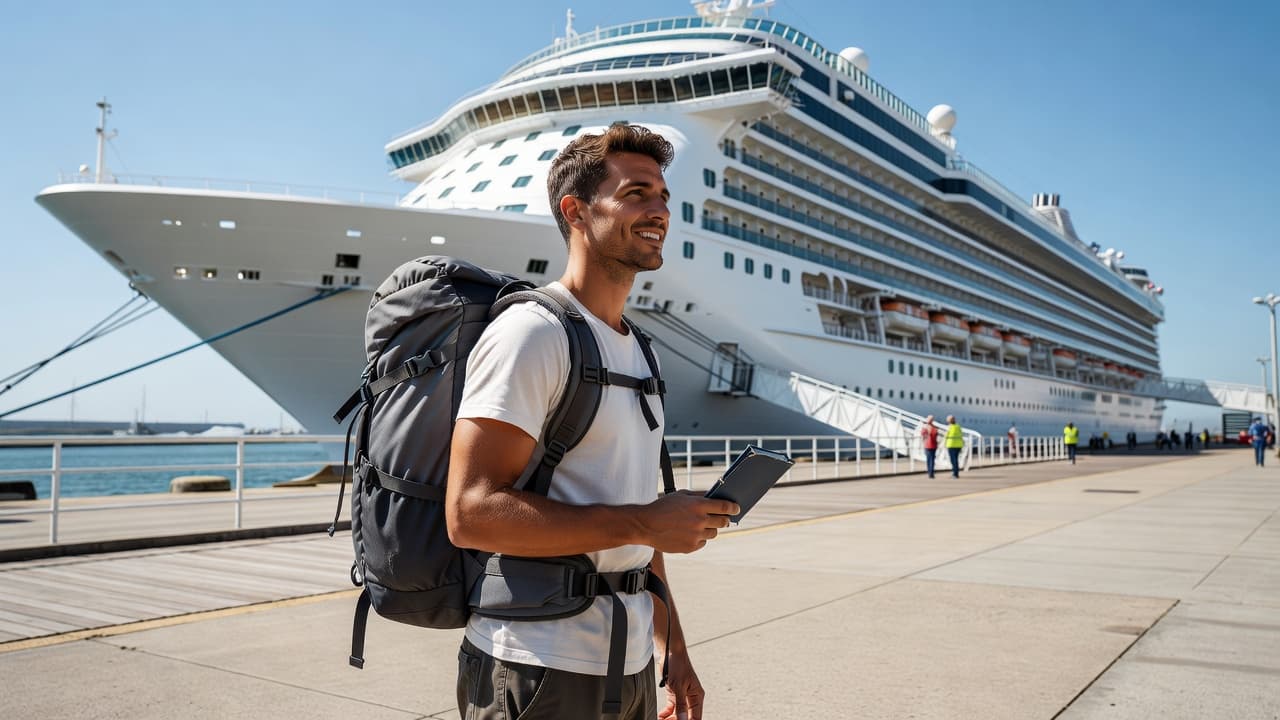
A traveler stands at a sunny cruise terminal holding a passport, wearing a streamlined travel backpack with a massive white cruise ship in the background.

Why Should You Think in Outfits, Not Individual Clothes?

If you’re figuring out how to pack for a cruise in a carry on, stop thinking in single items and start thinking in outfits. One shirt is fine. A shirt that works with two bottoms, fits under a layer, and can go from shore excursion to dinner is better.

That’s the whole trick. You want clothes that mix easily so you can build more looks with fewer pieces. Pick colors that play well together. Navy, black, white, tan, and one accent color go a long way. That way, you’re packing a system, not random outfits that only work once.

What Is the 7-Day Cruise Rule of Thumb?

A week at sea does not mean a suitcase full of clothes. A simple framework works better. Start with a few tops, a few bottoms, limited layers, two swimsuits, and two pairs of shoes.

ItemStarting Point
Tops4 to 5
Bottoms3 to 4
Layers1 to 2
Swimsuits2
Shoes2 pairs

That is a guideline, not a rulebook. Headed to the Caribbean? You may want lighter layers and more swimwear. Sailing Alaska or the shoulder season? You’ll probably swap in warmer pieces and trim the sandals. Cruise line dress codes matter too, so always adjust for your itinerary and the kind of dinners you plan to attend.

How Do You Build Your Cruise Carry-On Packing List Step-by-Step?

The easiest way to pack for a cruise in one backpack is to build the list in layers. Start with what you will wear, then add what you need for comfort, then finish with the items you cannot replace once you board.

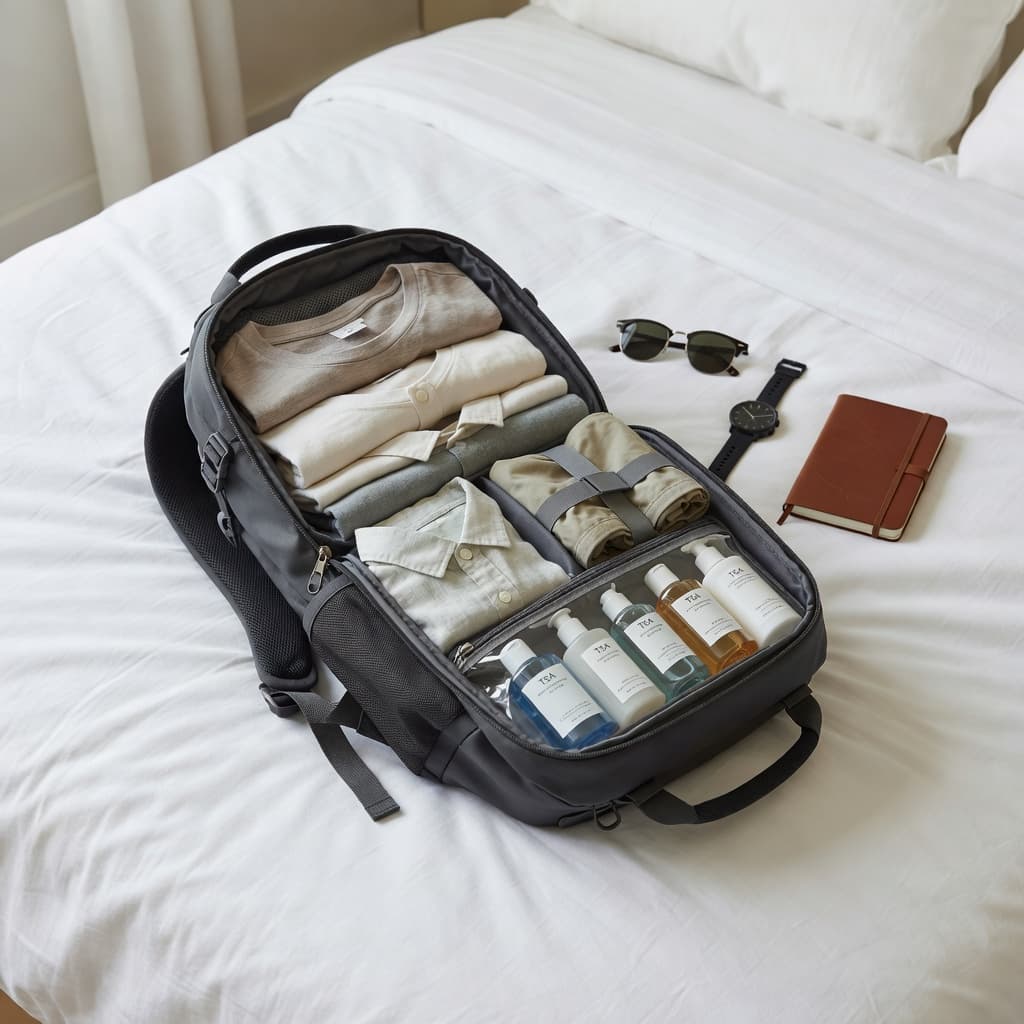
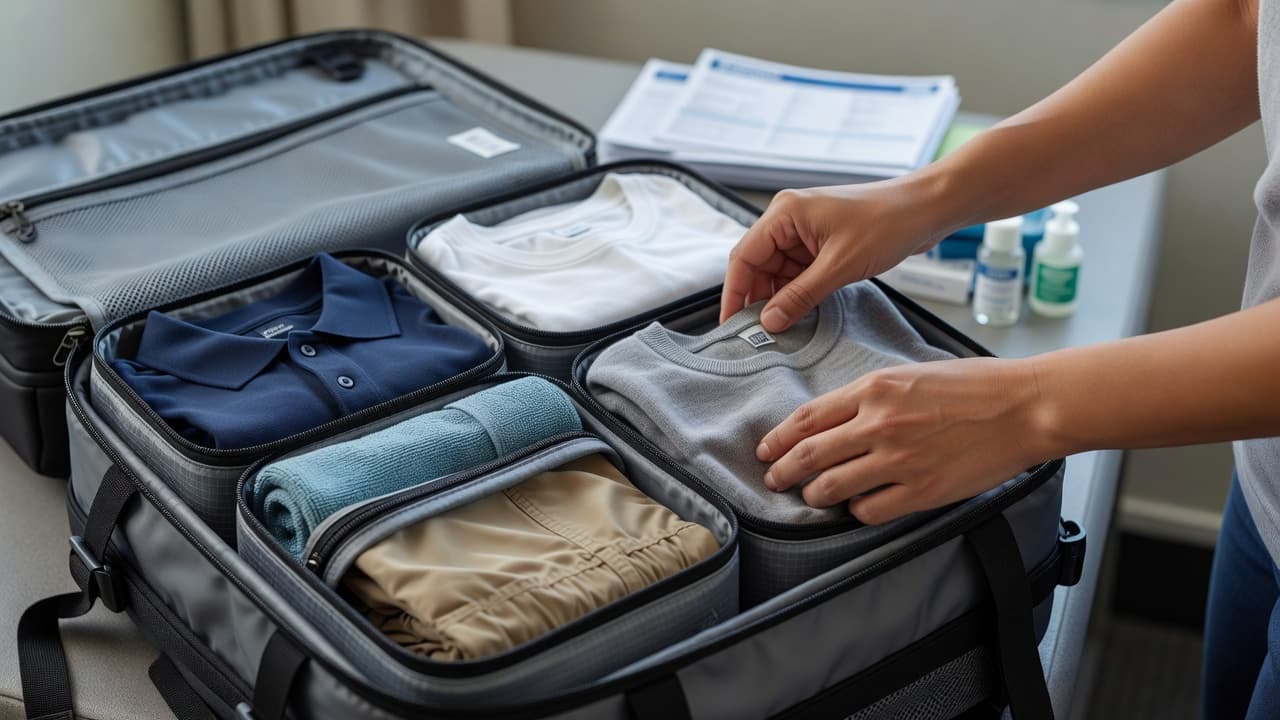
A neatly packed travel backpack rests on a soft bedspread surrounded by folded cotton shirts, small travel toiletry bottles, and passport accessories.

Which Clothes Work Hard and Take Up Less Space?

For a cruise backpack, clothing should do double duty whenever possible. A top that works for sightseeing and dinner is better than one that only works once. Pick pieces that mix easily and dry fast. Thin cotton blends, travel knits, and wrinkle-resistant fabrics usually pack better than bulky denim or heavy cotton.

✅ The Ultimate Capsule Wardrobe Checklist:
• 4-5 lightweight tops
• 2-3 shorts or pants
• 1-2 dresses or nicer outfits
• 1-2 layers (cardigan, hoodie, light jacket)
• 2 swimsuits
• 7 pairs of underwear & socks
• 1-2 sets of sleepwear

If one item only fits one outfit, it probably doesn’t belong in a carry-on backpack.

Should You Only Bring Two Pairs of Shoes?

Shoes are one of the biggest space wasters in cruise packing. They are bulky, awkward, and they eat up the best part of your bag. Most cruisers only need two pairs.

The two-shoe approach is simple:

  • One walking shoe for port days, shore excursions, and long days on your feet
  • One pair of sandals or flip-flops for the pool, deck, and casual ship time

That setup covers most cruise days without overthinking it. If you want a third pair, make it a dressier option only when your itinerary really calls for it. The goal is comfort first. If a pair hurts after an hour, it does not belong on a ship where you may walk more than you expect.

How Do You Keep Toiletries and Sunscreen Travel-Sized?

Toiletries should fit in a small hanging bag, not take over half your backpack. Keep the list tight and stick to the items you actually use every day. Larger toiletries do not need to travel with you if they are easy to buy before sailing or at a port.

⚠️ Essential Toiletries Only:
• Toothpaste and toothbrush
• Deodorant
• Cleanser and moisturizer
• Razor & hair basics
• Reef-safe sunscreen
• Lip balm

What Documents, Meds, and Tech Can’t You Replace Onboard?

Some items never leave the carry-on backpack. Not the checked bag. Not the cabin closet. The carry-on. If you need them at check-in, security, or the moment you board, they stay with you.

Keep these easy to reach:

  • Passport or cruise-approved ID
  • Boarding documents
  • Credit card & cash for tips
  • Prescription medication & motion-sickness remedies
  • Phone, charger, and power bank
  • Adapters, if you need them

Cruise docs and meds belong in a pocket you can grab without unpacking everything. That matters more than people think, especially on embarkation day when you are juggling bags, lines, and paperwork. Add a power bank if you rely on your phone for tickets, photos, and onboard plans, because a dead battery is a bad surprise when you are off the ship.

How Can You Pack Without Making a Mess?

The easiest way to keep a cruise backpack under control is to pack in layers, then lock each layer into place. Clothes should stay neat, shoes should stop stealing space, and small items should have a home before they ever touch the bag.

How Do You Roll, Cube, and Compress the Right Way?

Rolling works best for most casual clothes. T-shirts, swimsuits, leggings, sleepwear, and soft dresses roll down small and stay tidy in the bag. Packing cubes are useful when you want order more than extra space. Use one cube for tops, one for bottoms, and one for dinner outfits or swim gear.

Compression helps most with soft clothing, not stiff or bulky items. Think hoodies, knit layers, pajamas, and thin sweaters. If you want a simple option that keeps everything contained, a set of packing cubes for travel is the easiest place to start.

Hands neatly tucking folded summer clothing into blue fabric packing cubes placed inside a dark travel backpack.

💡 The Golden Rule of Compression:
1. Roll items that wrinkle less and need quick access.
2. Cube items you want separated by outfit or category.
3. Compress soft, bulky pieces that take up too much air.
*Never turn your bag into a brick! Leave enough space to zip it comfortably.*

How Do You Use the Backpack Like a Puzzle?

A carry-on backpack packs best when the heavy stuff sits close to your back and the lighter items fill the outer edges. Put shoes low and near the center, then tuck clothing around them so the weight stays balanced.

Shoes are little storage boxes, so use them! Fill them with socks, chargers, hair ties, or other small items that would otherwise float around your bag. Corners and gaps are free space, and cruise packing is all about using every inch without creating a mess.

Why Should You Wear Your Bulkiest Items on Travel Day?

If a jacket, sweater, or pair of shoes takes up half your bag, wear it instead. That one move can make the difference between a backpack that feels fine and one that drags on your shoulders all day. Your heaviest shoes should usually stay on your feet during transit. Fewer pounds on your back means less strain, less shifting, and less frustration when you are boarding with documents in one hand and your bag in the other.

What Cruise Rules Can Ruin a Carry-On Plan?

A carry-on backpack works great until cruise rules step in and take away the one thing you packed for convenience. Most surprises come from banned items, toiletries that are smarter in small sizes, and the reality that cruise cabins are not stocked like hotels.

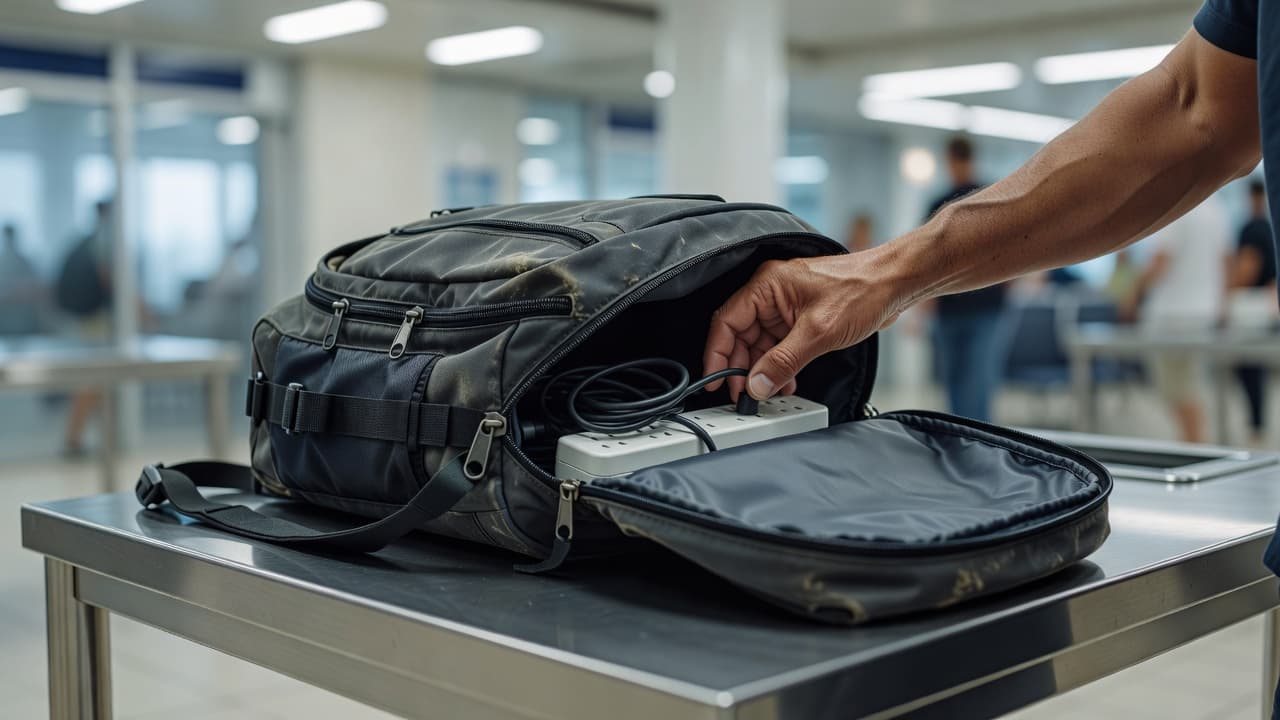
A close-up view captures a traveler opening a backpack on a metal inspection table as an officer prepares to examine the contents.

What Are You Not Allowed to Bring on a Cruise?

The most common cruise rule breaker is anything that creates heat, flame, or a security headache. That includes irons, steamers, knives, weapons, explosives, candles, drones, speakers, and surge-protected power strips. Those are the items that can turn a tidy backpack plan into a problem at embarkation.

🚫 Common Prohibited Items:
• Irons and steamers (fire risk)
• Knives, blades, and weapons
• Explosives, fireworks, flammable items
• Candles and open-flame decor
• Drones (also restricted in many ports)
• Large speakers
• Surge-protected power strips (use non-surge USB hubs instead!)

You can check a cruise line’s prohibited-items page before you leave, and that is time well spent. Royal Caribbean’s prohibited items list is a good example of how strict these rules can be.

Can You Bring Full-Size Shampoo on a Cruise Ship?

You usually can, but that does not mean you should. Full-size shampoo takes up room fast, adds weight, and turns into a bigger spill risk inside a packed backpack. Travel-size toiletries are the better move. They save space, fit neatly into a small pouch, and leave you room for the things you cannot skip, like sunscreen, medication, and chargers.

Do Cruise Cabins Have Irons?

No, cruise cabins normally do not have irons for guest use. Most cruise lines also ban personal irons and steamers, so planning to “fix wrinkles on board” is usually a dead end. Some ships do have laundry rooms or ironing rooms, but they are not always convenient.

For a backpack-only cruise, stick with options that travel well:

  • Wrinkle-release spray for quick touch-ups
  • Hanging clothes in the bathroom while you shower
  • Lighter, less fussy fabrics that recover after folding
  • Packing clothes loosely instead of cramming them flat

How Do You Make Your Backpack Ready for Ports, Dinners, and Ship Life?

A cruise backpack has to do a lot. It needs to work for hot port days, nicer dinners, and the random ship moments that catch you off guard, like a windy deck or a chilly dining room. The fix is not packing more. It’s packing a few smart items that earn their space.

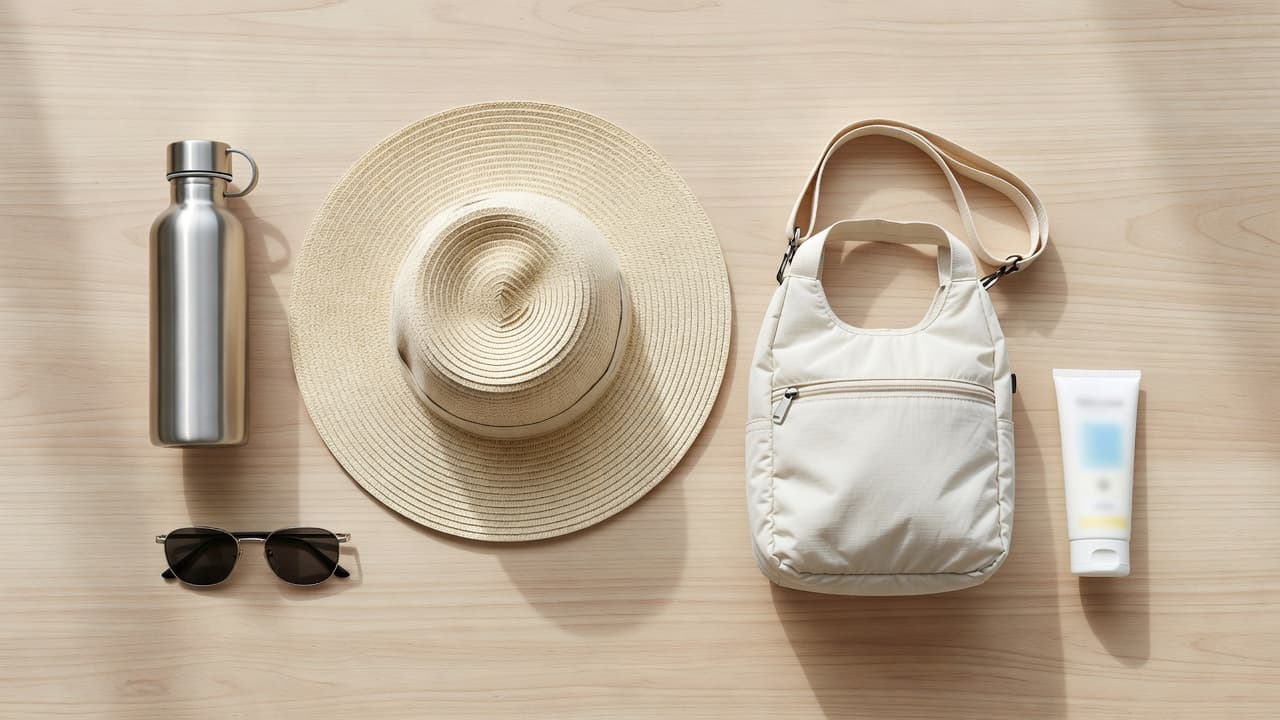
Top-down view of reusable water bottle, sun hat, sunglasses, lightweight day bag, and sunscreen prepared for coastal adventures.

How Do You Pack for Shore Days Without Overdoing It?

Shore days are where a carry-on backpack really proves itself. You want enough to stay comfortable, but not so much that you feel like you’re hauling a beach cart on your shoulders.

Keep the basics simple:

  • Reusable water bottle for hot ports and long walks
  • Hat and sunglasses for sun and glare
  • Small day toiletries like sunscreen, lip balm, and hand sanitizer
  • Lightweight layer or rain shell if the weather shifts

If you’re heading to a beach, ruins, or a walking tour, a compact day bag inside your backpack can be a lifesaver. It gives you a place for your wallet, phone, and sunscreen without dragging your whole backpack around all day. A refillable bottle makes sense on almost every cruise. So does a packable layer. Port weather changes fast, and ship air conditioning can feel like a freezer after lunch.

How Do You Plan One Simple Outfit for Dressier Nights?

You do not need three formal looks for one cruise. On most 7-day sailings, one polished outfit can cover dinner, photos, and any smart-casual night without looking repeated or tired.

For women, that might be one dress or jumpsuit that works with different shoes or jewelry. For men, one nice shirt with dress pants or dark chinos is enough. If you want to change the feel of the outfit, swap the shoes or add a layer. That’s usually all it takes.

One dressy outfit that you can wear twice beats two outfits you barely have room for.

How Do You Leave Room for Souvenirs and Dirty Laundry?

A backpack packed to the zipper leaves you no breathing room. That’s a problem on day four, when you buy a souvenir mug, a shirt, or a bottle of local rum and have nowhere to put it.

Leaving some space also helps with the messier side of cruise life. Used clothes need a home, especially swimsuits, socks, and anything damp from a beach day. A small laundry bag or compression sack keeps those items separate so they don’t mingle with clean clothes.

✅ Smart Add-Ons for Extra Space:
• Small laundry bag for worn clothes
• Compression sack for dirty items or bulky extras
• Foldable tote for souvenirs and port shopping
• Extra pocket space for anything you pick up onboard

That little buffer keeps your bag from becoming a compressed lump by the end of the trip. It also makes repacking faster when you’re heading home. If you treat your backpack like it needs a built-in exit plan, you’ll be glad you left the room.

Conclusion: Master the Art of Cruise Carry-On Only

A 7-day cruise in a backpack works when every item earns its spot. That is the whole point of cruise carry-on only travel: fewer bags, less stress, and a much easier start to the trip.

If you keep the list tight, pack around outfits instead of loose pieces, and check cruise rules before you zip up, you can board feeling ready instead of rushed. Pack early, use the checklist, and keep the must-haves close, because the smartest cruise packing is the kind you barely have to think about once you leave home.

🚀 Ready to Book Your Next Cruise Adventure?

Find the best deals on flights to your departure port and book independent shore excursions to maximize your budget!

People Also Ask: Cruise Carry-On FAQ

What size backpack is best for a 7-day cruise?

A 30L to 40L backpack is ideal for a 7-day cruise. Anything larger than 40L may exceed carry-on limits for some airlines if you’re flying to your port, and it becomes too bulky to manage easily. A 35L pack offers the perfect balance of space and maneuverability for a week-long voyage.

Can I bring a power strip on a cruise ship?

Most cruise lines strictly prohibit surge-protected power strips due to fire hazards. However, non-surge protected USB charging hubs or multi-port adapters are generally allowed. Always check your specific cruise line’s policy before packing, as bringing a banned power strip can result in confiscation at security.

How do I keep my clothes from wrinkling in a backpack?

Use the bundle wrapping method or rolling technique to minimize wrinkles. Place heavier items at the bottom, roll softer garments tightly, and use packing cubes to keep them compressed. Pack wrinkle-resistant fabrics like nylon blends, merino wool, or polyester knits, and hang delicate items in the cabin closet immediately upon boarding.

🎒 Don’t Forget Your Cruise Essentials!

Get packing cubes, travel-sized toiletries, reef-safe sunscreen, and portable chargers delivered fast before your trip.

🛒 Shop Amazon Essentials

© 2026 I Need My Vacation. All rights reserved.

How I Use Travel Packing Cubes That Save Space 2025

Stuffed suitcase chaos, be gone. Travel packing cubes that save space 2025 turn that mess into calm order, so everything fits in your carry-on without stress. As a travel expert at IneedMyVacation.com, I have tested dozens of organizers across red-eye flights, weekend escapes, and long-haul trips. The right cubes save 30 to 50 percent space, cut wrinkles, and make grab-and-go packing simple, which lines up with 2025’s surge in carry-on-only, budget-friendly, and sustainable travel.

I pack for real trips, not just photos. This year, compression cubes and modular sets are the clear winners for small suitcases and backpacks. Travel Weekly reports that 75 percent of travelers use organizers in 2025, thanks to the push toward lighter packing and efficient layouts. I see it every week: smarter packing means fewer baggage fees, faster security, and a more relaxed start to your trip. And when you’re ready to book, I always compare deals first on Expedia—it’s my go-to for bundled flight + hotel savings.

Here’s what I’ll cover, with a focus on affordable, durable picks that actually compress:

  • Amazon Basics 6-Piece Set, budget essential with compression zips
  • BAGAIL 8-Piece Set, light and family-friendly
  • Veken 6-Piece Set, great value with shoe bags
  • Gonex Compression Bags, vacuum-style power
  • Shacke Suede 5-Piece Set, soft build and thoughtful pockets
  • Reebok Active Packing Cubes, gym-to-gate durability
  • Eagle Creek Pack-It Reveal, structured with pro features
  • Away The Cube Set, premium, neat fit
  • Calpak Luka Modular Cube, colorful and stackable
  • Peak Design Travel Cube, strong for tech and camera gear
  • Plus tips for using cubes in duffels and backpacks

You’ll learn how to size cubes for your carry-on, roll or fold for max compression, and mix sets to match your itinerary. I’ll show where compression helps most, like bulky sweaters and jeans, and where it doesn’t, like stiff jackets. I’ll also flag materials that last, since sustainable travel starts with gear that does not fail after two trips.

Table of contents:

  • Why travel packing cubes save space in 2025
  • The best budget and compression sets
  • How to pack cubes for carry-ons, duffels, and backpacks
  • A simple comparison table
  • FAQs and quick buying tips

Ready to pack like a pro? Let’s get you organized for smoother, lighter travel. Pack smarter with IneedMyVacation.com!

This post contains affiliate links. If you make a purchase through these links, we may earn a commission at no extra cost to you.

Why Travel Packing Cubes Are a Game-Changer for Space Savings

Travel packing cubes that save space 2025 are the secret to clean, compact packing that fits your life and your carry-on. I use them to tame bulky sweaters, group outfits, and keep toiletries from wandering. Think of cubes as drawers inside your suitcase, only smarter and lighter.

Close-up of hands organizing a travel luggage with packing cubes for efficient packing.Photo by Matheus Bertelli

Compression Features That Shrink Your Load

The double-zipper compression on modern cubes turns soft layers into tight bricks. I zip once to close, then zip again to compress, which flattens air pockets and pulls excess fabric in. With sets like Gonex and other compression-forward designs, I routinely shave serious volume from bulky items. Paired with carry-on-only rules in 2025, this is gold for city breaks and one-bag travel.

Here is how it plays out in practice:

  • Zip sequence matters. Close the main zipper first, then compress with the second track to avoid snags and uneven bulges.
  • Load order helps. Place heavier, low-stretch items (jeans, hoodies) in compression cubes and keep lighter layers (tees, underwear) in standard cubes.
  • Expect big gains. Manufacturers and frequent travelers report up to an 80 percent reduction for soft goods when properly packed and compressed. In my tests, winter layers compress the most.

Compared to non-compression cubes, the difference is clear:

  • Compression cubes reduce air gaps, stack flatter, and free up corners you can fill with socks or a compact jacket.
  • Standard cubes win for quick access, but they rarely squeeze volume. I use them for items I will grab daily.
  • A blend works best. One compression cube for heavy pieces, standard cubes for the rest.

For more on compression performance and product picks, see Pack Hacker’s roundups of compression-friendly sets, which include Gonex and Peak Design options in their reviews (7 Best Compression Packing Cubes). Wirecutter also highlights structured, durable sets that keep their shape while you compress, a big help for wrinkle resistance and tidy stacking (The 4 Best Packing Cubes of 2025).

Organization Wins for Stress-Free Travel

Cubes do more than slim your suitcase. They remove friction from every step of the trip. I sort by category so I can unpack a drawer in one move:

  • Clothes by day or activity: city outfits in one cube, lounge wear in another.
  • Shoes in a standalone cube or pouch to keep dirt off fabrics.
  • Toiletries and tech in small cubes for quick security checks.

Mesh-topped cubes are a quiet hero. On Amazon, countless reviewers call out how the mesh panel lets them spot the right cube without opening anything, speeding up hotel unpacking and airport repacking. I agree. Visibility saves time, and airflow helps keep clothes fresh on longer trips.

A simple system keeps it smooth:

  1. Assign a color or size to each category. No thinking needed on the road.
  2. Store laundry in an empty cube to lock in odors.
  3. Put the heaviest cube near the wheel base of your carry-on to balance weight.

This is why travel packing cubes that save space 2025 are not just about squeezing inches. They build a model of your wardrobe inside your bag, so every item has a place, and you get on with your trip faster. If you want more curated options, Carryology’s 2025 picks include structured cubes from brands like Eagle Creek and Peak Design that play well with compression and clean layouts (Best Packing Cubes for 2025).

The Best Travel Packing Cubes That Save Space in 2025

I keep my bag tidy with a simple rule: use travel packing cubes that save space 2025 and let the cubes do the heavy lifting. The sets below balance price, durability, and real compression. I have packed them into carry-ons, backpacks, and weekender bags. Each one makes outfits easy to grab, cuts bulk, and keeps the zipper glide smooth.

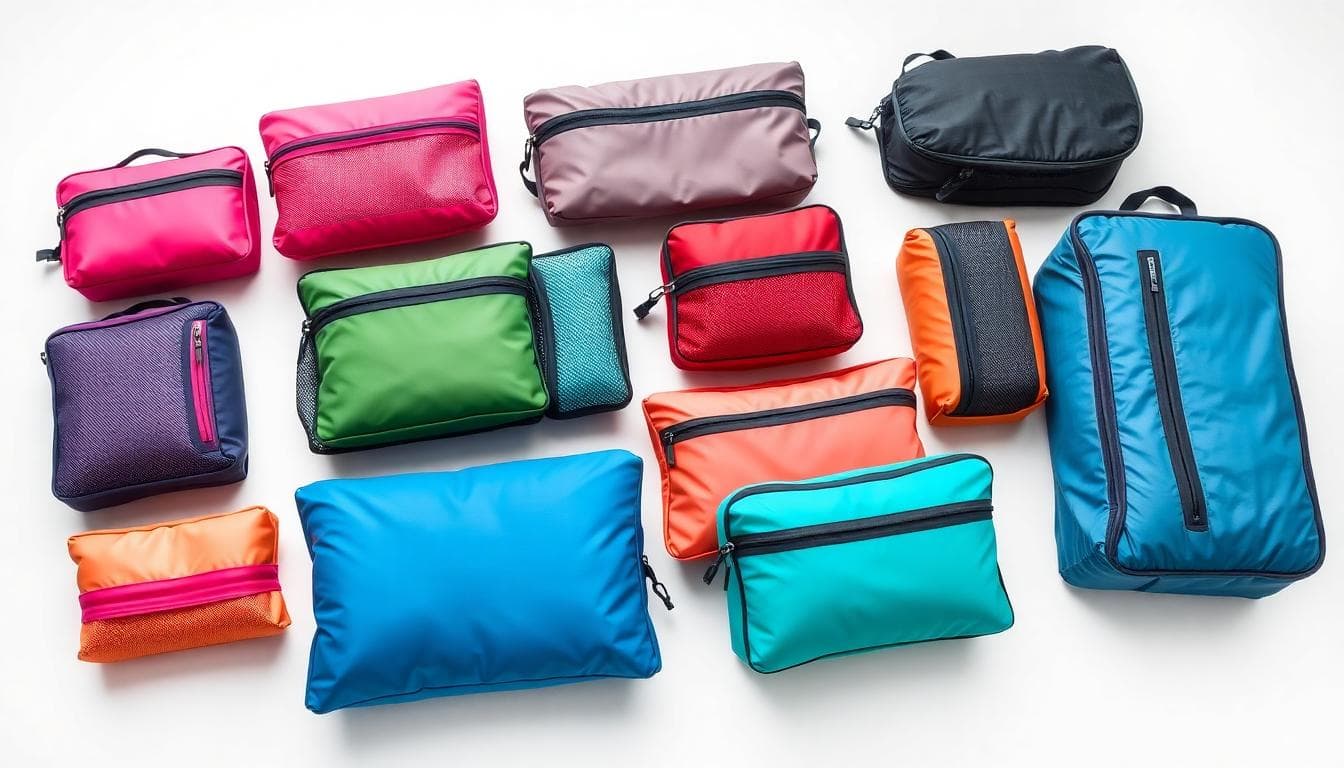
Variety of colorful travel packing cubes that save space 2025 displayed on a white background.Image created with AI to showcase different sizes and compression styles.
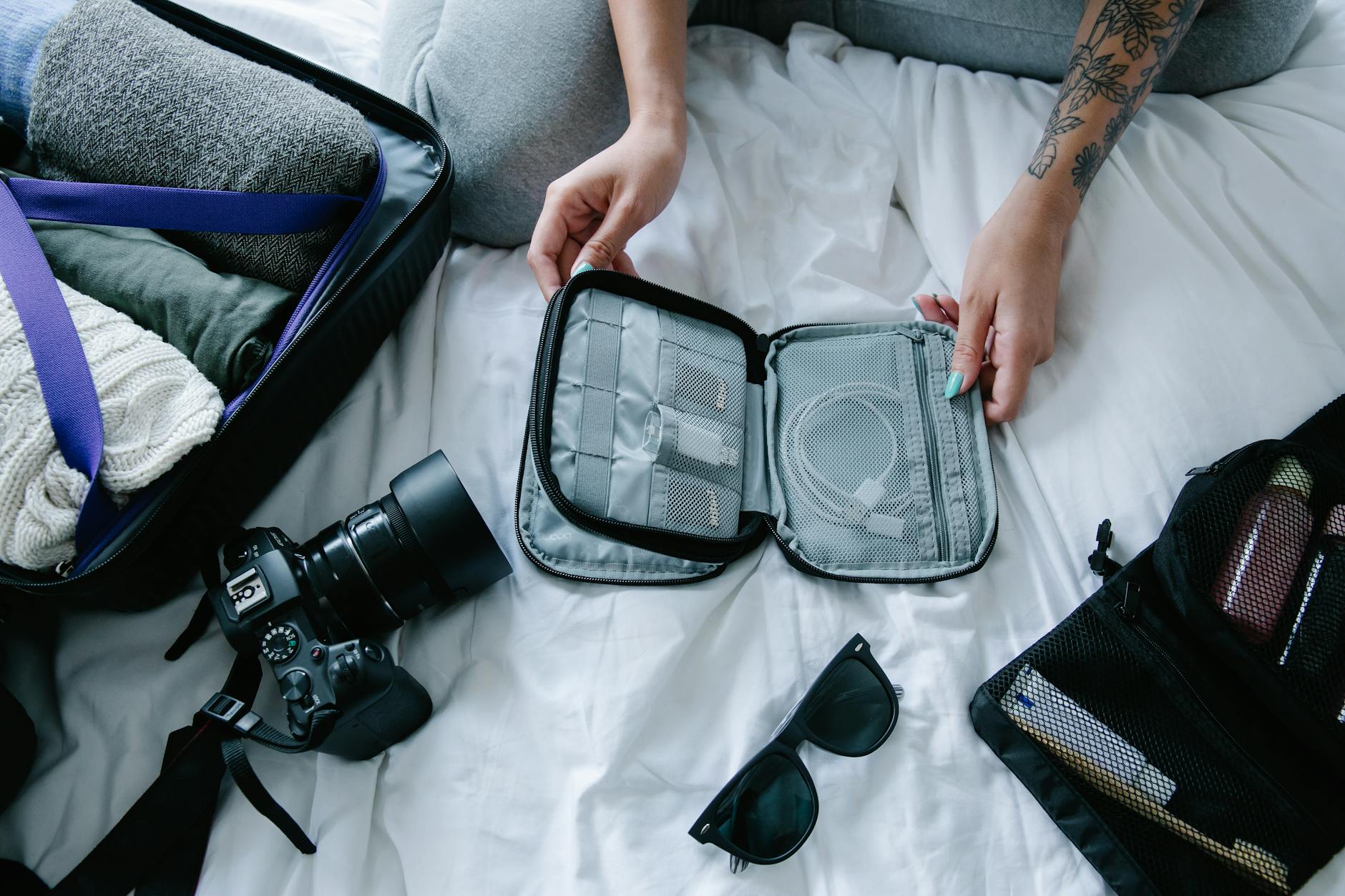
Traveler organizing essentials including a camera and packing cubes on a hotel bed.Photo by Timur Weber

Amazon Basics 6-Piece Set: Budget Pick for Beginners

If you are new to cubes, start here. This $20 to $25 nylon set uses a simple double-zipper layout with a compression track that flattens tees, leggings, and socks into tidy slabs. The mix of sizes fits outfits, underwear, and a slim shoe pouch, so you can map a full week without chaos.

  • What I like:
    • Lightweight nylon, so the cubes do not eat your baggage allowance.
    • Visible mesh tops that make it easy to spot what is inside at a glance.
    • Compression zippers to pull air out of soft layers.
  • Trade-offs:
    • Basic durability. The fabric and zips are fine for casual trips, but they are not the toughest.

Tip: Load bulkier items near the edges before compressing to avoid bulging. For a solid overview of what makes budget cubes work, see the roundup from Wirecutter’s packing cubes review, which highlights simple, structured sets that hold shape.

Gonex Compression Bags: Vacuum-Like Power on a Budget

These $20 to $25 compression bags act like soft vacuum sacks without a pump. I stack sweaters, joggers, and hoodies, zip the outer track, then watch the volume drop. Gonex claims up to 80 percent compression for soft goods, and in my trials with winter gear, the reduction is dramatic.

  • Why it stands out:
    • High compression for bulky items that usually hog space.
    • Water-resistant fabric that shrugs off drizzle and gym locker spills.
    • Family-friendly because you can assign a color to each person.
  • Keep in mind:
    • You give up structure compared to boxy cubes, so pack flat for best results.

If you want to see how compression bags stack up for one-bag travel, the testers at Pack Hacker’s best compression packing cubes include Gonex among practical options for small carry-ons.

Veken 6-Piece Set: Includes Shoe Bags for Full Organization

This $15 to $20 set is my go-to for tidy, visible packing on a tight budget. The cubes have mesh tops for quick ID and airflow. The extra shoe bags are clutch, keeping dirt and tread marks away from your clothes. I use the small cube for underwear, the medium for gym gear, and the large for jeans and sweaters.

  • Highlights:
    • Great visibility without opening each cube.
    • Versatile pieces that cover clothes, shoes, and laundry.
    • Light build that fits easily into duffels and roller bags.
  • Consider:
    • Zippers are decent, but do not overstuff. Leave a little breathing room.

When I recommend starter sets to readers, this is often the one. It checks the boxes for space savings, order, and price, and it plays well with one or two compression cubes for bulky items.

Eagle Creek Pack-It Reveal: Durable and Structured Choice

If you want gear that lasts, this $30 to $40 line delivers. The Pack-It Reveal cubes feel structured, breathe well, and slide in and out of luggage without snagging. Some versions in the Pack-It system include RFID-blocking accessories and organizers for added security. I trust these for repeated trips and heavier loads.

  • Strengths:
    • Long-lasting quality with smooth zippers and reinforced seams.
    • Breathable panels that help clothes stay fresh.
    • Stackable structure that keeps order inside your suitcase.
  • Watch-outs:
    • Higher price than budget bundles, but the lifespan pays it back.

Reviewers have praised these for years. In 2025, they are still a smart pick for travelers who want consistency and clean packing. The latest guidance from Wirecutter’s packing cubes review points to Eagle Creek as a reliable, well-built option that organizes for both short and long trips.

Peak Design Travel Cube: Premium for Tech and Camera Gear

For organized adventurers, this $40 to $50 cube is a favorite. It opens wide, expands when you need more space, and holds shape so it does not flop around. I use it for camera bodies, lenses wrapped in soft sleeves, and action cam kits. It also handles socks and base layers when I want a single, sturdy cube.

  • Why I reach for it:
    • Expandable design that adapts to changing loads.
    • Premium build with smooth access and smart dividers.
    • Clean styling that plays well with minimalist travel setups.
  • Consider:
    • It is pricier than basic nylon cubes, but the protection and workflow are excellent.

If you want more context on how this cube compares with other compression-forward picks, see Pack Hacker’s compression cube roundup, which often features Peak Design among top choices for one-bag setups.

Key takeaway: whether you go budget or premium, travel packing cubes that save space 2025 earn their keep by turning loose layers into compact, stackable blocks. Mix one high-compression option with lightweight mesh cubes, and your carry-on starts to feel like a tidy dresser drawer.

How to Use Travel Packing Cubes Effectively for Maximum Savings

Packing smart starts with a simple plan. I use travel packing cubes that save space 2025 to shrink bulk, organize by category, and avoid extra baggage fees. The goal is tight, flat cubes that stack like bricks, so every inch of your bag works harder. Follow these moves for cleaner cubes, lighter luggage, and a smoother trip.

Woman smiling as she zips a travel organizer indoors, preparing for a trip.A quick check of compression and zipper alignment keeps cubes tight and tidy.
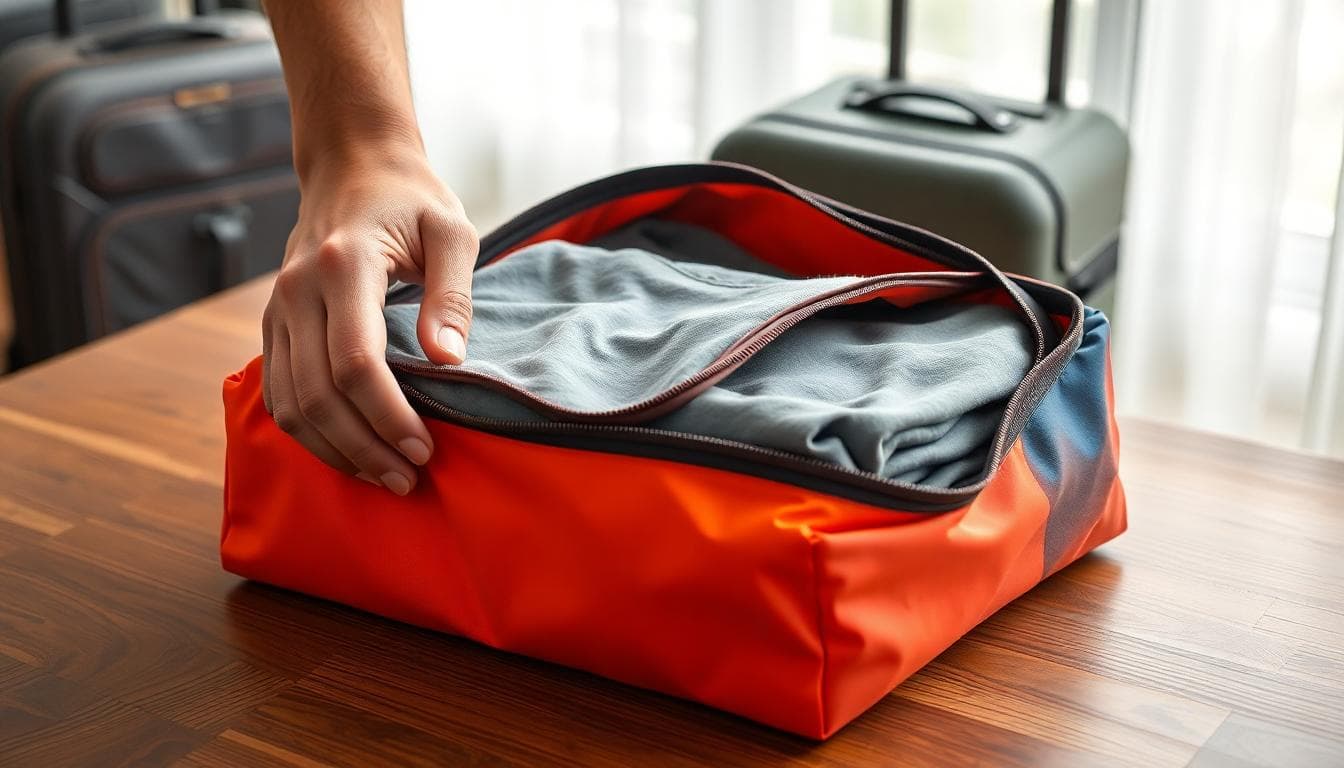
Photo by Timur Weber

Rolling and Compressing Techniques

Rolling helps you avoid bulky corners, while compression zips pull out trapped air. I use this repeatable process for shirts, joggers, and soft layers.

  1. Sort by fabric and weight
    Group similar items. Soft knits together, structured items together. This gives even compression and fewer lumpy edges.
  2. Smooth, then roll tight
    Lay the item face down, smooth wrinkles with your hands, fold sleeves in, then roll from the hem to the collar. Aim for firm, even rolls the width of your cube.
  3. Edge-load the cube
    Place the first roll along the long edge of the cube. Fill from edge to edge, then layer in rows. This builds a flat top and helps the zipper glide.
  4. Fill gaps with smalls
    Use socks, underwear, or a packable tee to fill any corner spaces. Less air means better compression.
  5. Zip, then compress
    Close the main zipper first. Hold the cube edges with one hand, then run the compression zipper slowly with the other. If you feel resistance, back up a half inch and smooth the fabric. This prevents snags and broken teeth.
  6. Stack by density
    Heavy cubes on the wheel side of a carry-on, lighter cubes on top. It balances the bag and keeps everything easy to grab.

Pro tip: Put structured items like jeans in a compression cube, and light layers like tees in a standard cube. Outside’s primer on cube strategy echoes this split approach for reliable compression and less rummaging. See their guide: The Ultimate Guide for Packing Cubes.

Close-up of hands rolling a t-shirt inside a colorful packing cube with a compression zipper half-closed.Rolling tight, filling edges, and zipping slowly are the three keys to space savings. Image created with AI
Quick checks that save space and time:

  • Flat first layer: The first row sets the shape. Keep it square.
  • Mind the mesh: If your cube has mesh, avoid sharp items near the panel to stop snags.
  • No overstuffing: If the compression zip bows upward, remove one item. A flatter cube packs better than an overfilled one.

For a visual workflow that matches this method, I like the step-by-step from Everki on planning, rolling, and filling cubes: How to Use Packing Cubes Effectively.

Categorizing Items to Stay Organized

Clear categories turn your suitcase into easy-access drawers. I map each trip with a simple color or size code so I can unpack in one move.

  • Outfits by day or activity: One cube for city days, one for lounge or gym gear, one for sleepwear. If I am on a short trip, I pack a complete day outfit per cube, including socks and underwear.
  • Dirty clothes system: Bring one dedicated laundry cube or a lightweight laundry pouch. When clothes get worn, they go in that cube, not the suitcase cavity. It locks in odor and makes laundry day simple.
  • Accessories and smalls: Use a small cube for socks and underwear, another for belts, scarves, or ties. For tech, I keep cables and chargers in a zip pouch, then stack it on top of a clothing cube.
  • Shoes and protection: Shoes go in a shoe bag or slim cube to protect fabrics from dirt. Tuck a pair of socks inside each shoe to save space.
  • Seasonal split: Bulky sweaters and jeans get compression cubes. Lightweight tops go in mesh cubes for visibility and airflow.

Example setup for a 5-day carry-on:

  • Large compression cube: 2 jeans, 1 sweater, 1 hoodie
  • Medium mesh cube: 5 tees, 2 long sleeves
  • Small cube: underwear and socks for 5 days
  • Slim cube or pouch: toiletries in TSA-approved bottles
  • Shoe bag: 1 pair of sneakers, socks stuffed inside

If you prefer a brand-based system, assign one color per person or per category to cut confusion mid-trip. Briggs & Riley’s quick guide also recommends varied sizes and a stack strategy to keep access simple, which mirrors how I pack for families and longer itineraries: How to get the most out of your Packing Cubes.

Key takeaway: travel packing cubes that save space 2025 work best when you combine tight rolling, careful compression, and a category map you can follow without thinking. Pack by edges, zip with care, and give every item a home.

Streamline Your Adventures with These Space-Saving Tools

Smart gear turns a tidy suitcase into a smooth trip. I pair travel packing cubes that save space 2025 with a few compact tools that cut clutter, protect clothes, and keep me moving. Think of this as a tight kit that works from airport to trail. Less rummaging, faster setup, and more room for the fun stuff.

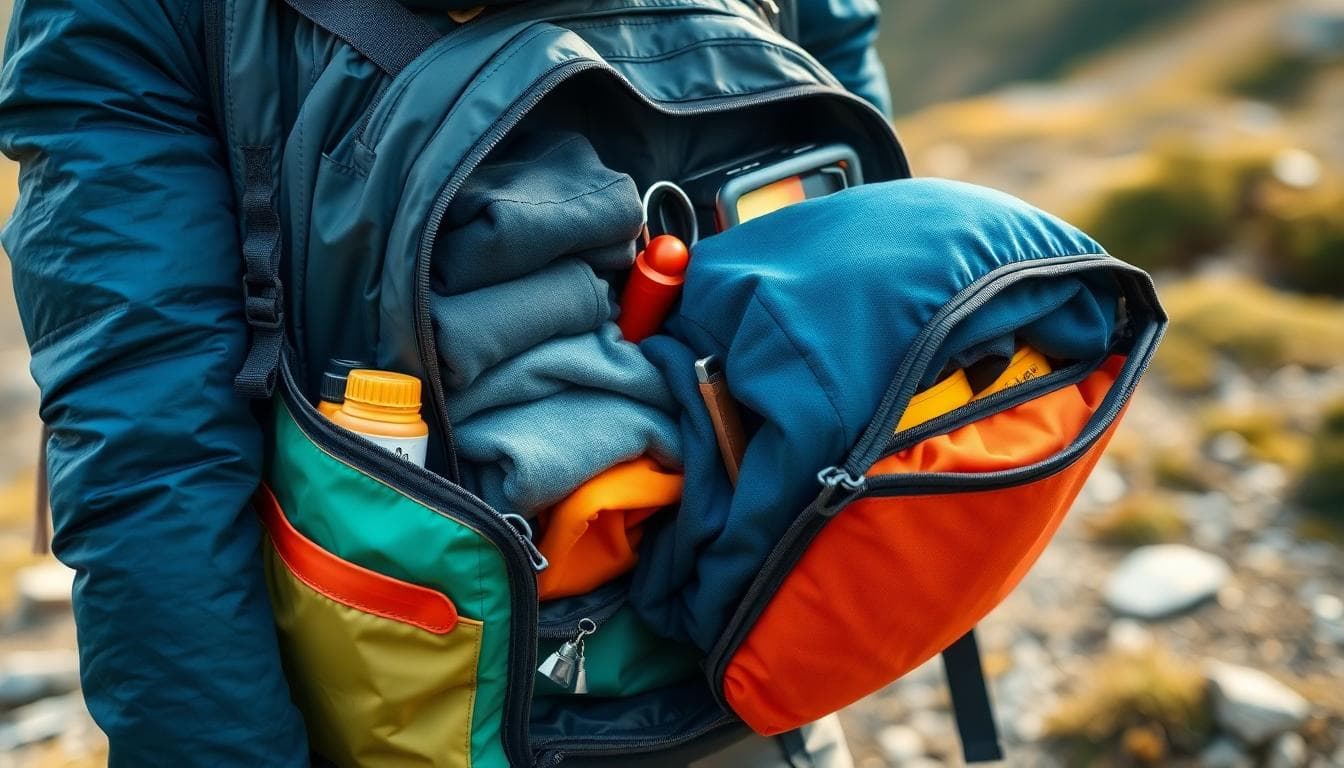
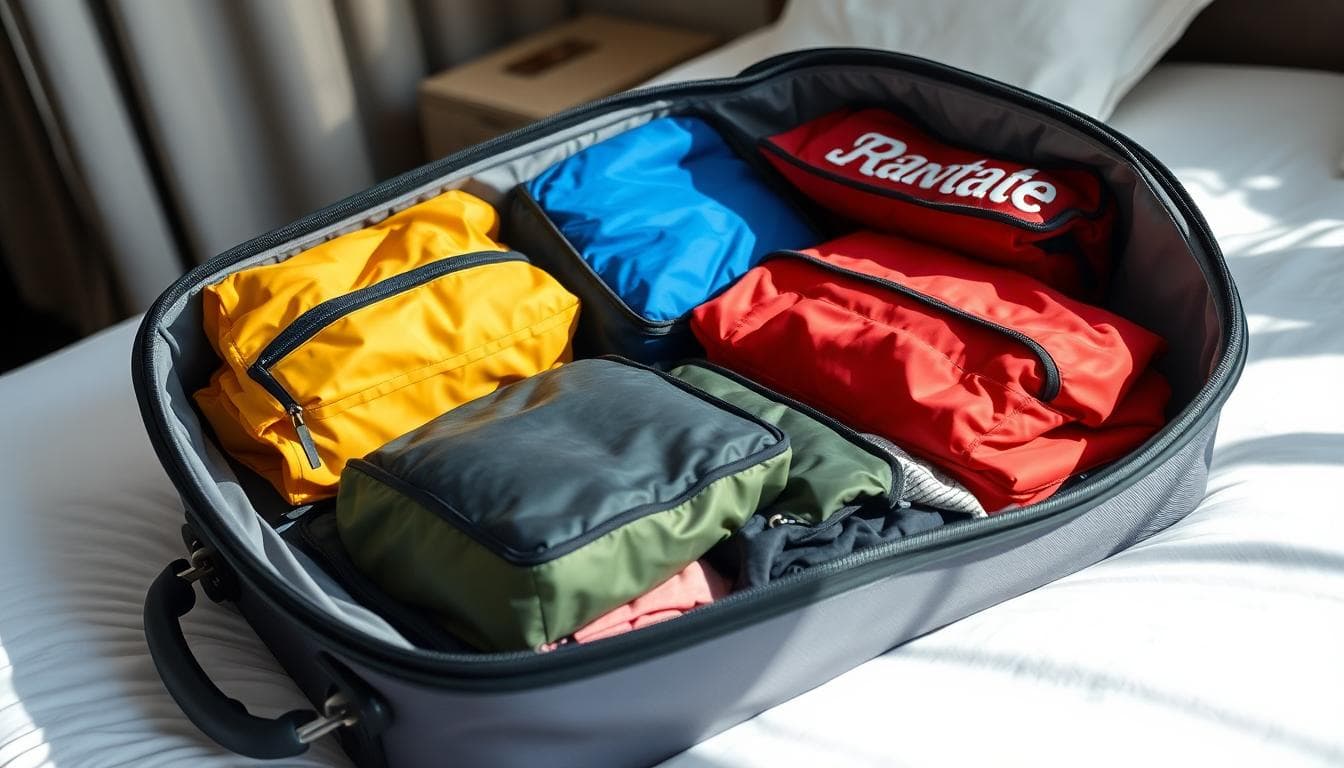
Traveler organizing a backpack with colorful cubes and compact tools in natural lightImage created with AI to show efficient, space-saving packing in action
Compression Helpers That Work With Your Cubes

I stack cubes like bricks, then add extra compression where it counts. These items play well with both standard and compression cubes.

  • Vacuum-style roll bags: Great for puffy layers you do not need daily. Squeeze air out by hand, then slide the bag into a large cube to keep shape. Travel testers at Travel + Leisure’s best packing cubes note big gains when you compress soft goods before you cube them.
  • Elastic garment bands: Wrap bulkier jeans or hoodies, then load the bundle into a compression cube. This reduces bowing at the zipper.
  • Spare compression straps: A simple pair of cross straps inside your suitcase locks cubes flat, which keeps stacks from shifting mid-transit.

Quick win: put the densest cube near the wheel base of your carry-on, then strap the stack tight. It feels like a drawer that never slides.

Flat Toiletry Kits That Save Real Space

Toiletries often waste volume. I swap bulky bottles for flat, leak-safe gear that slips beside my cubes.

  • Flat toiletry pouch: A wide, shallow pouch slides along the suitcase edge. It does not steal space from cubes.
  • Refillable silicone bottles: Travel sizes stand upright, cap inwards, and do not bulge. Pack them in a quart-size bag you can grab at security.
  • Mini solid swaps: Solid shampoo, conditioner bars, and balm sticks ditch liquid weight and pack flatter inside a small cube.

Setup I trust:

  1. Load a slim pouch with liquids, label facing up.
  2. Add a toothbrush cap and a foldable razor cover.
  3. Tuck the pouch on the long edge, outside the cube stack.

Cable, Tech, and Tiny Essentials Under Control

Small items turn into chaos fast. A compact organizer gives each piece a slot, so your cubes stay for clothes, not cords.

  • Zippered tech pouch: One for cables, chargers, and a power bank. I slip it on top of my smallest cube for quick access.
  • Tile or AirTag pocket: If your pouch supports it, tuck a tracker inside and stop worrying about misplacing gear.
  • Earplug and pill case: A matchbox-size case keeps health and sleep items where you expect them.

For a clear walkthrough on how this style of organization speeds travel, see Outside’s guide to packing cubes. Their approach mirrors my layout: visible, modular, and fast to repack.

Ultralight Add-Ons That Pull Double Duty

A few compact items earn a permanent spot next to my cubes. They pack small and solve daily problems.

  • Collapsible daypack: Folds to pocket size, expands for hikes or markets. It rides in the suitcase lid and weighs almost nothing.
  • Quick-dry microfiber towel: Thin, light, and perfect as a beach towel or a laundry helper. Roll it around fragile items for padding inside a cube.
  • Mini laundry kit: A flat laundry bag and a palm-size detergent sheet keep worn clothes contained, which protects your fresh cube stacks.

Want a deeper gear list that stays small in your bag? I keep an updated roundup of compact picks here: best compact travel gadgets for nomads 2025.

How I Pack It All Together

This is my quick, repeatable map that blends travel packing cubes that save space 2025 with smart tools:

  1. Pack clothes by category into cubes, heavy layers in compression cubes.
  2. Roll or fold to match each cube size, then edge-load to keep tops flat.
  3. Use one vacuum-style roll bag for outerwear, stored at the bottom.
  4. Slide a flat toiletry pouch along the long edge of the case.
  5. Place a tech pouch on top for security checks and in-flight access.
  6. Fill gaps with a microfiber towel and a collapsible daypack.

Result: a suitcase that opens like a tidy shelf. Getting ready takes minutes, not guesswork. If you like more context and real-world examples, this breakdown on whether cubes are worth it highlights the same benefits of order and time saved: Are packing cubes worth it?.

Key takeaway: combine compression cubes, flat pouches, and one or two ultralight add-ons, and your bag feels smaller and smarter at the same time.

FAQs About Travel Packing Cubes That Save Space

Packing smarter is a habit I can teach in minutes. These rapid-fire FAQs answer the questions I get the most about travel packing cubes that save space 2025, from real compression gains to what to buy on a budget.

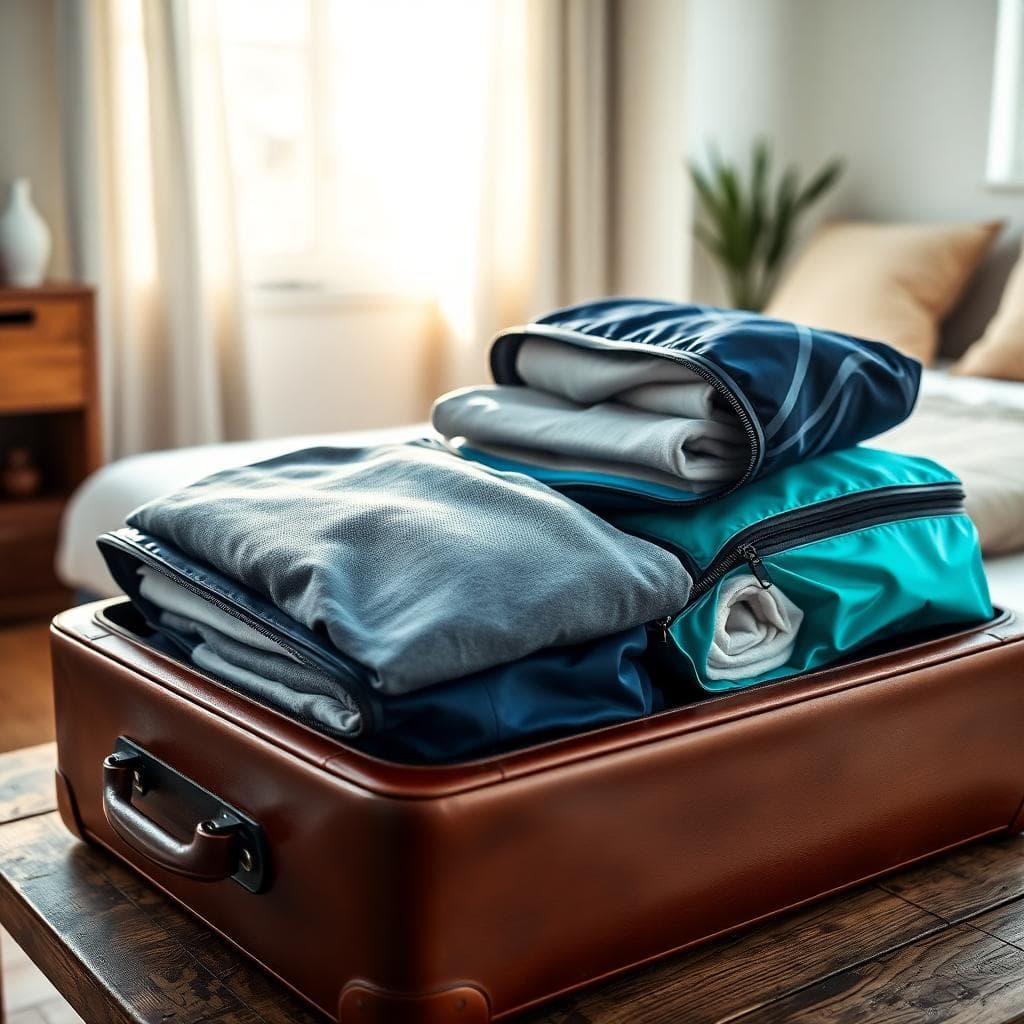
Open suitcase neatly organized with colorful compression packing cubes on a hotel bed, natural light highlighting textures and zippers. Image created with AIImage created with AI to show travel packing cubes that save space 2025 in action
Do packing cubes really save space, or just organize?

Yes, they save space when used right. Compression zippers flatten soft layers, and even standard cubes reduce air gaps by keeping items tight and stackable. Independent testers agree that cubes contain and slim clothing effectively, which helps you fit more in your carry-on. For a clear overview, see this practical breakdown of what makes cubes efficient from Travel + Leisure’s testers: The 8 Best Packing Cubes of 2025.

How much space can I expect to save with compression cubes?

With soft clothing, I regularly see 30 to 50 percent volume savings. Bulky knits and joggers compress the most. Some compression bags claim up to 80 percent for puffy layers, but I plan around more realistic gains so the zippers stay smooth.

What sizes should I buy for a carry-on?

I pack one large compression cube for jeans and sweaters, one medium for shirts, and one small for underwear and socks. If your suitcase is narrow, two medium cubes often stack cleaner than one large.

Is rolling or folding better inside cubes?

I roll soft items to avoid lumpy corners and fold structured pieces. The mix keeps cubes flat and prevents bowing at the zipper. For more fast wins, AARP’s suitcase space tips echo the same roll-and-compress method for tidy stacks: Save Suitcase Space with Packing Cubes.

Do I need compression cubes, or will standard cubes work?

Standard cubes are great for visibility and quick access. Compression cubes shine with dense fabrics. I use a hybrid: compression for heavy layers, mesh-topped cubes for daily wear. This keeps the bag balanced and easy to unpack.

What materials last the longest?

Look for midweight nylon or polyester with reinforced seams and smooth zippers. Mesh panels help with airflow and visibility. Avoid ultrathin fabric if you overpack, since it can snag or stretch.

How do I keep cubes from wrinkling clothes?

Smooth each garment before rolling, edge-load the cube for a flat top, and do not overstuff. When you arrive, stand cubes upright and pull items from the top to reduce handling.

Are packing cubes worth it for short trips?

Yes. On a weekend trip, cubes turn your carry-on into drawers. You can pull one cube and get dressed without rummaging, which saves time at your hotel. For a balanced view of pros and cons, this guide lays out when cubes make the most sense: Are Packing Cubes Worth It?.

Conclusion

Travel packing cubes that save space 2025 turn a bulky bag into a clean, compact kit that keeps pace with you. Compression standouts like Gonex flatten sweaters and joggers, while budget heroes like Amazon Basics, BAGAIL, and Veken organize daily outfits without adding weight. For frequent flyers, Eagle Creek and Peak Design bring structure and durability, and style-forward options like Away and Calpak keep your setup tidy and sharp. I save real room by mixing one high-compression cube for heavy layers, then using mesh cubes for tees, underwear, and socks. The result is a suitcase that opens like a drawer, with fewer wrinkles and faster get-ready time.

If you are building a fresh setup, start simple. One compression cube, two mesh cubes, and a shoe pouch handle most carry-ons. Add a slim laundry bag and a flat toiletry kit, and your load feels lighter before you even zip the case. That small system works for weekend escapes and two-week itineraries, which fits 2025’s trend toward carry-on-only, cost-smart travel. And before you go, always lock in your trip with flexible, affordable options on Expedia.

Ready to act on it? Shop my favorite picks and plan your next trip with IneedMyVacation.com, then pack once and enjoy the journey. Your future self at security and at the hotel closet will thank you for the upgrade.

What would you pair with your cube stack next, a collapsible daypack or a tech pouch? Tell me, then make it real in your bag.

AI Generated© 2025 IneedMyVacation.com. All rights reserved.


Pin It on Pinterest

Seraphinite AcceleratorOptimized by Seraphinite Accelerator
Turns on site high speed to be attractive for people and search engines.