
...

IneedMyVacation.com

🦜 Best Caribbean Islands for Birdwatching 2026: Endemic Species, Eco-Lodges & Tour Guide

Trinidad and Tobago, Jamaica, Dominica, Cuba, and Puerto Rico are the top Caribbean islands for birdwatching in 2026. Trinidad offers diverse habitats, Jamaica and Cuba feature rare endemic species, Dominica provides lush rainforest parrots, and Puerto Rico allows for easy, short-trip birding.

Affiliate Disclosure: This article contains affiliate links. If you book or purchase through these links, I Need My Vacation may earn a small commission at no extra cost to you. We only recommend services we genuinely trust and use ourselves to help you plan the perfect trip. Thank you for your support!

🌿 Find Your Wildlife Day First

Compare specialist birding excursions and nearby eco-lodges. Confirm guide availability and reserve access separately before booking your flights.

💡 When the tour page opens: Type “Birdwatching” or “Nature Walk” and filter by your specific island (e.g., “Jamaica” or “Dominica”).

💡 When the hotel page opens: Search “Blue Mountains” or “El Yunque” and filter by “Free cancellation” to protect your deposit.

🎯 Key Takeaways for Caribbean Birding

  • 🌳 Choose Trinidad and Tobago for a mix of rainforest, wetland, and coastal birding habitats.
  • 🇯🇲 Make Jamaica or Cuba your shortlist when hunting for rare, island-endemic birds leads the trip.
  • 🦜 Pick Dominica for immersive forest walks and the chance to spot the rare Sisserou Parrot.
  • 🇵🇷 Consider Puerto Rico for a shorter, highly accessible trip with varied habitats and no passport required for US citizens.
  • 📅 Confirm specialist guide availability and reserve access before buying nonrefundable flights.

🗺️ Which Caribbean Island Fits Your Wildlife Trip?

These picks reflect different habitats and travel needs, not a single biodiversity ranking. I always start with the wildlife site, not the resort photo. For a birding trip, choose your target habitat first, then arrange lodging and transport around the wildlife experience you want. The useful comparison is time in habitat, not the number of hotel stars. A cheaper room across the island can add a transfer and cost you your best morning birding window. For active vacations, compare these Caribbean hiking destinations alongside your birding shortlist.

DestinationMain AppealUseful BaseMain Trade-off
Trinidad & TobagoHabitat varietyNorthern Range; TobagoTwo-island transport
JamaicaIsland endemicsBlue MountainsWinding mountain roads
DominicaRainforest wildlifeRoseau / Northern forestsRain and uneven trails
CubaEndemics & wetlandsPlaya Larga (Zapata)Travel administration
Puerto RicoShort-trip flexibilitySan Juan + Western sitesDriving between habitats

🌴 Why Choose Trinidad and Tobago for Habitat Variety?
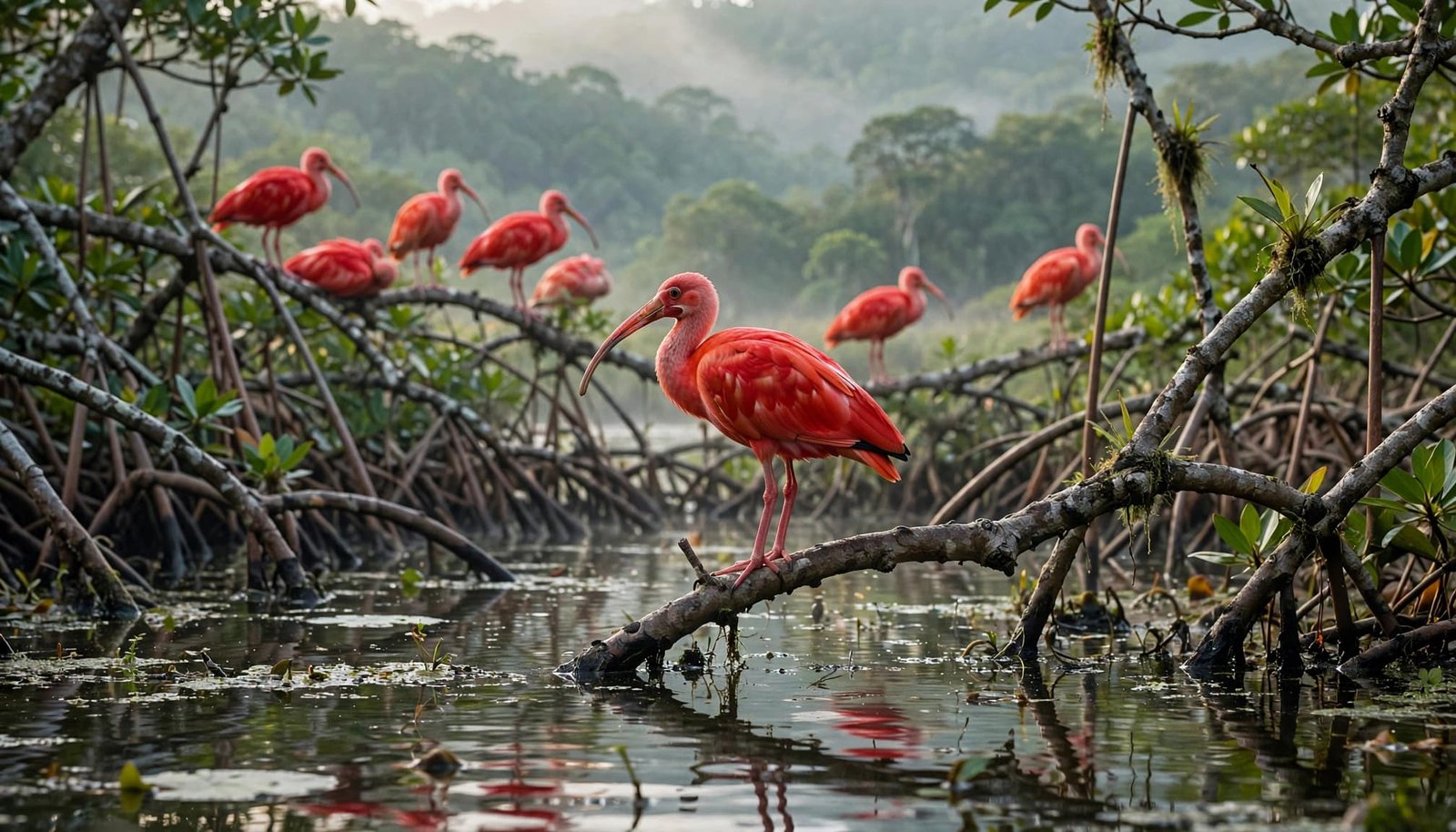
Scarlet ibises perch in mangroves above calm water and distant hills.

What can you see on Trinidad’s wetlands and forests?

Trinidad combines Northern Range forests with wetlands such as Caroni Swamp. Scarlet ibises are the signature attraction at Caroni, while forest outings may offer chances to look for rainforest species such as hummingbirds, toucans, and trogons. I’d plan a forest morning and a separate wetland excursion rather than squeeze both around a long resort transfer. Tobago adds Main Ridge forest and coastal birding, with more room for beach time. It’s a useful choice when your partner wants wildlife without spending every day chasing target species.

🇯🇲 Is Jamaica the Right Island for Endemic Birds?
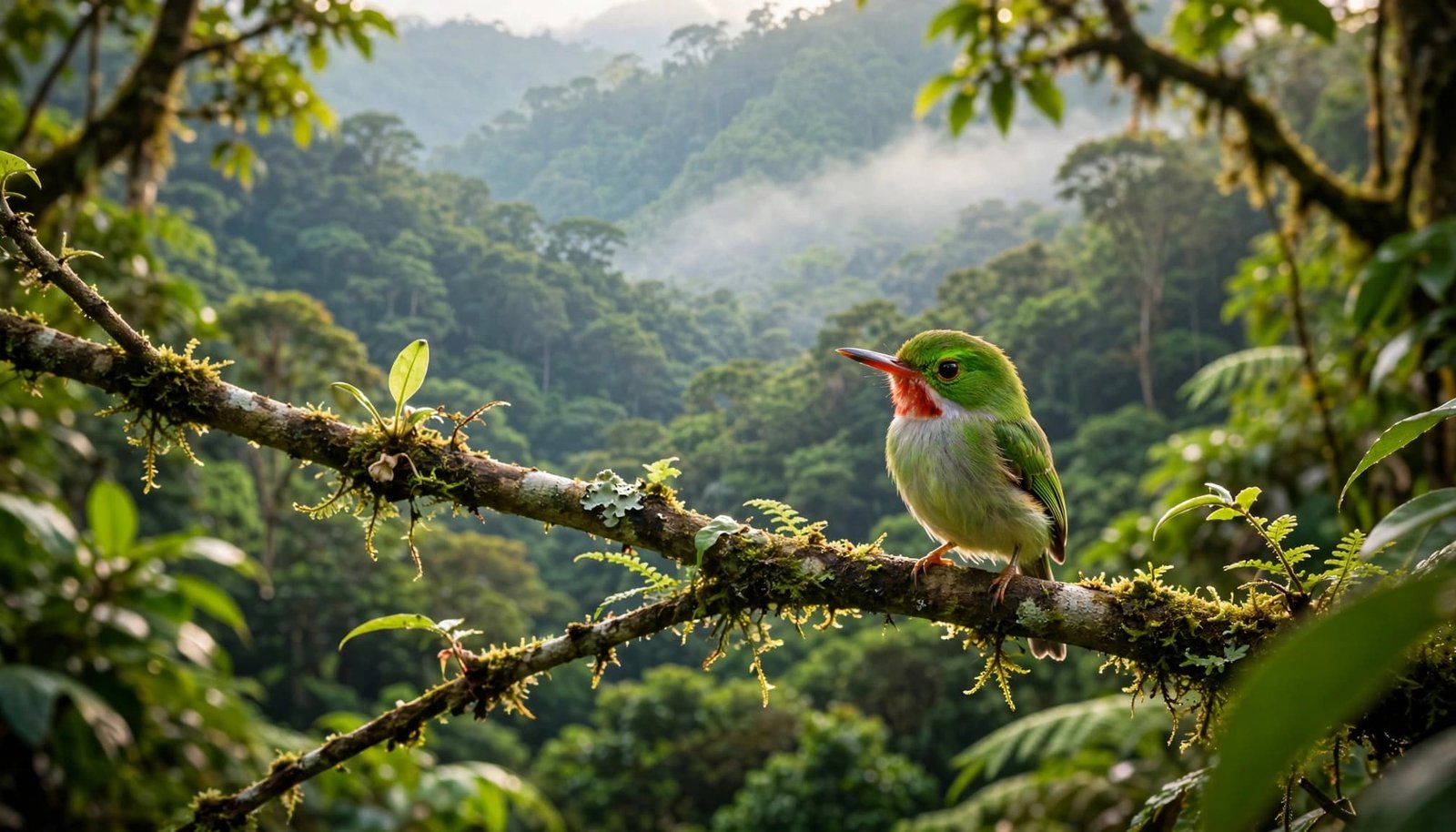
A colorful Jamaican tody perched on a branch above a green mountain forest.

Which endemic birds make Jamaica worth the trip?

Jamaican Tody, Crested Quail-Dove, and Jamaican Blackbird are among the endemic species that give a birding itinerary clear targets. Field Guides describes Jamaica as having at least 29 island-endemic species—birds found nowhere else. The Blue and John Crow Mountains offer important forest habitat. A guide who knows calls and current locations can help you find birds that would be easy to walk past. A mountain base saves early driving when forest birding is your priority, while a coastal resort works better for travelers planning one guided outing among beach days.

🦜 Who Should Book a Dominica or Cuba Wildlife Vacation?
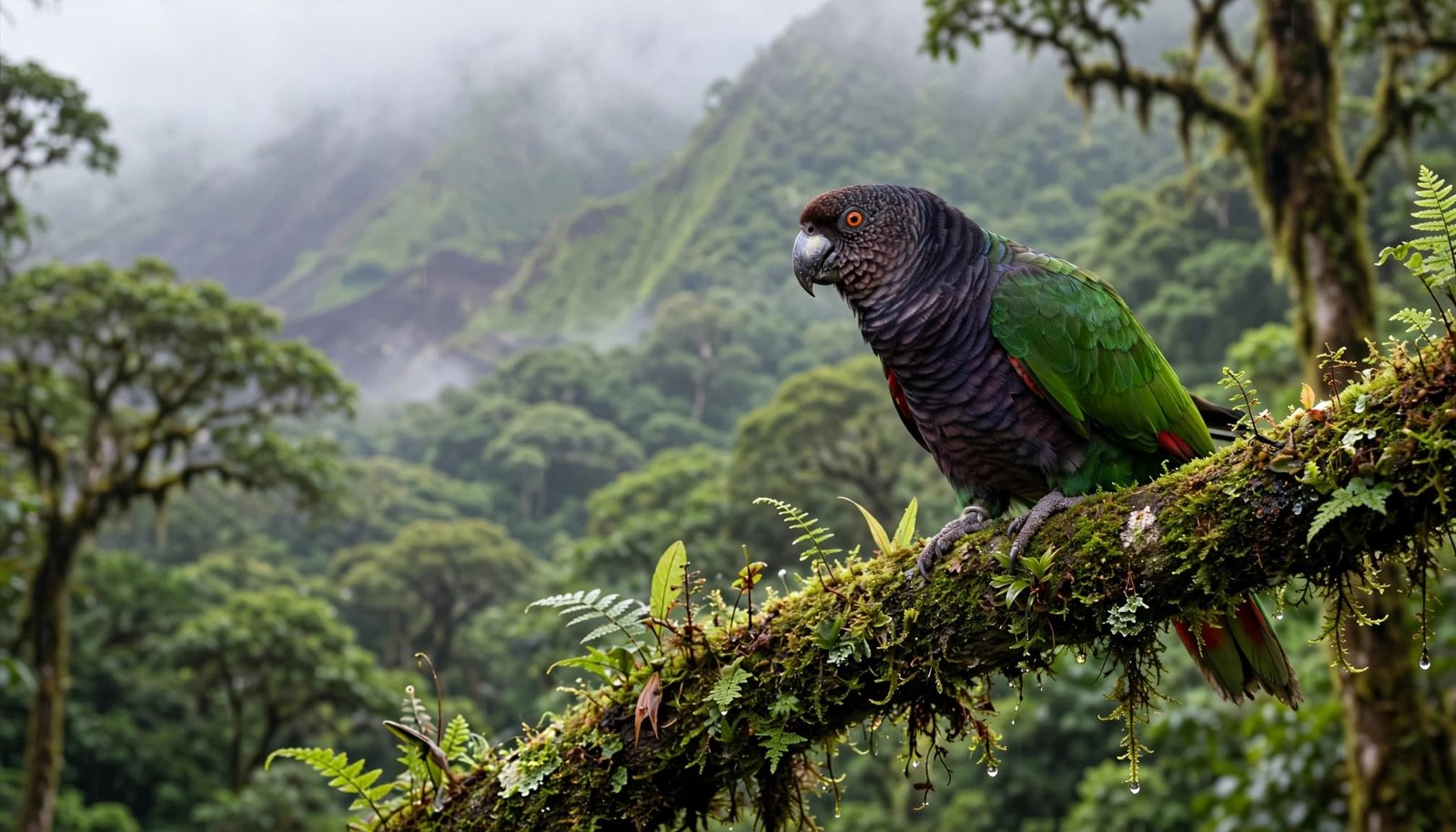
A green-and-red parrot perched on a mossy branch in a misty rainforest.

Dominica suits travelers who want nature to lead the whole vacation. The protected Sisserou Parrot occurs only on this island and is associated with rainforest, particularly at higher elevations. Dominica also offers whale-watching excursions, making it perfect for mixed-interest groups. Read our Dominica nature travel guide to connect wildlife days with the island’s wider attractions.
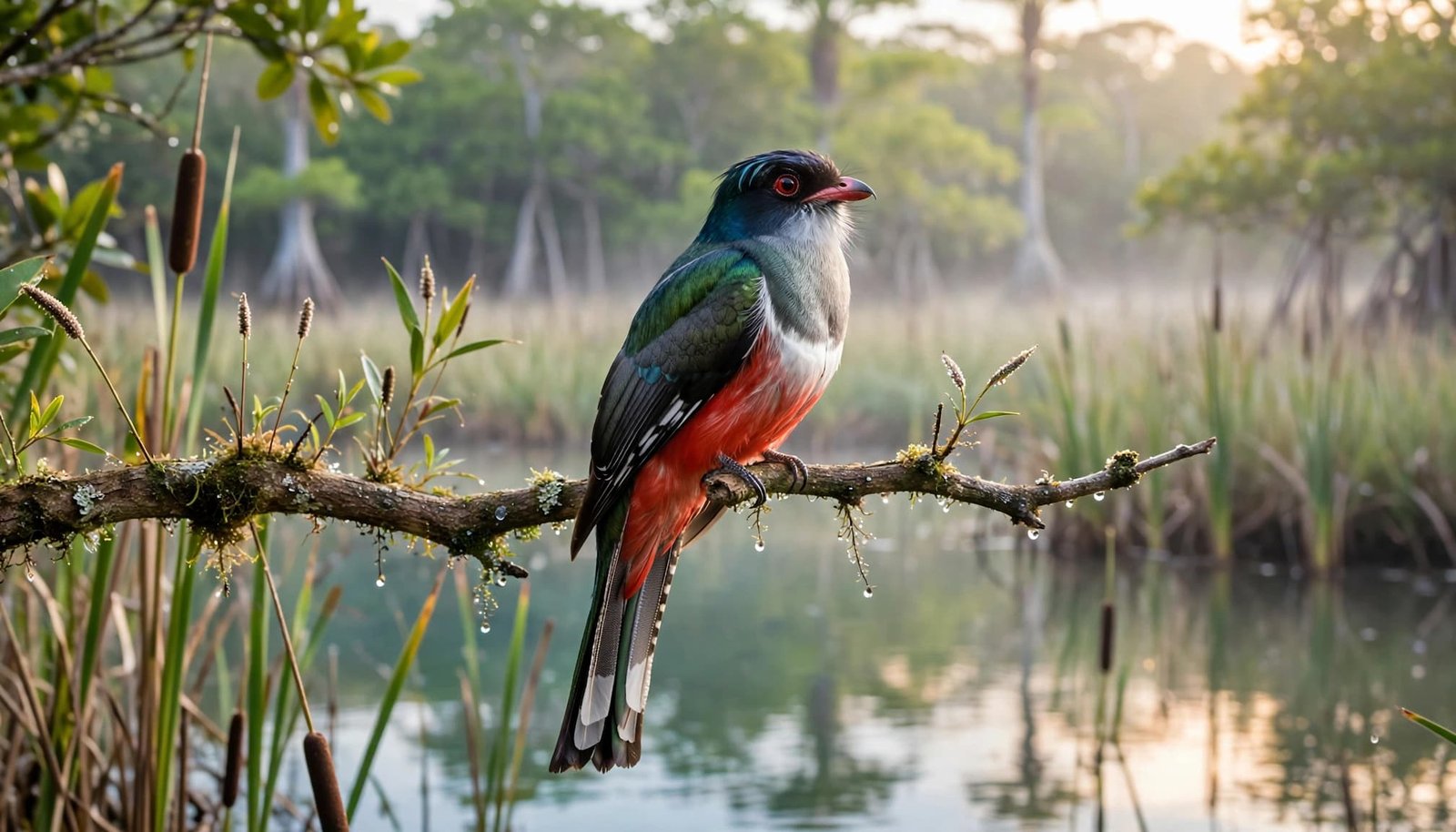
A Cuban trogon perched on a branch above a marsh.

Cuba’s Ciénaga de Zapata combines wetlands, woodland, and important endemic-bird habitat. Bee Hummingbird, Cuban Trogon, and Zapata Sparrow are among the birds that make this area attractive. However, Cuba needs more administrative checking than other islands. Verify entry requirements, insurance, and payment arrangements. For U.S. travelers, don’t assume an ordinary leisure itinerary meets applicable travel restrictions.

🇵🇷 Why Is Puerto Rico Useful for a Shorter Birding Trip?
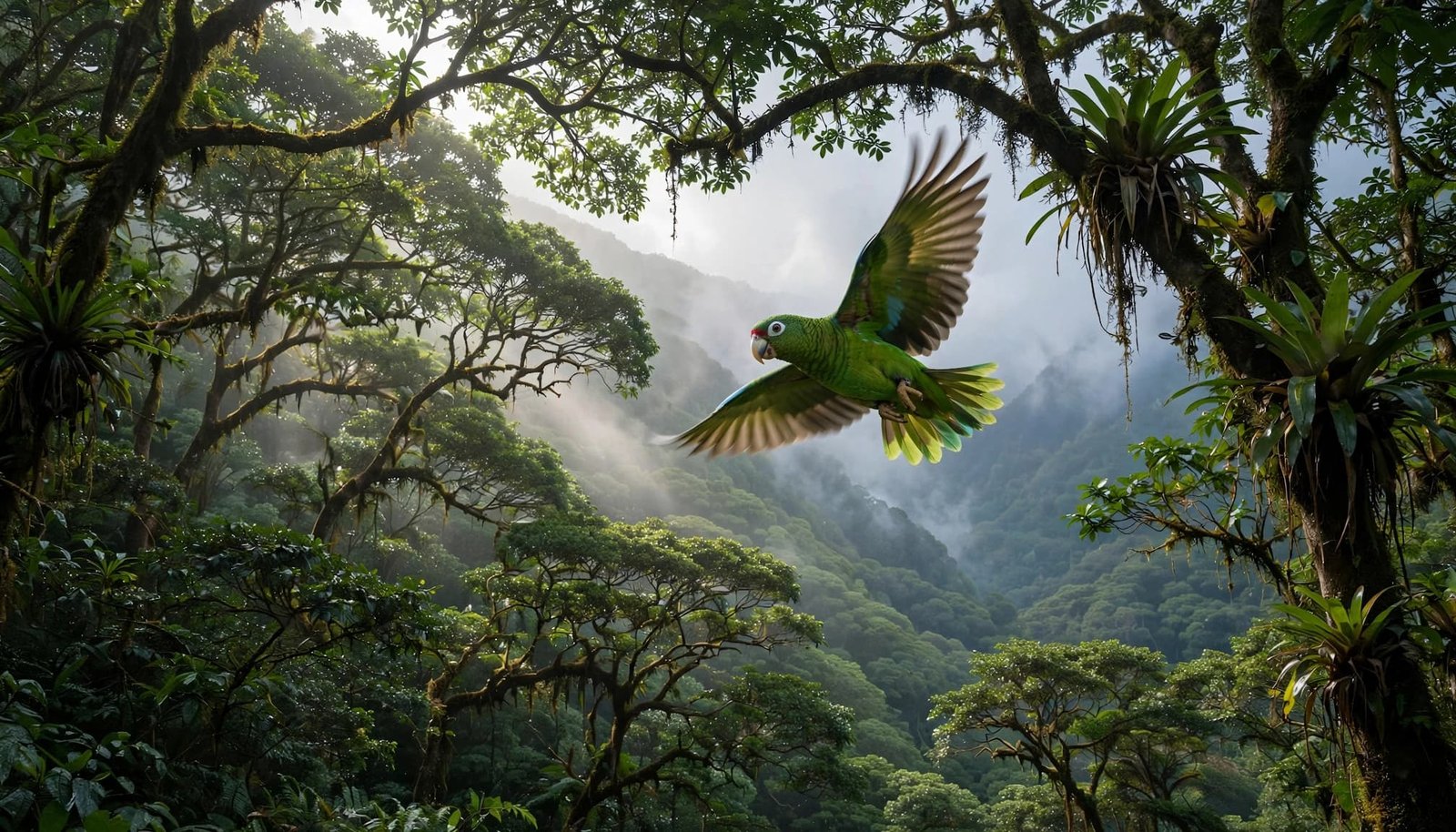
A Puerto Rican parrot flies over a misty rainforest canopy.

Puerto Rico offers wet forest, dry forest, and coastal habitats without requiring another island flight. El Yunque is the familiar rainforest option, while Guánica and Cabo Rojo add contrasting environments. The Puerto Rican Tody is a highly rewarding target. U.S. citizens traveling directly between the mainland and Puerto Rico don’t need a passport, making logistics incredibly easy. San Juan works for a city-and-nature vacation, but western sites need meaningful driving time. Choose a western overnight stay if those habitats are central to your trip.

✈️ 2026 Airfare Snapshot (round-trip economy, from ~): JetBlue JFK–POS (Trinidad) ~$480; American MIA–KIN (Jamaica) ~$320; JetBlue SJU–DOM (Dominica) ~$280; Delta ATL–SJU (Puerto Rico) ~$180.

🏨 2026 Eco-Lodge Snapshot (from ~ per night): Blue Basin Inn (Trinidad) ~$190; Hotel Mockingbird Hill (Jamaica) ~$260; Jungle Bay Dominica ~$380; El Yunque Rainforest Cottages (PR) ~$240.

🔭 How Do You Choose a Caribbean Birding Tour & Gear?

Field Guides, Birding Ecotours, and Eagle-Eye Tours are useful starting points when comparing specialist tour companies. Compare actual birding hours, group size, guide arrangements, and travel time. A tour listing twenty target birds can still offer poor value if most daylight hours disappear into transfers. The Caribbean Birding Trail connects island birding sites and conservation-focused ecotourism. A good interpretive guide explains habitats and conservation pressures as well as naming birds.

Practical guiding starts with comfort and safety. Shade, water, manageable walking, and clear expectations help travelers enjoy the wildlife instead of worrying about the next steep section.

🔭 The Ultimate Birder’s Glass: Spot Endemics in Low Light

Swarovski Optik EL 10×42 Swarovision Binoculars (~$2,899)

When hunting for the elusive Jamaican Tody or the Sisserou Parrot deep in a shaded rainforest canopy, glass quality is everything. The Swarovski Optik EL 10×42 features field-flattening lenses that deliver edge-to-edge sharpness, exceptional low-light transmission for dawn forest walks, and a wide field of view to track fast-moving hummingbirds. This is the gold standard for serious ornithologists and wildlife photographers.

✅ Swarovision Technology ✅ 91% Light Transmission ✅ Waterproof & Fogproof
🛒 Check Swarovski EL Pricing

💡 When Amazon opens: Copy/paste “Swarovski Optik EL 10×42 Swarovision” to view the premium green or anthracite finishes.

🎒 What Should You Pack and How Do You Control Costs?

Comfortable binoculars (8×42 for beginners), lightweight rain protection, grippy footwear, insect repellent, and a reusable water bottle cover the essentials. A dry pouch helps protect electronics during wetland boat trips. Use our Caribbean travel packing essentials guide for the wider vacation kit. To control costs, compare the complete plan: flights, accommodation, guiding, transfers, and access fees. An inexpensive stay far from the forest can lose its advantage after repeated private pickups. Protect your remote wildlife excursions with comprehensive 🛡️ travel protection via EKTA to cover sudden weather cancellations and medical emergencies in remote areas.

🚖 Secure Remote Birding Site Transfers

Many prime birding habitats (like the Blue Mountains or Zapata Swamp) are far from main hotels. Lock in a fixed-price private transfer with a driver who knows the routes.

🚖 Book Private Eco-Transfers

💡 When the page opens: Type “Kingston to Blue Mountains” or “Havana to Playa Larga” for a guaranteed fixed rate.

❓ People Also Ask: Caribbean Birding FAQ

1. Which island is best for a first Caribbean birdwatching trip?

Trinidad and Tobago offer the most varied habitats for beginners and experts alike, while Puerto Rico is a highly practical choice for a shorter vacation with easy flight connections. Choose based on your group’s walking comfort and available specialist guides rather than chasing a single overall winner.

2. Can I birdwatch in the Caribbean without booking a guide?

Yes, where public access and trail conditions allow it. However, a guided birding tour is especially useful for identifying forest calls, navigating restricted access areas, finding difficult endemic targets, and arranging remote transport. Many travelers combine independent coastal walks with one specialist forest morning to manage costs.

3. Are endemic-bird sightings guaranteed on a guided tour?

No. Weather, trail access, habitat conditions, and natural bird behavior always affect sightings. A reputable guide will tell you what they have seen recently and how the itinerary handles missed targets without disturbing wildlife or using unethical playback calls. Always keep one flexible wildlife window in your itinerary for a second chance.

🌅 Book the Habitat, Then the Hotel

The right island gives you wildlife time without making every morning a transport problem. Choose your targets, confirm a suitable guide, and place your accommodation near the outings that matter most. Keep one flexible wildlife window in your itinerary instead of filling every day. That gives your vacation room for weather changes and a second chance at a missed bird. If your Caribbean birding adventure starts with a connecting flight through Mexico, pre-book your ground transport with 🚐 OMyTransfers for seamless layover rides.

🌴 Ready to Narrow Your Birding Shortlist?

Confirm the route, total price, and cancellation terms before committing your deposit. Compare flexible flights to your chosen birding hub.

💡 When the flight page opens: Enter your home airport + “POS” (Trinidad), “KIN” (Jamaica), or “SJU” (Puerto Rico) and toggle “Flexible dates”.

☕

Support the Blog

If you love our travel guides and vacation tips, consider buying us a coffee to fuel the next adventure!

Buy Me a Coffee

© 2026 I Need My Vacation. All rights reserved.
🌌 Best Caribbean Bioluminescent Bays 2026: Vieques, Fajardo & Jamaica

The best Caribbean bioluminescent bays in 2026 include Mosquito Bay on Vieques for the brightest recorded glow, Laguna Grande for an easier Puerto Rico kayak trip, and Jamaica’s Luminous Lagoon for boat tours. Choose your destination by access and tour format, then check the moon phase before booking.

Affiliate Disclosure: This article contains affiliate links. If you book or purchase through these links, I Need My Vacation may earn a small commission at no extra cost to you. We only recommend services we genuinely trust and use ourselves to help you plan the perfect trip. Thank you for your support!

🌙 Ready to Plan Your Glow-in-the-Dark Night?

Find a bioluminescence tour that fits your dates. If Vieques is your pick, check your flight plan and ferry schedules before committing to a room.

💡 When the tour page opens: Type “Vieques Bioluminescent Bay” or “Fajardo Laguna Grande” and filter by your exact travel dates.

💡 When the flight page opens: Enter your home airport + “SJU” (San Juan) and toggle “Flexible dates” to find the darkest moon phases.

🎯 Key Takeaways for Your 2026 Bio Bay Trip

  • 🏆 Mosquito Bay on Vieques is the pick if the glow is your main reason for traveling, but reaching Vieques takes an extra ferry or flight.
  • 🛶 Laguna Grande in Fajardo fits a mainland Puerto Rico itinerary. Expect a guided kayak trip through mangroves, not a swim.
  • 🏊 La Parguera offers a south-coast boat option, with swimming available on some tours under current operator rules.
  • 🛥️ Luminous Lagoon in Jamaica is a good choice if you prefer a relaxing boat ride over paddling a kayak in the dark.
  • 🌑 A dark sky matters. Look at moonrise and moonset times, not only the date of the new moon. No operator can promise a bright display.

🗺️ Which Caribbean Bioluminescent Bays Are Worth the Trip?

The right bay depends on where you’re staying and how you want to get onto the water. A glowing bay can be the highlight of your vacation, but it can also become an expensive late-night detour if you book the wrong island or miss the last connection. I’d pick the bay first, then build the hotel and transport plan around it.

DestinationBest FitTour FormatCheck Before Paying
Vieques (PR)Glow-focused travelersGuided kayakNo swimming allowed
Fajardo (PR)Mainland PR visitorsGuided kayakPaddling rules & transport
La Parguera (PR)Travelers wanting a swimBoat or kayakSwimming often permitted
JamaicaFamilies / Non-paddlersGuided boatEasy boarding & swim

🏆 Is Mosquito Bay on Vieques Worth the Extra Trip?

Yes, if seeing the brightest recorded bio bay is the point of your vacation. Discover Puerto Rico’s guide identifies the bay as the Guinness World Records holder for brightest bioluminescent bay. That’s a strong reason to choose Vieques, though a record isn’t a promise about your particular night.

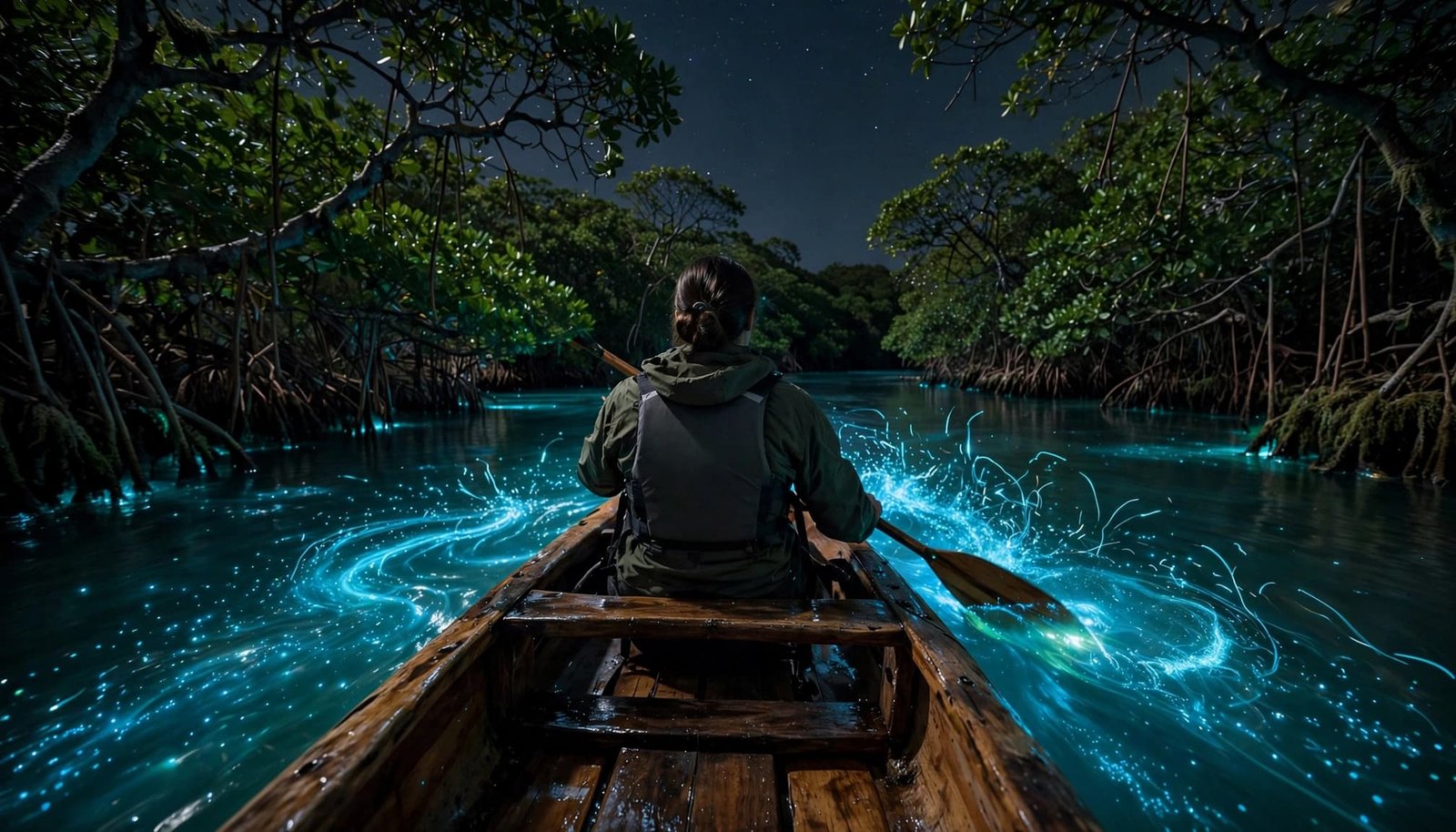
A lone kayaker leaves a blue-green glow across dark water beside mangroves.

What makes the Vieques experience different?

A guided kayak puts you close to the water. When a paddle disturbs it, points of blue-green light can appear along the stroke. The protected setting is part of the appeal, but rules apply: swimming is strictly prohibited in the Vieques bay to protect the dinoflagellates. For couples, this is the memorable, quiet-water choice. Solo travelers can join a guided group without arranging a private boat.

How do you get there without a stressful return trip?

Vieques is separate from Puerto Rico’s main island. Travelers commonly arrive by ferry from Ceiba or by air (Cape Air or AirLink), then arrange local transport. Don’t count on a same-night ferry back after a late tour. Plan on staying on the island. That extra room can cost more than the tour, so price the whole Vieques night before calling it a bargain.

✈️ 2026 Vieques Airfare & Ferry Snapshot: Cape Air SJU–VQS (Vieques) ~$140 RT (25-min flight); Vieques Ferry from Ceiba ~$4 RT (book in advance, limited capacity).

🏨 2026 Vieques Stay Snapshot (from ~ per night): W Retreat & Spa Vieques (Luxury) ~$650; El Blok (Boutique) ~$320; Hix Island House (Eco-Chic) ~$280.

🛶 Is Laguna Grande the Easier Puerto Rico Bio Bay?

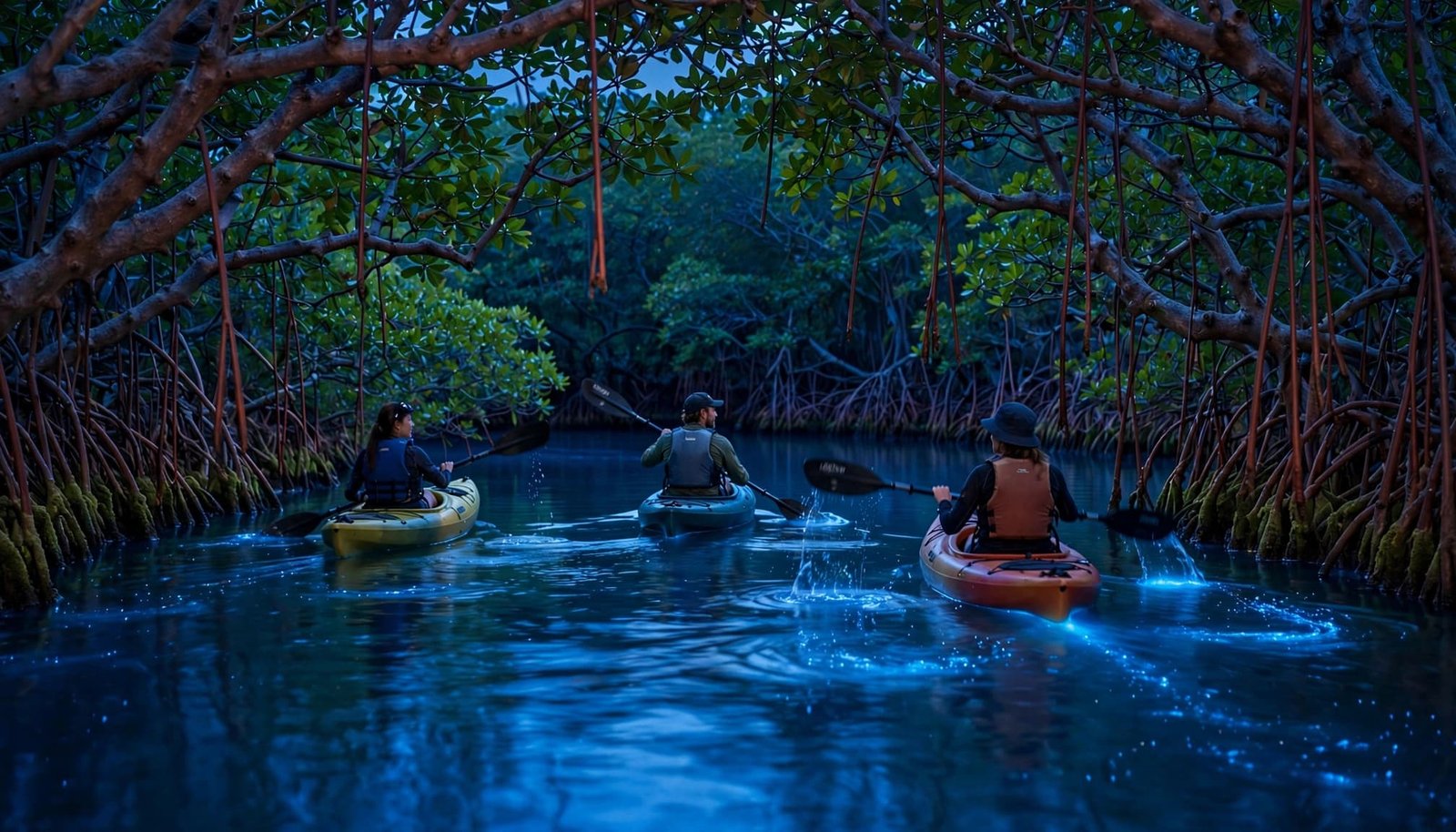
Usually, yes. The Fajardo Bio Bay works well if your hotel is on Puerto Rico’s main island. Tours commonly depart from Las Croabas and paddle through a channel bordered by mangrove forest to reach the lagoon. You get the kayak experience without adding a Vieques ferry or flight. I’d start here for a shorter Puerto Rico vacation, especially if San Juan is your base. Our San Juan travel guide for 2026 can help you decide how much of your stay to devote to the city.

Three kayakers paddle through a twilight mangrove channel with faint blue water glowing around their paddles.

What can’t you do at Laguna Grande?

You can’t swim in the lagoon. A guided kayak tour keeps visitors on the designated route and limits contact with the protected water. If your dream photo involves floating in glowing water, choose La Parguera or Jamaica instead. Some kayak operators have minimum ages and kayak weight limits, so families should check each listing rather than assume every “family-friendly” tour accepts every child.

🏊 When Does La Parguera Make More Sense?

The southwest-coast site in Lajas, Puerto Rico, is worth considering if you’re already staying nearby. It’s also the Puerto Rico bio bay to investigate if swimming matters to you. Some operators offer boat trips with a permitted swim, but rules vary by tour. The trade-off is travel time; a tour that looks affordable can become less appealing once you add a cross-island drive and a late return to San Juan.

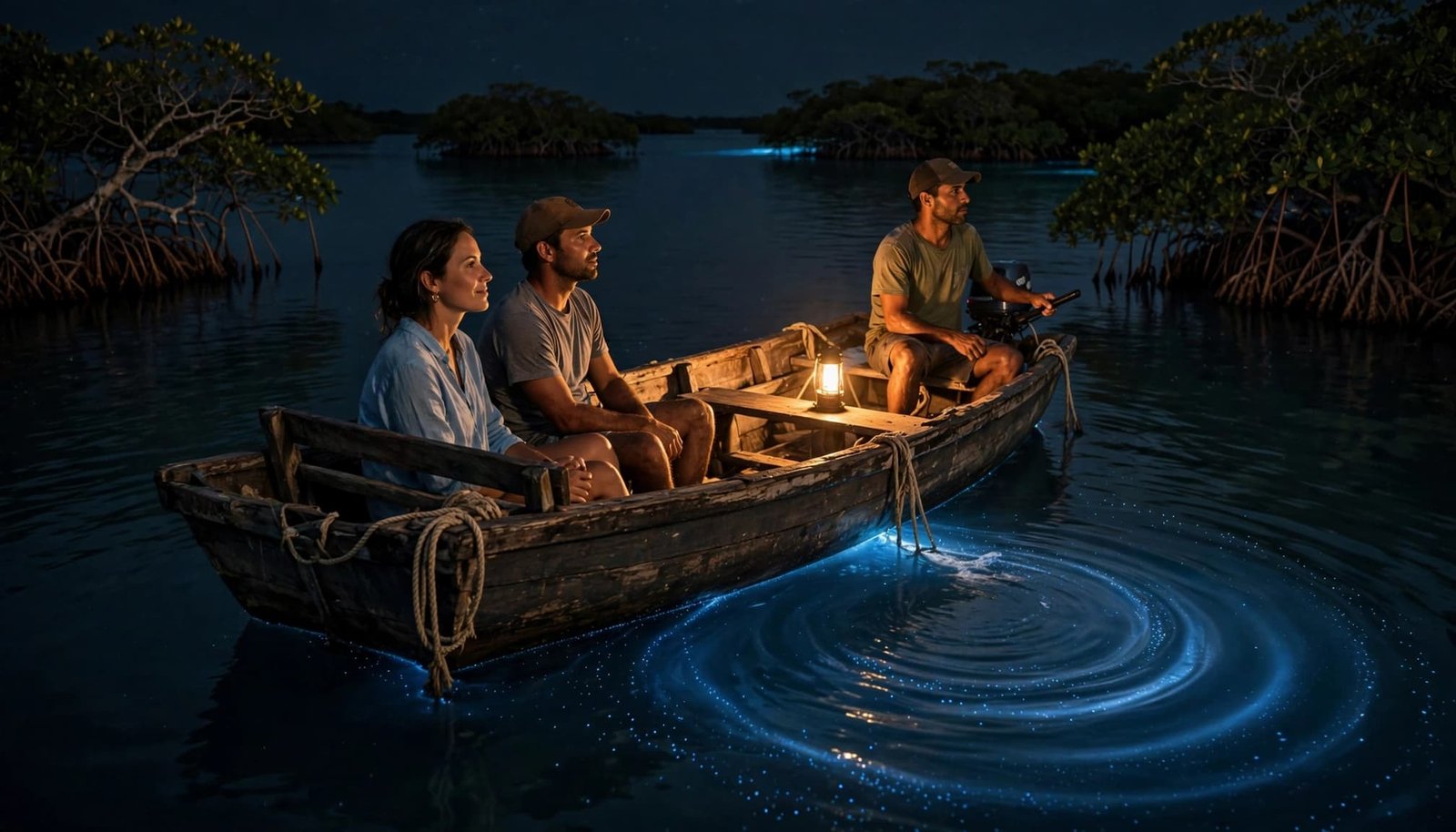
Two passengers and a boat operator travel past mangroves on dimly glowing water.

🏨 2026 La Parguera Stay Snapshot (from ~ per night): Copamarina Beach Resort & Spa (Oceanfront) ~$280; Villa Pesquera (Boutique) ~$220. Perfect for a relaxed southwest coast base.

🛥️ Is Jamaica’s Luminous Lagoon Good for Non-Paddlers?

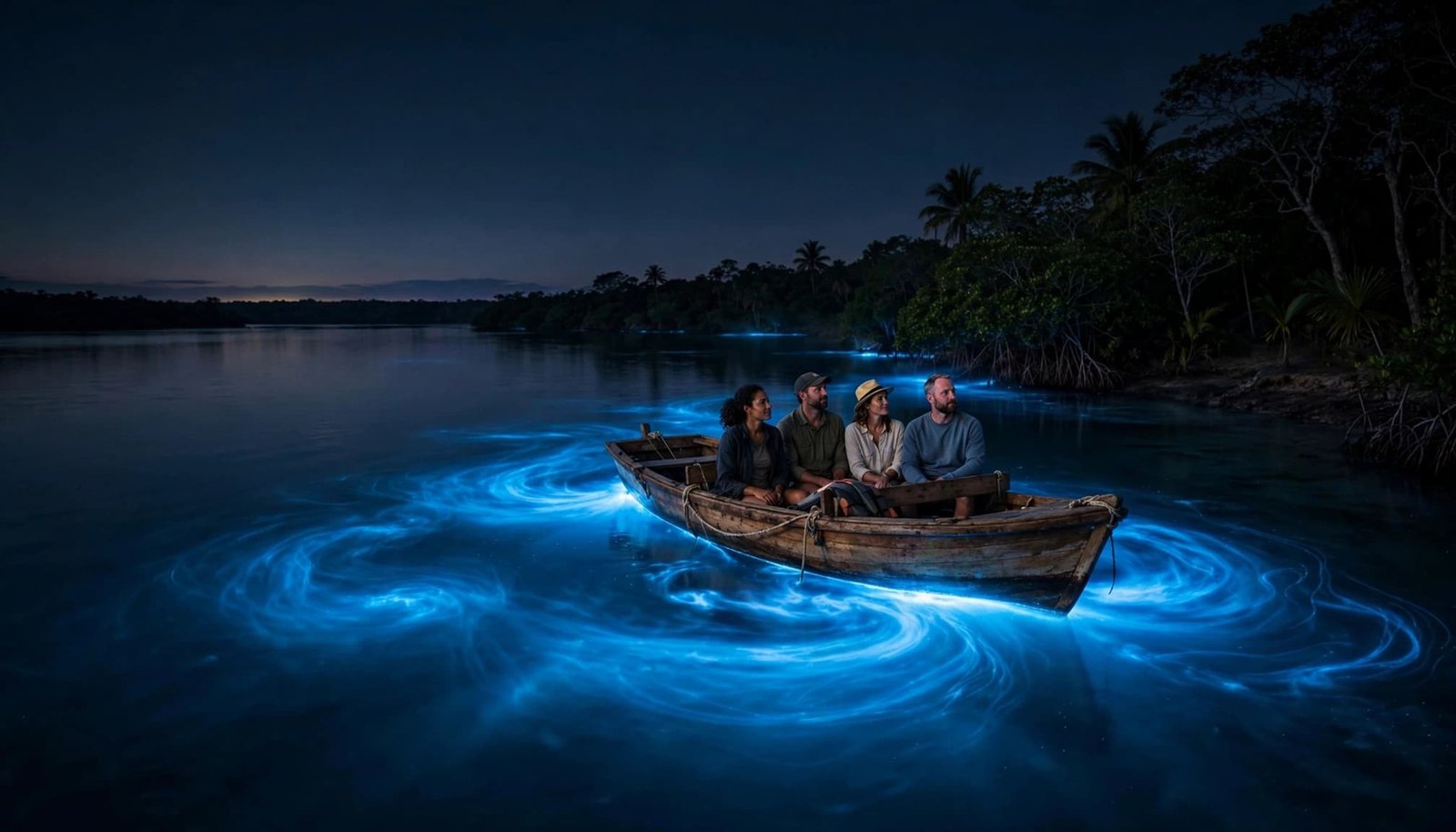
Luminous Lagoon near Falmouth is a straightforward boat option among these better-known destinations. If kayaking sounds tiring, you can watch the water light up as the boat moves through it. Optional swimming may be offered, but check current operator rules and conditions before packing for a swim. A boat tour can be easier for families than paddling after dark, but ask about minimum ages, boarding steps, and life jackets.

Four travelers ride a wooden boat across glowing blue water at night.

🚖 Pre-Book Your Jamaica Lagoon Transfer

Skip the late-night taxi negotiation. Lock in a fixed-price, air-conditioned private ride from your Montego Bay or Ocho Rios hotel directly to the Falmouth lagoon.

🚖 Book Fixed-Price Jamaica Transfers

💡 When the page opens: Type “MBJ Airport to Falmouth” or “Ocho Rios to Luminous Lagoon” for a guaranteed fixed rate.

🌎 Where Else Can You See Bioluminescence?

Grand Cayman, St. Croix, and Holbox appear on glowing-water wish lists. They’re better treated as trips to investigate than guaranteed substitutes for Puerto Rico’s established bays. If you’re visiting St. Croix from the U.S. mainland, our guide to Caribbean islands you can visit without a passport helps with the wider travel plan. Holbox Island is off Mexico’s Yucatán Peninsula; if you are extending a Cancun trip to visit Holbox, pre-book your ground transport with OMyTransfers for seamless Cancun and Riviera Maya rides to the Chiquilá ferry dock.

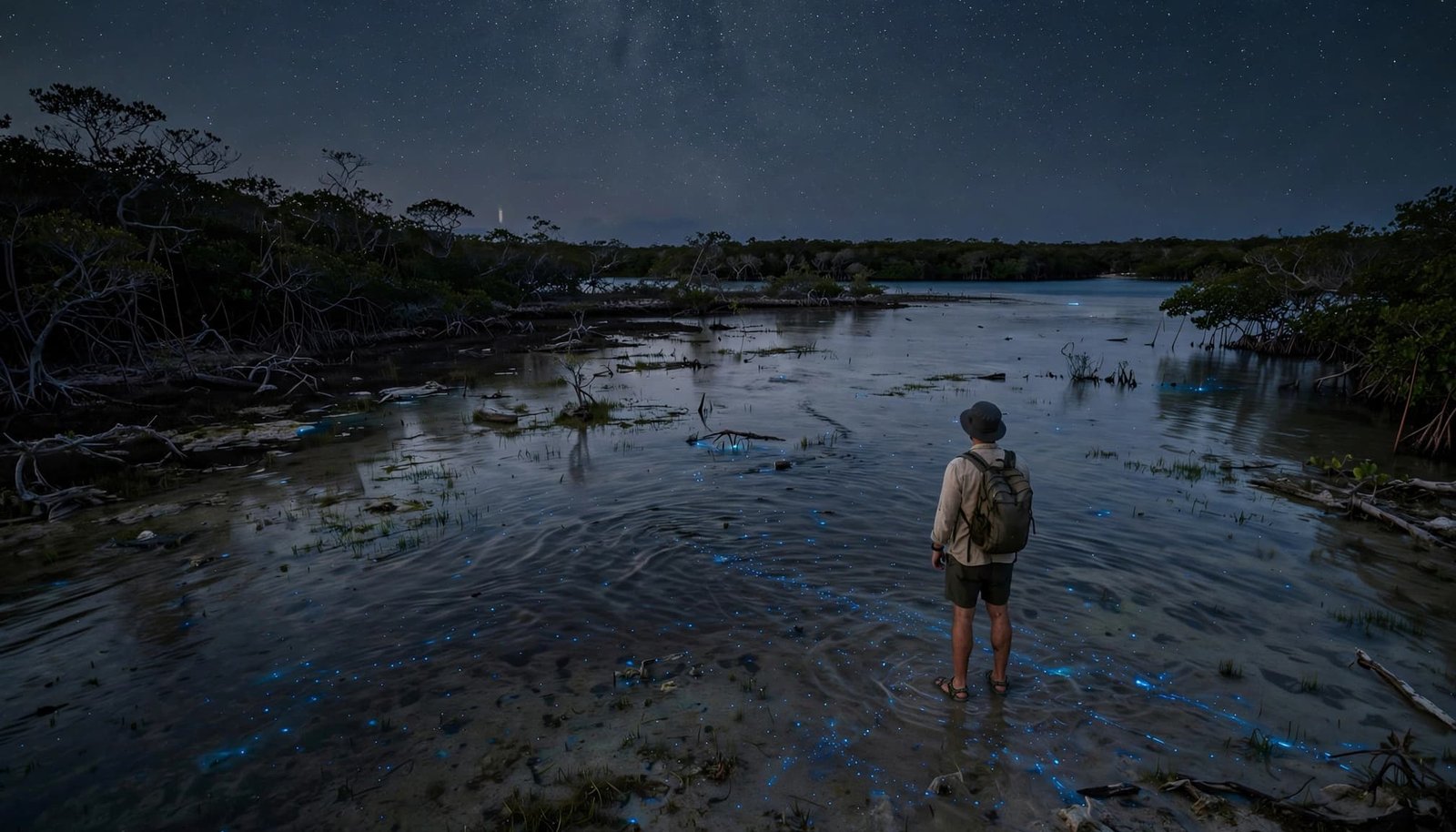
A traveler stands in glowing water beside a dark mangrove coast at night.

🌑 When Should You Book for the Best Glow?

Choose a dark night when you can, then leave room for nature. The new moon is a useful starting point because less moonlight usually means better contrast. Bright moonlight doesn’t stop bioluminescence; it makes the flashes harder to see. Check the moon phase, along with moonrise and moonset for the tour’s location and time. If you have several nights on an island, avoid saving the bay for your final evening. A weather cancellation is easier to handle when another night remains.

The light comes from tiny organisms called dinoflagellates. When movement disturbs the water, they produce brief flashes. A camera’s long exposure may show more light than your eyes see at one moment, so manage your expectations for smartphone photography!

📸 Capture the Glow: Premium Low-Light Photography

Sony Alpha a7 IV Full-Frame Mirrorless Camera (~$2,498)

Smartphones struggle to capture bioluminescence, often resulting in pitch-black photos. The Sony Alpha a7 IV features a 33MP full-frame sensor with exceptional low-light performance and high ISO capabilities. Pair it with a fast f/1.8 lens and a small travel tripod to actually capture the blue-green glow of Mosquito Bay or Laguna Grande without relying on misleading long-exposure stock photos.

✅ 33MP Full-Frame Sensor ✅ Extreme Low-Light ISO ✅ 4K 60p Video
🛒 Check Sony a7 IV Pricing

💡 When Amazon opens: Copy/paste “Sony Alpha a7 IV Full-Frame” to compare body-only vs. kit lens bundles.

❓ People Also Ask: Caribbean Bio Bay FAQ

1. Can you swim in a bioluminescent bay?

Swimming is strictly prohibited in Vieques’ Mosquito Bay and Fajardo’s Laguna Grande to protect the fragile dinoflagellate ecosystem. However, some boat tours in La Parguera (Puerto Rico) and Jamaica’s Luminous Lagoon do permit swimming. Always confirm current rules with your specific operator before booking.

2. Do you need a new moon to see bioluminescence?

No, but less moonlight makes the flashes much easier to see. The new moon is the ideal time, but you should check the moon’s rise and set times against your tour departure. A night outside the exact new-moon date may still have a useful dark window if the moon sets early.

3. Which Caribbean bioluminescent bay is the easiest to visit?

Laguna Grande in Fajardo is the most practical if you’re already staying on mainland Puerto Rico or San Juan, as it requires no extra flights or ferries. Jamaica’s Luminous Lagoon is the easiest for non-paddlers and families, as it relies on motorized boat tours rather than kayaking in the dark.

🌅 Choose the Bay Before You Book the Island

If a glowing bay is the reason for your trip, choose the Vieques option and make room for a night on the island. For a simpler Puerto Rico evening, consider the Fajardo-area option. Jamaica’s boat experience is a solid choice if you’d rather not paddle. A dark sky helps, but practical details shape the whole night: a tour you can join, a way back to your room, and rules you understand before you arrive. Sort those out first, then enjoy the glow.

🌙 Ready to Lock In Your Bio Bay Adventure?

Compare guided tours, verify moon phases, and secure your refundable base before the best kayak slots sell out.

💡 When the hotel page opens: Type “Vieques” or “Fajardo” and filter by “Free cancellation” to protect your deposit if the weather turns.

☕

Support the Blog

If you love our travel guides and vacation tips, consider buying us a coffee to fuel the next adventure!

Buy Me a Coffee

© 2026 I Need My Vacation. All rights reserved.
Underrated Florida Beaches Near Sarasota and Fort Myers (No Spring Break Chaos)

Some Florida beach days feel like a concert you didn’t buy tickets for. Parking lots fill, music drifts, and the shoreline turns into a moving crowd. When I want Gulf Coast beauty without the Spring Break chaos, I plan around nature-forward beaches that stay quieter because they’re less hyped, slightly out of the way, or built for walking and wildlife instead of parties.

Capture the serene beauty of a Sarasota sunset reflecting over a calm ocean in Florida.

Photo by bin Ziegler

In March, I pack for mild swings. Fort Myers often runs warmer (with many days in the 70s), while Sarasota can feel a touch cooler, especially in the shade or after sunset. Either way, these five beaches let me breathe. I’ll share parking notes, what each spot feels like, and what I never forget to bring. If you’re still shopping dates, I also keep an eye on last-minute spring break deals so I can move fast when prices dip.

TL;DR (my top 3 quiet picks):

  • Turtle Beach (Siesta Key): calmer, wide shoreline for long walks
  • South Lido Beach and Nature Park: mangroves, trails, and “choose your own quiet”
  • Bunche Beach (Fort Myers): shallow water, birds, and soft sunsets

Affiliate Disclosure: This article contains affiliate links. If you book or purchase through these links, I Need My Vacation may earn a small commission at no extra cost to you. We only recommend services we genuinely trust and use ourselves to help you plan the perfect trip. Thank you for your support!

Quick Navigation

My 5 Underrated Sarasota and Fort Myers Beaches That Stay Peaceful

Pristine white quartz sand stretches to the horizon at Turtle Beach on Siesta Key, Florida, with calm turquoise Gulf waves lapping the shore. A couple walks barefoot along the waterline during golden hour sunset, under a warm orange-pink sky, evoking a peaceful empty beach vibe.

Quiet shoreline and soft light on Turtle Beach, created with AI.

1) Turtle Beach (Siesta Key): The “Exhale” Version of Siesta

Turtle Beach stays calmer because most people chase the postcard crowds up the key. Here, the vibe is more local, more towel-and-book, less “where’s the loudest spot.”

Best for: Long walks, sunset pacing, families who want room to spread out.
Sand and water: Sand feels a bit more natural and slightly coarser than powdery Siesta; the Gulf still looks that clear green-blue on a good day.
Access notes: Aim to park early, then walk a few minutes downshore to thin out the people. If you see a cluster, keep moving. The beach opens up fast.
Don’t forget: A small cooler with water, because I don’t count on nearby concessions.
Best quick pick for: Quiet Siesta Key sunsets without the scene.

2) South Lido Beach and South Lido Nature Park: Where Mangroves Filter the Noise

Tranquil scene at South Lido Beach and Nature Park in Sarasota, Florida, with one kayaker in shallow calm bay waters, sandy beach, birds on shore, mangrove trails and trees in soft morning light.

Mangroves, calm water, and space to wander at South Lido, created with AI.

This area stays peaceful because it’s part beach, part nature park. People arrive with a plan (walk, birdwatch, paddle), not just a party cooler.

Best for: Wildlife, shade breaks, “beach plus trail” days.
Sand and water: Soft sand on the Gulf side; calmer bay water near mangroves where the surface can look like glass.
Access notes: I enter through the park area, then use trail-side access points to find quieter pockets. Bring patience for parking during peak hours.
Don’t forget: Bug spray for mangrove edges, especially near dusk.
Best quick pick for: A quiet, nature-first Sarasota beach day.

If you want more ideas in the same spirit, this roundup of secluded, quiet Florida beaches matches how I think about “calm” (less hype, more space).

3) Manasota Beach: Raw Dunes and a Long, Unbothered Shoreline

Quiet Manasota Beach in Florida features raw natural dunes with sea oats, soft white sand, gentle waves on the Gulf shore, scattered seashells, and a lone palm tree under an overcast sky, evoking a serene untouched vibe.

Dunes, sea oats, and a wide-open stretch at Manasota, created with AI.

Manasota feels quieter because it doesn’t try to entertain you. It’s dune grass, open sky, and the steady shush of surf.

Best for: Shell hunting, long walks, clearing your head.
Sand and water: Soft sand with a more natural, “untouched” feel; water can look darker turquoise under cloud cover.
Access notes: Once you’re on the sand, walk away from the main access area. Even a 5 to 10-minute stroll makes a big difference.
Don’t forget: A lightweight towel or chair, because I like to roam, then sit when I find the perfect empty patch.
Best quick pick for: A simple beach walk with dune views.

4) Bunche Beach (San Carlos Bay): Shallow Water and Birds Instead of Crowds

Shallow clear waters perfect for wading on white sand flats at Bunche Beach, with exactly three birds on the shore, distant mangroves, and sparkling water under bright midday sun. Peaceful birdwatching spot in realistic wide-angle landscape photo, no humans.

Shallow flats and birdwatching at Bunche Beach, created with AI.

Bunche stays calm because it’s not a “swim-all-day” beach. The shallows invite wading, spotting birds, and watching the light move across the bay.

Best for: Birdwatching, calm-water wading, low-key sunsets.
Sand and water: Soft sand flats; gentle water that often stays shallow for a long way out.
Access notes: This spot can feel busiest near the main entry. I walk down the shoreline to find space and keep my distance from any cluster.
Don’t forget: Polarized sunglasses—they help me spot fish and birds in glare.
Best quick pick for: Wildlife and shallow water near Fort Myers.

5) Bowditch Point Park (North Tip of Estero Island): Trails That Lead to Quiet

Bowditch stays peaceful because it’s a park first. Many visitors stick to quick beach access elsewhere, while Bowditch rewards the people who walk the sandy paths.

Best for: Sunset watching, trail walks, couples who want calm.
Sand and water: A breezier, open feel with wide views; the Gulf can look especially bright near sundown.
Access notes: Follow the trails and keep going until voices fade. If you want the quietest stretch, choose the path that takes you farther from the first beach opening.
Don’t forget: A small trash bag. I always pack out wrappers and bottle caps I find.
Best quick pick for: Sunset plus a quiet park walk.

A Simple Crowd-Avoid Plan That Works on These Beaches

I keep it boring, because boring works:

  1. Go early, especially on weekends
  2. Choose weekdays and arrive before mid-morning when possible
  3. Use nature-park entrances and trails, not the most obvious beach access

If I’m deciding between “sleep in” and “easy parking,” I pick parking. A calm start changes the whole day.

Finally, I bring my own water and snacks, since quieter beaches usually have limited concessions. Bug spray helps near mangroves, and a small towel or chair makes breaks easy. I also carry a small trash bag, because dunes and nesting areas deserve respect.

Where I Stay for Quiet Beach Access in Sarasota and Fort Myers (and How I Book It Fast)

For Sarasota beaches (Turtle Beach, South Lido), I like staying in the Sarasota area so I can slip out early and avoid long drives. For Fort Myers picks (Bunche, Bowditch), I base closer to Fort Myers or near Estero Island, depending on what’s open and priced fairly.

My fast booking routine is simple:

  1. Look for refundable rates—plans change fast in March
  2. Read recent guest reviews and search the word “quiet”
  3. Avoid properties with mentions of thin walls or loud pools
  4. Choose smaller beach inns and calm rentals over giant properties

When I’m ready to book, I compare options across multiple platforms to find the best deal:

🏨 Compare refundable stays:
• Search Booking.com for Sarasota & Fort Myers
• Check Agoda for alternative deals

✈️ Find flexible flights:
• Search flights on Aviasales

Closest airports: SRQ (Sarasota-Bradenton) for Sarasota beaches and RSW (Southwest Florida International) for Fort Myers area.

Getting from the Airport to the Sand Without Stress

Rideshares work, but busy weeks can mean longer waits. If I’m landing late or traveling with family, I prefer to lock in a pickup ahead of time. Most drives run about 20 to 45 minutes, depending on traffic and which beach area you choose.

🚗 Pre-book your airport pickup with Welcome Pickups

What I Pack for Low-Key Florida Beach Days (Light, Sun-Safe, and Easy)

I pack like I’m planning to stay longer than I think. That way I don’t have to leave my quiet spot for basics. Here’s my short list:

  • Reef-safe sunscreen (protects you and marine life)
  • Reusable water bottle (stay hydrated without plastic waste)
  • Wide-brim sun hat (better coverage than baseball caps)
  • Bug spray (essential for mangrove-friendly days)
  • Small first-aid kit (for minor scrapes or jellyfish stings)
  • Polarized sunglasses (reduce glare on the water)
  • Lightweight beach towel or chair (for impromptu rest stops)
  • Small cooler (water and snacks keep you from leaving your spot)
  • Trash bag (pack out what you pack in, plus any litter you find)

🛒 Shop my beach essentials on Amazon: View recommended beach gear

One last rule I follow: Leave no trace, stay off dunes, and give nesting areas plenty of space.

FAQ: Quiet Florida Beaches Near Sarasota and Fort Myers

Which beach is best for families who want calm water?

I start with Bunche Beach, because the shallow bay water often makes wading feel easy and safe for kids. If my family prefers the Gulf, I choose Turtle Beach, then I walk downshore to find space away from clusters.

Where can I see wildlife without crowds?

South Lido Nature Park and Bunche Beach are my top two. Mangroves and shallow flats attract birds. I go earlier for the best sightings, and I keep my distance to avoid disturbing them.

Is it realistic to visit these beaches without a car?

It’s possible, but I plan carefully. I’ll stay closer to the beach area, then use rideshares for short hops. For airport arrivals, I like having a pre-booked transfer, especially if I’m carrying chairs or a cooler. Public transit is limited in these areas.

What months feel like spring break weather without spring break crowds?

I’ve had the best luck in late April, early May, and then again in September and October. You won’t get a guarantee, but the vibe often feels calmer while the Gulf Coast still feels beach-friendly. For more crowd-free inspiration, I also skim lists of underrated Florida beach towns.

Are these beaches good for swimming?

Yes, but with caveats. Turtle Beach and Manasota offer typical Gulf swimming. Bunche Beach is better for wading than deep swimming due to shallow flats. South Lido has both Gulf swimming and calmer bay areas. Always check local conditions and flags.

Conclusion

When I want Florida’s Gulf Coast at its best, I choose beaches that trade bars and noise for space, sunsets, and birdsong. Turtle Beach, South Lido, Manasota, Bunche, and Bowditch all give me that “quiet morning” feeling, even in busy seasons.

Before you go, I’d keep it simple:

  1. Book flights once dates feel right—compare options on Aviasales
  2. Reserve a refundable place to stay—search Booking.com or check Agoda
  3. Plan one sunrise or sunset, and protect it on your calendar
  4. Pack light but smart—reef-safe sunscreen, water, and respect for nature

These beaches remind me why I fell in love with Florida’s Gulf Coast in the first place: not the crowds or the chaos, but the quiet moments when the water meets the sand and everything else fades away.

© 2026 I Need My Vacation. All rights reserved.
Pin It on Pinterest

Seraphinite AcceleratorOptimized by Seraphinite Accelerator
Turns on site high speed to be attractive for people and search engines.